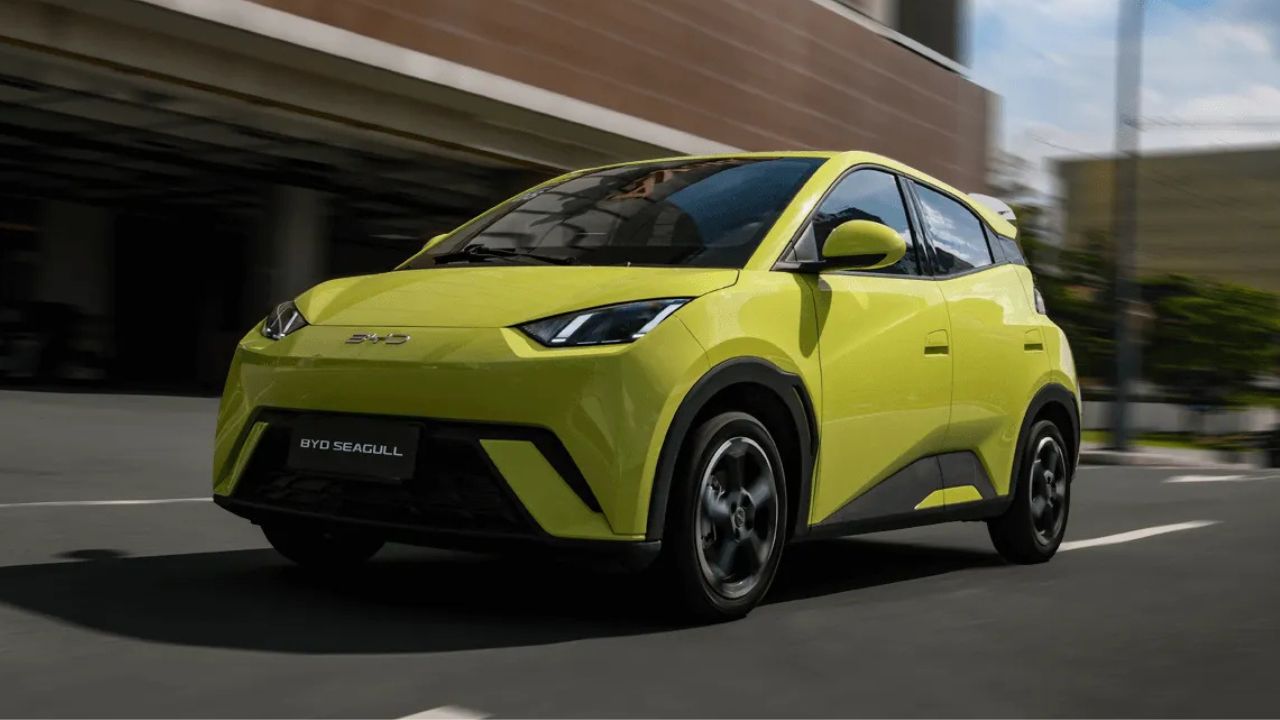
BYD’s latest electric hatchback has triggered a flood of preorders in China for a blunt reason: it is cheaper than many gasoline cars while packing the tech and range drivers now expect from an everyday EV. The model is landing in showrooms at a price that undercuts rivals and even some of BYD’s own earlier offerings, signaling how far the company is willing to go to keep its growth story alive.
The surge of interest around this launch is not just a win for one brand. It marks a new phase of the global EV race, where the question is no longer who can build an electric car, but who can build one that ordinary buyers can afford without feeling they are making a compromise.
What happened
BYD has introduced a compact electric vehicle aimed squarely at the mass market, with a sticker price that falls well below many established battery models in China. Built on the company’s existing small-vehicle platform and using its in-house Blade battery technology, the car squeezes usable range into a relatively low-cost package. Early figures from dealers and online reservation channels point to tens of thousands of orders within days of launch, with wait lists forming in several major cities.
The new hatch slots under BYD’s better known Dolphin and Yuan Plus models and targets buyers who might otherwise choose a small gasoline sedan or micro-SUV from joint ventures such as SAIC Volkswagen or Dongfeng Nissan. BYD has leaned on its vertical integration, from battery cells to power electronics, to strip out supplier margins and pass some of that saving directly into the showroom price. In entry trim, the result is a car priced close to the equivalent of a mid-range internal combustion compact, yet still offering modern safety tech, a connected infotainment system, and a usable daily range.
That pricing strategy reflects a broader shift inside the company. Earlier this year BYD signaled that it would concentrate more heavily on pure battery models and plug-in hybrids after briefly experimenting with a more cautious stance on full EVs. Executives framed the latest launch as proof that the company can still push into new niches while staying disciplined on costs. At the same time, BYD has been reworking its model mix, retiring slower-selling variants and channeling production capacity into high-volume, lower-margin vehicles that can keep its factories running near full tilt.
Industry analysts see the new car as a direct response to intensifying competition in China’s lower price bands, where dozens of domestic brands now fight for share. That battle has already triggered a price war in which leading players have repeatedly trimmed stickers or offered aggressive financing to keep traffic flowing into showrooms. BYD’s latest move takes that fight a step further by baking the discount into the base price rather than leaning on temporary incentives.
The company’s willingness to pivot has been visible in other corners of its lineup. In one notable example, BYD reversed course on an earlier plan to step back from certain pure EV segments and instead pushed ahead with a new model called the Racco, a compact electric crossover positioned for urban buyers. That shift, described by company executives as a strategic “U-turn,” was framed as a response to stronger than expected demand for affordable city EVs and is detailed in coverage of BYD’s decision to introduce the new Racco.
Why it matters
The enthusiasm around BYD’s new budget EV highlights a paradox at the heart of the electric car industry. Global automakers have poured billions into battery plants and new platforms, betting on rapid adoption. Yet demand growth has cooled in several major markets, leaving manufacturers with more capacity than they can profitably use. That imbalance has pushed companies, especially in China, to chase volume with lower prices.
Reporting on the sector describes how BYD and its peers are grappling with a mix of weak demand, intense competition, and overcapacity that has already triggered multiple rounds of price cuts. In that context, a hot-selling low-cost model is not simply a nice-to-have product. It is a pressure valve that helps absorb excess factory output and maintain scale economies in battery production, which in turn keeps unit costs falling.
For consumers, the implications are more straightforward. Every time a major player like BYD proves it can profitably sell an EV at or below the price of an equivalent gasoline car, the argument that electric cars are only for the wealthy loses more ground. The new hatchback offers a concrete example of how far costs have come down in areas such as lithium iron phosphate battery chemistry, integrated power electronics, and simplified vehicle architectures. Features that once belonged only in higher trims, such as advanced driver assistance and large touchscreens, are now filtering into entry-level EVs.
The geopolitical angle is harder to ignore. BYD’s success with aggressively priced models in China strengthens its hand as it expands into Europe, Latin America, Southeast Asia, and the Middle East. Policymakers in Brussels and Washington have already raised concerns that Chinese automakers, supported by domestic scale and lower production costs, could undercut local manufacturers in foreign markets. A wave of popular, inexpensive BYD models at home increases the likelihood that some of those vehicles, or their direct derivatives, will eventually be exported in large numbers.
The strategy carries real risks for BYD itself. Thinner margins on each vehicle leave less room to absorb swings in raw material prices or currency moves. If rivals respond with further discounts, the company could find itself locked in a race to the bottom that erodes profitability even as unit sales rise. Investors will be watching closely to see whether the surge of orders around the new model translates into sustainable earnings or simply masks deeper structural pressures.
Brand positioning is another open question. BYD has worked to move upmarket with models like the Han sedan and the Denza line, which target buyers who might otherwise look at premium European or Japanese brands. Flooding the market with ultra-cheap EVs risks diluting that higher-end narrative. The company will need to show that it can segment its portfolio cleanly, keeping budget offerings from cannibalizing more profitable models while still leveraging shared platforms and components.
For the broader industry, BYD’s move is a data point in a larger trend toward “good enough” EVs that meet daily needs without the long-range bragging rights of flagship models. Strong uptake in China for a car that prioritizes affordability and practicality over maximum battery size would send a signal to engineers and product planners worldwide about where to focus their next development cycles.
What to watch next
The first variable to track is how long the order frenzy lasts once early adopters and brand loyalists have placed their deposits. Sustained demand over several quarters would suggest that BYD has found a durable sweet spot on price and features, rather than simply riding launch buzz. Dealers will be monitoring cancellation rates and the mix between fleet and private buyers, since heavy reliance on ride-hailing or corporate customers can make sales appear stronger than underlying retail appetite.
Regulatory responses will also shape the next chapter. In Europe, ongoing investigations into potential subsidies for Chinese-made EVs could lead to higher tariffs, which would blunt the advantage of BYD’s low-cost models if they are exported in volume. Any move by Chinese authorities to adjust purchase incentives or tighten credit conditions could similarly affect domestic affordability and, by extension, the appeal of budget EVs.
Rival automakers are unlikely to stand still. Legacy players such as Volkswagen, Toyota, and Hyundai are already accelerating their own low-cost EV programs, often through partnerships with Chinese battery makers or local joint ventures. If they can match BYD on price while leaning on established dealer networks and service infrastructure, the competitive field in the subcompact and compact EV segments will become even more crowded.
More From Fast Lane Only: