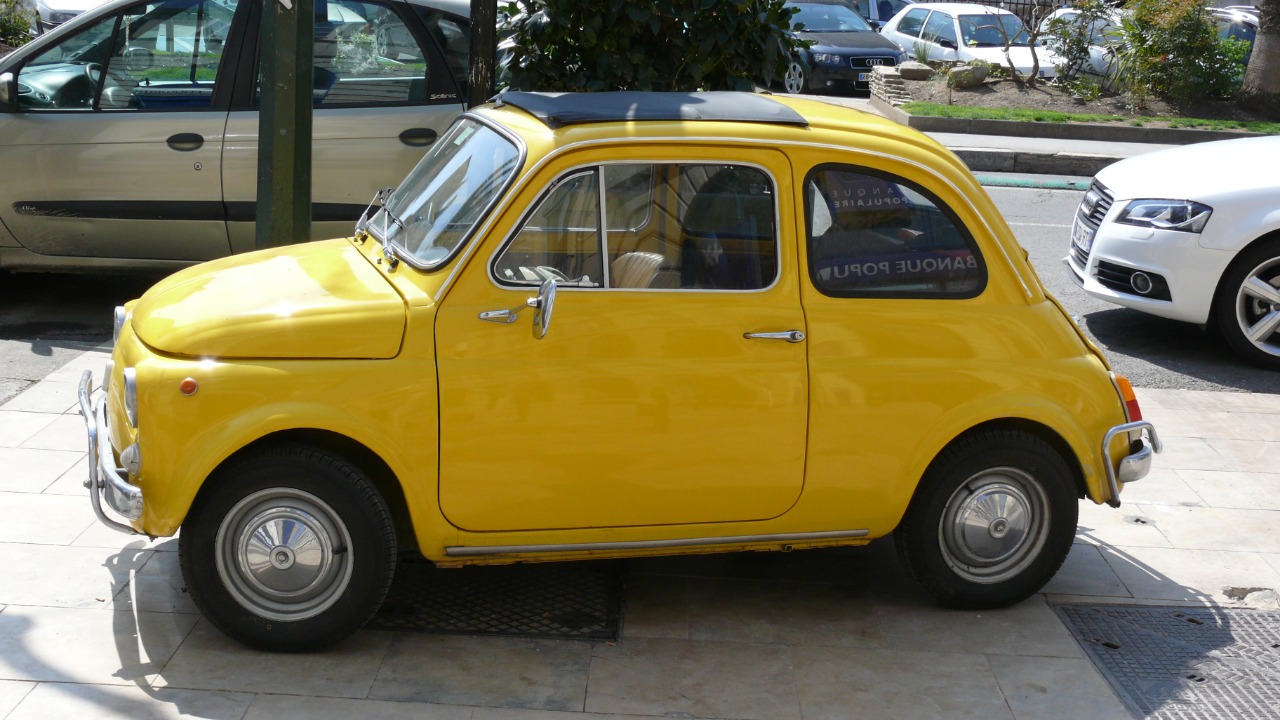
The 1965 Fiat 500 F arrived at a moment when European carmakers were racing to add complexity, yet it quietly proved that a tiny, unfussy city car could win hearts and move a country. By stripping motoring back to the basics, it showed that simplicity was not a compromise but a strategy, one that turned a budget runabout into a cultural touchstone. I see that lesson echoing today, every time designers and engineers talk about doing more with less.
The people’s car that Italy actually needed
To understand why the 1965 version mattered, I first look at the brief that shaped the original Fiat 500 in the late 1950s. Fiat wanted a compact, affordable car for post‑war Italy, and the result, known as the Cinquecento, was introduced as a small, practical answer to scooters and crowded trams, a true people’s car for narrow streets and tight budgets. Company history describes the Origins of the Fiat 500 as rooted in that mission to build an inexpensive city car for post‑war Italy, and that intent never really changed as the model evolved.
Among Fiat’s many models, the Fiat 500 quickly became the one that carried the brand’s identity far beyond Italy, because it was small, recognisable and unpretentious. Reporting on its legacy notes that Among Fiat cars, the Fiat 500 stands out as an enduring symbol of Italian style, launched as a modest city car that grew into a national icon. By the time the 1960s arrived, the question was not whether this tiny car worked, but how to refine it without losing the straightforward charm that made it so useful.
How Giacosa’s simplicity set the template
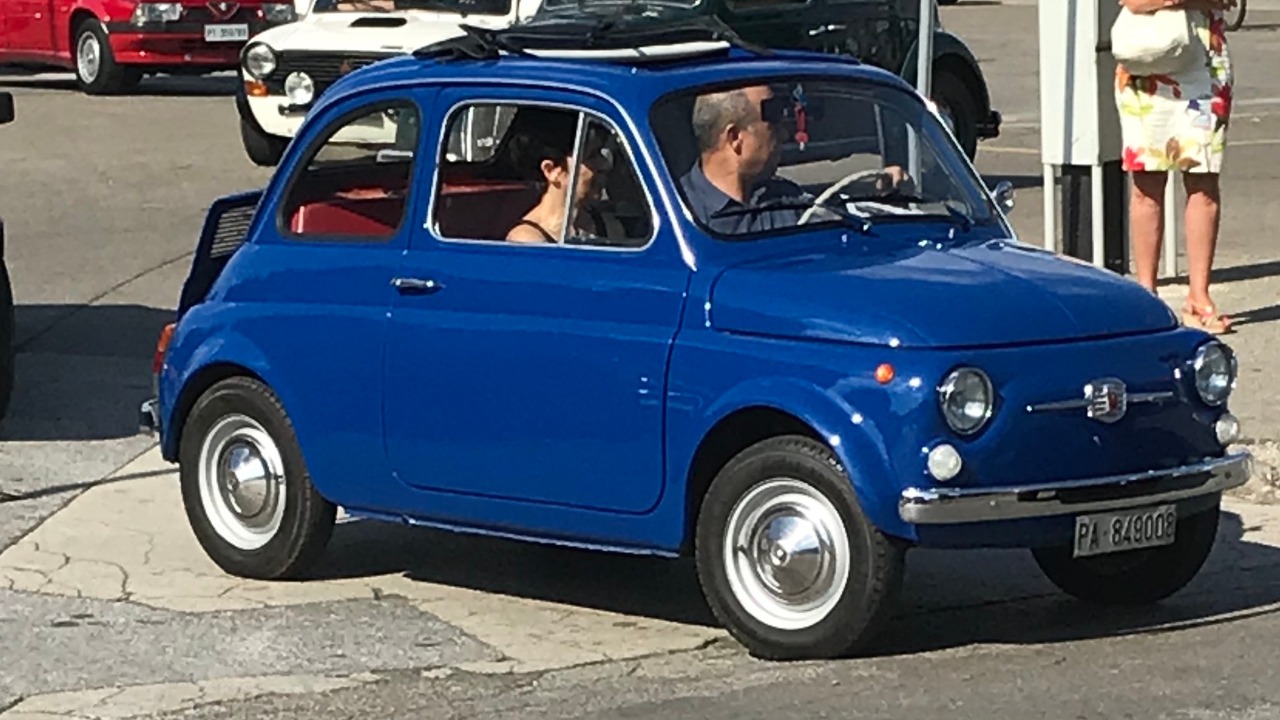
The key to that refinement lay in the way Dante Giacosa approached the project. Rather than layering on gadgets, he reimagined the previous 500 with a focus on mechanical clarity and ease of use, so that anyone familiar with a scooter could understand it. One detailed buying guide stresses that Key to the 500’s success and appeal was its simplicity, and that Dante Giacosa completely reimagined the previous 500’s design so it could be maintained by a mechanic used to a scooter. That philosophy meant fewer parts, easier servicing and a car that felt approachable rather than intimidating.
Two years after an earlier small Fiat, Giacosa presented the Nuova 500, and its personality came directly from that stripped‑back thinking. Its homely charm lay in the design’s simplicity, with a tiny body, a basic cabin and just the essential controls, nothing more. One account of this period notes that Next up, two years later, Giacosa presented the iconic Nuova 500 and that Its homely charm came from the fact that there was a speedometer, a few switches and pretty much it for controls. By the time the 1965 Fiat 500 F arrived, that template of minimalism was already proven, and the task was to keep it intact while making the car safer and more usable.
What changed with the 1965 Fiat 500 F
When I look at the 1965 Fiat 500 F, I see a careful evolution rather than a radical redesign. The model made its debut in the mid‑1960s and became the main production version for several years, bridging earlier and later variants. Company records describe the 500 F as running from 1965 to 1972, with the Lusso model joining in 1968, and position it as the first version to really modernise the basic package without changing its size or purpose. That continuity is part of why the F feels like the definitive iteration.
The most visible change was the move from rear‑hinged “suicide” doors to front‑hinged ones, a small tweak that made a big difference to safety and perception. Coverage of the car’s evolution explains that by 1965, the Fiat 500 F was introduced with front‑hinged doors, replacing the original rear‑hinged design, and that this update was meant to offer a touch of elegance as well as practicality. One detailed history notes that By 1965, the Fiat 500 F had those front‑hinged doors to offer a touch of elegance, while still keeping the car tiny and simple. That combination of modest safety improvement and unchanged footprint is exactly how the F proved that simplicity could adapt rather than disappear.
The F as the definitive, if often misidentified, 500
Because it sat between early and late versions, the 1965 Fiat 500 F ended up as the car most people picture when they hear “classic 500”, even if they do not know the badge. It spanned the period between the D and the L, which makes it the most frequently misidentified model, yet that also means it carried design cues from both eras. Reference material points out that the F spans two periods of 500 production, the D and the L, and that Between 1965 and 1972 it became the most commonly confused version because it combined the original, rear‑hinged design heritage with the newer details. In practice, that made the F the everyday face of the model on European streets.
Period descriptions of the car underline how modest its ambitions were. It was extraordinarily cheap and simple, yet it was still treated as a proper car rather than a toy, with a footprint that made sense in dense cities. One technical feature notes that About the only compromise on the 500 was that it stayed very small, roughly 116 inches long by 52 inches wide, but that compactness was the point. The F did not try to outgrow its brief, it simply refined it, and that restraint is a big part of why it still feels coherent today.
From cheap transport to design icon
What fascinates me is how a car designed as basic transport ended up in the same conversation as high art. The 500 F four‑seater, produced from 1965 to 1972, has been singled out in photo essays as the first 500 with front‑hinged doors and a slightly safer structure in a crash, a reminder that even tiny tweaks can change how a car is perceived. One gallery feature highlights the Open photo of the Fiat 500 F Berlina and notes that the 500 F four‑seater, produced from 1965 to 1972, was the first 500 with those front‑hinged doors that were said to be safer in a crash. That kind of incremental improvement, layered on a simple base, helped the car age gracefully.
Over time, that grace turned into formal recognition. The New York Museum of Modern Art added a 500 F to its permanent collection, treating it as an object that captured a particular moment in industrial design rather than just a nostalgic toy. One report notes that the York Museum of Modern art has added a 500 F to its permanent collection, and another account explains that an original example of the 500 has been added to the New York Museum of Modern Art collection. A further note on the same story points out that the car chosen came from the range built between 1965 and 1972, which means the museum effectively canonised the F‑era shape as the definitive one.
Why engineers still admire the 500’s restraint
When I listen to modern engineers talk about the cars they respect, the conversation often circles back to machines that do a lot with very little, and the Fiat 500 fits that pattern perfectly. One recent discussion of city cars makes the point that if you ask any engineer which cars they admire most, they usually pick the simplest ones, because from a design and engineering perspective, simplicity is harder to achieve than complexity. In that context, the Fiat 500 is held up as the ultimate city car, precisely because it solved urban mobility with minimal weight, size and cost rather than layers of technology. The 1965 F, with its small improvements and unchanged footprint, is a textbook example of that mindset.
That same clarity still guides how enthusiasts and buyers approach the car today. A detailed buying guide for the 1957 to 1976 models, produced with input from specialists, treats the 500 as the Italian original people’s car and walks through the simple mechanical checks that keep it running. The guide explains that a trusted technical partner provided the information to help with a purchase and servicing, underlining how the Jun advice still leans on the car’s basic layout and ease of maintenance. When I put all of this together, from Dante Giacosa’s early decisions to the 500 F’s place in a museum, the message is consistent: in 1965, the Fiat 500 did not just survive by staying simple, it proved that simplicity, handled with care, could be the most sophisticated choice of all.
More from Fast Lane Only: