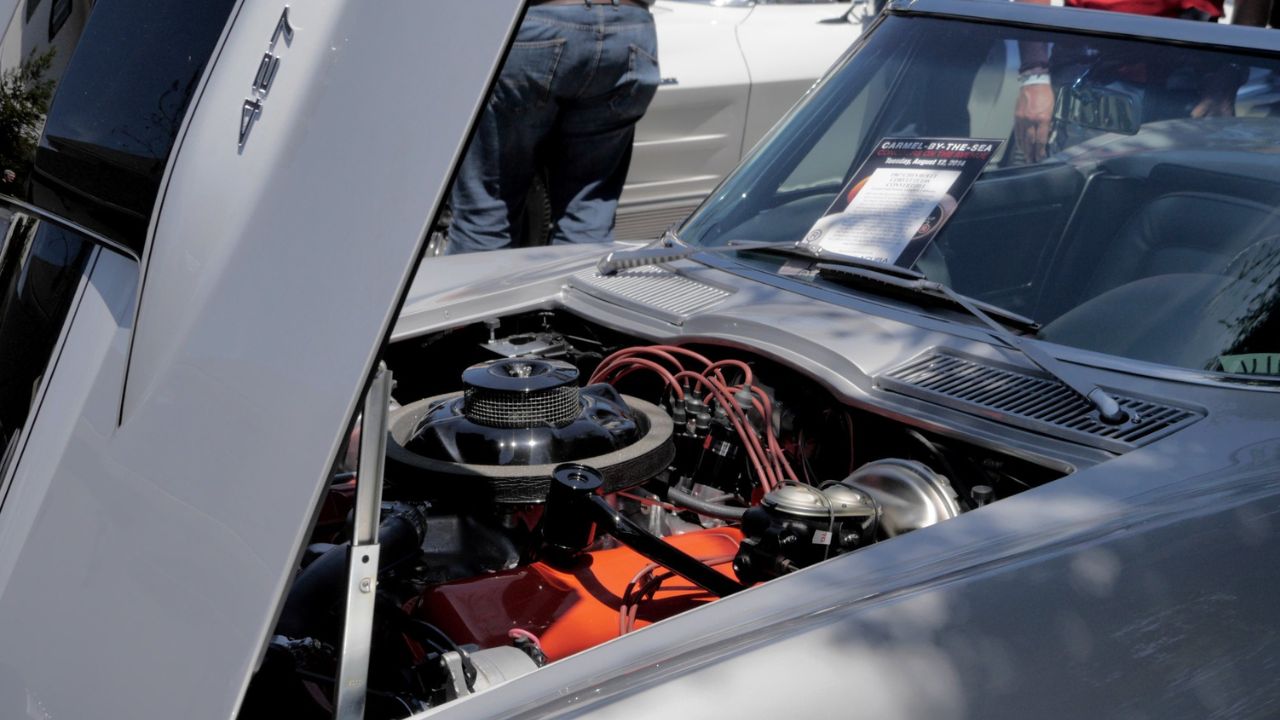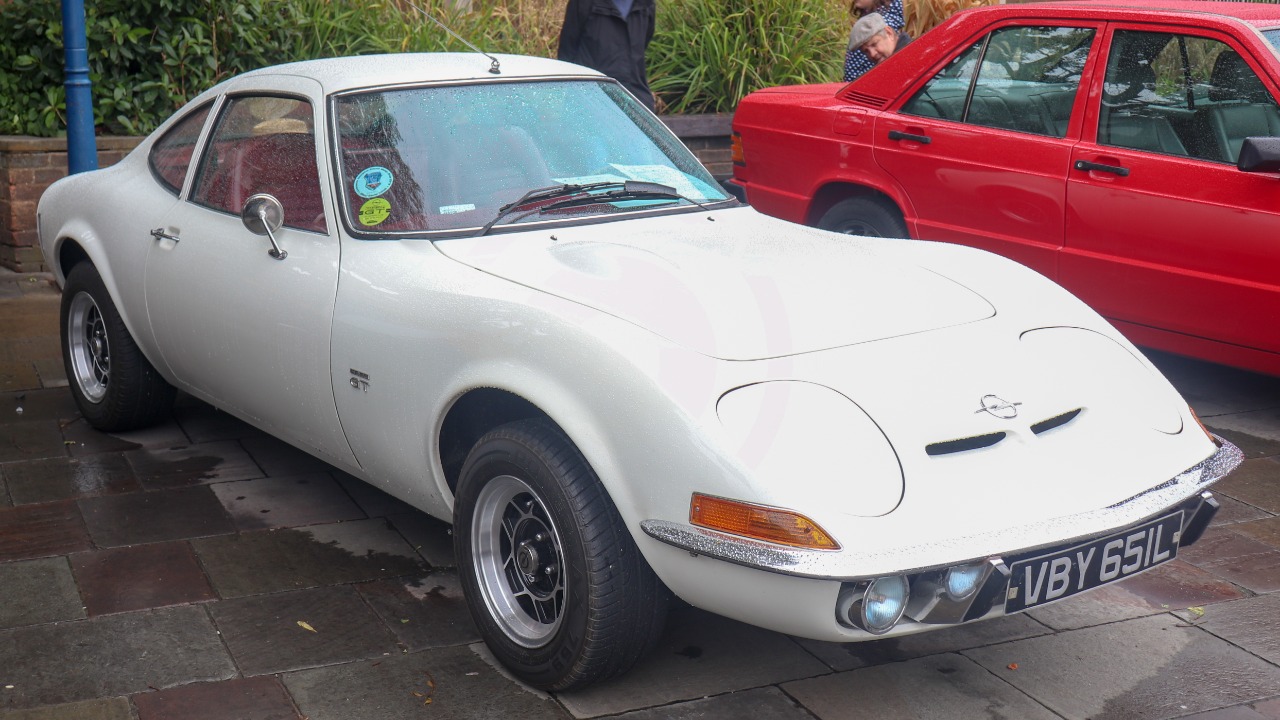
The 1969 Opel GT arrived as a compact German sports car that looked ready to park next to a Chevrolet Corvette without apologizing for its size or its badge. With dramatic curves, a long hood, and a cabin pushed over the rear axle, it delivered American-style theater in a package that fit European roads and budgets. I see that blend of familiar shape and different purpose as the key to why so many enthusiasts still call it Germany’s Corvette.
Shared DNA: How a German coupe ended up looking like a Corvette
When I look at the Opel GT in profile, the resemblance to a Corvette is impossible to ignore, but the story is more nuanced than simple imitation. It is widely believed that both the Opel GT and the C3 Corvette drew inspiration from the same earlier show car, which helps explain why their coke-bottle curves and sweeping fenders feel like cousins rather than copies, and why the Opel GT could be celebrated as a smaller, more economical take on that American silhouette without being dismissed as a knockoff, a point echoed in detailed histories of the Opel GT and the Corvette. The proportions tell the same story: a low nose, muscular rear haunches, and a cabin that seems to sit inside the rear wheels, all classic Corvette cues translated into a tidier footprint.
Designers inside Opel leaned into that visual drama, and they had the talent to back it up. Chuck Jordan worked at Opel on the project that would become the 1968 Opel GT, and his team shaped what was quickly nicknamed Europe’s “mini Corvette,” a label that captured both the styling kinship and the ambition to give European buyers their own glamorous sports coupe, as period accounts of Chuck Jordan at Opel make clear. By pairing that American-influenced shape with German build quality and compact dimensions, the company created a car that looked like it belonged on Route 66 but felt perfectly at home on the Autobahn.
Baby Corvette, European priorities

What really fascinates me is how the Opel GT took the Corvette idea and filtered it through European priorities of the late 1960s. The car was considered a small Corvette, often called a “Baby Corvette,” yet it was engineered around modest four-cylinder power and a focus on efficiency rather than brute force, a contrast that comes through in contemporary discussions of The Design of The Opel GT. Instead of a thundering V8, buyers got a smaller engine that still delivered respectable speed but kept fuel bills and taxes in check, which made the car feel like a rational indulgence rather than an all-out muscle machine.
The packaging was just as focused. The Opel GT was a two-seater without a conventional trunk, its tight cabin wrapped closely around driver and passenger in a way that emphasized style over practicality, and that choice underlined its role as a pure sports car rather than a family runabout, as enthusiasts who dissect the Opel GT history often point out. In that sense, it mirrored the Corvette’s willingness to sacrifice everyday utility for drama, yet it did so at a scale and price that made sense in European cities, which is exactly why the “Baby Corvette” nickname stuck so firmly.
GM’s German halo car
Under the skin, the Opel GT was not some boutique experiment but a carefully positioned product from a major industrial player. The car was a German sports model built under General Motors by Opel, and that corporate backing meant it could borrow proven mechanical components while still presenting itself as something exotic in showrooms, a balance that is highlighted in reviews that describe the Opel GT as German and under General Motors. By using familiar hardware underneath a dramatic body, Opel kept costs under control and reliability high, which helped the GT feel attainable in a way that many hand-built European exotics never were.
In Germany, the GT was treated as a halo car, a rolling billboard meant to draw attention to a full line of otherwise dowdy Opels, and that strategy worked so well that the model attracted both domestic buyers and a significant export audience, including 70,564 cars in the United States out of a total 103,463 units, figures that underline how In Germany the GT was a halo car. That dual identity, a German product with American corporate parents and a huge U.S. customer base, only deepened the Corvette comparison and helped cement the GT’s reputation as the transatlantic sports coupe that could speak both languages.
Europe’s answer to the American sports icon
From my perspective, the Opel GT’s lasting charm lies in how confidently it answered the question of what a European Corvette should be. Commentators have described it as Europe’s response to the Chevrolet Corvette, noting that the American original was a benchmark sports car in the 1960s and that the GT gave buyers on the other side of the Atlantic a similarly dramatic shape with a very different mechanical philosophy, a comparison that surfaces in analyses of How Europe Answered To The Chevrolet Corvette With The Opel GT. The styling of the Opel GT clearly took cues from the same design language that informed the C3 Corvette, yet the German car’s smaller engines and lighter weight made it more about agility and balance than straight-line fireworks.
That difference in character did not stop enthusiasts from embracing the Corvette comparison, it actually made the nickname feel more affectionate than accusatory. The Opel GT is often referred to as the baby Corvette due to its visual similarity to the third generation Corvette, and fans still celebrate how the car delivered big character in a compact package, a sentiment that comes through in video tributes that call the Opel GT the baby Corvette. By offering a sports car that looked ready for an American boulevard but behaved like a precise European coupe, Opel created a bridge between two automotive cultures at a time when cross-Atlantic influences were reshaping car design.
Why the nickname still fits today
Decades later, I find that the “Germany’s Corvette” label still fits the Opel GT because the car captured a moment when European makers were willing to be bold and theatrical. Enthusiast retrospectives describe how the Opel GT shocked the market when it debuted in the late 1960s, presenting a sleek, almost concept-car shape that stood out sharply from the sedans and wagons that filled most Opel showrooms, a reaction that is echoed in modern looks back at how the Opel GT made its debut. That sense of surprise is exactly what the Corvette had delivered in America, and the GT’s ability to provoke the same reaction in Europe is a big part of why the comparison has endured.
The nickname also survives because the car’s story has been kept alive by owners and historians who relish its quirks as much as its beauty. Detailed write-ups still refer to the 1968 Opel GT as Europe’s “mini Corvette,” and they credit designers like Chuck Jordan at Opel for giving the continent a sports coupe that could stand proudly next to a Corvette without pretending to be one, a legacy that is preserved in accounts of Europe and the Corvette link. When I see an Opel GT today, I do not just see a scaled-down American icon, I see a confident German interpretation of what a sports car should be, and that is why the “Germany’s Corvette” tag still feels like a compliment the car has earned.
More from Fast Lane Only: