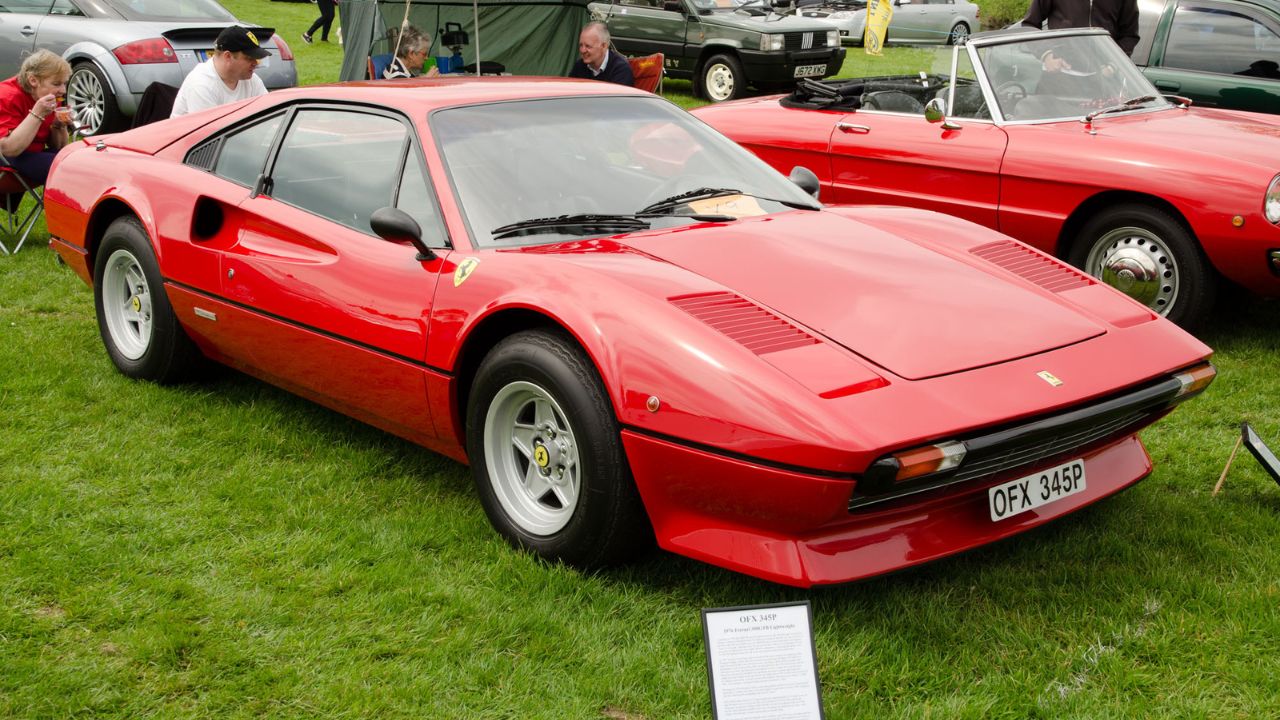
The 1975 Ferrari 308 GTB arrived at a moment when exotic cars were still temperamental toys, yet it managed to look like a poster and behave like a partner. It wrapped a race-bred V8 and sharp chassis in a shape that was easy to live with, from visibility to luggage space. When I look back at that first 308 GTB, I see a car that tried to reconcile beauty with everyday usability, and largely pulled it off.
The birth of a usable Ferrari icon
The original 308 GTB did not sneak into the world, it stepped onto the stage at the Paris and London shows as a clear statement of intent. Ferrari positioned the new GTB as the successor to the Dino 246 GT, but with a more mature identity and a stronger link to the main Ferrari range, and that context matters when we talk about practicality. The car was Built to a Pininfarina design by Scaglietti, and that partnership produced a body that was compact, low, and clean, yet still left room for a usable cabin and luggage space behind the engine bay.
Seen from today, the 308 GTB feels like the moment Ferrari realized a mid engine berlinetta could be both sculpture and transport. The company’s own history notes that the GTB made its debut at Paris and London, and that the first models used fibreglass coachwork to keep weight down, a choice that helped the car feel light on its feet rather than intimidating. When I think about usability, that low mass and compact footprint are as important as the styling, because they made the car less of a chore in traffic and on narrow streets, even while it looked every bit the classic Ferrari.
Design that served both drama and daily life
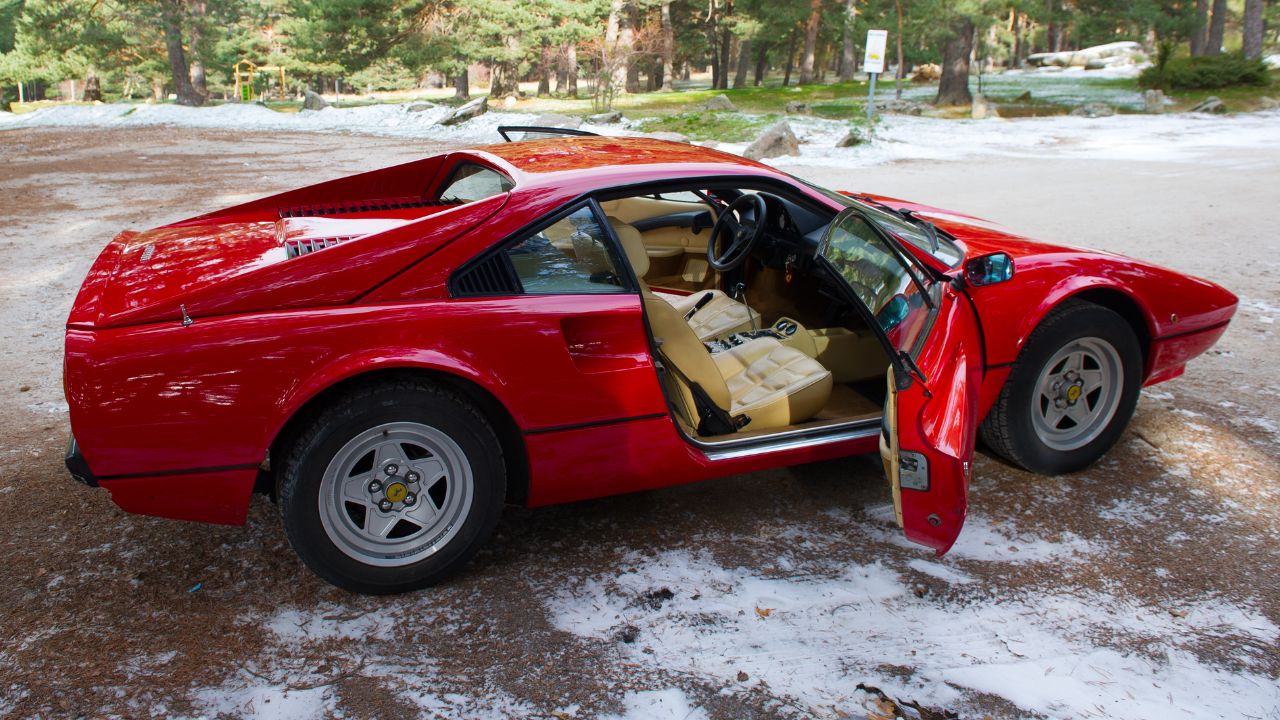
What strikes me about the 308 GTB is how its styling balances drama with clarity. The wedge profile, the deep side scoops, and the delicate nose are pure theatre, yet the glass area is generous and the pillars are slim, which gives the driver real visibility instead of a letterbox view. The official description of the Typerear, transverse, 90° V8 layout underlines how the mechanical package sat low and compact, and that allowed Pininfarina to keep the roofline sleek without crushing the occupants. In practice, that meant you could enjoy the look of a low slung berlinetta and still sit in a cabin that felt airy enough for a long drive.
Underneath, the 308 GTB relied on a tubular steel structure that was engineered to be both stiff and predictable. Period descriptions of the tube frame and limited slip differential make it clear that Ferrari wanted a chassis that could handle serious pace without punishing its driver. I find that combination of a visually delicate body and a robust structure central to the car’s appeal, because it meant the 308 GTB could be driven briskly on real roads, not just admired in a garage. The styling did its job on the posters, but the proportions and glasswork did just as much for the person behind the wheel.
Engineering the sweet spot between performance and comfort
Under the rear deck, the 308 GTB’s V8 was compact, high revving, and surprisingly civilized. The factory data describes a Bore of 81 x 71mm with Unitary and Total displacement figures that add up to a 2.9 litre engine, and that technical precision translated into a powerplant that loved to spin without feeling fragile. The same sheet lists the engine as a 2.9 L V8 with Engine Code F106 AB, and that combination of displacement and layout gave the car enough performance to feel special while still being tractable in traffic. I see that as a key part of the usability story, because a car that only comes alive at the redline is exhausting on a commute.
Contemporary enthusiasts often point out that the 308 GTB’s V8 could cover serious mileage without constant rebuilds, which is not something every seventies exotic could claim. One detailed look at the Ferrari GTB engine and performance highlights how the car’s V8 could deliver strong acceleration while remaining durable, and that reliability is a quiet form of practicality. When I imagine using a 308 GTB as a weekend car today, that balance of rev happy character and mechanical robustness is exactly what would let me enjoy it on both back roads and motorways without constantly worrying about the next major service.
From fibreglass pioneer to analog dream machine
The earliest 308 GTB examples, often called Vetroresina, are particularly revealing if you care about the balance between beauty and use. These cars combined the Pininfarina lines with a lightweight composite shell, and a detailed guide to the Model 1975 – 1977 Ferrari 308 GTB Vetroresina explains how the fibreglass body helped keep weight low. That reduction in mass did more than improve lap times, it made the steering lighter at parking speeds and the car more forgiving on bumpy roads, which again feeds into the idea of a Ferrari you could actually use. I find it telling that the factory later moved to steel, trading some lightness for easier repairs and production, another nod to real world ownership.
Over time, the 308 family has come to represent something broader in car culture. Enthusiast reflections on how the 308 became an analog dream machine often focus on the purity of its controls and the absence of electronic filters, but they also note that the car is approachable in size and temperament. When I read those accounts, I am reminded that usability is not just about luggage space or service intervals, it is also about how confident a car makes you feel on a narrow road. The 308 GTB’s relatively modest footprint and progressive handling are a big part of why it still feels inviting rather than intimidating.
Chassis, handling and the everyday driving experience
Under the skin, the 308 GTB’s chassis was carefully tuned to deliver both agility and stability. A detailed breakdown of the CHASSIS and Tipo F106 AB 100 structure notes that the wheelbase was shortened compared with earlier models, which sharpened turn in without making the car nervous. I see that shorter wheelbase, combined with the mid engine layout, as central to the 308’s reputation for nimble handling, because it allowed quick direction changes while still giving the driver time to react. The same sources highlight details like standard tinted glass and thoughtful cabin appointments, small touches that made the car more pleasant in daily use.
Performance data from track oriented sources reinforces the idea that the 308 GTB was not just pretty, it was effective. One analysis of The Ferrari 308 GTB lap times and weight points to a mass of just 2,778 lb, a figure that helps explain the car’s responsive feel. When I picture threading a 308 through a series of bends, that relatively low weight, combined with the limited slip differential and mid engine balance, suggests a car that communicates clearly rather than snapping without warning. For an owner who wanted to drive to a circuit, enjoy a few sessions, and then cruise home, that blend of feedback and forgiveness would have been invaluable.
From carburetors to injection, and why it still matters
The 308 story did not stop with the original carbureted GTB, and the later evolution helps underline how Ferrari kept chasing usability without losing character. By the time the 308 GTBi arrived, the move to fuel injection was framed as a way to improve drivability and emissions, and a modern driving impression of a 1980 Ferrari 308 GTBI makes clear that the injected cars still feel lively while being easier to start and smoother at low speeds. I see that transition from carbs to injection as another step in the same balancing act that began in 1975, a willingness to adopt new technology when it made the car more usable day to day.
Even so, the core layout and spirit remained consistent. A closer look at the ENGINEERING and PERFORMANCE beneath the Ferrari 308 highlights how the mid mounted 2.9-lite V8 and five speed gearbox were designed to work on both motorways and race tracks alike, a dual mission that goes straight to the heart of usability. When I connect that with modern commentary that features the 308 as a pivotal Ferrari, I am reminded that the car’s legacy is not just about style or sound, but about how it made the idea of owning and driving a mid engine Ferrari feel achievable for more people.
A legacy that still feels surprisingly practical
Half a century on, Ferrari itself now talks about the 308 GTB as a cornerstone of its V8 berlinetta lineage. Official retrospectives describe how it was Unveiled in 1975 as an icon of Ferrari’s V8 berlinettas, with bold Pininfarina design and a mid engine layout that set the template for decades to come. When I read that, I think not only of the car’s beauty but of the way it normalized the idea that a Ferrari could be driven regularly, parked in an ordinary garage, and used for more than occasional blasts. The fact that the same basic package later spawned targa topped GTS versions and evolved through GTBi and beyond shows how flexible and owner friendly the concept was.
Modern enthusiasts still celebrate the moment when The Ferrari 308 GTB debuted at the Paris Motor Show, often comparing it with the outgoing Dino and noting how it took over as Maranello’s premier mid engine model. Contemporary guides to the 308 and even social media posts that revisit the GTBi era keep circling back to the same idea, that this car combined a glamorous shape with a chassis and drivetrain you could actually live with. When I put all of that together, from the early fibreglass bodies to the later injected engines, I see the 1975 308 GTB as the moment Ferrari proved that beauty and usability did not have to be opposites, they could share the same key ring.