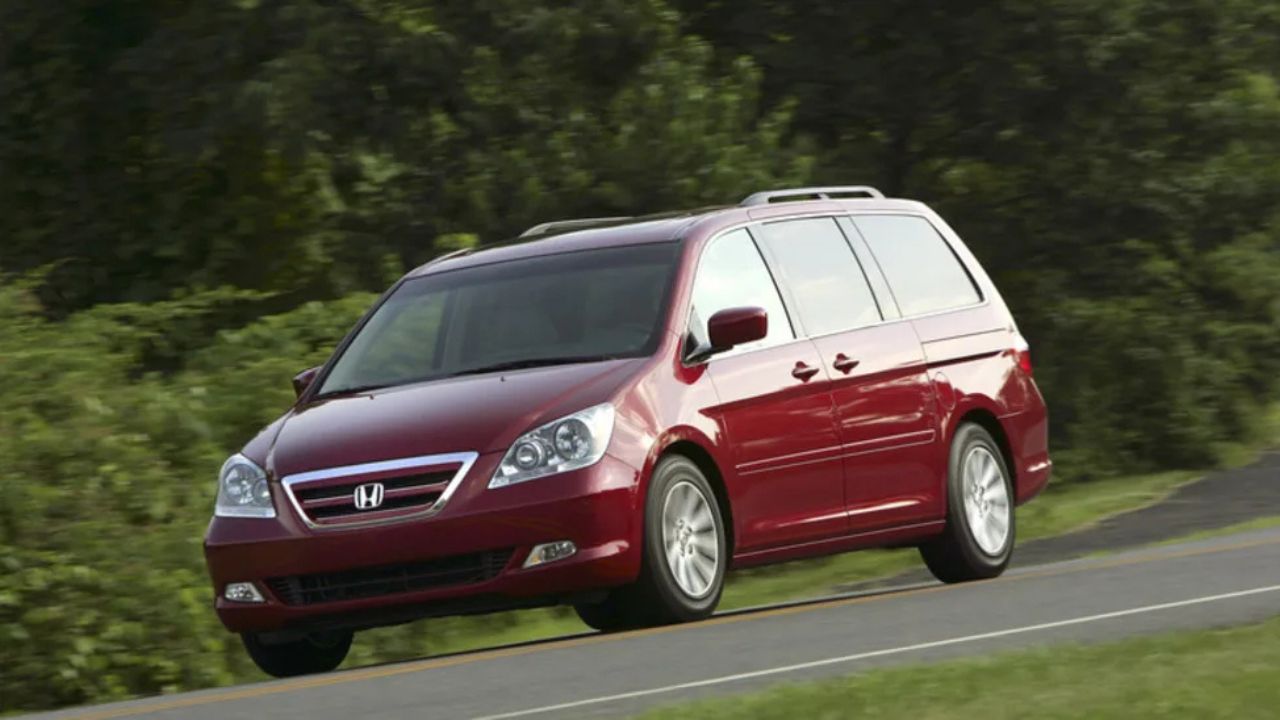
A quad-turbo Bugatti Veyron and a three-row Honda Odyssey seem to live on different planets, yet both once rolled on the same experimental tire architecture. The shared technology was not a styling flourish or a marketing gimmick, but an ambitious attempt to rethink how a car stays safely on the road when everything goes wrong.
That shared experiment, Michelin’s PAX run-flat system, promised supercar stability at 250 miles per hour and minivan security on a late-night family drive. Its rise and quiet retreat reveal a great deal about how tire innovation happens, why it often stumbles in public, and why the next radical idea may again debut on unlikely vehicles.
What happened
In the early 2000s, Michelin launched the PAX system, a run-flat concept that replaced the traditional tire-and-wheel pairing with a tightly integrated package. Instead of a conventional bead locking the tire to a standard rim, PAX used a unique wheel profile and an internal support ring that could carry the vehicle’s weight if air pressure dropped. The goal was to let drivers continue at reduced speed for dozens of miles after a puncture without losing control.
The system attracted two very different customers. At the extreme performance end, Bugatti used PAX on the Veyron, a 1,001 horsepower hypercar engineered for speeds above 250 miles per hour. At the family-hauler end, Honda fitted certain Odyssey minivans with PAX, pitching parents on the safety and convenience of not having to wrestle with a roadside tire change. As a result, a multi-million-dollar exotic and a mainstream people mover ended up sharing the same underlying tire architecture, even though the specific sizes and compounds were tailored to their roles.
On the Veyron, PAX tires were part of a larger safety envelope that had to manage extreme heat, lateral loads, and straight-line stress at more than triple typical highway speeds. They were designed to stay intact even after a loss of pressure at those conditions, supported by the internal ring and the specialized wheel design. On the Odyssey, the same structural concept was tuned for comfort, load-carrying capacity, and predictable behavior in day-to-day puncture scenarios such as nails or curb impacts.
In both cases, the PAX package required dedicated wheels, unique mounting equipment, and specific training for technicians. Owners could not simply visit any neighborhood shop for replacements or repairs. The system also replaced the traditional spare tire, since the run-flat capability was meant to remove the need for a jack and spare altogether. That decision saved space and weight, but it also committed owners to the PAX ecosystem for the life of the vehicle.
Over time, the practical costs of that commitment became clear. Replacement PAX tires were significantly more expensive than comparable conventional tires, and availability could be limited. Some owners reported long waits for replacements and struggled to find shops with the right tools and training. Eventually, Michelin wound down support for PAX, and automakers that had adopted the system shifted back to conventional wheels and tires or to other run-flat approaches. The Veyron moved on to more traditional high-performance tire solutions, and Honda abandoned PAX on later versions of the Odyssey.
The unusual pairing of Veyron and Odyssey on the same tire technology is documented in detail in coverage of the Michelin PAX system, which tracks how both vehicles relied on the same basic architecture to solve very different problems.
Why it matters
The shared tire tech between a Bugatti and a minivan shows how safety and performance engineering often converge. At 250 miles per hour, a tire failure can be catastrophic in a fraction of a second. At 70 miles per hour on a crowded highway, a blowout on a loaded minivan can be just as unforgiving. In both situations, engineers are trying to buy time and control for the driver after something has already gone wrong.
Run-flat systems like PAX address the same core risk: the sudden loss of air pressure that turns a tire from a structural component into a loose sleeve around a wheel. By building in an internal support structure and a wheel profile that keeps the tire in place, the system aims to preserve the car’s basic handling long enough to reach a safe stop or a service bay. For the Veyron, that meant stability at extreme speeds during testing and potential real-world failures. For the Odyssey, it meant letting a parent continue driving to a safe location instead of changing a tire on the shoulder with children in the back.
The fact that a family minivan and a hypercar shared this solution undercuts the idea that performance and safety live in separate categories. Much of what makes a Bugatti survivable at high speed, from tire construction to brake materials, has direct relevance to the family car that spends its life in school zones and on interstates. The PAX story is a clear example of how a single technology can be tuned to two very different missions while still relying on the same underlying physics.
Yet the retreat of PAX from the market highlights how technical brilliance can lose out to practical friction. The system demanded specialized wheels, unique mounting tools, and a supply chain that could deliver replacements on short notice. For owners, that translated into higher costs and fewer choices. For independent shops, it meant investing in equipment for a relatively small pool of vehicles. The safety benefits were real, but the everyday headaches were real as well.
This tension is a recurring theme in automotive technology. Engineers can design extremely capable systems, but adoption depends on how easily those systems fit into existing infrastructure. Conventional tires can be mounted almost anywhere, with a global network of suppliers and shops. Run-flat systems that require proprietary hardware must justify their complexity not just in the lab but in the lived experience of owners who might be hundreds of miles from a dealer.
The PAX episode also shaped how automakers think about risk and liability. By removing the spare tire and relying solely on run-flat capability, Honda and other adopters took on the responsibility that the system would work as advertised for the life of the vehicle. When replacement availability became patchy and owners faced long waits or high costs, frustration turned into reputational damage. That experience has made manufacturers more cautious about locking customers into single-vendor solutions that are hard to unwind later.
For tire companies, PAX is a case study in how far to push integration. The system blurred the line between tire and wheel, creating a package that could not be easily separated. That offered engineering advantages and tighter control over performance, but it also made the product harder to service and more vulnerable to any break in the support chain. Later run-flat approaches, and even modern airless tire concepts, have tried to balance integration with compatibility so that owners are not entirely dependent on a narrow ecosystem.
The shared technology between the Bugatti Veyron and the Honda Odyssey has another implication. It suggests that innovation does not always start at the top and trickle down, or start with mass-market cars and move up. Technologies can appear simultaneously in niche exotics and everyday vehicles when they solve a universal problem like tire failure. The choice of launch platforms often reflects marketing strategy as much as engineering logic. A hypercar validates the performance ceiling of a system, while a minivan proves its relevance to ordinary families.
Even though PAX itself faded, its legacy can be seen in how current tires are tested and marketed. High-performance tires now routinely advertise their behavior under low-pressure conditions, and mainstream run-flat options are more common on sedans and crossovers. The idea that a tire should give the driver a safe window after a puncture has become more accepted, even when the specific hardware differs from the PAX blueprint.
What to watch next
The story of PAX and the unlikely pairing of Bugatti and Honda points toward several trends that will shape the next generation of tire technology. One is the push toward airless or semi-airless designs. By removing air as the structural element, these concepts aim to eliminate blowouts entirely. Instead of an internal support ring inside a conventional-looking tire, airless designs use flexible spokes or lattice structures that carry the load. The goal is similar to PAX, a tire that keeps working after damage, but the architecture is more radical.
Another trend is the integration of sensors and data into tires. Where PAX focused on mechanical support after a failure, modern systems increasingly try to prevent that failure or at least warn the driver earlier. Embedded pressure and temperature sensors can alert drivers to slow leaks long before they become dangerous. Fleet operators already rely on continuous tire monitoring to reduce downtime and improve safety. As those systems become cheaper, they are likely to spread to more consumer vehicles, pairing digital awareness with whatever physical tire structure the car uses.
Electrification will also shape tire design. Electric vehicles place different demands on tires because of their weight, instant torque, and focus on efficiency. Run-flat capability, rolling resistance, and noise all interact differently on a battery-electric car than on a gasoline-powered minivan or hypercar. Lessons from PAX about balancing safety, comfort, and serviceability will inform how suppliers propose new solutions to automakers that want both efficiency and resilience.
For automakers, the PAX experience is a reminder to be careful about proprietary ecosystems. Future tire innovations that require special wheels or mounting equipment will face questions about long-term support. Manufacturers will need to show that owners will not be stranded without replacements a decade later or forced into expensive conversions. That concern is particularly acute for brands that sell high-volume family vehicles, where the customer base is less tolerant of specialized maintenance than buyers of limited-run exotics.
At the same time, high-end performance cars will continue to serve as testbeds for radical tire ideas. Hypercars and track-focused models offer small, controlled fleets where new materials and structures can be validated under extreme conditions. If those concepts prove durable and serviceable, they can migrate into broader segments. The PAX pairing of Veyron and Odyssey is an early example of that dynamic, even if the technology itself did not last.
Regulators and safety agencies will also influence what comes next. As crash investigations and data analysis reveal more about the role of tire failures in serious accidents, there may be pressure for stricter standards on how tires behave under low-pressure conditions. Requirements for minimum run-flat performance or for integrated pressure monitoring could push the market toward designs that treat post-puncture drivability as a baseline expectation rather than a premium option.
Finally, consumer expectations are shifting. Drivers who have grown used to roadside assistance apps and navigation that can route them to the nearest service center may value predictability over absolute self-sufficiency. A future tire solution that guarantees a safe, controlled limp to a shop, combined with clear digital guidance, might be more appealing than carrying a full-size spare. The PAX system aimed for that kind of assurance but ran into the limits of its era’s infrastructure.
More from Fast Lane Only