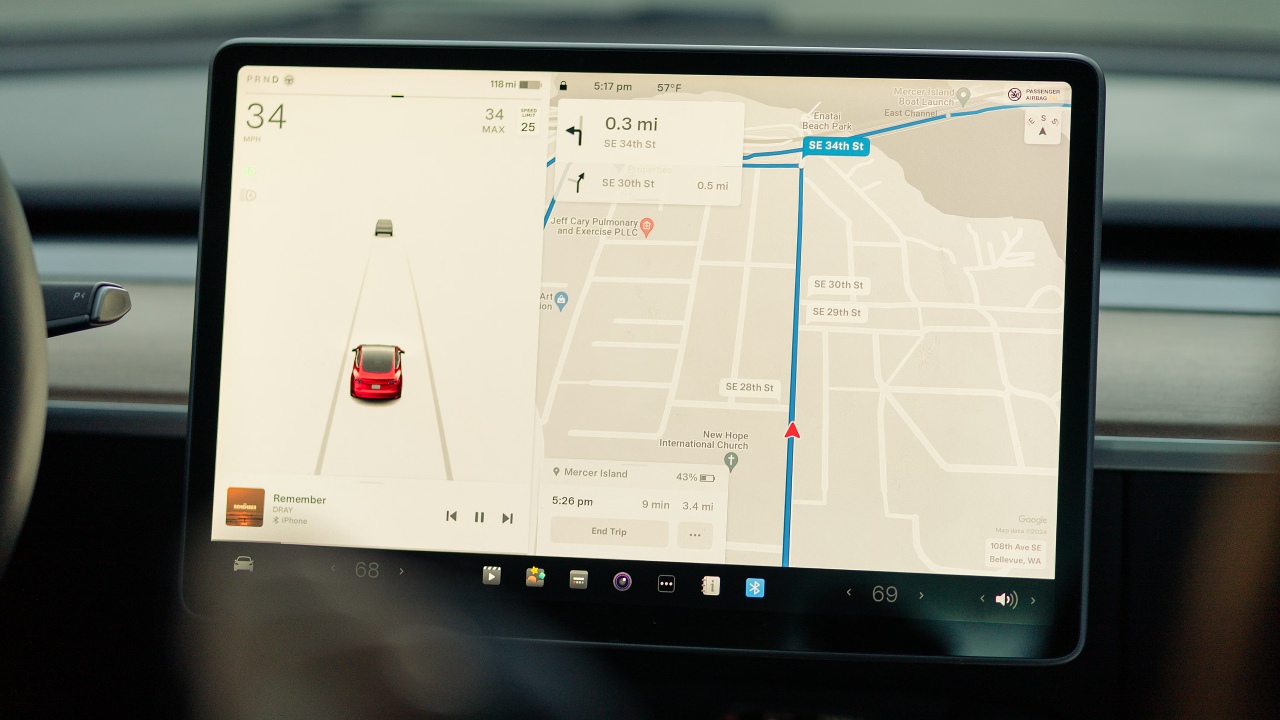
After years of chasing tablet-style dashboards, major carmakers are quietly reversing course. Physical buttons and knobs, once dismissed as old fashioned, are returning to center consoles and steering wheels as evidence mounts that flat glass is slowing drivers down and fraying their patience. The industry’s pivot reflects a simple reality: the touch interfaces that looked futuristic in the showroom often feel clumsy, distracting, and even hazardous on the road.
Automakers are not abandoning digital displays altogether, but they are rethinking how drivers should interact with them at 70 miles per hour. Safety researchers, regulators, and drivers themselves are converging on the same conclusion that tactile controls are easier to use without looking away from traffic. The result is a growing backlash against all screen, no button interiors and a renewed focus on ergonomics that prioritize human limits over minimalist aesthetics.
Safety data is turning against all screen dashboards
The central argument against sprawling touch interfaces is no longer about taste, it is about safety. Distracted driving has become a persistent factor in crashes, and The National Highway Traffic Safety Administration has tied a significant share of collisions and near misses to drivers taking their eyes off the road. Safety specialists warn that complex touch menus, layered icons, and gesture based controls demand more visual attention than traditional knobs and switches, especially when a driver is trying to adjust climate settings or navigation at speed.
Researchers who compare reaction times have found that interacting with in car screens can be slower than performing the same tasks on physical buttons, and in some tests even worse than driving while using a phone. Analyses of modern infotainment systems show that drivers often need multiple taps and swipes to complete simple actions, which lengthens the time their gaze is locked on the display instead of traffic. Legal commentators examining crash cases have echoed this concern, noting that unlike physical buttons, touch panels typically require drivers to look down and confirm their selection, particularly for basic functions like climate control or navigation, which increases the risk of error and delay.
Drivers are rebelling against menu mazes
Beyond the safety statistics, there is a groundswell of frustration from drivers who feel that their cars have become needlessly complicated. Owners of recent models complain about having to dig through layers of menus just to change fan speed or seat heating, a process that might be tolerable in a parked vehicle but becomes infuriating in traffic or bad weather. Online discussions are filled with anecdotes of drivers who miss the days when a single twist of a dial could change the temperature, instead of hunting for a small on screen slider that jumps around with every bump in the road.
Some of the sharpest criticism has focused on vehicles that removed nearly every physical control in favor of capacitive touch pads and flat panels. Drivers of certain electric models, for instance, have reported that even routine tasks like adjusting air conditioning require navigating multiple screens, which feels especially awkward when hands are cold or gloved. Others point to steering wheels that replaced conventional buttons with touch sensitive pads, only to discover that accidental brushes could trigger unwanted commands. These experiences have fueled a perception that designers prioritized a clean aesthetic over usability, leaving owners to wrestle with interfaces that seem optimized for a showroom demo rather than daily commuting.
Legacy brands are restoring buttons, knobs, and toggles
Faced with mounting complaints, established manufacturers are beginning to restore physical controls to their latest models. Several legacy automakers, including Volkswagen, have started reintroducing conventional buttons for core functions after experimenting with touch sensitive sliders and pads that proved unpopular. In some electric hatchbacks and crossovers, steering wheel touch pads that once controlled audio and driver assistance features are being replaced with more traditional switches, a tacit admission that the earlier design went too far in the direction of novelty.
Other brands are making similar adjustments in their cabins, often highlighting the change as a response to customer feedback. Porsche has been cited as an early mover in this shift, bringing back rows of buttons for key functions in its newer interiors while still retaining large central screens for navigation and media. Reports on upcoming models from multiple European and Asian manufacturers describe dashboards that blend digital displays with dedicated climate and volume controls, signaling that the industry is settling on a hybrid approach rather than a pure touchscreen future. Even enthusiast communities that once celebrated minimalist designs are now praising vehicles that keep physical controls for frequently used features, arguing that the mix of analog and digital feels both modern and humane.
Regulators and safety experts are tightening expectations
The market reaction is being reinforced by a changing regulatory climate. Euro NCAP, which influences vehicle safety standards across Europe, has introduced protocols that scrutinize how drivers operate in car systems and how much attention those systems demand. The new guidance emphasizes that critical functions should be operable with minimal visual distraction, a criterion that inherently favors tactile controls that can be located by feel. As these protocols feed into safety ratings, manufacturers have a direct incentive to design interfaces that keep eyes on the road rather than on a cascading series of icons.
Safety advocates and academic experts are also amplifying the message that interface design is not a cosmetic choice but a core safety feature. Human factors specialists who advise automakers stress that every additional second a driver spends navigating a menu is a second not spent monitoring traffic, pedestrians, or changing road conditions. In public discussions, researchers have underscored that capacitive surfaces and gesture controls may work well on a stationary smartphone, yet behave very differently in a moving vehicle where vibration, glare, and stress are constant. Podcasts and interviews with road safety experts, including voices such as Eric who has highlighted how some car manufacturers are returning to physical buttons so drivers can operate controls without diverting their gaze, are helping to translate these technical concerns into plain language for consumers and policymakers.
Cost, branding, and the search for a better balance
The touchscreen boom did not happen by accident. For automakers, large displays offered a way to differentiate cabins, centralize software updates, and, in some cases, reduce the number of individual parts by consolidating functions into a single panel. Flat glass also became a visual shorthand for modernity, aligning car interiors with smartphones and tablets that consumers use every day. Some companies still lean heavily into this aesthetic, betting that buyers will accept steeper learning curves in exchange for a sleek, high tech look.
Yet the economics are shifting as warranty claims, customer satisfaction scores, and safety ratings converge on the drawbacks of all digital dashboards. Studies referenced by industry analysts indicate that drivers are more distracted when more functions migrate to touchscreens, and that satisfaction improves when frequently used controls remain physical. Consumer surveys collected by organizations that track complaints show that Drivers are increasingly demanding physical controls for safety and usability reasons, pushing brands to reconsider earlier decisions to strip out buttons. As a result, the emerging consensus is not a return to the cluttered dashboards of the past, but a more deliberate mix: large screens for maps and media, paired with simple, well placed buttons and knobs for the tasks drivers perform every day.
More from Fast Lane Only