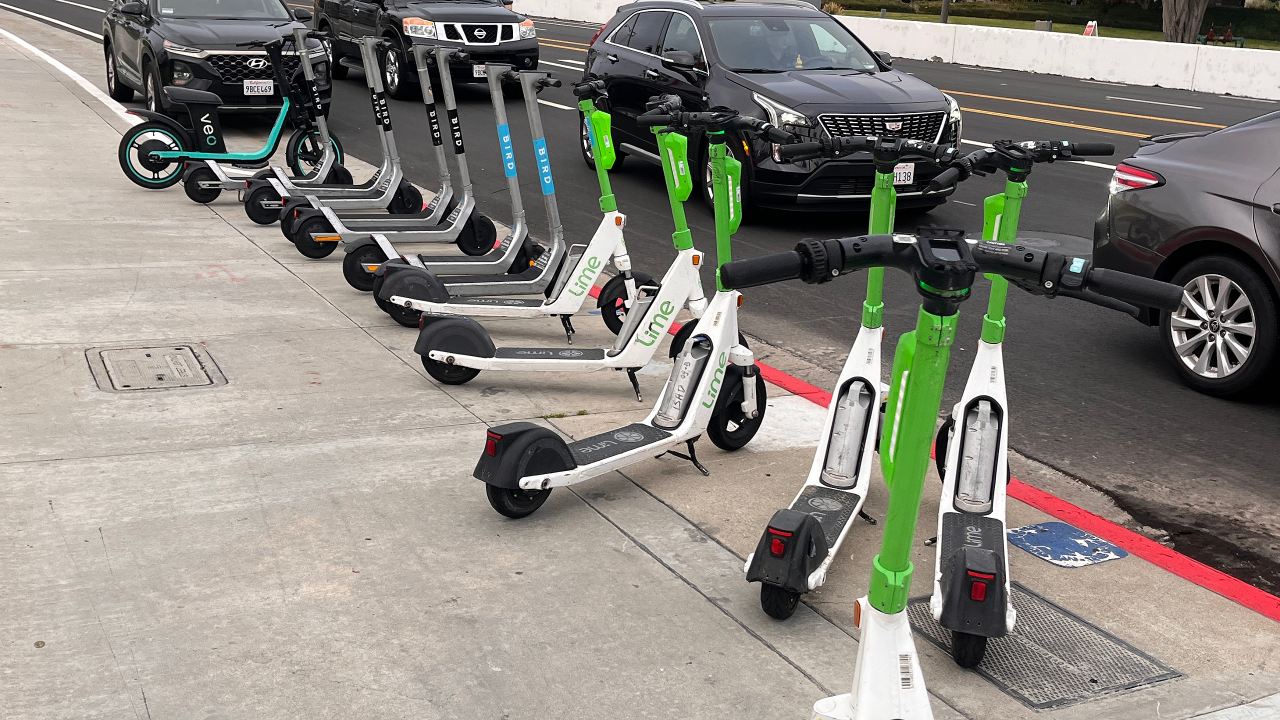
Police forces from England to Australia are no longer content to simply impound illegal electric bikes and scooters. Increasingly, they are sending them straight to industrial crushers, turning expensive machines into scrap metal in a matter of minutes. I see that shift not as a stunt, but as a deliberate attempt to reset the balance between the promise of micromobility and the mounting risks that come with a largely unregulated fleet of fast, silent machines.
From symbol of freedom to tool of intimidation
Electric bikes and scooters arrived as symbols of urban freedom, letting riders slip past traffic and cut commute times, but police say a growing slice of that fleet is now being used to menace communities. In parts of Australia, officers have described groups of teenagers on high powered e-bikes and scooters using their speed and agility to swarm roads, intimidate drivers, and vanish before patrol cars can respond. One recent operation there linked at least 25 children to such behaviour and led to the seizure of 36 “e-rideables”, a scale that helps explain why officers were filmed smashing confiscated bikes with a mechanical digger in front of cameras.
In the United Kingdom, frontline officers describe a similar pattern, with e-bikes and e-scooters used to weave through traffic, mount pavements, and cut across parks in ways that make traditional pursuit tactics almost pointless. A spokesperson from the Special Constabulary Roads Policing Team has called the presence of these machines on pavements and roads a “Significant public nuisance”, noting that riders exploit their compact size and instant torque to slip away from officers and leave pedestrians startled or injured. When I look at those accounts side by side, the logic of turning seized bikes into scrap becomes clearer: police are trying to remove not just individual offenders, but the very tools that make this style of offending so hard to police.
The legal grey zone that fuels the crackdown
Part of the problem is that the law has not kept pace with the technology, and that ambiguity has created fertile ground for abuse. In the United Kingdom, for example, an electric scooter is treated in law as a powered vehicle, technically a Personal Light Electric Vehicle, and Therefore is subject to the same broad framework as a car or motorbike. That means requirements for insurance, licensing, and roadworthiness that most casual riders simply do not meet. E-bikes sit in a different category, but once they are modified to exceed legal speed or power limits, they too slip into the realm of unregistered motor vehicles, even if they still look like ordinary bicycles.
Lawmakers and city officials are now trying to close those gaps with more targeted rules. In New York City, Local Law 42, described in council documents as key Legislation, prohibits the assembly or reconditioning of “second use” lithium ion batteries made with reused cells, a direct response to a wave of deadly fires linked to cheap, modified packs. Separately, a newer framework known as Safe Delivery Device Access, championed by Council Member Oswald J. Feliz, tries to balance the needs of delivery workers with stricter safety standards. When I map those developments against the crushing of seized bikes, I see a common thread: authorities are no longer treating micromobility as a novelty, but as a serious transport mode that must fit inside a clear legal box or be removed from the road entirely.
Why destruction, not storage, has become the preferred deterrent
Crushing a vehicle is a blunt instrument, and police know it. Yet forces in England and Wales are being handed explicit powers to do exactly that within days of a seizure when a bike, scooter, or car is linked to antisocial driving. Government guidance describes how new rules will let officers destroy vehicles used in this way within 48 hours, rather than leaving them in storage yards while cases drag on. Combined with existing traffic and public order laws, those powers are meant to send a clear message that reckless riding will not just earn a fine, it will cost the machine itself.
On the ground, officers argue that visible destruction is one of the few things that cuts through to riders who treat fines as a cost of doing business. In Hampshire, police have run operations where illegal e-scooters and e-bikes are seized and then publicly crushed, with officers noting that Several of the machines had been involved in road traffic collisions where riders were under the influence of drink or drugs. In a related initiative known as Operation Crush, Insp Andy Tester has described how e-scooters have become “really popular” with criminals, including those involved in drug gangs, precisely because they are quick, quiet, and hard to track. When I listen to those officers, I hear a consistent logic: if the vehicle is the enabler, then removing it quickly and irreversibly is the most efficient way to disrupt the pattern.
Public safety fears: from pavements to battery fires
Behind the tough rhetoric sits a set of very real safety concerns that go beyond annoyance at noisy teenagers. Roads policing teams in the United Kingdom have catalogued cases where e-bike riders blast along pavements, zip through parks, and cut around schools at speeds that leave pedestrians with no time to react. One officer in a recent video described how illegal e-bikes “zip up and down on the paths” and “through the parks” without regard for anyone else, painting a picture of near constant low level risk around playgrounds and bus stops. When those machines are also unregistered and uninsured, any collision can leave victims with life changing injuries and no straightforward route to compensation.
Safety concerns are not limited to the street. In dense cities, the lithium ion batteries that power e-bikes and scooters have become a fire hazard in their own right, particularly when riders rely on cheap, modified, or second hand packs. Local Law 42 in New York, which explicitly targets “second use” batteries, is a direct response to that threat, and the Local Law framework treats unsafe charging and storage as a citywide risk rather than a private choice. In that context, the decision to crush seized bikes instead of reselling them or returning them to the market takes on another dimension: it is not just about punishing riders, but about permanently removing potentially dangerous hardware from circulation.
The political push to “send a message”
As complaints about antisocial riding have mounted, politicians have begun to frame the issue in stark terms and to demand more dramatic enforcement. In the United Kingdom, one proposal that has gained traction is to require police to crush cars, e-bikes, and scooters used in persistent antisocial behaviour within a fixed window, often cited as 48 hours. Advocates argue that anything less simply allows offenders to treat seizures as temporary setbacks, retrieve their machines, and return to the same streets. In one widely shared call for tougher action, critics of the current regime described illegal e-bikes and scooters as fast, nimble, and often modified to exceed legal limits, used by individuals who have no regard for public safety, age restrictions, or insurance requirements, and insisted that They should lose their vehicles as a matter of course.
That political pressure is not confined to Westminster. In Australia, footage of officers smashing seized e-bikes and scooters has been framed as a necessary response to what police describe as organised groups of youths using their machines to evade arrest and intimidate drivers. One report on that operation highlighted that at least 25 children were involved and that 36 e-rideables were seized, with officers stressing that 202 complaints had been logged in the area, a figure they see as evidence of a community at breaking point. When I weigh those numbers against the civil liberties concerns raised by any policy that allows rapid destruction of private property, I am struck by how much of the debate now turns on symbolism: crushing a bike is as much about reassuring frustrated residents as it is about the immediate impact on crime.
More from Fast Lane Only