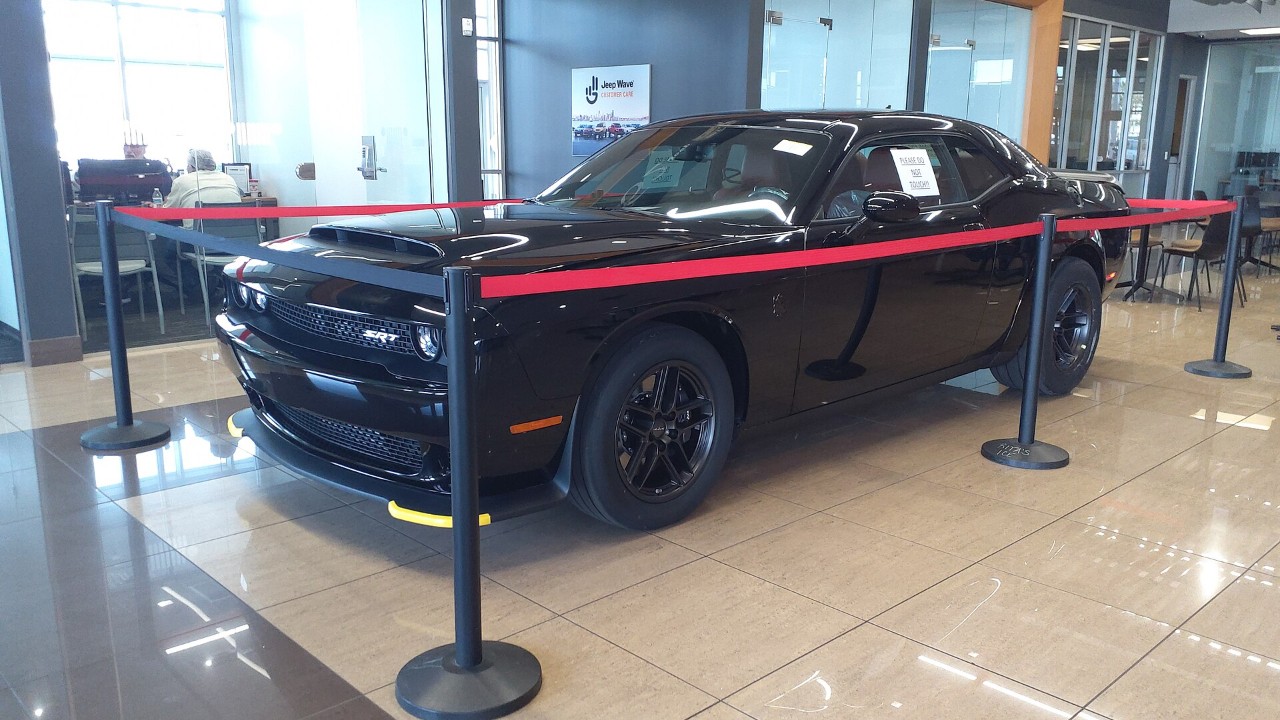
Ford’s newest flagship Mustang arrives with a familiar mission but a very different badge. Instead of reviving the Shelby GT500 name, the company has crowned its supercharged pony car the Mustang Dark Horse SC, signaling a shift in how Ford wants enthusiasts to think about its highest performance models. The decision reflects branding strategy, licensing realities, and a desire to connect this car to Ford’s broader racing push rather than to a single historic partner.
From Shelby icon to in-house hero
At a mechanical level, Ford has built a car that clearly follows the template of the last Shelby GT500, yet it has chosen to present it as an evolution of the existing Dark Horse rather than a continuation of the Shelby line. Reporting on the 2026 Ford Mustang Dark Horse SC notes that the car uses a supercharged 5.2‑liter V‑8, not a simple blower on the standard Dark Horse’s 5.0‑liter engine, which places it squarely in GT500 territory in layout and intent. The supercharged configuration, the focus on track capability, and the positioning at the top of the Mustang range all echo the previous generation halo car, which is why several reviewers describe the Dark Horse SC as a true successor to that model rather than a mere trim level.
Yet Ford has deliberately stepped away from the Shelby badge. One explanation that surfaces in enthusiast discussions is straightforward: Ford is no longer licensing the GT500 name from Shelby, while Shelby American has moved to offer an 830 horsepower GT500 of its own, a GT fitted with a Ford Performance catalog engine and priced at about 175,000 dollars. In that context, keeping the Shelby GT500 label on a factory Ford would blur the line between the manufacturer’s product and Shelby’s separate, higher priced car. Commenters such as Chris Durham also point out that Shelby American currently controls names like Cobra, while Ford still retains heritage labels such as Boss, underscoring how fragmented the performance branding landscape has become.
A new performance hierarchy inside Ford
Ford’s choice of Dark Horse SC is not only about what it cannot call the car, but also about what it wants its performance ladder to look like. When Ford introduced the Dark Horse nameplate, it described the move as a wholesale reintroduction of its racing brand and a signal of a new way of thinking about track‑focused Mustangs. The Dark Horse was framed as a bridge between the mainstream Mustang GT and more extreme, competition‑leaning variants, with the Dark Horse SC now extending that logic upward rather than branching off into a separate Shelby family. By keeping the name within the Dark Horse line, Ford can build a coherent hierarchy that runs from the standard Ford Mustang Dark Horse to the more extreme supercharged version without ceding top billing to an outside partner.
That strategy is reinforced by how closely the Dark Horse SC is tied to other Ford performance projects. The company has explicitly linked development of the car to the GTD program, noting that by working with the GTD team it was able to adopt Brembo carbon‑ceramic brakes and Michelin Pilot Sport Cup2 R tires for the Mustang Dark Horse SC. Those components, along with weight savings from the Track Package, place the car in a continuum with Ford’s most serious track machinery rather than in a separate Shelby silo. In effect, Ford is using the Dark Horse SC to say that the most advanced race‑bred engineering now lives under its own performance umbrella, not only under the Shelby banner.
Why “Dark Horse SC” speaks to modern Mustang buyers
From a branding perspective, the Dark Horse SC name lets Ford speak directly to contemporary enthusiasts while still nodding to tradition. The “SC” suffix is intentionally literal, standing for “supercharged” and signaling to buyers that this is the forced‑induction step above the naturally aspirated Dark Horse. Coverage of the car emphasizes that Ford did not simply bolt a supercharger onto the existing 5.0‑liter V‑8, but instead created a distinct 5.2‑liter supercharged engine, which justifies giving the car its own clear designation. By pairing that technical clarity with the relatively new Dark Horse label, Ford can market the car as a fresh chapter rather than a retro callback.
The Dark Horse identity also resonates with how Ford wants owners to use the car. Commentators describe the current Ford Mustang Dark Horse as the most powerful, most aggressive and most track‑ready Mustang short of the new supercharged model, and the SC version builds on that reputation. Track‑oriented hardware, the ability to deactivate the stability control system, and the adoption of GTD‑inspired components all reinforce the idea that this is a driver’s car first, a collectible badge second. In that light, the Dark Horse SC name feels less like a museum piece and more like a signal that the car is meant to be driven hard, which aligns with the expectations of buyers who have watched Ford expand its performance catalog through programs like Ford Performance and GTD.
The evolving Ford and Shelby relationship
None of this diminishes the historical weight of the Ford and Shelby partnership, which has produced some of the most celebrated racing and road cars in Mustang history. However, present‑day reporting makes clear that the relationship has changed. Ford is not currently licensing the GT500 name from Shelby, and Shelby American is pursuing its own high‑end GT500 project, separate from Ford’s factory lineup. That reality means that any new Mustang wearing a Shelby GT500 badge would have to navigate complex licensing and brand positioning questions, especially with Shelby offering an 830 horsepower GT500 based on a GT and a Ford Performance catalog engine.
In that environment, Ford’s decision to keep the Shelby name off its latest flagship Mustang reads as a pragmatic move to avoid confusion and protect both brands. By allowing Shelby American to develop its own GT500 while Ford focuses on the Dark Horse SC, each party can target a different slice of the enthusiast market without overlapping too closely. The Dark Horse SC can be presented as the pinnacle of Ford’s in‑house engineering, while Shelby’s GT500 can occupy a more bespoke, limited‑production niche. For buyers, the separation clarifies what they are getting: a factory Ford Mustang Dark Horse SC that is a true successor to the previous GT500 in spirit and hardware, and a distinct Shelby product that stands on its own terms.
What the name choice signals about Ford’s future
Looking ahead, the Dark Horse SC badge hints at how Ford intends to structure its performance portfolio in the coming years. By anchoring its top Mustang in the Dark Horse family and tying it closely to the GTD program, Ford is effectively saying that its most advanced track technology will be developed and marketed under its own performance brands. The adoption of Brembo carbon‑ceramic brakes, Michelin Pilot Sport Cup2 R tires, and weight‑reduction strategies from the Track Package shows how lessons from one halo project can cascade into another when they share a common identity. That approach is easier to sustain when Ford controls the nameplate outright, rather than negotiating each step through a licensing arrangement.
For enthusiasts, the result is a car that carries the spirit of the Shelby GT500 without the exact lettering on the decklid. The supercharged 5.2‑liter V‑8, the focus on track readiness, and the clear positioning at the top of the Mustang range all echo the outgoing GT500, yet the Dark Horse SC name places the emphasis on Ford’s own racing brand and its collaboration with programs like GTD. In my view, that is the core of why Ford chose Dark Horse SC over Shelby GT500: it allows the company to honor its past while building a flexible, internally controlled performance hierarchy that can evolve with future Mustangs, whether they are powered by supercharged V‑8s, hybrid systems, or technologies that are still on the drawing board.
More from Fast Lane Only