Automakers are racing to deploy Level 3 automated driving, promising hands-off relief in traffic while insisting that drivers remain the ultimate backstop. That gray zone between human and machine is exactly where past safety crises have taken root, and the next large-scale recall is likely to emerge from the same fault line. As companies push systems that can drive themselves some of the time, I see the risk shifting from isolated software bugs to systemic misunderstandings about who is actually in control.
The fragile promise of “conditional” autonomy
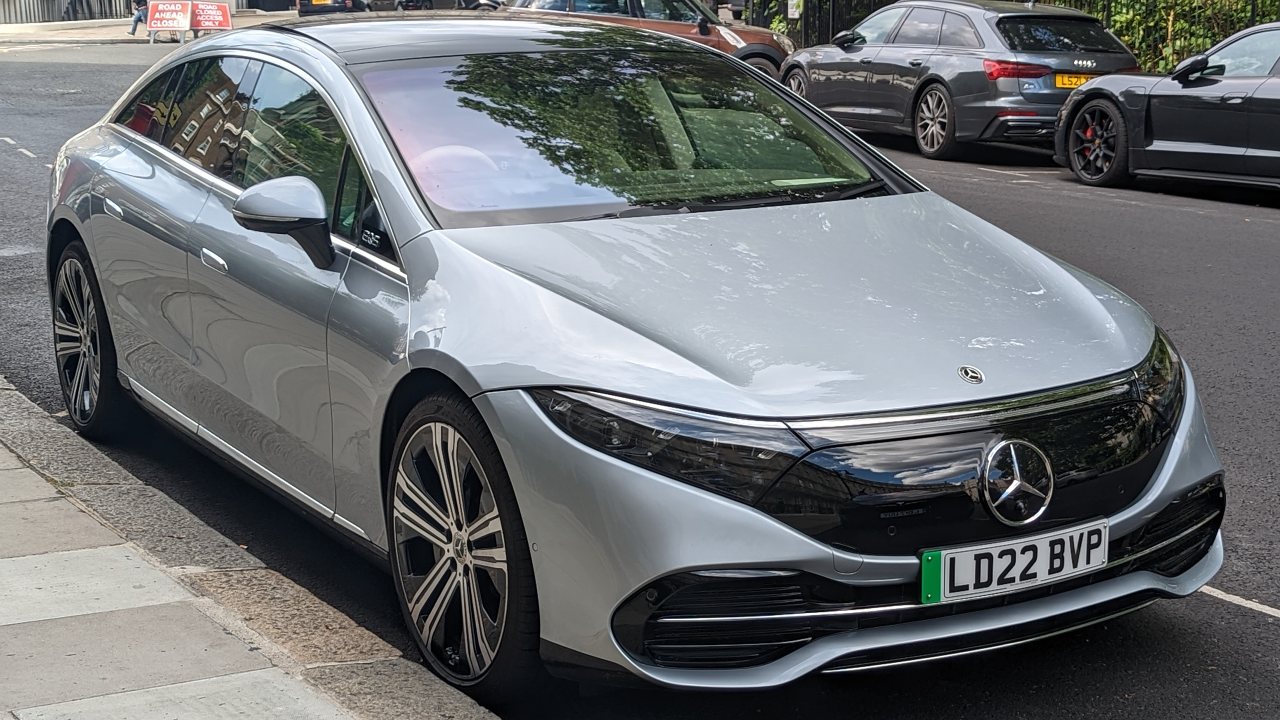
Level 3 systems are marketed as a breakthrough because they can handle the full driving task in specific conditions, yet still expect the human to jump back in when the software reaches its limits. That conditional handoff is not just a technical challenge, it is a behavioral trap, because drivers quickly treat automation that works most of the time as something they can trust all of the time. Reporting on early deployments of Level 3 features in premium sedans shows that manufacturers are already threading a narrow regulatory needle, describing the car as capable of automated driving on certain highways while still insisting that the driver is legally responsible for what happens on the road, a tension that sets the stage for confusion when something goes wrong.
That ambiguity is not theoretical. In filings with regulators, companies have had to spell out exactly when their Level 3 systems can be used, which speeds are allowed, and how quickly the driver must respond to a takeover request, underscoring how narrow the safe operating window really is. Yet the marketing pitch often emphasizes comfort and convenience, highlighting the ability to watch in-dash entertainment or take hands off the wheel in traffic jams. When the public hears that a car can “drive itself” on a freeway, the nuance of “only in these exact conditions and only until the system asks you to resume control” tends to get lost, which is precisely how a design meant to reduce crashes can instead set up the next wave of high-profile failures and recalls.
Human drivers are the weakest link in the Level 3 chain
Every major investigation into advanced driver assistance has reinforced the same pattern: as automation improves, humans relax, disengage, and overestimate what the system can do. Federal safety probes into Level 2 systems such as Tesla Autopilot and General Motors Super Cruise have documented drivers who looked away from the road, used their phones, or even left the driver seat while the car handled steering and speed, despite clear instructions that they must remain attentive.[3] Level 3 raises the stakes by explicitly telling drivers they can stop monitoring the road in certain scenarios, then expecting them to snap back into full control when the software encounters a situation it cannot parse.
Regulators have already warned that this “out of the loop” problem can slow reaction times and degrade situational awareness, especially when the car has been driving smoothly for long stretches.[4] In practice, that means a Level 3 system might hand control back to a driver who has not been actively scanning mirrors, tracking nearby vehicles, or anticipating hazards, yet is suddenly responsible for avoiding a collision in a fraction of a second. When that handoff fails, the legal paperwork will say the human was in charge, but the design reality will point to a foreseeable mismatch between human attention and machine expectations, a mismatch that can trigger both lawsuits and sweeping recalls.
Regulators are already stretched by lower-level automation
Even before Level 3 arrives at scale, safety agencies are struggling to keep up with the complexity of partially automated systems. The National Highway Traffic Safety Administration has opened defect investigations into hundreds of thousands of vehicles equipped with advanced driver assistance, including probes into crashes where software failed to recognize stationary emergency vehicles or misjudged cross traffic. These cases involve Level 2 technology that still requires continuous driver supervision, yet they have already produced large recalls and over-the-air software fixes that took months to design and validate.
Layering Level 3 on top of that backlog risks overwhelming the investigative and testing capacity of regulators who must now assess not only whether the software behaved correctly, but also whether the human-machine interface gave drivers a fair chance to intervene. Recent enforcement actions have shown that agencies are willing to treat confusing or misleading driver monitoring as a safety defect in its own right, not just a user error.[6] If Level 2 systems can trigger multi-million vehicle recalls over interface design, Level 3’s more complex promises and handoff logic are almost certain to invite even broader corrective actions once real-world crash data accumulates.
Liability, branding, and the recall incentive
Automakers are trying to thread a legal needle with Level 3, claiming technical responsibility for the driving task in narrow conditions while still shielding themselves from open-ended liability. Some companies have publicly stated that they will accept fault when their Level 3 system is engaged and operating within its defined envelope, a stance that helps reassure regulators but also raises the financial stakes if a defect is later uncovered. Once a manufacturer has promised to stand behind the system’s decisions, any pattern of crashes linked to software behavior or unclear handoff cues becomes a powerful incentive to initiate a recall rather than fight each case individually in court.
Branding choices can compound that risk. Names that imply full autonomy, even when the system is technically limited, have already drawn scrutiny from regulators who argue that such labels encourage misuse.If a Level 3 feature is marketed as a “driverless” or “self-driving” mode, plaintiffs’ attorneys will point to that language whenever a crash occurs while the system is active, arguing that consumers reasonably believed the car could handle more than it actually can. Faced with that kind of reputational and legal exposure, companies may find that broad recalls and software downgrades are the least damaging option, even if the underlying defect is subtle or rare.
Complex software, opaque data, and the recall trigger
Modern automated driving stacks are sprawling software systems that blend camera feeds, radar, lidar, high-definition maps, and machine learning models trained on millions of miles of data. That complexity makes it difficult for both manufacturers and regulators to pinpoint exactly why a particular crash occurred, or to prove that a fix fully resolves the issue without introducing new edge cases. Investigations into previous automated and semi-automated systems have already shown how hard it is to reconstruct the precise sequence of sensor readings, classification decisions, and control commands that led to a collision, especially when proprietary logs and algorithms are involved.
Level 3 deployments will add another layer of opacity because the system must decide not only how to steer and brake, but also when to hand control back to the human and how aggressively to demand attention. If post-crash data shows that a driver failed to respond to a takeover request, regulators will want to know whether the alert was prominent enough, whether it came with sufficient lead time, and whether the system had previously lulled the driver into complacency by handling similar situations without issue. Each of those questions can expose design flaws that are hard to patch quietly. Once a pattern emerges across multiple incidents, the pressure to issue a recall and push updated software to every affected vehicle becomes difficult to resist, particularly when the alternative is leaving millions of cars on the road with a known but poorly understood failure mode.
Why the next big recall is likely to be Level 3
When I look across the current landscape, the ingredients for a large-scale Level 3 recall are already in place: ambitious marketing, ambiguous responsibility, overstretched regulators, and software whose behavior is difficult to fully verify before it reaches public roads. Early adopters are rolling out Level 3 features in limited geographies and traffic scenarios, but history suggests that once the technology is available, competitive pressure will push companies to expand its use cases quickly. Each expansion, from higher speeds to more complex roads, increases the chance that a previously unseen edge case will surface in the wild, potentially in a way that affects every vehicle running a particular software version.
Recalls are not inevitable, and robust design, conservative deployment, and transparent data sharing can mitigate many of these risks. But the structure of Level 3 itself, with its promise of true automated driving in some situations and its reliance on a human safety net in others, creates a fragile dependency on perfect coordination between person and machine. As more drivers experience that handoff in real traffic, any systematic weakness in how the system communicates its limits or manages edge cases will scale across entire fleets. At that point, a recall is not just a regulatory tool, it is the only practical way to realign expectations, update software, and restore a measure of trust in a technology that was supposed to make driving safer, not more uncertain.
More from Fast Lane Only: