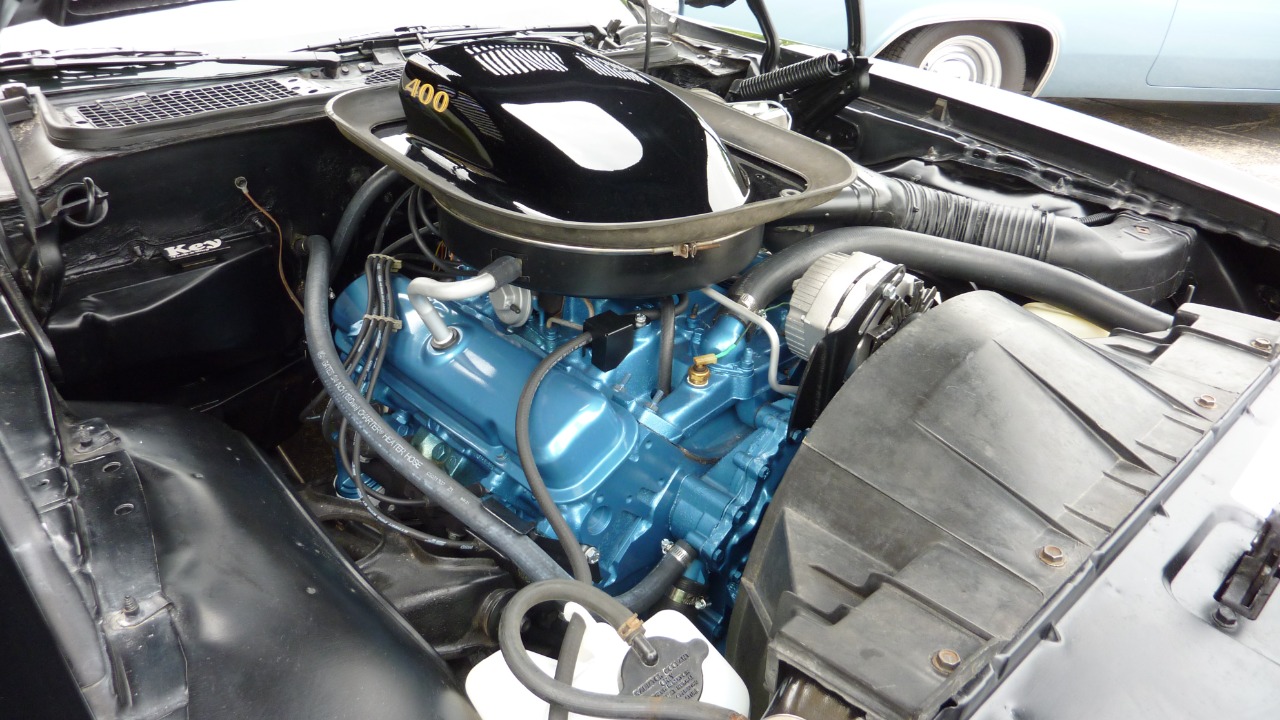
The Pontiac 400 engine, a powerhouse of the muscle car era, almost never saw the light of day due to a series of engineering challenges, corporate decisions, and market forces. The story of this iconic engine is not only about its technical specifications and performance but also about the myriad factors that could have kept it from ever hitting the assembly line. From internal struggles within General Motors to shifting consumer preferences, the Pontiac 400’s journey to production is a fascinating chapter in automotive history.
The Birth of the Pontiac 400 Engine
In the 1960s, Pontiac was at the forefront of American automotive innovation, focusing on developing powerful V8 engines that would define the muscle car era. The Pontiac 400 was conceived as a response to the growing demand for high-performance vehicles that could deliver both speed and excitement. The engineering team, led by visionaries such as John DeLorean and Russell Gee, aimed to create an engine that could compete with the likes of Ford’s 427 and Chevrolet’s 396 engines.
The initial goals for the Pontiac 400 were ambitious. Engineers focused on achieving a displacement of 400 cubic inches, which would allow for an impressive power output. The design team worked to incorporate advanced features, such as a new intake manifold and improved cylinder head designs, aiming to deliver upwards of 360 horsepower. Their vision was clear: the Pontiac 400 would be a force to be reckoned with on the streets and at the racetracks.
Engineering Challenges and Setbacks
As the Pontiac 400 moved from conceptualization to the prototype phase, a series of technical challenges emerged that threatened to derail the project. One of the primary issues was achieving the desired horsepower and torque without compromising reliability. Initial tests revealed that while the engine could produce impressive numbers, it was prone to overheating and did not perform consistently under stress.
Manufacturing constraints also played a significant role in the development timeline. Pontiac’s facilities were not equipped to handle the production of the new engine without significant upgrades. These upgrades required time and resources, leading to delays that caused frustration among the engineering team. The pressure from upper management to meet production deadlines added further tension, creating an environment where innovation could easily be stifled.
Corporate Dynamics and Decision-Making
The relationship between Pontiac and General Motors during the development of the 400 engine was complex. General Motors, as the parent company, wielded considerable influence over production decisions, often prioritizing models and engines that aligned with broader corporate strategies. Pontiac’s management faced the challenge of convincing GM executives that the 400 engine was essential for the division’s success.
Internal conflicts arose as Pontiac engineers advocated for the unique characteristics of the 400, while corporate management leaned towards more conservative approaches. Economic pressures in the late 1960s, including rising fuel prices and changing consumer preferences, further complicated the decision-making process. The muscle car market faced uncertainty, leading executives to question whether investing in the Pontiac 400 was a wise move.
Market Forces and Consumer Demand
The late 1960s and early 1970s saw a dynamic and rapidly changing automotive landscape. The muscle car market was booming, but consumer preferences were beginning to shift as concerns over fuel efficiency and emissions regulation started to take hold. The Pontiac 400 was initially designed to cater to a demographic that craved speed and power, but as the market evolved, the demand for high-performance engines began to wane.
Competition was fierce during this period, with manufacturers like Ford and Chevrolet constantly pushing the envelope in terms of performance. The success of models like the Ford Mustang and Chevrolet Camaro put pressure on Pontiac to deliver a competitive product. The 400 engine’s development coincided with this competitive climate, making it crucial for Pontiac to not only complete the engine but also market it effectively to stand out from the crowd.
Legacy and Impact of the Pontiac 400
The Pontiac 400’s legacy is rooted in its cultural significance within the muscle car community. Enthusiasts remember the engine for its raw power and distinctive sound, often associating it with the iconic Pontiac GTO and the Firebird. Its reputation as a high-performance engine has endured, influencing the design and engineering of subsequent Pontiac models and other American muscle cars.
Despite the challenges it faced, the Pontiac 400 ultimately made it to production and became a cornerstone of Pontiac’s identity. The near-failure of the engine taught valuable lessons about innovation, risk-taking, and the importance of aligning engineering goals with market realities. Future engine designs from Pontiac and other manufacturers would be shaped by the experiences gained during the development of the 400.
A Glimpse into What Could Have Been
Had the Pontiac 400 not reached production, the automotive landscape of the 1970s and beyond could have looked vastly different. The absence of such a powerful engine might have stunted the growth of the muscle car segment, leading to less competition and innovation in performance vehicles. Other manufacturers may not have felt the same pressure to push the limits of engineering if Pontiac had faltered.
Reflecting on the importance of innovation and risk-taking in the automotive industry, the story of the Pontiac 400 serves as a reminder that success is often born from overcoming obstacles. The perseverance of Pontiac’s engineers and management ultimately resulted in an engine that not only met performance expectations but also became a symbol of American muscle. The Pontiac 400’s enduring legacy continues to inspire automotive enthusiasts and engineers alike, proving that sometimes, the road to success is paved with challenges.
More from Fast Lane Only
- Unboxing the WWII Jeep in a Crate
- 15 rare Chevys collectors are quietly buying
- 10 underrated V8s still worth hunting down
- Police notice this before you even roll window down
*Research for this article included AI assistance, with all final content reviewed by human editors.