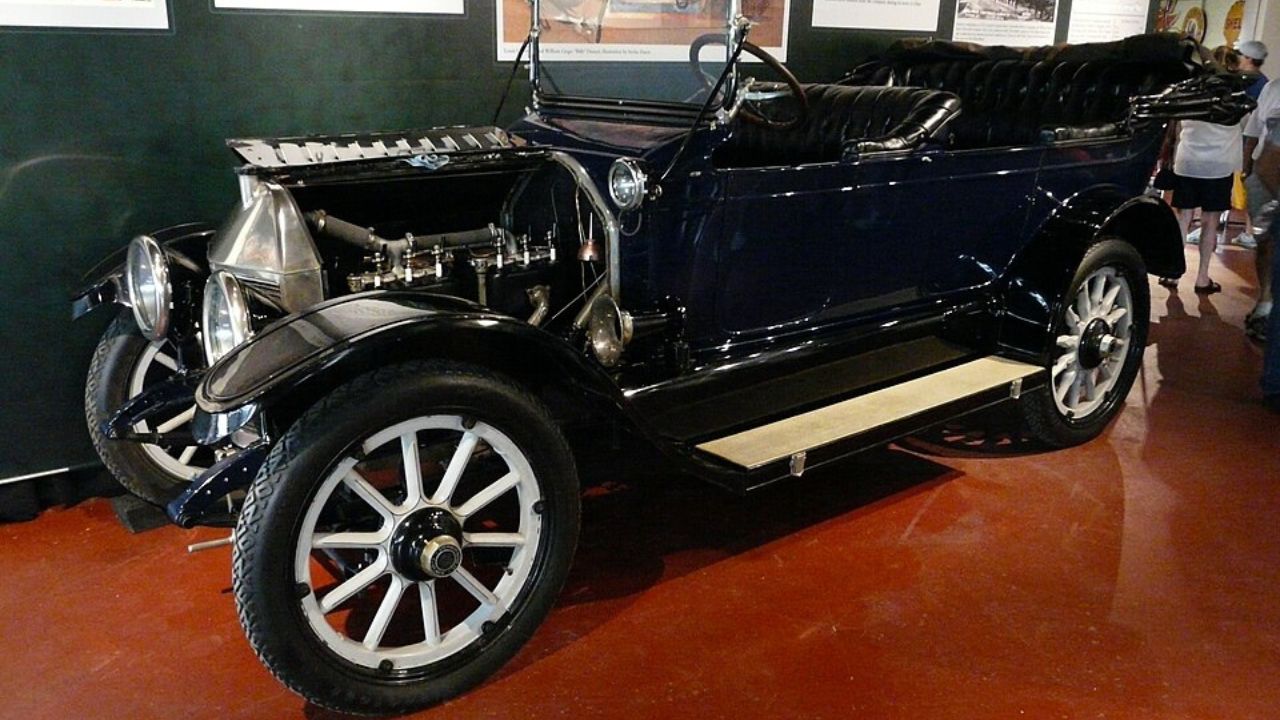
The 1911 Chevrolet Series C Classic Six did not appear out of thin air as a quaint brass-era curiosity. It was conceived as a statement car, an answer to a rapidly consolidating American auto market and a direct challenge to the idea that the only car worth building was a cheap, utilitarian box on wheels. To understand why it was built at all is to see how Chevrolet set itself up to become a mass-market powerhouse by starting with a surprisingly upscale gamble.
How a luxury-minded gamble created Chevrolet’s first car
When Louis Chevrolet and William C. Durant set plans for their new car in 1910, the Ford Model T already dominated the low-price field. Rather than copy it, the partners positioned the Series C Classic Six as a larger, more powerful touring car aimed at buyers who wanted refinement as much as basic transportation. Period accounts describe a six-cylinder engine, a long wheelbase, and features like electric starter and lights that put it at the high end of the young market.
Durant had been forced out of General Motors after a rapid expansion spree, and the new Chevrolet brand became his route back into the industry’s top tier. The Classic Six was designed to signal engineering credibility and to attract investors as much as customers. It looked more like the European-influenced cars Louis Chevrolet had raced than like the bare-bones runabouts crowding American roads. As a result, the company’s first product functioned as a calling card, meant to show that the Chevrolet name stood for performance and sophistication.
That early ambition still colors how historians rank Chevrolet’s milestones. Modern retrospectives that list the most significant Chevrolets often begin with the Classic Six as the foundation that made later icons possible, even if later models such as the small-block V8 cars or the Corvette draw more attention in popular memory. The first Series C set the template of pairing accessible branding with serious engineering, a pattern that would define several of the company’s most important models.
What changed inside Chevrolet’s strategy after the Series C
The Series C was not a volume success. Its relatively high price and complexity limited sales in a market that was rapidly gravitating to simpler machines. Yet that outcome is exactly what pushed Chevrolet to pivot from prestige to scale, a shift that would soon reshape the entire company.
By the mid 1910s, Chevrolet management recognized that survival required a car that could compete more directly with Ford on price and practicality. The company introduced smaller, four-cylinder models and gradually moved the brand downmarket. The Classic Six quietly exited the lineup, but the experience of engineering and marketing a sophisticated first car remained embedded in the company’s culture.
Later historical surveys of Chevrolet’s portfolio show how quickly this shift paid off. Rankings of the brand’s standout vehicles trace a line from the early touring cars to mid-century workhorses, then to performance legends, placing the Classic Six as an origin point that gave way to a far broader range of mass-market Chevrolets. The key change was not just in price positioning but in the company’s understanding of what its customers actually wanted from a Chevrolet badge.
There was also a change in how Chevrolet fit inside the larger corporate world. Durant eventually used the growing Chevrolet company to regain control of General Motors, merging the brand into the GM fold. That move turned an upstart maker of a single high-end touring car into the volume anchor of a sprawling conglomerate. The Series C had been built to prove that Durant and Chevrolet could build a serious car; its legacy was to give them the leverage to shape GM itself.
Why the Classic Six still matters in Chevrolet’s story
On the surface, a 1911 touring car seems far removed from the crossovers and electric models that carry the Chevrolet bowtie today. Yet the Classic Six continues to matter for three intertwined reasons: brand identity, engineering lineage, and cultural memory.
First, the car established Chevrolet as a name associated with driving enjoyment rather than mere utility. Even as the brand shifted into affordable territory, that hint of performance stayed alive. Later models that enthusiasts celebrate, from early V8 sedans to muscle cars and sports cars, draw on a tradition that began when Louis Chevrolet insisted on a powerful six-cylinder for his first design. Modern centennial retrospectives have pointed back to that origin when tracing how the company balanced workaday sedans with aspirational halo models.
Second, the Classic Six helped create an engineering culture that valued experimentation. The car’s relatively advanced features for its time signaled that Chevrolet would not be content to build only stripped-down transportation. That mindset later fed into innovations like overhead-valve engines and more sophisticated chassis designs. Even when the company chased volume, it often did so with mechanical packages that punched above their price class, a pattern that can be traced back to the confidence of the first model.
Third, the survival of early cars from this era gives the Classic Six a tangible presence in automotive culture. Collectors and historians have documented some of the earliest surviving Chevrolets, including examples that are considered the oldest running Chevrolet still on the road. These cars, whether exact Series C survivors or close contemporaries, keep the story of the brand’s first steps alive at shows, museums, and rallies. They remind modern audiences that Chevrolet did not start with pickup trucks or compact sedans but with a large, elegant touring car aimed at drivers who wanted something more than basic mobility.
For present-day Chevrolet, which navigates a market shaped by electrification, crossovers, and shifting consumer tastes, that origin story serves as both inspiration and warning. The Classic Six shows the power of building a car that expresses a clear vision, but it also illustrates the risk of ignoring where the bulk of buyers are headed. The company’s later success came from blending those lessons.
How the origin story shapes what comes next
Looking ahead, the logic that created the 1911 Series C offers a lens for reading Chevrolet’s current and future moves. The brand once used a single, statement-making car to establish credibility before pivoting to high-volume models that carried its engineering DNA into driveways across the country. A similar pattern is visible as Chevrolet experiments with new technologies and segments.
In recent years, the company has balanced practical family vehicles with more expressive products that keep enthusiasts engaged. Analysts who track Chevrolet’s long history often place modern halo cars and key trucks in the same lineage as early icons, treating them as contemporary equivalents of the Classic Six in how they define what a Chevrolet can be among the brand’s landmark vehicles. The idea is consistent: use standout models to set the tone, then spread that character across the lineup.
As the industry shifts toward electric powertrains and software-driven features, Chevrolet faces a question that would have been familiar to Louis Chevrolet and William C. Durant. Should the brand lead with an aspirational, technically advanced flagship, or focus first on affordable, utilitarian models that echo the later, post–Classic Six strategy? The company’s early history suggests that a bold first impression can pay dividends, provided it is followed quickly by cars that ordinary buyers can actually afford.
There is also the matter of heritage. Enthusiasts and collectors frequently look back to the earliest Chevrolets for clues about what the brand should prioritize. The continued attention given to surviving Classic Six–era cars, and to formal rankings of the best Chevrolets across decades, signals that the market still values continuity with the past. When Chevrolet designs future products, the story of its first car will continue to inform debates over styling, performance
More from Fast Lane Only
- Unboxing the WWII Jeep in a Crate
- 15 rare Chevys collectors are quietly buying
- 10 underrated V8s still worth hunting down
- Police notice this before you even roll window down
*Research for this article included AI assistance, with all final content reviewed by human editors