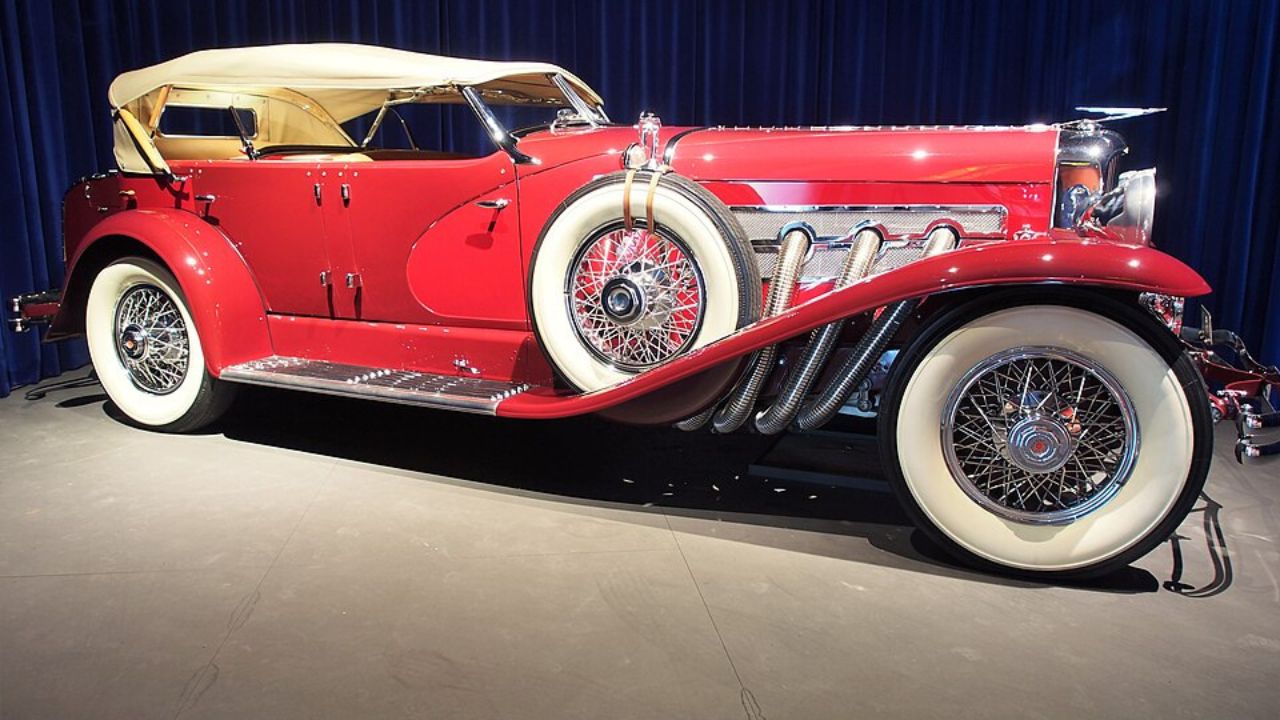
The 1935 Duesenberg Model SJ arrived at the very end of the classic era, yet it set a benchmark that still intimidates modern supercars. Built in tiny numbers, tailored for royalty and Hollywood money, and engineered with aircraft levels of ambition, it combined outrageous performance with bespoke coachwork. Nearly ninety years later, collectors and judges still treat a great SJ as the high bar for what a luxury performance car can be.
That status is not nostalgia alone. The Model SJ continues to dominate concours lawns, auction catalogs, and enthusiast wish lists because it solved the same problem that defines the modern hypercar: how to turn extreme engineering into rolling theater.
How the 1935 SJ turned a grand tourer into an American supercar
The starting point for the SJ was already extraordinary. The standard Duesenberg Model J carried a massive straight-eight engine, advanced overhead camshaft design, and a reputation for outrunning almost anything on the road. The SJ added a factory supercharger that pushed output into territory that contemporary European marques could rarely match, giving the car performance that modern writers still describe as supercar level.
That powertrain sat in a sophisticated chassis with hydraulic brakes, a long wheelbase, and a level of structural strength that let coachbuilders experiment with low, sweeping bodies. The result was a car that could cruise comfortably yet surge to speeds that most owners would never fully explore. Period tests and later analysis consistently rank the SJ near the top of prewar performance cars, which is why modern lists of the greatest sports machines still reference the Duesenberg heritage alongside much newer icons.
What changed with the SJ in 1935 was not just more power. Duesenberg and its partner coachbuilders leaned into the idea of the car as a fully curated object. Buyers did not simply choose paint and trim; they commissioned one-off bodies from firms such as Gurney Nutting, Rollston, and Murphy, each with its own signature stance and detailing. The SJ became a platform for extreme personalization at a time when mass production was rapidly taking over the industry.
Coachbuilt theater and the rise of the Gurney Nutting speedster
Among the many 1935 SJs, the supercharged speedsters bodied by Gurney Nutting have become the definitive expression of the model. One of these cars, built for an Indian maharaja, combined the long Duesenberg hood with a dramatically cut-down rear deck and a low windscreen that made the driver look almost level with the cowl. The design balanced elegance with aggression, a visual promise that the car could cross continents at sustained high speed.
That same Gurney Nutting speedster has been judged repeatedly at the highest level of concours competition. At the Peninsula Classics Best of the Best event, which pits major concours winners against each other, a 1935 Duesenberg speedster took the top honor, beating a field that included some of the most celebrated Ferraris and Bugattis. Coverage of the award noted that the car had already triumphed at major shows before facing this final showdown.
Another report on the same car, identified as an ex-maharaja Model SJ, highlighted how judges praised its restoration accuracy and the way it captured the glamor of interwar motoring. The ex-maharaja SJ was singled out not just for paint and chrome, but for the integrity of its mechanical restoration and period-correct details.
Enthusiast coverage framed the 2023 Peninsula award as a statement that prewar American engineering can still captivate a global panel of experts. A detailed feature on the event described how the SJ speedster stood out for its combination of technical sophistication and dramatic coachwork, even when parked beside midcentury European racers that usually dominate such contests.
Why the Model SJ still shapes how enthusiasts think about greatness
Modern collectors often talk about the SJ in the same breath as contemporary hypercars, but for different reasons. Where a current limited-run supercar leans on carbon fiber and electronic trickery, the SJ relied on overbuilt mechanical parts and hand-fitted bodywork. That approach created a car that feels monumental even at a standstill. The huge engine, exposed exhaust pipes, and intricate dashboard remind observers that every component was designed to be seen and admired.
The model’s ongoing influence can be measured in market behavior. Detailed market analysis of classic Duesenbergs shows that even non-supercharged cars command very high prices, particularly when they retain original coachwork. One profile of a 1935 Model J by Rollston explained how rarity, provenance, and body style combine to push values into seven figures. The same report broke down why the Rollston body, with its formal roofline and precise proportions, is especially prized among collectors.
Although that particular car was a Model J rather than an SJ, the analysis helps explain why supercharged examples sit at the very top of the hierarchy. The SJ adds performance and scarcity to an already desirable package. When a Duesenberg with the right coachwork and history reaches the auction block, bidding often turns into a contest of pride as much as investment strategy.
Beyond price, the SJ matters because it captures a moment when American manufacturers tried to beat Europe at its own game. The car combined domestic engineering resources with European-style coachbuilding and luxury. That blend continues to inspire modern designers who want to create limited-run flagships that feel distinct from mass-market products.
How concours success keeps rewriting the car’s modern reputation
The Peninsula Classics award cycle has effectively reintroduced the SJ to a new generation of enthusiasts. Each time the ex-maharaja speedster appears at a high-profile event, coverage revisits the car’s technical story and its place in history. That repetition has helped shift the conversation about prewar American cars, which were once treated as secondary to European exotics.
Judges and commentators have pointed out that the SJ’s engineering was not just impressive for an American brand, but competitive with anything built in Europe at the time. The supercharged straight-eight, the quality of the chassis, and the sophistication of the coachwork all support the argument that Duesenberg was playing in the same league as Bugatti and Hispano-Suiza. The repeated recognition at top-level concours gives that argument visible proof.
At the same time, the way these cars are restored and presented has evolved. Restorers now prioritize mechanical authenticity and subtle finishes over the over-restored look that once dominated the concours world. The ex-maharaja SJ’s success reflects that shift. Judges praised its period-correct materials and its faithful recreation of original details, which suggests that future restorations will follow the same philosophy.
What the SJ’s legacy suggests about the future of ultra-luxury performance
The story of the 1935 Duesenberg Model SJ offers a few clear lessons for modern carmakers working at the top of the market. First, extreme performance alone is not enough. The SJ paired its supercharged power with design that conveyed speed and glamour even when parked. That combination of engineering and theater is exactly what current hypercar buyers still expect.
Second, scarcity and personalization matter. Duesenberg built very few SJs, and almost every car carried unique coachwork. That level of individuality mirrors the bespoke programs that high-end brands now offer, from custom paint finishes to one-off body styles. The continued fascination with specific SJs, such as the Gurney Nutting speedster and the Rollston-bodied convertible, shows how much value collectors place on distinct identity.
Third, long-term relevance depends on how a car is curated once it leaves the factory. The SJ might have faded into obscurity if owners and restorers had not maintained it to an exceptional standard. Instead, careful preservation and historically informed restoration have kept the model in the public eye. The same pattern is likely to shape which of today’s limited-run cars will still matter to collectors several decades from now.
More from Fast Lane Only
- Unboxing the WWII Jeep in a Crate
- 15 rare Chevys collectors are quietly buying
- 10 underrated V8s still worth hunting down
- Police notice this before you even roll window down
*Research for this article included AI assistance, with all final content reviewed by human editors