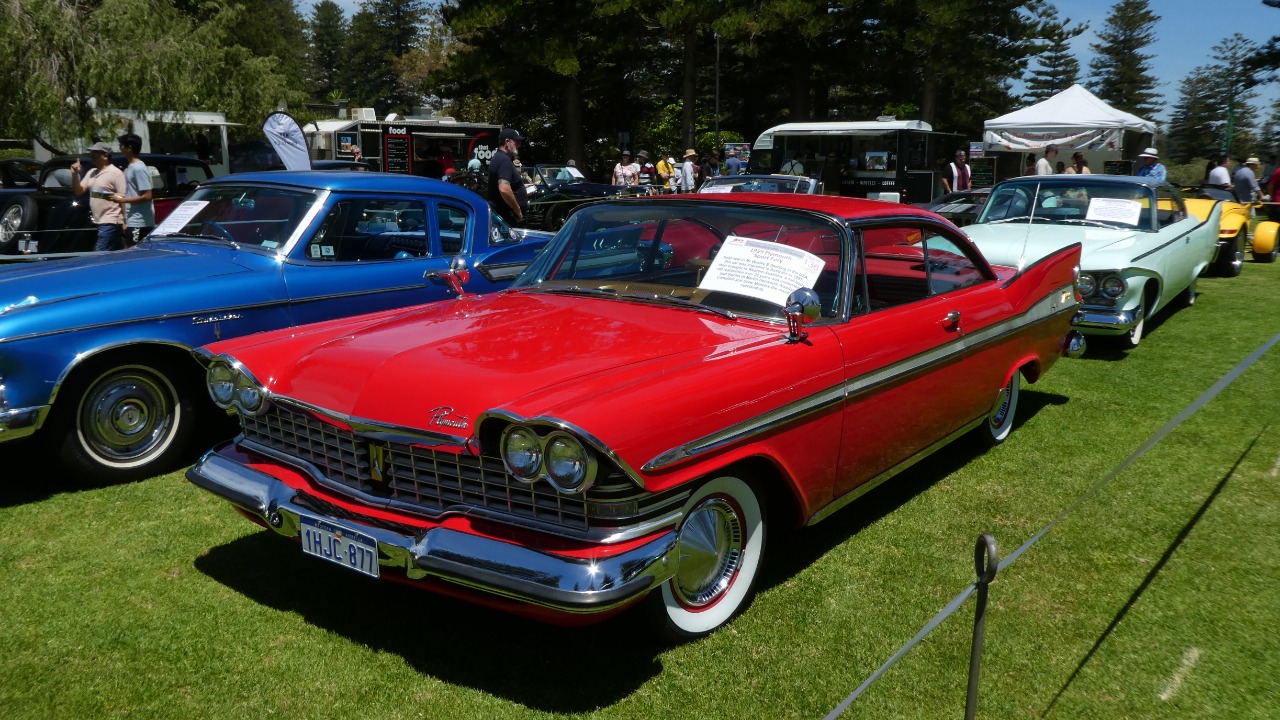
The 1959 Plymouth Sport Fury arrived at a moment when American cars were growing longer, lower, and louder in both style and performance, yet it managed to stand out even in that crowded field. By reshuffling the Fury nameplate, sharpening the “Forward Look” design, and pairing it with serious V8 power, Plymouth turned this model year into a pivot point for the brand and for late‑fifties Detroit excess. I see the 1959 Sport Fury as the car where Plymouth stopped merely following trends and started setting them, even if only for a brief, brilliant window.
The year Fury stopped being a niche and became the flagship
To understand why the 1959 Plymouth Sport Fury felt like a turning point, I start with the badge on its fins. Earlier in the decade, Fury had been a limited, almost specialty trim, but for 1959 the company pushed that name to the top of the lineup and spread it across the range. Accordingly, the Fury label appeared on all top‑of‑the‑line 1959 Plymouths except the Suburban wagons, and the old Plaza nameplates disappeared from the catalog, a clear signal that Plymouth wanted one halo identity rather than a clutter of overlapping trims that confused buyers who were trading up.
That decision did more than tidy the brochure, it repositioned the brand in the family‑car arms race. By turning Fury into the default premium choice, Plymouth could sell the same basic body shell at higher margins while giving shoppers a simple ladder to climb from basic transportation to something aspirational. The 1959 Sport Fury sat at the glamorous end of that ladder, a hardtop and convertible that took the new flagship identity and wrapped it in extra chrome, color, and performance, building on the momentum of its handsome 1957 models that had already made Plymouth look more modern than some rivals, as detailed in period overviews of the Fury lineup.
“Forward Look” styling pushed to its flamboyant limit
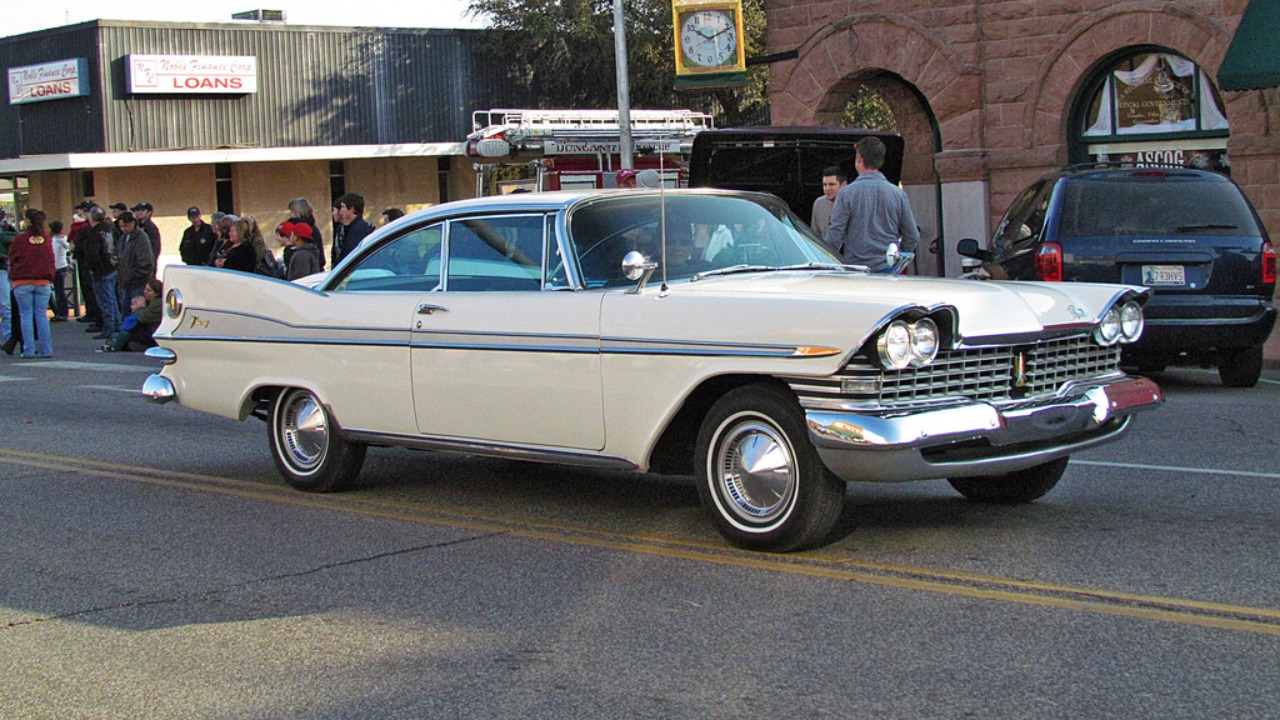
Styling is where I think the 1959 Sport Fury most clearly marks a break from what came before. It was the third year of Plymouth’s “Forward Look” design language, and by then the fins, sweep spears, and low rooflines had been turned up to full volume. Reports on the car describe how 1959 marked the third year of the Forward Look for Plymouth, with the body restyled in a rather flamboyant fashion that made even everyday sedans look like show cars, and the Sport Fury versions leaned into that drama with contrasting inserts, bold two‑tone paint, and interiors that would not have looked out of place next to tight skirts or evening gowns in a department store window.
Seen from the side, the car’s long rear overhang and high fins were not just decoration, they were a rolling billboard for late‑fifties optimism, the sense that bigger and brighter automatically meant better. I find it telling that Plymouth chose this moment to marry that styling to its new flagship identity, effectively saying that the future of the brand would be written in chrome and tailfins. Contemporary accounts of the 1959 Sport Fury’s bodywork emphasize how the Forward Look treatment on Plymouth created a cohesive, almost theatrical presence on the road, a presence that helped the car stand out even in an era when every boulevard was crowded with fins, as captured in detailed coverage of the Forward Look Plymouth.
From budget brand to serious performance contender
Underneath the styling, the 1959 Sport Fury also marked a shift in how Plymouth approached performance. The Chrysler Corporation had launched Plymouth in 1928 as a budget‑friendly option, a step below its now missing mid‑priced siblings, but by the late fifties that bargain image was starting to chafe. The Sport Fury helped change the conversation by pairing its flashy looks with V8 engines that could move the big body with real authority, and period tests show that despite its large proportions, the 1959 Plymouth could deliver strong acceleration and a quarter‑mile time of 15.7 seconds when properly equipped, figures that put it in the same conversation as more expensive performance cars of its day, as summarized in modern breakdowns of 1959 Plymouth Sport Fury performance.
Transmission choices reinforced that new attitude. Two different automatic transmissions were offered in the Sport Fury, the standard equipment two‑speed PowerFlite and the more advanced three‑speed TorqueFlite, both controlled by dash‑mounted pushbuttons that made even a grocery run feel a little futuristic. Contemporary road tests praised how the car could be hustled through corners with surprisingly little body lean or tire squeal for such a large machine, suggesting that Plymouth was no longer content to be known only for value but wanted to be taken seriously by drivers who cared about how a car felt on the road, a point underscored in detailed evaluations of the Sport Fury driveline.
The Golden Commando and the rise of muscle‑era thinking
For me, the clearest hint of the muscle‑car era hiding just over the horizon is under the Sport Fury’s hood. When fitted with the Golden Commando 395 engine, the car stopped being merely a stylish cruiser and became a genuine straight‑line threat. According to testing in Motor Life Magazine, the Golden Commando 395 engine as fitted to the Sport Fury delivered the kind of acceleration that made highway passing effortless, while the suspension soaked up rough pavement in a way that kept the big Plymouth composed even when the driver was leaning on the throttle, a combination that reads today like a rough draft of the formula Detroit would refine in the 1960s, as captured in period reports on the Golden Commando 395.
What stands out to me is how Plymouth blended that power with everyday usability. The same car that could light up a quarter mile also offered a roomy cabin, a big trunk, and the kind of ride comfort that families expected from a full‑size American sedan. That dual personality, equal parts boulevard cruiser and back‑road sprinter, foreshadowed the way later performance models would try to be all things to all drivers. In that sense, the 1959 Sport Fury did not just mark a turning point for Plymouth, it hinted at a broader shift in American car culture toward expecting serious speed from cars that still wore family‑friendly badges.
How the 1959 Sport Fury reshaped the Fury nameplate
The changes that arrived with the 1959 Sport Fury also rippled through the rest of the Fury line. In 1959, Plymouth introduced the Sport Fury as a separate, more upscale variant, effectively carving out a sub‑brand within the broader Fury family that could carry higher prices and more equipment without confusing buyers who still wanted a simpler car. Over time, that move helped turn Plymouth Fury into a name that could stretch from relatively modest sedans to high‑style hardtops, a flexibility that would prove useful as tastes shifted in the 1960s and beyond, as chronicled in historical summaries of the evolving Plymouth Fury body and trim strategy.
I see that 1959 decision as a template for how automakers still manage their lineups today. By creating a Sport Fury that sat above the regular Fury, Plymouth showed how a single nameplate could be stretched vertically, with different trims speaking to different buyers while still sharing a common identity. That approach, born in the age of tailfins and pushbutton automatics, lives on every time a modern brand spins a performance or luxury sub‑model out of a mainstream sedan or SUV. The 1959 Plymouth Sport Fury may have been a product of its time, but the way it redefined the Fury badge continues to echo through the industry’s playbook.
More from Fast Lane Only: