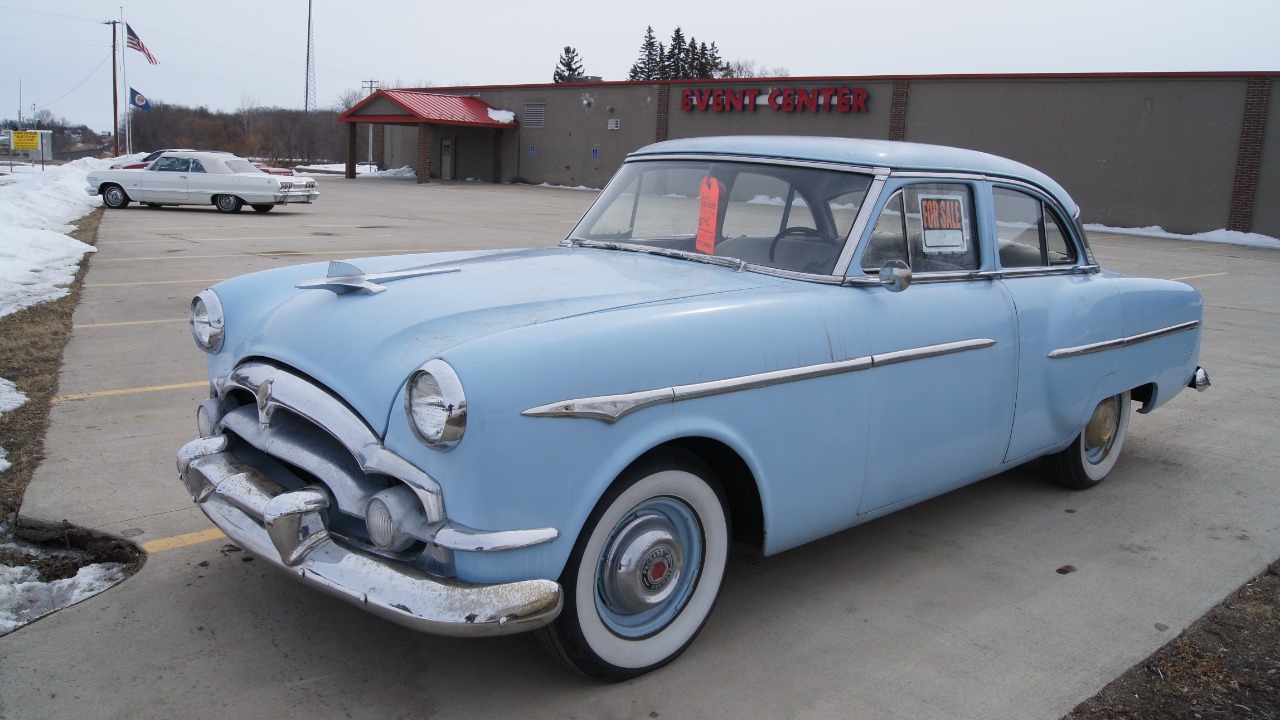
The 1953 Packard Clipper arrived at a moment when one of America’s oldest luxury marques was trying to look young without forgetting its age. The car wore smoother sheet metal and a friendlier price tag, yet it still carried the weight of Packard’s prewar prestige and the expectations that came with it. In that tension between heritage and reinvention, the Clipper became a rolling experiment in how far tradition could bend in the early 1950s without breaking.
When I look at the 1953 Clipper now, I see a company trying to thread a needle that rivals with deeper pockets had already started to sew. Packard wanted to modernize its image, court new buyers, and still reassure loyalists that the old virtues were intact. The result was a car that felt surprisingly contemporary from behind the wheel, but whose place in the market was never as clear as its designers and executives needed it to be.
From cloisonné crests to clean lines
Packard’s struggle with modernization did not begin with the Clipper, it had been building for several seasons. Earlier in the decade, the company’s own Drive to freshen its image had already chipped away at some of the visual cues that made a Packard instantly recognizable. During the 1951 model year, for example, the brand’s traditional cloisonné emblems and proud hood ornament were toned down, the ornament was much shorter, and the overall look grew more anonymous, a shift that critics later argued undercut the aura that had once set Packard apart from the Detroit crowd 1951 Packard 300.
By the time the 1953 Clipper appeared, that design philosophy had hardened into a strategy. Executives wanted a car that looked smoother and more contemporary, with less of the baroque trim that had defined luxury in the 1930s and 1940s. The Clipper’s proportions and detailing reflected that intent, with cleaner sides and a more integrated front end that fit the early fifties taste for restrained modernity. Yet the more Packard leaned into this visual understatement, the more it risked blending into a field where brands like Cadillac were loudly advertising their status with chrome, fins, and ever more dramatic grilles.
A middleweight in a heavyweight fight
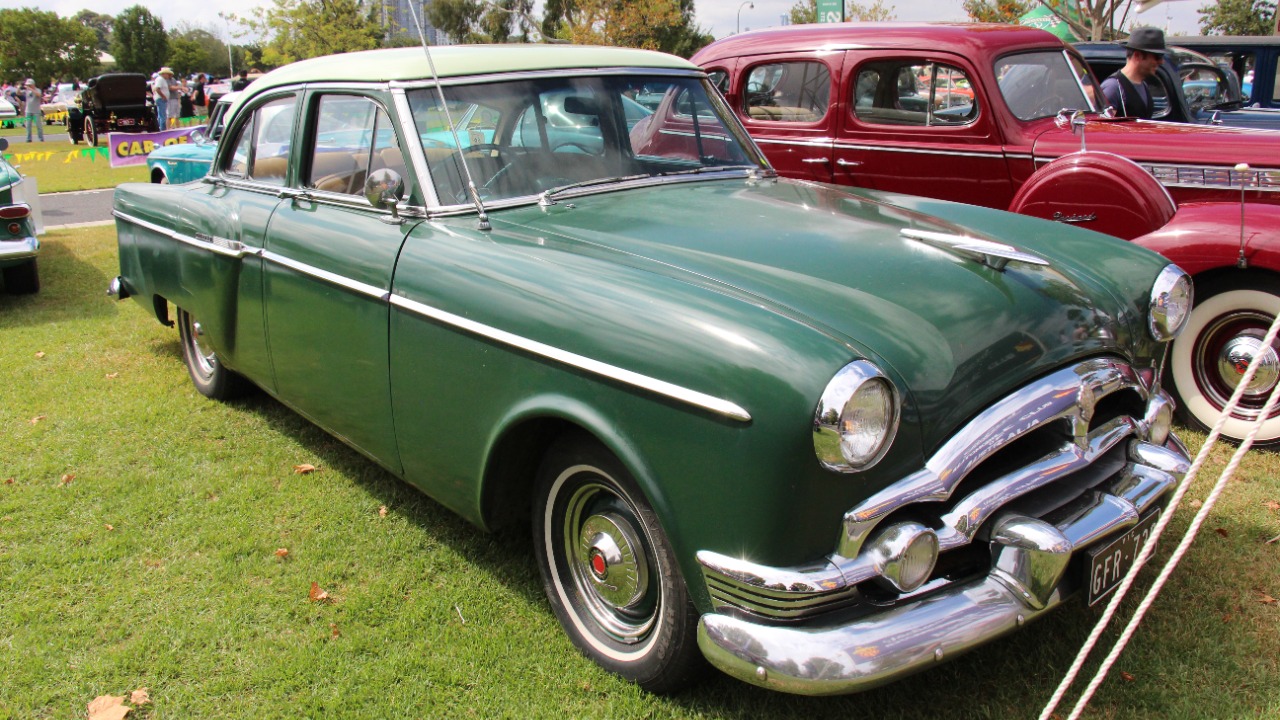
Packard entered the 1950s as a storied name, but its business reality was far less secure. As the decade opened, the company was already wrestling with shrinking market share, rising costs, and the brutal economics of competing against the largest automakers in the world. Analysts looking back at the period describe how, as the 1950s dawned, the Packard Motor Car Company found itself fighting a kind of last stand, trying to maintain a full luxury lineup while also chasing volume in the mid priced field, a dual mission that strained its resources and muddied its identity Charge of the Light Brigade.
The Clipper was supposed to be the answer to that dilemma, a bridge between Packard’s senior cars and the broader market that General Motors and Ford dominated. In theory, it would let the company chase buyers who might otherwise walk into a Buick or Mercury showroom, without diluting the prestige of the top tier models. In practice, the Clipper’s pricing and positioning left it squeezed between full luxury rivals and aggressively marketed mid range offerings, including the emerging premium lines that would later be formalized by brands like Lincoln. Packard for 1953 needed the Clipper to be a volume hit, yet the company’s losses continued to mount even as the new models arrived, a sign that the strategy was not closing the financial gap introducing the 1953 Packards.
Inside a “brand new old family car”
Where the 1953 Clipper arguably succeeded most clearly was in the way it felt to live with. Contemporary restorers and owners often describe the car’s cabin as warm and inviting, a space that captures the optimism of boomtown America without tipping into gaudiness. One detailed look at a restored example highlights tight vinyl, tasteful fabrics, and a dashboard layout that balances mid century style with straightforward ergonomics, a combination that makes the Clipper feel like classic Americana rather than a museum piece warm and welcoming interior.
That same restored Clipper carries a telling origin story. According to Mid Southern Restorations, the car was commissioned by a customer who wanted to “build a brand new old family car,” a phrase that perfectly captures the model’s appeal to modern enthusiasts. The project retained the essential Packard character while adding subtle updates like a power antenna and small fender skirts, proof that the underlying design can absorb careful modernization without losing its soul According to Mid Southern Restorations. When I picture that “brand new old family car,” I see the 1953 Clipper’s original mission in miniature, a car meant to feel familiar yet freshly relevant to a new generation.
On the road, not just in the brochure
For all the talk about styling and strategy, the real test of any car is how it drives, and the 1953 Clipper still surprises people who slide behind the wheel today. One owner who chronicled time with a Clipper noted that what stood out most was how modern it felt compared with its contemporaries, especially in the way it tracked on the highway and responded to everyday inputs. The car did not feel like an “old car” in the clichéd sense, but rather like a thoughtfully engineered sedan that happened to wear mid century sheet metal What was surprising to me.
That driving character matters because it shows how Packard’s engineers were quietly pushing the brand forward even as the marketing and product planning struggled. The Clipper’s chassis tuning, steering feel, and general refinement gave it a composure that matched or exceeded many rivals in its price class, even if the badge on the hood no longer carried the unchallenged prestige it once did. When I imagine a buyer cross shopping in the early fifties, I can see how a test drive might have sold them on the Clipper’s road manners, even if the showroom lacked the flash of a Cadillac or the aggressive promotion that surrounded the latest models from the Big Three.
Foreshadowing Packard’s final act
In hindsight, the 1953 Clipper also reads like a prelude to the more radical changes that would arrive later in the decade. Enthusiasts often point out that The Senior Packards of 1955 and 56 really were better in many objective ways, with much more modern styling, modern V8 engines, and the full complement of contemporary features that buyers expected in a premium car. Those later models finally delivered the kind of technical and visual leap that Packard had been promising, yet by then the company’s financial and organizational troubles were so deep that even a strong product could not fully reverse its trajectory The Senior Packards of.
Leadership changes also shaped how the Clipper fit into Packard’s broader story. When Nance took the helm, he moved quickly to steer the company back toward the luxury automobile market that had defined its prewar glory. The 1953 Packard Formal Sedan by Derham, for instance, showed how the brand could still produce a coachbuilt flagship that was competitive with the Buick Skylark, even as the Clipper line worked the middle ground Packard Formal Sedan. In that light, the Clipper looks less like a misstep and more like one piece of a larger, if ultimately unsuccessful, attempt to balance exclusivity with volume.
Why the Clipper still matters
When I trace the arc from Packard’s cloisonné crests to the smoother flanks of the 1953 Clipper, I see a company wrestling with the same question that haunts many heritage brands today: how do you stay yourself while keeping up with the times. The Clipper did not save Packard, and it did not redefine the mid priced market in the way its creators hoped, but it did capture a moment when tradition and modernity were still trying to coexist in the same showroom. Its mix of understated styling, comfortable interior, and unexpectedly contemporary driving feel shows how close Packard came to squaring that circle before larger economic forces closed in.
That is why the 1953 Clipper continues to draw enthusiasts who want more than just fins and flash from their fifties iron. It represents a thoughtful, sometimes conflicted attempt to modernize a storied nameplate without erasing what made it special in the first place. When someone commissions a “brand new old family car” built around a Clipper shell, or takes one out on a modern highway and marvels that it does not feel like an “old car,” they are participating in the same experiment Packard undertook in 1953. The company may be gone, but in cars like the Clipper, its effort to reconcile past and future still feels very much alive.
More from Fast Lane Only: