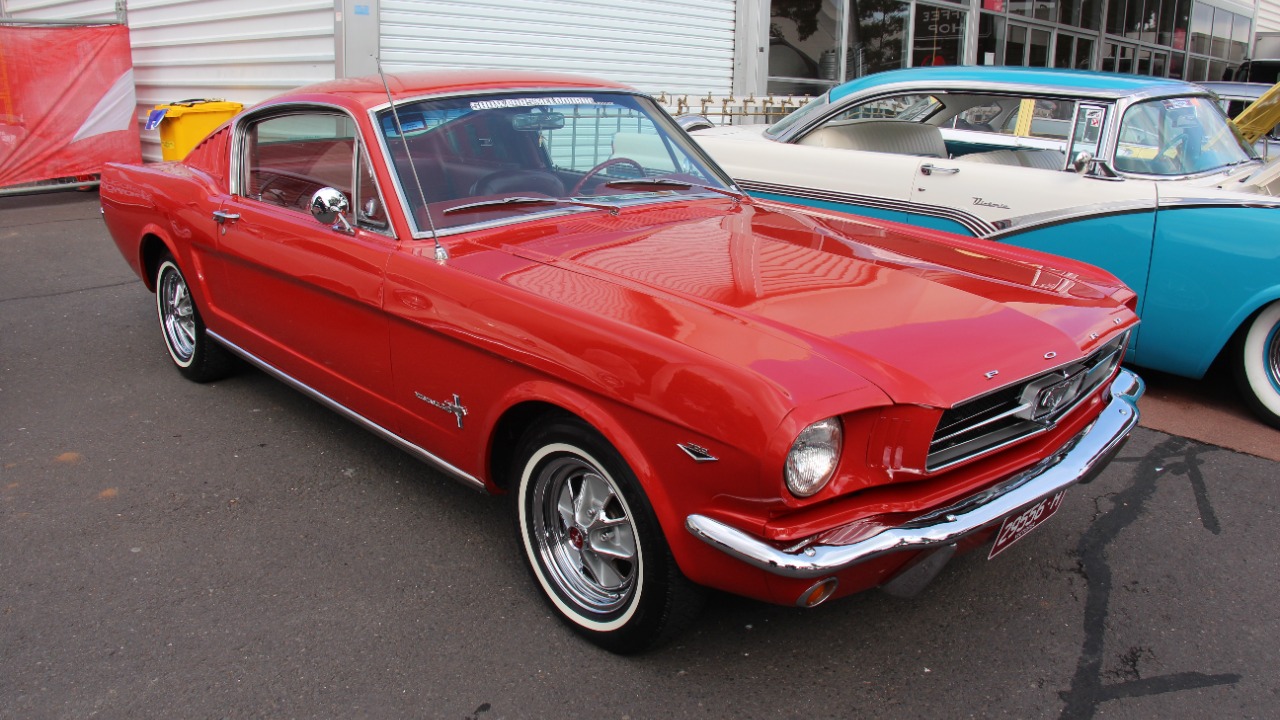
The 1965 Ford Mustang K-Code 289 arrived as a compact, affordable coupe with a racing heart, and it quickly rewrote expectations for what an American pony car could do. With its high-compression “Hi-Po” V8, close-ratio gearing, and track-ready hardware, the K-Code turned the Mustang from a stylish commuter into a serious performance machine. Six decades later, it still serves as a yardstick for how much speed and character a mass-market car can deliver.
Understanding how this specific Mustang became a benchmark means looking beyond nostalgia. The K-Code 289 set technical standards, reshaped Ford’s performance strategy, and laid groundwork that modern enthusiasts still build on, from concours restorations to dyno-tested recreations.
The Hi-Po Formula: Inside the K-Code 289
At the center of the K-Code story sits the 289 cubic inch High Performance V8, a small-block that shared basic architecture with Ford’s garden-variety engines but carried a very different personality. Engineers raised compression to 10.5:1, fitted a solid-lifter camshaft, and added heavy-duty valve springs and screw-in rocker arm studs. The factory rating of 271 horsepower at 6,000 rpm and 312 pound-feet of torque gave the light Mustang a power-to-weight ratio that embarrassed many larger, more expensive cars of its day.
Contemporary dyno work has helped separate myth from reality. A modern test that carefully recreated a stock specification K-Code, right down to the original-style intake and exhaust manifolds, showed that the engine could still produce output consistent with its advertised numbers when tuned correctly. That recreation of the classic V8, built with period-correct components and run on a modern engine dyno, confirmed that the Hi-Po 289 was not just a marketing exercise but a genuinely strong small-block. The project, documented through a detailed dyno test, underscored how advanced the original engineering really was.
The K-Code package extended beyond the engine itself. Ford paired the Hi-Po 289 with a dual-point distributor, a special harmonic balancer, and stronger connecting rods. A 4-barrel carburetor and free-flowing exhaust helped the engine breathe at high rpm, while the solid-lifter valvetrain encouraged drivers to wind it out to the redline. Unlike many big-block muscle combinations that relied on brute displacement, the K-Code relied on revs, precision, and careful parts selection.
Chassis, Driveline, and the GT Connection
Power is only as useful as the chassis that carries it, so the K-Code Mustang received upgrades that transformed the way it handled and survived hard use. Buyers typically paired the Hi-Po engine with a 4-speed manual gearbox and a 9-inch rear axle, both far tougher than the components found behind lower-spec engines. Heavy-duty suspension pieces, stiffer springs, and larger front brakes helped the car stay composed when driven aggressively.
Many K-Code cars were ordered with the GT Equipment Group, which added front disc brakes, fog lamps, and dual exhaust with bright tips. This combination of the Hi-Po 289 and GT hardware created one of the most desirable early Mustang configurations. A detailed ownership story of a 1965 GT that was converted to K-Code specification decades later illustrates how intertwined the performance package and the GT identity became. In that case, the owner sourced a correct Hi-Po engine, upgraded the driveline, and essentially recreated the experience of a factory K-Code GT, as chronicled in a Mustang transformation that highlights the lengths enthusiasts will go to capture the original feel.
These upgrades were not cosmetic. The close-ratio 4-speed kept the engine in its power band, the stronger rear axle tolerated repeated drag strip launches, and the disc brakes gave the relatively light car stopping power that matched its straight-line speed. Together, they formed a balanced package that encouraged both spirited street driving and weekend competition.
Competition Roots and the Pony Car Arms Race
The K-Code Mustang did not exist in a vacuum. Ford designed the Hi-Po 289 with competition in mind, targeting everything from SCCA road racing to drag strip classes. The same basic engine architecture appeared in the Shelby GT350, where additional tuning and induction changes pushed performance even further. That racing link gave the K-Code a credibility that ordinary showroom specials often lacked.
Period road tests comparing the Mustang to rivals such as the Plymouth Barracuda showed how this approach paid off. In one vintage comparison, a Hi-Po 289 Mustang squared off against a V8 Barracuda, with testers noting the Ford’s stronger acceleration and more focused character. The Mustang’s combination of power, gearing, and suspension tuning allowed it to outpace the Plymouth in both straight-line and handling evaluations, as captured in a vintage road test that framed the early pony car rivalry.
Ford also spread the Hi-Po 289 across its lineup, using the engine in models such as the Mercury Comet Cyclone. A documented example of a 1965 Comet Cyclone equipped with the same high-performance small-block shows how the company leveraged this powerplant as a corporate performance tool. The Comet’s specification sheet, highlighted in a feature on the 289 Hi-Po Cyclone, mirrors many of the Mustang’s upgrades, from the solid-lifter cam to the heavy-duty internals. That cross-model strategy amplified the engine’s reputation and reinforced its status as a benchmark.
Why the K-Code Stood Apart from Other 289s
To understand why the K-Code became a reference point, it helps to compare it with the standard 289 variants of the same era. The regular 2-barrel and 4-barrel 289 engines shared displacement and basic block design but lacked the Hi-Po’s aggressive camshaft, higher compression, and strengthened bottom end. They delivered smoother idle quality and better fuel economy, but they could not match the sustained high-rpm capability that made the K-Code special.
Technical breakdowns of the Hi-Po 289 emphasize differences such as the use of larger main bearing caps, shot-peened connecting rods, and a unique crankshaft damper. A deep dive into the engine’s design, including the specific cam profile and valvetrain hardware, shows how Ford chased durability and power at the same time. One detailed analysis of the Hi-Po’s internals, presented in an engineering overview, describes how these parts allowed the engine to live at higher rpm than its siblings, which in turn supported both racing success and long-term street reliability.
That combination of everyday usability and track-ready hardware is a key reason the K-Code became a benchmark rather than a one-off curiosity. Owners could drive these cars to work during the week, then bolt on slicks and compete on the weekend, all without tearing the engine apart after every outing. In the context of mid-1960s mass-market cars, that balance was unusual.
Production Rarity and Collector Appeal
Although the Mustang itself was a runaway sales success, the K-Code option remained relatively rare. A small fraction of buyers chose the high-performance engine, partly because it carried a price premium and partly because many customers were satisfied with the standard V8. That limited production has turned surviving K-Code cars into sought-after collectibles.
Collectors prize not only the engine code on the fender tag but also the associated hardware: the correct carburetor, distributor, exhaust manifolds, and driveline components. Documentation and originality play a large role in valuation, and cars that retain their factory Hi-Po parts command significant premiums over standard 289 Mustangs. The combination of mechanical distinction and low production volume has helped cement the K-Code’s reputation among enthusiasts and investors alike.
Evolution into the Late Sixties Mustang
The influence of the K-Code 289 extended into subsequent model years as Ford refined the Mustang’s styling and equipment. By 1966, the car received subtle exterior updates, interior tweaks, and additional performance options, while still offering V8 power that traced its lineage to the original Hi-Po concept. Period specifications for the 1966 Mustang highlight the range of engines available, from the base six-cylinder to multiple 289 variants, reflecting how central that displacement had become to the car’s identity. A detailed specification sheet for the 1966 Mustang shows how Ford broadened the lineup while maintaining a clear performance hierarchy.
Although the specific K-Code option eventually gave way to larger-displacement engines and new performance packages, its philosophy lived on. Later small-blocks and big-blocks adopted similar approaches to valvetrain design, compression, and durability. The idea that a relatively compact, rev-happy V8 could serve as the heart of a mainstream performance car remained a defining feature of the Mustang family.
Modern Enthusiasts and the K-Code Legacy
Today, the K-Code 289 continues to shape how enthusiasts build and evaluate classic Mustangs. Restorers chase date-coded Hi-Po blocks, correct cylinder heads, and original-style carburetors to recreate factory-spec cars. Others use the K-Code’s blueprint as a starting point, adding modern ignition systems, improved exhaust, and updated cam profiles while preserving the engine’s high-revving character.
Stories of owners converting standard 1965 and 1966 Mustangs into K-Code-spec machines illustrate the engine’s enduring pull. These projects often involve sourcing a genuine Hi-Po block, upgrading to the proper 4-speed and 9-inch rear axle, and installing suspension and brake components that mirror the original package. The goal is not only more power but also the distinctive driving feel that comes from the solid-lifter valvetrain and close-ratio gearing.
Recreated engines, like those run on modern dynos, serve as rolling laboratories for this legacy. Builders confirm that when assembled to period specifications, the Hi-Po 289 still delivers crisp throttle response, strong midrange torque, and a willingness to rev that feels surprisingly contemporary. That performance, paired with the compact Mustang chassis, keeps the K-Code relevant in a hobby crowded with later, more powerful muscle cars.
How the K-Code Redefined the Affordable Performance Car
The broader impact of the 1965 Mustang K-Code 289 lies in how it reset expectations for an affordable performance car. Before the pony car era, buyers often had to choose between small, nimble imports and large, heavy American V8 sedans. The K-Code Mustang offered a different formula: compact size, manageable weight, and a sophisticated small-block that could compete with both domestic rivals and European sports cars.
That formula encouraged other manufacturers to respond. Competitors developed their own high-revving small-blocks and performance packages, fueling an engineering race that benefited enthusiasts across the market. The success of the K-Code showed that there was strong demand for cars that blended style, daily usability, and serious speed, all at a price point accessible to younger buyers.
In retrospect, the K-Code’s benchmark status comes from a mix of factors. It delivered verified, repeatable performance that matched its marketing claims. It integrated engine, driveline, and chassis upgrades into a cohesive package. It proved itself in competition and on the street, then inspired generations of builders and collectors to treat it as a standard to match or beat.
What Enthusiasts Should Watch Going Forward
Looking ahead, the K-Code 289’s influence is likely to grow rather than fade. As more collectors focus on originality and documented history, factory Hi-Po cars will continue to command attention at auctions and in private sales. Restomod builders will keep borrowing from the K-Code playbook, using high-compression small-blocks, aggressive cams, and strong driveline components to create modern interpretations of the classic formula.
More from Fast Lane Only
- Unboxing the WWII Jeep in a Crate
- 15 rare Chevys collectors are quietly buying
- 10 underrated V8s still worth hunting down
- Police notice this before you even roll window down
*Research for this article included AI assistance, with all final content reviewed by human editors.