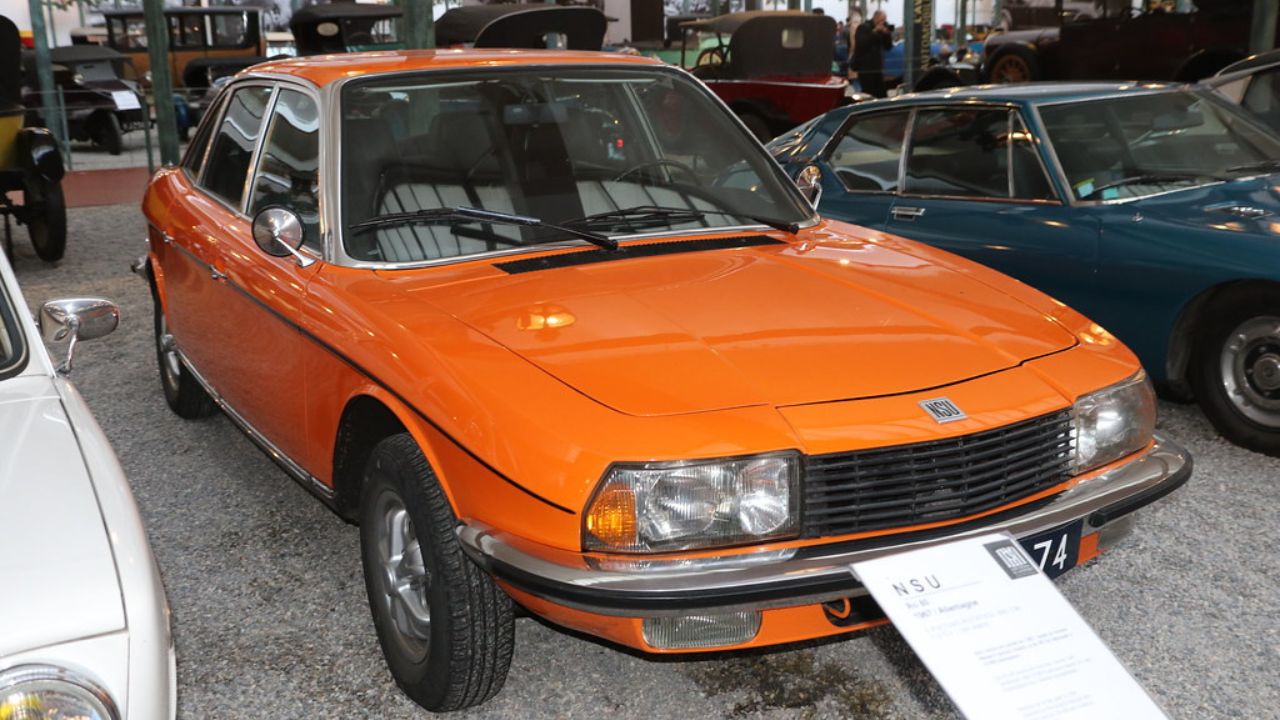
The NSU Ro 80 arrived in 1967 as a family sedan that bet everything on a radical rotary engine and a shape that looked like it had slipped in from the future. Instead of playing it safe, the small German maker tried to leapfrog its rivals with technology that promised smooth power and low vibration but carried serious risk. I want to look at how that gamble briefly paid off, why it unraveled, and why the Ro 80 still feels strangely relevant every time the car industry chases a new kind of propulsion.
The boldest sedan in the room
When I picture the late 1960s car park, the Ro 80 stands out like a concept car that somehow escaped the design studio. The small German company NSU launched it as its most ambitious model, wrapping a roomy four door body around a twin rotor Wankel engine and front wheel drive. The body was not just pretty, it was engineered to slip through the air, with a low nose, clean flanks, and a high, almost fastback tail that made most contemporaries look like they were carved with an axe. At a time when boxy sedans still dominated European streets, that silhouette signaled that NSU wanted to sell tomorrow, not yesterday.
The company backed up that visual statement with hard numbers and production intent. Series production began in October 1967 and, as Production ramped up, the Ro 80 moved from curiosity to a real presence on the road. During 1968, the first full year of production, NSU built exactly 5,986 cars, and in 1969 that climbed to 7,811, figures that showed genuine demand for such an unconventional sedan. For a small maker, those numbers were a vote of confidence in the idea that a rotary powered, aerodynamically honed four door could be a mainstream product rather than a science project.
Rotary promise, rotary problems
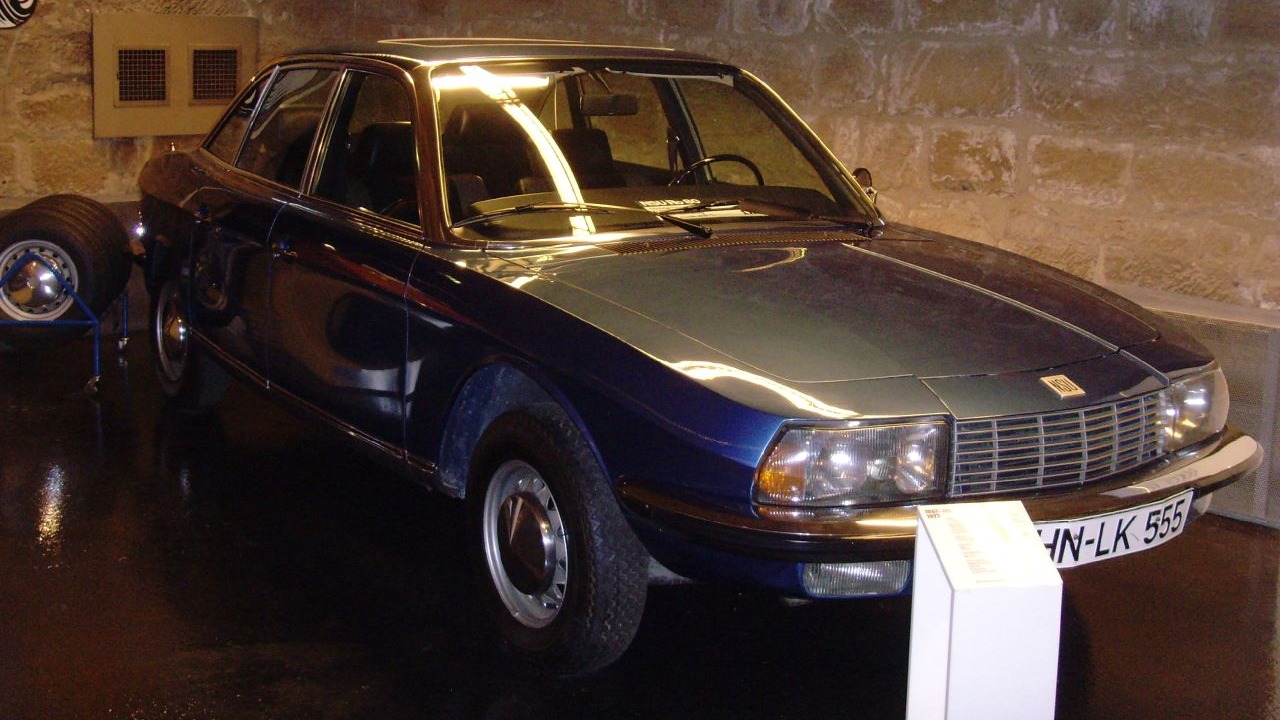
Under that sleek body, the Ro 80’s Wankel engine was meant to be its greatest asset. Compared with the gruff four cylinder units of the era, the twin rotor design delivered a smooth, high revving character that felt more like a turbine than a traditional piston engine. Contemporary owners and later reviewers have noted that, when everything was working properly, the car felt refined and eager in a way that embarrassed many rivals. One modern account points out that, in those moments, the rotary was so silky that it made the more conventional European Ford V4 swaps some frustrated owners resorted to feel agricultural by comparison.
The trouble is that the same engine that made the Ro 80 special also became its curse. The Ro 80 powerplant suffered from construction faults and sealing issues that gave the car an early reputation for unreliability, a perception that is hard to shake once it settles in buyers’ minds. Reports on The Ro 80’s development describe how limited resources and the rush to market left NSU sorting out major durability problems in customers’ driveways rather than on test benches. For a sedan pitched as a sophisticated daily driver, repeated engine rebuilds were not just an annoyance, they were a direct hit to the brand’s credibility.
How a futuristic shape met a conservative market
Even if the engine had been flawless, the Ro 80 was asking a lot of buyers in terms of design and layout. The body was one of the most aerodynamic four door sedans in the world at its launch, with a drag conscious profile that looked more like a 1980s car than something from the late 1960s. That slippery shape, detailed in period engineering accounts of the body, was not just about style, it was meant to complement the rotary’s high speed character and improve fuel efficiency. Inside, the Ro 80 offered a spacious cabin, large glass area, and a driving position that felt more modern than many of its peers, reinforcing the sense that this was a car designed from a clean sheet.
Yet the market NSU was selling into was not always ready to follow. Detailed histories of the project argue that the root of the problem, aside from the Ro 80’s hasty development, was that NSU misjudged how conservative many sedan buyers really were. Analyses of the car’s commercial fate note that the company overestimated customers’ willingness to embrace a radical powertrain and avant garde styling from a relatively small brand. One account of the model’s decline points to this miscalculation, describing how NSU clung to its fiercely guarded independence even as warranty costs and slow acceptance of the rotary concept strained its finances.
From engineering triumph to financial trap
Looking back, I see the Ro 80 as a textbook case of how technical brilliance can turn into a financial trap when it arrives a little too early and a little too fragile. The car’s production story underlines that tension. Series production began in October 1967 and the last examples left the line in April 1977, a decade that saw the model move from award winning newcomer to aging outlier. During that span, the company’s limited resources were increasingly focused on keeping the rotary alive rather than broadening the range, a pattern that later histories of Series production describe as a slow squeeze that left little room for error.
The mechanical issues were not just a matter of teething troubles, they were structurally expensive. Analyses of the engine’s design highlight what one detailed retrospective bluntly labels The Infamous Apex Seal Issues, a phrase that captures how central those tiny components were to the car’s fate. All of the promise of the rotary concept collided with the reality that early apex seals wore out too quickly, forcing NSU to replace engines under warranty and eroding any profit the company might have made on each car. All of that added up to a situation where the Ro 80, instead of funding NSU’s future, helped accelerate its decline and eventual absorption into a larger corporate group.
The Ro 80’s long shadow
Even with that troubled history, the Ro 80 has never quite faded from view, and I think that persistence says something about how deeply it impressed people who encountered it. Period advertising leaned into its modernity, with posters declaring, “There are ‘Yesterday’ cars, and there are ‘Today’ cars,” a slogan that captured how NSU wanted the Ro 80 to stand apart from the crowd. Later retrospectives on the model note how that line, quoted in Reflecting on its legacy, still feels apt when you park a Ro 80 next to its contemporaries. The car’s influence can be traced in later German sedans that adopted similar proportions and aerodynamic priorities once the rest of the industry caught up.
Today, the Ro 80 lives on in museums, enthusiast garages, and the imaginations of designers who wonder what might have been if NSU had enjoyed deeper pockets. One video review follows Kristoff Bower through Wolfs’s car museum as he picks a favorite from more than 200 historic vehicles, and the Ro 80 earns attention precisely because it still looks fresh. Another modern documentary, titled in a way that underlines how the rotary dream backfired, describes the Ro 80 as a car that was ahead of its time but ultimately helped consume its maker, a theme explored in depth in a feature on how the rotary sedan ate its maker. Contemporary writers continue to riff on the idea too, with one designer imagining a rotary powered Italian styled sports car that never existed and noting that the original Ro 80 was charming and innovative but also the project that did the company in financially. For me, that mix of admiration and caution is exactly why the Ro 80 still matters: it is a reminder that pushing the envelope can change the shape of the future, even if the pioneer pays the highest price.
More from Fast Lane Only: