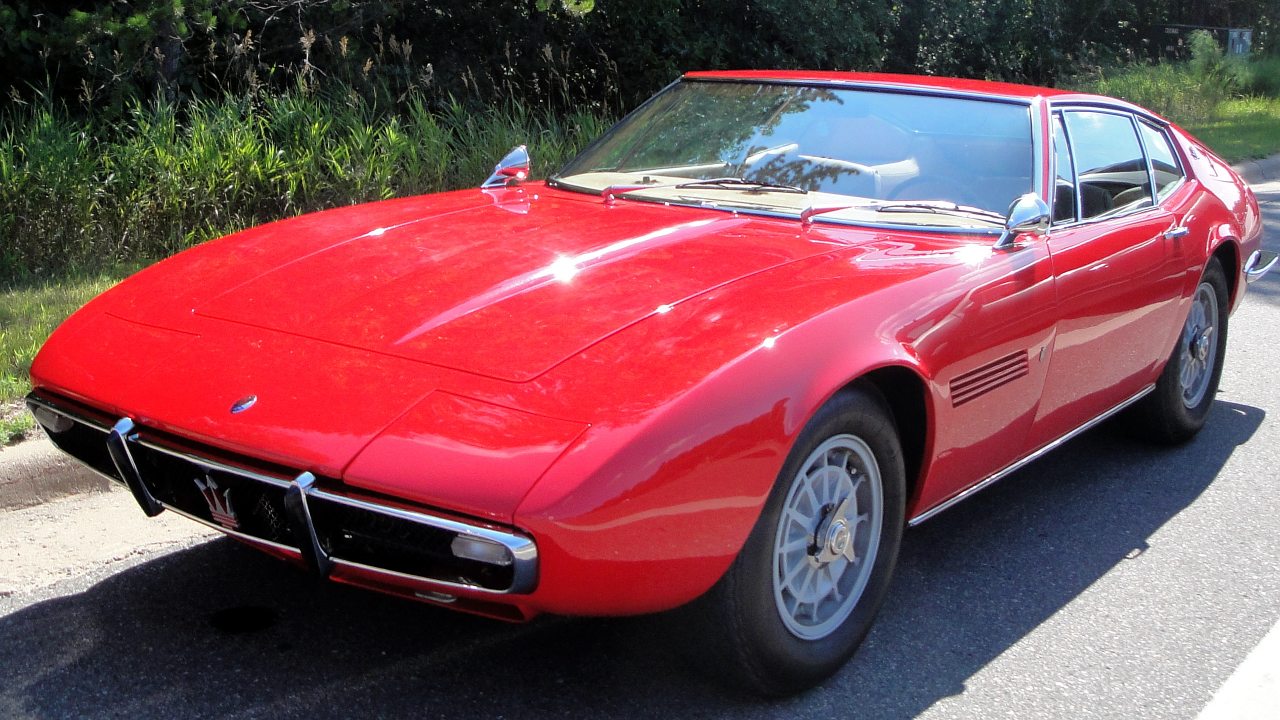
The 1967 Maserati Ghibli arrived at a moment when Italian grand tourers were already dazzling, yet it still managed to reset expectations for style, speed, and everyday usability. Rather than chasing rivals on their terms, Maserati used the Ghibli to fuse race-bred engineering with a low, almost architectural body that looked more like a concept car than a production coupé. That mix of drama and restraint is why the first Ghibli still feels distinct in a field crowded with legends.
From Turin showstopper to instant design benchmark
The car that would become the 1967 Maserati Ghibli 4.7 Coupé first appeared as a sensation at the Turin Motor Show, framed in period accounts as a kind of “Turin Triumph” and “The Birth of” an “Icon.” In November, the prototype stunned crowds with its impossibly long hood, low roofline, and crisp surfacing that made other grand tourers look suddenly ornate. By the time the production Maserati Ghibli Coupé reached customers, the basic silhouette was intact, giving buyers a road car that looked almost unchanged from the show stand.
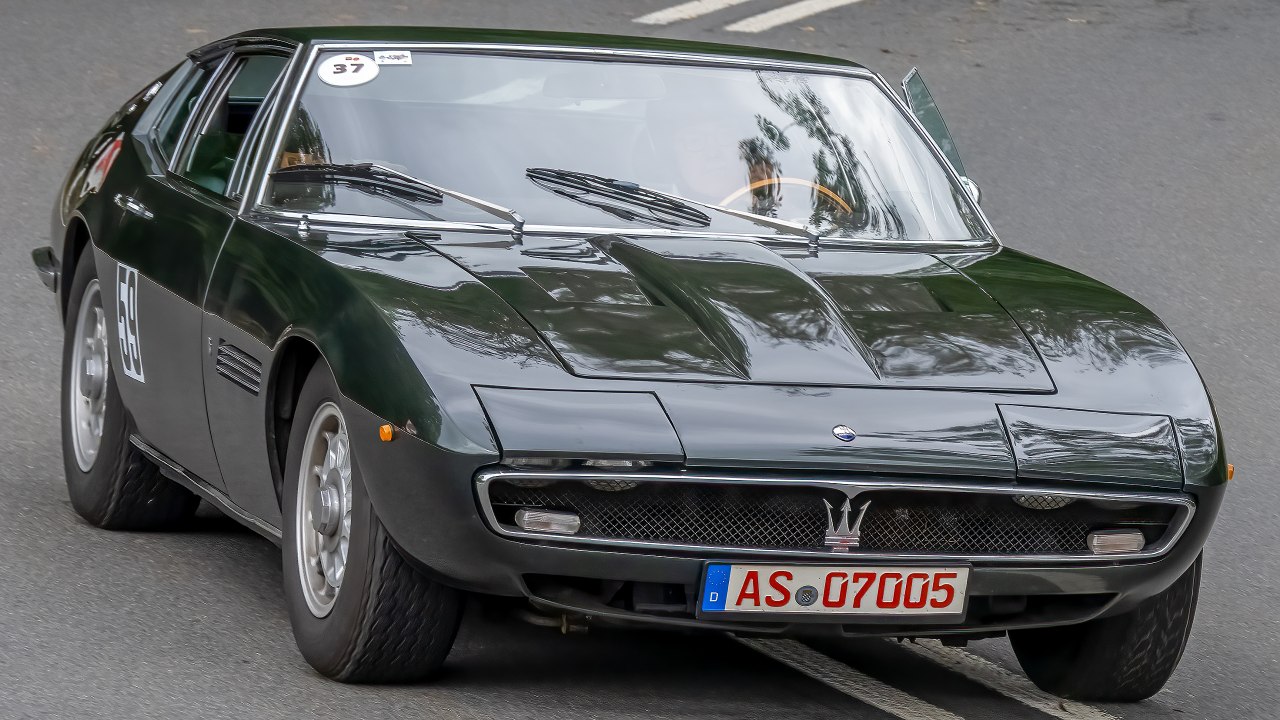
That impact was no accident. Maserati turned to Giugiaro, then a young but already influential stylist, to draw the Ghibli. He later described the shape as a “very striking, long, flat bonnet, full-width radiator grille, pop-up headlights, a sharp nose and a very low, slender cabin with a very raised neck,” a summary that still reads like a checklist for the modern super GT. The result was a car that did not just follow contemporary taste but helped define it, and the Ghibli’s basic proportions continue to be cited in official Ghibli histories as the template for later Maserati grand tourers.
A race-bred V8 that changed Maserati’s GT formula
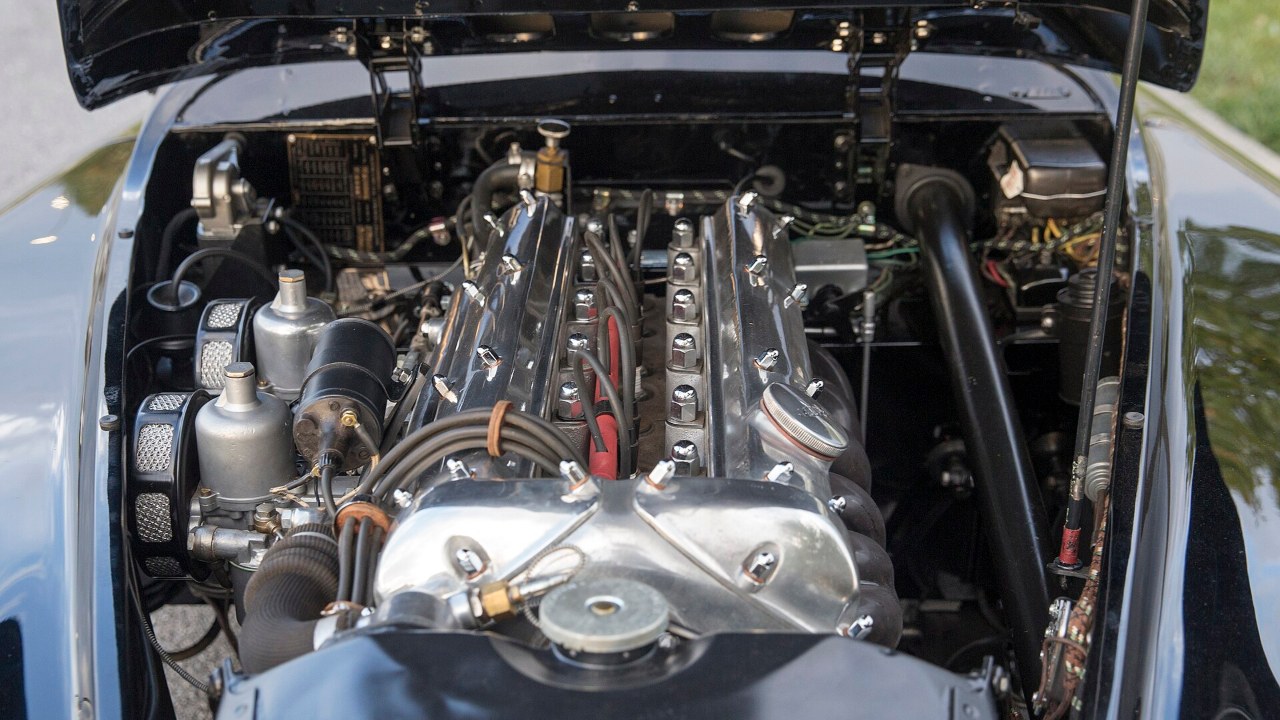
Under the hood, Maserati made a decisive break with its own recent past. Earlier models like the Mistral relied on a 255-horsepower 4.0-liter DOHC inline-6, a sophisticated engine but one that left room for more power in a car as dramatic as the new coupé. For the Ghibli, engineers instead installed a 330-hp DOHC 4.7 V8 derived from Maserati’s 450S race car, a move that instantly shifted the brand’s grand touring flagship from refined to ferocious. That 4.7 figure appears repeatedly in period specifications and underlines how central the new displacement was to the car’s identity.
The V8 was not just powerful, it was tuned for the kind of effortless thrust that defines a true GT. Contemporary analysis notes that while rivals often leaned on high-revving V12 engines, the Ghibli’s V8 was torque-rich and did not exceed 6000 RPM, which made its performance feel relaxed rather than frantic. Official data lists Displacement at 4,719 cc and Top Speed at 265 km/h, numbers that put the Ghibli squarely in the top tier of its era. Paired with a five-speed ZF manual transmission and four-wheel disc brakes, the drivetrain gave the car the long-legged, continent-crossing character that Maserati wanted from its new flagship.
Performance that matched its dramatic looks
Many 1960s exotics looked fast but struggled to back up the promise. The Ghibli did not have that problem. Factory figures and auction records describe a top speed of 265 km/h, with one period specification listing The Ghibli at a stated 164.5 m, a figure that, even allowing for period measurement conventions, places it firmly among the quickest road cars of its time. That performance was not theoretical either, since the combination of the 330-hp V8, relatively low profile, and carefully honed aerodynamics allowed the car to sustain high speeds in the kind of long-distance driving that defined the grand touring category.
Context matters here. In the same era, Ferrari fielded the front engine 365 g, better known as the Daytona, which has grown into an icon of the company’s road-car history. Lamborghini had the Miura, a mid-engine statement piece that redefined the supercar template. Yet owners who have lived with all three have described a 1967 Ghibli as “Far more comfortable/usable than a Daytona or Miura,” a telling comparison that highlights how Maserati balanced speed with real-world manners. Where the Ferrari and Lamborghini could feel like racing cars with license plates, the Ghibli delivered similar pace with a calmer, more forgiving character.
Everyday usability in a world of temperamental exotics
That usability was not an accident of tuning but a core part of Maserati’s pitch. In its presentation of the Ghibli, Maserati proposed a car with a sporty yet unostentatious impression, emphasizing that the engine was powerful but civil and that suspension stiffness could be smoothed out for comfort. The cabin layout followed the same logic, with clear instrumentation, supportive seats, and luggage space that made weekend trips realistic rather than aspirational. Owners who used the car as a daily driver have reinforced this view, describing the 1967 Ghibli as more comfortable and usable than flashier rivals like the Daytona and Miura.
Mechanical choices supported that brief. The torque-rich V8, which did not need to spin past 6000 RPM to deliver its best, meant the car could lope along at highway speeds without constant gear changes. The five-speed manual and four-wheel disc brakes gave drivers precise control without the nervousness that sometimes plagued mid-engine exotics. Even the decision to keep the styling relatively clean, with a low but not ostentatious profile, fit Maserati’s aim of building a grand tourer that could slip through city traffic as easily as it devoured an autostrada. In an era when many high-performance cars were weekend toys, the Ghibli’s blend of comfort and pace set it apart.
A design that still defines Maserati’s identity
Decades later, Maserati continues to treat the original Ghibli as a touchstone for its brand identity. Official retrospectives on the model’s Production Years from 1967 to 1972 highlight not only its Displacement and Top Speed figures but also its Model code, Tipo AM115, as shorthand for a golden era of grand touring. When the company marked the car’s 55th anniversary, it emphasized how the Ghibli’s proportions and details, from the long hood to the subtle integration of The Trident on the nose, still inform modern designs. Even references to the later Ghi in contemporary celebrations underline how the original’s silhouette remains a benchmark.
That continuity helps explain why the 1967 Ghibli feels different from other classics of its era. Where some 1960s exotics are now admired mainly as period pieces, the Ghibli’s mix of sharp geometry, restrained ornamentation, and race-bred hardware still aligns with what enthusiasts expect from a modern GT. The fact that Maserati continues to celebrate the Ghibli name, and that collectors still seek out early Tipo AM115 cars, suggests that the balance first struck in Turin has lost little of its appeal. In a field crowded with legends like the Ferrari Daytona and Lamborghini Miura, the original Ghibli stands apart because it managed to be both an icon and a genuinely usable car, a combination that remains rare even today.
More from Fast Lane Only: