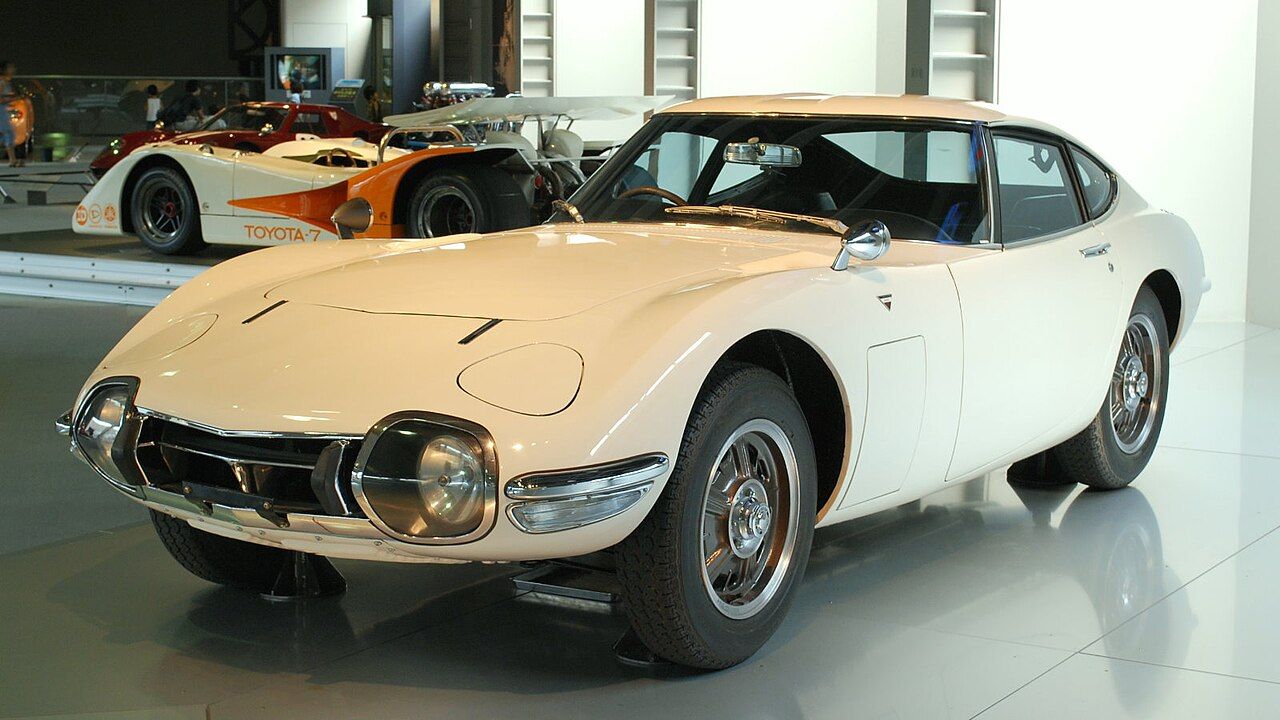
The 1967 Toyota 2000GT is not just a car; it is a symbol of Japan’s burgeoning automotive industry and a testament to the country’s engineering prowess. With its sleek design and impressive performance, the 2000GT has earned its place as one of the defining sports cars of its era.
The Birth of a Legend
In the 1960s, Japan was undergoing a significant transformation in its automotive landscape. With the nation recovering from the aftermath of World War II, Japanese manufacturers began to emerge on the global stage, striving to prove themselves against established European brands. The Toyota 2000GT was born out of this ambition, designed to showcase Japan’s engineering capabilities and to compete with the likes of the Jaguar E-Type and the Porsche 911.
Key figures played pivotal roles in the development of the 2000GT, most notably chief engineer Tetsuya Tada. He envisioned a car that combined performance, style, and the latest technological advancements. To achieve this, Toyota collaborated with Yamaha, a company known for its expertise in engineering and design. This partnership allowed for a unique blend of Toyota’s manufacturing prowess with Yamaha’s artistic vision, resulting in a vehicle that was as beautiful as it was powerful.
Design and Aesthetics
The design of the Toyota 2000GT drew heavily from contemporary European sports cars, while also incorporating distinct Japanese elements. Its long hood and short rear deck became signature features, evoking a sense of speed and elegance. The car’s body was constructed from lightweight materials, contributing to its aerodynamic efficiency and performance.
One of the standout aspects of the 2000GT’s design was its attention to aerodynamics. The low-slung profile and smooth lines were not merely aesthetic choices; they were meticulously crafted to reduce drag and enhance stability at high speeds. The car’s design team took cues from wind tunnel testing, a technique that was gaining prominence in automotive design. This focus on aerodynamics not only set the 2000GT apart from its competitors but also contributed to its impressive performance on the road.
Performance and Engineering
Under the hood, the Toyota 2000GT was equipped with a 2.0L inline-six engine that produced an impressive 150 horsepower. This power was transmitted to the rear wheels, allowing the car to accelerate from 0 to 60 mph in just over eight seconds. The engine was also notable for its dual overhead cam configuration, a cutting-edge feature that contributed to its superior performance and efficiency.
Equipped with advanced engineering features such as an independent suspension and four-wheel disc brakes, the 2000GT offered exceptional handling and ride quality. The independent suspension allowed the car to navigate corners with precision, while the disc brakes provided reliable stopping power. These features placed the 2000GT ahead of many of its contemporaries, establishing it as a serious contender in the sports car market.
Cultural Impact and Popularity
The Toyota 2000GT transcended its role as a mere automobile, becoming an icon of popular culture. Its most famous appearance was in the James Bond film “You Only Live Twice,” where it was driven by Sean Connery. This exposure helped solidify the car’s status as a symbol of sophistication and performance, capturing the imagination of car enthusiasts worldwide.
The 2000GT also played a crucial role in shifting perceptions of Japanese automotive engineering. At a time when Japan was often dismissed as a producer of low-quality vehicles, the 2000GT showcased the country’s ability to create high-performance, beautifully designed cars. Testimonials from early owners and automotive influencers further cemented its reputation, with many praising its engineering excellence and driving experience. For a deeper dive into the cultural legacy of the 2000GT, check out this list of iconic Japanese sports cars.
Limited Production and Rarity
The production of the Toyota 2000GT was limited to just 351 units, a factor that has significantly contributed to its collectibility and allure among car enthusiasts. The combination of high demand and low supply has resulted in skyrocketing values in the collector car market. Today, a well-preserved 2000GT can fetch well over a million dollars at auction, making it one of the most sought-after Japanese cars of all time.
Production challenges also played a role in the car’s limited numbers. The meticulous craftsmanship required to produce each vehicle meant that the assembly process was time-consuming, leading Toyota to make the strategic decision to limit the production run. This rarity, combined with the car’s storied history and performance credentials, has made the Toyota 2000GT a prized possession among collectors.
Technological Innovations
The Toyota 2000GT was not only a performance car but also a showcase of pioneering technologies. Its lightweight body, constructed from aluminum, was revolutionary for its time, allowing for enhanced performance and fuel efficiency. This focus on weight reduction would influence Toyota’s engineering philosophy in future models, including the much-loved Supra.
In addition to its lightweight design, the 2000GT introduced several innovations that would become standard in the sports car segment. The dual overhead cam engine, for example, was a feature that many manufacturers would adopt in subsequent years. The car’s engineering was ahead of its time, setting a benchmark that others would strive to meet. For further insights into the technological advancements of the 2000GT, refer to this detailed history of the model.
Legacy and Historical Significance
The legacy of the Toyota 2000GT extends far beyond its production years. It played a pivotal role in establishing Japan as a serious player in the global sports car market. Its innovative design and engineering capabilities helped to shift perceptions, proving that Japanese manufacturers could compete with their Western counterparts. Over the years, the 2000GT has received numerous accolades, including recognition in automotive halls of fame and awards celebrating its design and performance.
The 2000GT also paved the way for future Toyota sports cars, most notably the iconic Toyota Supra. The lineage of performance and design excellence that began with the 2000GT has continued to influence Toyota’s approach to sports car development. As a result, the 2000GT remains a significant chapter in the narrative of Japanese automotive history.
The Enthusiast Community
In recent years, there has been a resurgence of interest in the Toyota 2000GT among car enthusiasts and collectors. Events and gatherings dedicated to this iconic vehicle have become increasingly popular, celebrating its legacy and allowing owners to showcase their prized possessions. From car shows to vintage racing events, the 2000GT continues to attract attention and admiration.
Online communities have also sprung up, providing resources for restoration and preservation of the 2000GT. Enthusiasts share tips, advice, and experiences, fostering a sense of camaraderie among those who appreciate this historic sports car. For discussions and shared experiences, platforms like Reddit have become a hub for 2000GT fans, as seen in this archived discussion about the model’s impact and significance.
More from Fast Lane Only