By 1970, the muscle car market had reached its peak.
Dealerships across America were filled with increasingly powerful machines. Chevrolet offered the Chevelle SS 454. Plymouth had the Road Runner and GTX. Dodge sold the Super Bee and Charger R/T. Pontiac continued refining the GTO, while Buick surprised enthusiasts with the torque-rich GSX.
Horsepower was everywhere.
For buyers, however, there was a problem.
The most desirable muscle cars were becoming increasingly expensive. High-performance options, premium trim packages, and larger engines could quickly drive prices upward, putting some of Detroit’s fastest machinery beyond the reach of budget-conscious enthusiasts.
Ford recognized an opportunity.
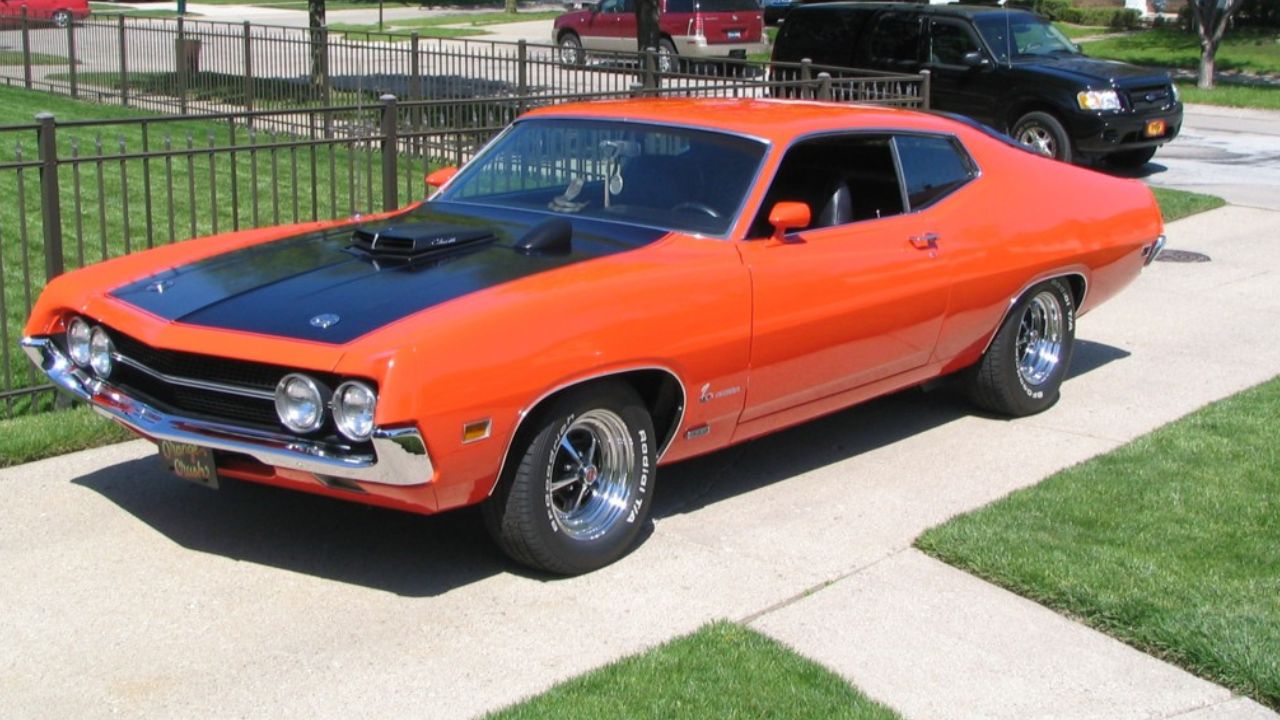
Rather than creating another luxury-oriented performance car, the company developed a model focused on delivering maximum speed for the money. The result was the 1970 Ford Torino Cobra, a vehicle that combined serious horsepower with relatively restrained pricing.
While it never achieved the fame of some rivals, the Torino Cobra quietly became one of the strongest performance bargains available during the golden age of muscle cars.
It offered big-block power, aggressive styling, and impressive acceleration without requiring buyers to pay for unnecessary extras.
In many ways, it represented muscle-car value at its finest.
Ford Was Expanding the Torino’s Role
The Torino had already established itself as an important part of Ford’s intermediate lineup by the late 1960s.
Originally positioned as a more upscale version of the Fairlane, the Torino gradually evolved into one of Ford’s primary performance platforms. Buyers could choose from a wide range of configurations, from practical family transportation to serious high-performance machinery.
For 1970, Ford completely redesigned the Torino.
The new body featured dramatic styling, smoother contours, and a more muscular appearance than previous generations.
The redesign provided the perfect opportunity to strengthen the car’s performance image.
Ford intended to compete aggressively in the muscle car market.
The Cobra would become one of its most effective weapons.
The Cobra Focused on Performance First
One reason the Torino Cobra offered such strong value was its mission.
Unlike some performance cars that attempted to blend luxury and speed, the Cobra prioritized performance above almost everything else.
Ford deliberately kept the package relatively simple.
The company concentrated resources where enthusiasts wanted them most: under the hood.
This approach helped control costs while ensuring buyers received genuine performance capability.
The strategy resembled the philosophy behind cars like the Plymouth Road Runner.
Rather than charging customers for extensive luxury features, Ford emphasized horsepower and acceleration.
The formula appealed to buyers who cared more about speed than status.
The Standard Engine Was Already Serious
Many muscle cars required buyers to pay extra for their most desirable engines.
The Torino Cobra started from a much stronger position.
Its standard engine was Ford’s formidable 429-cubic-inch Cobra Jet V8.
That was a remarkable amount of displacement for a base powerplant.
Officially rated at 370 horsepower, the Cobra Jet delivered enormous torque and exceptional acceleration. Like many engines of the era, enthusiasts often believed the real output exceeded published figures.
Regardless of the exact number, the engine’s reputation spoke for itself.
The Cobra Jet was one of the most respected performance engines in Detroit.
Making it standard equipment dramatically enhanced the Torino Cobra’s value proposition.
The 429 Cobra Jet Was Built for Real-World Performance
Part of the Cobra Jet’s appeal involved its flexibility.
The engine wasn’t merely powerful at high rpm.
It produced substantial torque throughout the operating range.
That characteristic made the Torino Cobra exceptionally effective in everyday driving.
Drivers didn’t need to constantly rev the engine to access performance.
The car accelerated strongly with minimal effort.
Whether leaving a stoplight, merging onto a highway, or passing slower traffic, the Cobra Jet provided immediate response.
This real-world usability helped distinguish the Torino Cobra from some rivals.
The performance felt effortless.
The Super Cobra Jet Raised the Stakes
For buyers seeking even greater capability, Ford offered the Super Cobra Jet package.
This option transformed the Torino into an even more serious performance machine.
The package included upgrades intended to improve durability and maximize acceleration. Enhanced internal engine components, performance-oriented gearing, and other modifications helped prepare the car for demanding use.
The Super Cobra Jet appealed particularly to drag-racing enthusiasts.
Its reputation quickly spread among knowledgeable performance buyers.
The availability of such a package further strengthened the Cobra’s value.
Customers could purchase a relatively affordable muscle car and equip it with one of Ford’s most formidable performance combinations.
The Styling Matched the Performance
The 1970 Torino redesign produced one of Ford’s most attractive muscle car bodies.
The long hood, sweeping roofline, and muscular fenders gave the car a powerful presence.
Unlike some competitors that relied heavily on graphics and ornamentation, the Torino’s styling created impact through shape and proportion.
The Cobra package added performance-oriented details that reinforced the vehicle’s identity.
Functional hood scoops, distinctive trim, and special badging helped separate it from ordinary Torinos.
The appearance communicated speed without appearing excessive.
Many enthusiasts still consider the 1970 Torino among Ford’s best-looking muscle cars.
NASCAR Success Boosted Its Credibility
Ford’s racing involvement played an important role in the Torino’s image.
The redesigned body proved highly effective in NASCAR competition, where aerodynamics and high-speed stability mattered tremendously.
Success on the racetrack helped strengthen public perceptions of the Torino’s capabilities.
Buyers appreciated the connection between racing and production vehicles.
The Cobra benefited directly from this relationship.
Although street cars differed significantly from their racing counterparts, the shared styling created a powerful marketing advantage.
The Torino looked like a winner because versions of it were winning.
That association mattered during the muscle car era.
It Was Often Cheaper Than Rivals
Perhaps the most compelling aspect of the Torino Cobra was its pricing.
Many competing muscle cars required buyers to spend considerable amounts of money to obtain top-tier engines and performance equipment.
The Cobra often delivered comparable performance for less.
Because the 429 Cobra Jet came standard, buyers didn’t need to navigate a lengthy options list to obtain serious horsepower.
The car’s straightforward approach reduced costs while maintaining competitiveness.
This value-oriented strategy resonated with enthusiasts.
The Torino Cobra provided a lot of performance per dollar.
That simple fact explains much of its appeal.
The Insurance Problem Was Growing
By 1970, insurance costs were becoming an increasingly important consideration for performance-car buyers.
Rates for powerful muscle cars continued rising, particularly for younger drivers.
Although the Torino Cobra wasn’t immune to these trends, its strong performance value helped offset some concerns.
Buyers understood they were receiving substantial capability for their investment.
As the economics of muscle car ownership became more challenging, value mattered more than ever.
The Cobra remained competitive in that environment.
It Lived in the Shadow of Other Fords
One reason the Torino Cobra remains somewhat underrated today is that it competed for attention within Ford’s own lineup.
The Ford Mustang dominated public perception of Ford performance. Specialty models such as the Boss 302 and Boss 429 attracted significant media coverage and enthusiast interest.
As a result, the Torino Cobra sometimes received less attention than it deserved.
Yet in many respects, it offered more performance value than some of its more famous siblings.
The car simply lacked the same level of publicity.
Its relative obscurity has become part of its charm.
Collectors Are Taking Notice
In recent years, appreciation for the Torino Cobra has increased substantially.
Collectors have begun recognizing the car’s unique combination of styling, power, and affordability.
The 429 Cobra Jet engine remains highly desirable, and the 1970 body style enjoys strong support among enthusiasts.
As buyers search for alternatives to more expensive muscle car icons, the Torino Cobra continues gaining attention.
Its reputation has grown steadily.
The market increasingly acknowledges what knowledgeable enthusiasts have understood for decades.
The Cobra was one of Ford’s best performance values.
The Muscle Car Bargain Ford Got Right
Looking back, the 1970 Torino Cobra succeeded because it focused on the fundamentals.
Ford understood that many buyers wanted maximum performance without paying for unnecessary luxury features. By making the powerful 429 Cobra Jet standard equipment and keeping the package relatively straightforward, the company created a car with exceptional value.
The formula worked.
The Cobra offered impressive acceleration, attractive styling, and strong racing credibility at a competitive price.
It delivered what enthusiasts actually wanted.
Big Performance Without the Big Price
The 1970 Ford Torino Cobra became one of Ford’s strongest values because it combined serious horsepower with practical pricing.
At a time when muscle cars were becoming increasingly expensive, the Cobra delivered a standard 429 Cobra Jet engine, available Super Cobra Jet upgrades, race-inspired styling, and impressive performance without requiring buyers to stretch their budgets excessively.
It wasn’t the most famous muscle car of the era.
It wasn’t the flashiest.
But for enthusiasts seeking maximum performance per dollar, few cars offered a better deal.
More than fifty years later, that combination remains just as impressive.
And that’s why the Torino Cobra continues to earn the respect of collectors and muscle car historians alike.
More from Fast Lane Only