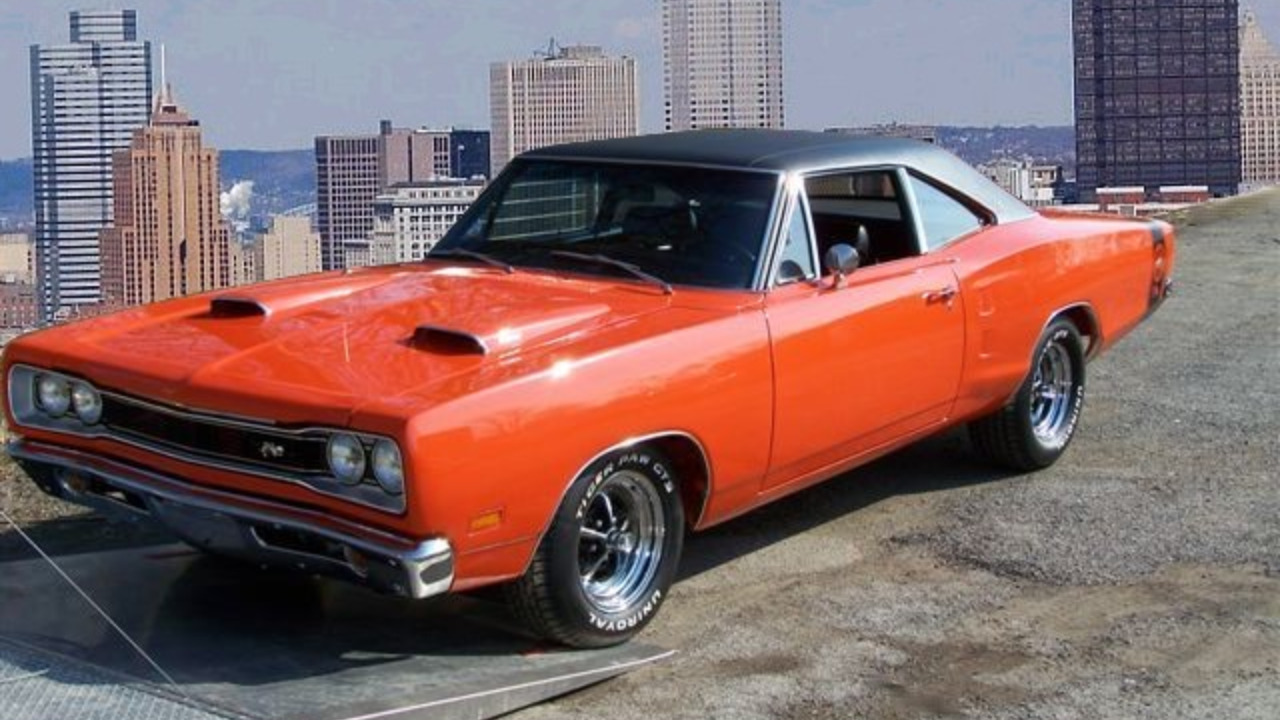
By 1969, the muscle car wars were raging across America.
Every major manufacturer seemed locked in a battle for horsepower supremacy. Showrooms were filled with increasingly powerful machines wearing famous names and eye-catching graphics. Buyers could choose from the Pontiac GTO, Chevrolet Chevelle SS, Plymouth GTX, Mercury Cyclone, Oldsmobile 442, and countless other performance models.
There was just one problem.
Many of these cars were becoming expensive.
Adding big-block engines, premium trim packages, performance options, and luxury features could quickly push prices higher than many young enthusiasts could comfortably afford. The very market that helped create the muscle car movement was beginning to face a financial barrier.
Dodge recognized an opportunity.
Instead of building another upscale performance car, the company created a machine focused on delivering maximum speed for minimum cost. Introduced for 1968 and refined for 1969, the Dodge Super Bee became one of the most aggressive value propositions in the entire muscle car market.
It offered powerful engines, strong acceleration, distinctive styling, and genuine street credibility without forcing buyers to pay for luxury appointments they didn’t necessarily want.
In many ways, the Super Bee embodied the original spirit of the muscle car movement better than some of its more expensive rivals.
It was fast, affordable, and unapologetically focused on performance.
Dodge Saw What Plymouth Had Accomplished
The Super Bee didn’t emerge in isolation.
Within Chrysler Corporation, Plymouth had already achieved tremendous success with the Plymouth Road Runner.
Introduced for 1968, the Road Runner followed a brilliantly simple formula. Plymouth stripped away many luxury features, kept pricing competitive, and concentrated resources on performance. Buyers loved it.
The Road Runner proved something important.
Many enthusiasts cared more about horsepower than prestige.
Dodge executives noticed immediately.
The division already offered performance cars such as the Coronet R/T, but those models occupied a more upscale position in the marketplace. Dodge needed a direct competitor to the Road Runner—something affordable, aggressive, and unmistakably performance-oriented.
The result became the Super Bee.
The Coronet Platform Kept Costs Under Control
Rather than creating an entirely new vehicle, Dodge based the Super Bee on the midsize Coronet platform.
This decision helped reduce development costs and allowed the company to bring the car to market quickly.
The Coronet already possessed solid engineering foundations and enough space to accommodate Chrysler’s most powerful engines.
More importantly, it was familiar.
Using an existing platform enabled Dodge to focus its budget on performance enhancements rather than expensive structural development.
The strategy fit perfectly with the Super Bee’s mission.
Everything revolved around delivering value.
The company wanted buyers to spend money on horsepower, not unnecessary complexity.
Performance Was the Main Attraction
Unlike some muscle cars that blended luxury and speed, the Super Bee made its priorities obvious.
Performance came first.
From the moment buyers walked into a dealership, Dodge emphasized acceleration, engine options, and overall capability.
The car wasn’t pretending to be a luxury coupe.
It wasn’t trying to compete with premium personal cars.
It existed for enthusiasts who wanted to go fast.
That straightforward approach resonated strongly with buyers.
The Super Bee felt honest.
Customers understood exactly what they were getting.
And what they were getting was substantial performance for the money.
The Standard 383 Was Already Impressive
One reason the Super Bee represented such strong value involved its standard engine.
Buyers didn’t need to spend extra money to receive meaningful performance.
The base powerplant was Chrysler’s 383-cubic-inch Magnum V8.
This engine delivered impressive output and strong real-world acceleration. It produced enough horsepower to make the Super Bee a legitimate performance car right out of the box.
For many buyers, the 383 offered everything they needed.
The engine combined reliability, torque, and speed in a package that worked exceptionally well on both the street and drag strip.
Few competitors offered so much standard performance at a comparable price.
The Six Pack Raised the Stakes
For enthusiasts seeking even more power, Dodge offered one of the most famous engine packages of the era.
The 440 Six Pack utilized three two-barrel carburetors mounted atop Chrysler’s massive 440-cubic-inch V8.
The setup dramatically increased airflow and transformed the Super Bee into an even more formidable machine.
When all three carburetors came into action, the engine delivered explosive acceleration that quickly became legendary among enthusiasts.
The Six Pack option represented one of the best performance upgrades available anywhere in Detroit.
It also reinforced the Super Bee’s reputation as a serious muscle car rather than merely a budget alternative.
The Hemi Was Still Available
As impressive as the Six Pack engine was, it wasn’t the top of the lineup.
Buyers with larger budgets could order the legendary 426 Hemi.
Officially rated at 425 horsepower, the Hemi stood among the most feared engines of the muscle car era.
Its hemispherical combustion chamber design allowed exceptional airflow and remarkable performance potential.
A Hemi-powered Super Bee became a genuine street and strip weapon.
The availability of such an engine gave the car tremendous credibility.
Even buyers who selected less expensive powertrains appreciated knowing the Super Bee shared showroom space with one of the greatest performance engines ever produced.
Styling Was Bold but Affordable
Although Dodge kept costs under control, the company understood the importance of appearance.
The 1969 Super Bee received styling updates that helped distinguish it from ordinary Coronets.
A revised grille, performance-oriented graphics, and unique trim elements created a more aggressive personality.
The famous Super Bee logos added character and reinforced the model’s identity.
Unlike some premium muscle cars, however, the styling enhancements remained relatively simple.
Dodge spent money where it mattered most.
The visual changes created excitement without significantly increasing production costs.
The result looked special without becoming extravagant.
It Was Built for Young Enthusiasts
The Super Bee’s affordability played a major role in its popularity.
Many buyers were younger enthusiasts who wanted muscle car performance but lacked the financial resources to purchase more expensive alternatives.
Dodge understood this audience.
The company knew these customers valued acceleration, styling, and street credibility above luxury amenities.
The Super Bee catered directly to those priorities.
By eliminating unnecessary costs and focusing on performance, Dodge created a car that felt accessible.
The formula broadened the muscle car market and helped strengthen the Super Bee’s appeal.
It Thrived at the Drag Strip
The Super Bee quickly developed a strong reputation in drag racing circles.
Its combination of powerful engines, sturdy engineering, and relatively affordable pricing made it a popular choice among enthusiasts who enjoyed quarter-mile competition.
Whether equipped with the 383, Six Pack, or Hemi, the car proved capable of impressive performance.
Owners appreciated the fact that they could purchase a competitive vehicle without spending a fortune.
The drag strip became one of the Super Bee’s natural habitats.
Success in competition further enhanced the model’s reputation.
The Value Formula Worked
One of the most impressive aspects of the Super Bee story is how effectively Dodge executed the concept.
The company successfully balanced cost and capability.
The car wasn’t stripped down to the point of discomfort.
Nor was it burdened by unnecessary luxury equipment.
Instead, Dodge found a sweet spot.
Buyers received strong engines, attractive styling, and genuine performance while maintaining affordability.
The formula mirrored the original spirit of muscle cars: big power in a relatively accessible package.
That approach helped define the segment.
It Lived in the Shadow of More Famous Names
Despite its strengths, the Super Bee often competed for attention against better-known muscle cars.
The GTO carried significant prestige. The Road Runner generated enormous publicity. The Chevelle SS attracted a loyal following.
As a result, the Super Bee sometimes received less recognition than it deserved.
Yet among enthusiasts who understood performance value, the Dodge earned considerable respect.
Its reputation was built on results rather than image alone.
The car delivered exactly what it promised.
Collectors Appreciate It More Than Ever
Today, the Super Bee enjoys a strong following among collectors and Mopar enthusiasts.
Its combination of affordability, performance, and historical significance makes it highly desirable.
Examples equipped with Six Pack or Hemi engines are particularly sought after, but even standard 383-powered cars command respect.
Collectors recognize the Super Bee as one of the purest expressions of the muscle car philosophy.
It wasn’t about luxury.
It wasn’t about status.
It was about performance.
That clarity of purpose continues to resonate.
The Working-Class Muscle Car
Looking back, the 1969 Dodge Super Bee succeeded because it understood its audience.
Dodge knew many enthusiasts wanted horsepower more than premium interiors or upscale features. By concentrating resources on engines and performance, the company created a vehicle that delivered exceptional value.
The strategy worked brilliantly.
The Super Bee offered serious acceleration, distinctive styling, and strong racing credentials at a price many buyers could justify.
It made muscle car ownership more accessible.
Big Power Without the Big Price Tag
The 1969 Dodge Super Bee offered muscle car performance without premium pricing because that was its mission from the beginning.
Built on the practical Coronet platform and powered by engines ranging from the strong 383 Magnum to the legendary 426 Hemi, the Super Bee delivered genuine performance while avoiding the costs associated with more luxurious rivals.
It represented the idea that speed should be attainable.
More than fifty years later, that philosophy remains a big part of the car’s appeal.
The Super Bee wasn’t designed to be the fanciest muscle car in America.
It was designed to be one of the smartest buys.
And in that role, it succeeded remarkably well.
More from Fast Lane Only