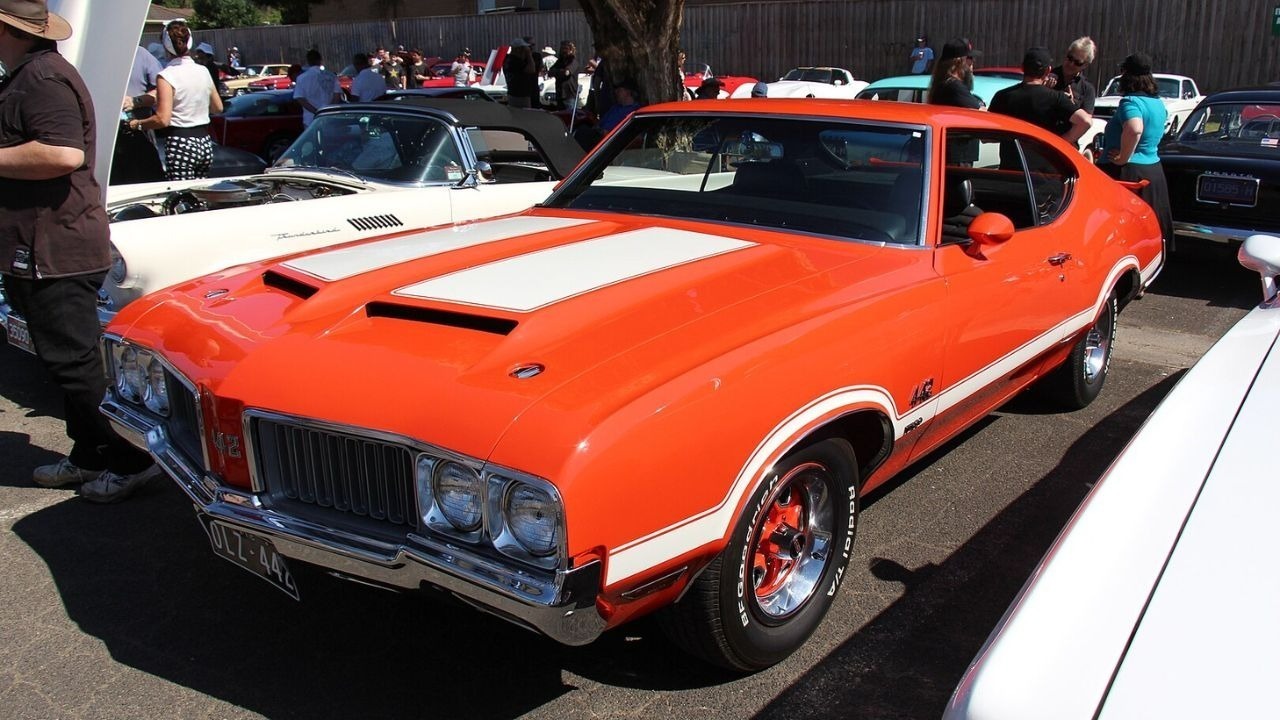
The 1970 Oldsmobile 442 W-30 earned its reputation not through shock value or over-the-top styling, but through balance, engineering discipline, and real-world performance that felt both powerful and controlled. In an era defined by escalating horsepower wars, it stood out as a refined yet brutally capable expression of Oldsmobile’s performance identity.
A Muscle Car Built on Refinement, Not Excess
By 1970, the muscle car segment had become a battlefield of ever-growing engines and increasingly aggressive designs. Oldsmobile, however, took a slightly different approach. Rather than chasing extremes, it focused on delivering performance that felt polished and usable.
The Oldsmobile 442 W-30 (1970) represented the peak of that philosophy. It was not just a powerful variant of the 442—it was the most serious, factory-engineered version of the platform, designed to deliver consistent performance without sacrificing drivability.
This combination of refinement and capability helped it stand apart in a crowded field. While other muscle cars often emphasized raw attitude, the W-30 package emphasized control, traction, and repeatable acceleration.
The W-30 Package: Factory Performance Done Right
What made the 1970 442 W-30 especially respected was the way Oldsmobile engineered its performance upgrades. The W-30 package was not just cosmetic; it was a carefully integrated performance system that improved airflow, cooling, and engine response.
At its core was a high-output V8 designed to deliver strong torque across the rev range. Instead of relying on high-revving drama, it focused on immediate low-end power, which made the car feel exceptionally strong in everyday driving situations.
The forced-air induction system, functional hood scoops, and upgraded components all worked together to ensure the engine could breathe efficiently under load. This made the W-30 feel consistent and confident even under aggressive acceleration.
It was not just about peak horsepower—it was about sustained, usable performance.
Big-Block Power With a Controlled Character
The 1970 442 W-30 delivered its performance in a way that felt disciplined rather than chaotic. Its big-block V8 provided massive torque, but the chassis and tuning ensured that power was delivered in a controlled manner.
This made the car especially effective in straight-line performance scenarios. It could launch hard without feeling unstable, and it maintained composure at high speeds better than many competitors of the era.
Unlike some muscle cars that felt unruly or demanding, the W-30 gave drivers a sense of confidence. It rewarded skill, but it did not punish imperfection as harshly as more aggressive setups.
That balance is a key reason it became so highly respected among enthusiasts.
Styling That Signaled Strength Without Flash
The visual identity of the 1970 Oldsmobile 442 W-30 was another important part of its appeal. It did not rely on excessive graphics or extreme styling cues to communicate performance.
Instead, it used subtle but purposeful design elements—functional hood scoops, clean body lines, and a strong stance—to signal capability. It looked serious rather than theatrical.
This restrained design approach gave it a more mature presence compared to some of its more flamboyant rivals. It projected confidence through proportion and detail rather than visual noise.
That understated appearance also contributed to its sleeper-like appeal, especially when paired with its serious performance hardware.
A Chassis Tuned for Real-World Usability
One of the defining strengths of the W-30 package was how well it translated power into real-world usability. The chassis was engineered to handle high torque loads without becoming unpredictable or uncomfortable.
Suspension tuning struck a balance between performance stability and road comfort. While it was certainly firm by modern standards, it was more composed than many purely drag-focused muscle cars of the time.
Steering feedback was direct enough to inspire confidence, and the car maintained stability during high-speed runs. It was not built for technical cornering like modern sports cars, but it excelled in the kind of straight-line and highway driving that defined the muscle car era.
Why Enthusiasts Respected It More Than They Bragged About It
Unlike some muscle cars that built their reputation on bold marketing or extreme styling, the 442 W-30 earned respect quietly. Enthusiasts appreciated it because it delivered consistent, repeatable performance without drama.
It was not necessarily the loudest or most outrageous car in its class, but it was one of the most well-rounded. That made it especially appealing to drivers who valued substance over spectacle.
This reputation for reliability in performance situations helped it gain long-term credibility. It was a car that could be driven hard and still feel composed, which is not something every muscle car of the era could claim.
The Peak of Oldsmobile’s Performance Identity
The 1970 model year is widely seen as the high point of Oldsmobile’s muscle car development. The W-30 package represented the culmination of years of refining the 442 formula into something both powerful and mature.
It demonstrated that Oldsmobile understood how to build performance cars that were not just fast in ideal conditions, but effective in real-world use. That distinction helped it stand apart from more extreme competitors.
Rather than chasing trends, Oldsmobile focused on perfecting its own approach—and the W-30 was the result of that discipline.
Collector Value and Modern Appreciation
Today, the 1970 Oldsmobile 442 W-30 is highly regarded among collectors who appreciate balanced muscle cars. It may not always command the same attention as the most famous nameplates, but it holds a strong position among informed enthusiasts.
Surviving examples, especially those with correct factory specifications, are increasingly sought after. The combination of rarity, engineering integrity, and historical significance has helped elevate its status in the classic car market.
The Oldsmobile 442 W-30 (1970) now represents one of the most complete interpretations of the muscle car formula—powerful, controlled, and built with a level of engineering maturity that set it apart from more chaotic rivals.
Why Its Reputation Endures
The legacy of the 1970 442 W-30 is rooted in balance. It proved that a muscle car did not need to be extreme or unpredictable to be respected. Instead, it could be fast, composed, and usable without sacrificing character.
In hindsight, that philosophy feels ahead of its time. Modern performance cars often strive for the same balance of power and control that the W-30 delivered more than five decades ago.
That is why it remains one of the most respected muscle cars of its decade—not because it was the loudest, but because it was one of the most complete.
More from Fast Lane Only
- Unboxing the WWII Jeep in a Crate
- 15 rare Chevys collectors are quietly buying
- 10 underrated V8s still worth hunting down
- Police notice this before you even roll window down
*Research for this article included AI assistance, with all final content reviewed by human editors