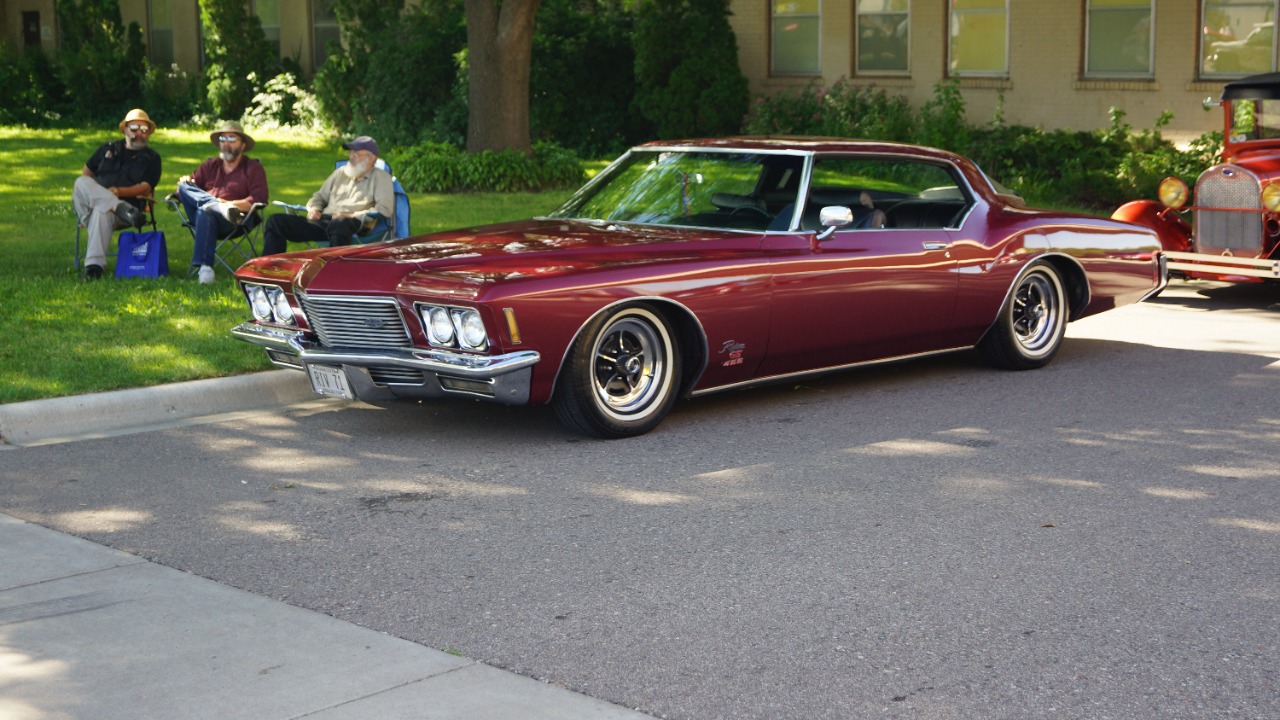
When the 1971 Buick Riviera debuted, it stunned both car buyers and automotive journalists. Gone were the sharp, elegant lines that had defined earlier Rivieras. In their place was a bold new design featuring a long hood, sweeping curves, and one of the most controversial rear ends in automotive history.
Nicknamed the “boattail” Riviera, the 1971 model represented one of the most dramatic styling shifts ever undertaken by an American automaker. While some enthusiasts immediately fell in love with its distinctive appearance, others were less impressed. Yet regardless of opinion, the Riviera succeeded in doing exactly what Buick intended: standing out from every other luxury car on the road.
So why did Buick take such a dramatic styling gamble? The answer lies in changing consumer tastes, design experimentation, and a desire to restore excitement to the personal luxury car market.
The Riviera Needed a Fresh Identity
When Buick introduced the Riviera in 1963, it quickly gained a reputation as one of the most stylish American cars available. Its clean lines and sophisticated proportions helped it compete with rivals such as the Ford Thunderbird and later the Oldsmobile Toronado.
By the late 1960s, however, the personal luxury segment had become increasingly crowded. Manufacturers were introducing new models and refreshing existing ones at a rapid pace. Buick executives feared that the Riviera was beginning to blend into the crowd.
To maintain the car’s premium image, the company needed a design that would attract attention and create a stronger identity.
Rather than making small styling updates, Buick decided to pursue something much more ambitious.
Inspiration Came from Classic Luxury Cars
The man most responsible for the new Riviera’s appearance was designer Bill Mitchell, General Motors’ influential vice president of design. Mitchell admired classic European performance and luxury automobiles, particularly prewar cars known for their dramatic proportions and flowing bodywork.
One vehicle often cited as inspiration was the legendary 1938 Bugatti Type 57SC Atlantic. Its distinctive tapered rear section helped inspire the Riviera’s famous boattail design.
Mitchell believed modern automobiles had become too conservative and wanted to inject more emotion into automotive styling. The Riviera became an opportunity to bring that vision to life.
The Famous “Boattail” Rear End
The most recognizable feature of the 1971 Riviera was its sharply tapered rear section.
Viewed from above, the body narrowed dramatically toward the rear bumper, creating a shape similar to the stern of a speedboat. This unusual design gave the car a unique profile that immediately separated it from competitors.
The boattail treatment was unlike anything else offered by an American manufacturer at the time. Combined with muscular fender lines and a prominent grille, it created a powerful visual statement.
While the design generated plenty of attention, it also sparked debate. Some buyers considered it elegant and futuristic, while others found it overly dramatic.
Either way, people noticed it.
Aerodynamics Played a Minor Role
Although the Riviera’s shape appeared sleek and aerodynamic, styling rather than performance was the primary motivation behind the redesign.
During the early 1970s, most American automakers still prioritized visual impact over wind-tunnel efficiency. The boattail shape was intended to evoke speed and sophistication rather than significantly improve fuel economy or top-speed performance.
The dramatic rear styling served primarily as a branding tool, helping the Riviera establish a unique presence in showrooms.
Buick Wanted to Attract Younger Buyers
Another reason for the radical redesign was Buick’s desire to appeal to younger customers.
Traditionally, Buick had been associated with older, more conservative buyers. The company hoped the Riviera’s bold styling would attract professionals and enthusiasts looking for something more exciting than a conventional luxury coupe.
The strategy aligned with broader trends throughout the automotive industry, where manufacturers were increasingly emphasizing performance, individuality, and personal expression.
The Riviera’s dramatic appearance helped reinforce its image as a luxury car with a sporty edge.
Mixed Reactions from the Market
The 1971 Riviera received widespread media attention, but customer reactions were divided.
Some buyers appreciated Buick’s willingness to take risks and embraced the distinctive design. Others preferred the cleaner, more restrained styling of previous generations.
Sales were respectable but did not fully meet Buick’s expectations. In response, designers gradually toned down the boattail styling during the 1972 and 1973 model years, making the rear section less pronounced while retaining the car’s overall character.
These revisions reflected Buick’s attempt to balance bold design with broader consumer appeal.
A Design That Became a Classic
Although controversial when new, the 1971 Riviera has aged remarkably well. Today, many collectors consider it one of the most distinctive American luxury cars of the 1970s.
The boattail Riviera represents an era when automakers were willing to experiment with daring designs and take creative risks. Its unique appearance ensures it remains instantly recognizable more than five decades after its introduction.
Collectors often seek out 1971 models specifically because they feature the purest version of the original boattail design before later revisions softened the styling.
Conclusion
The 1971 Buick Riviera changed styling so dramatically because Buick wanted to create a stronger identity in an increasingly competitive market. Inspired by classic luxury automobiles and guided by Bill Mitchell’s vision, designers developed a bold boattail shape that challenged conventional automotive styling.
While opinions were divided when it debuted, the Riviera succeeded in becoming one of the most memorable American cars of its era. Today, its dramatic design stands as a reminder that sometimes the most enduring automotive icons are the ones willing to break the rules.
More from Fast Lane Only