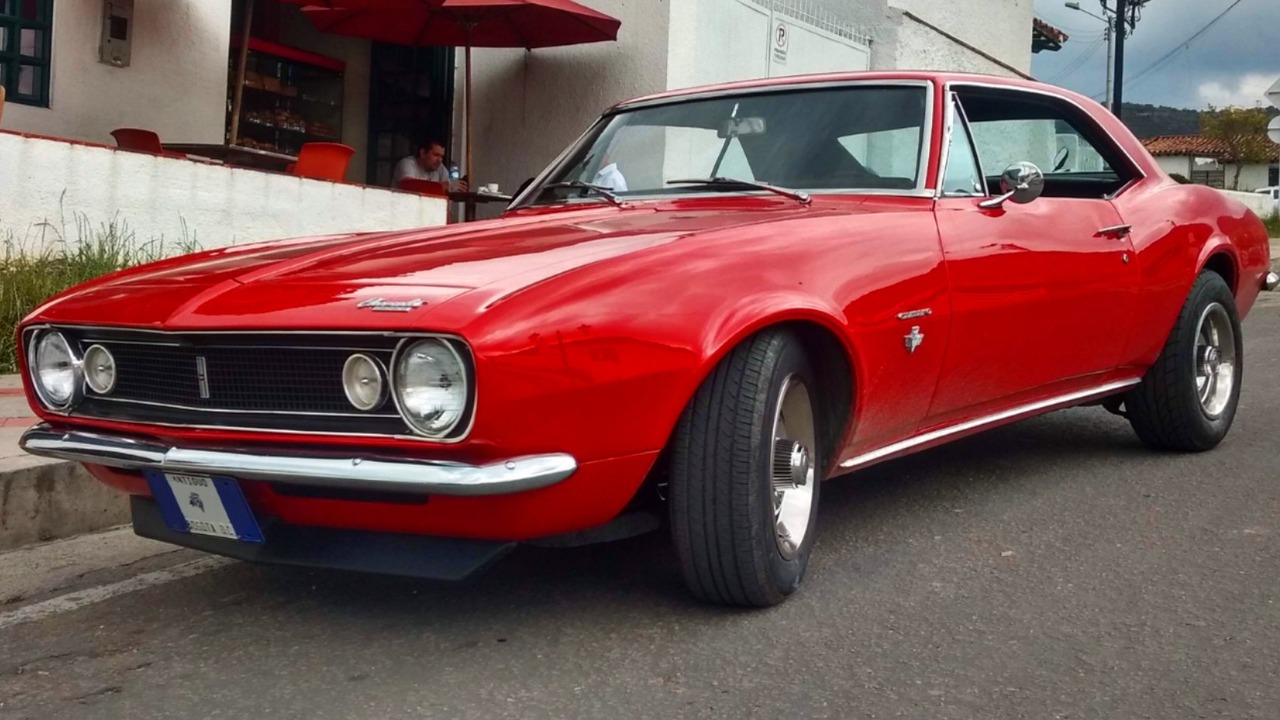
The Chevrolet Camaro is one of the most iconic muscle cars ever built, but few people realize just how quickly it came together. While the car would go on to become a symbol of American performance and a fierce rival to the Ford Mustang, its development was driven by urgency, competition, and a race against the clock.
When the Camaro debuted as a 1967 model, it represented Chevrolet’s answer to a problem that had caught General Motors by surprise. Ford had launched the Mustang in April 1964, creating an entirely new market segment that became known as the pony car. The Mustang was an instant success, and its popularity left GM scrambling to respond.
What followed was one of the fastest vehicle development programs of the era.
Ford’s Success Created Pressure
When the Mustang hit dealerships, demand exceeded even Ford’s expectations. More than 400,000 units were sold during its first year, proving that buyers wanted sporty, affordable cars with youthful styling and plenty of customization options.
General Motors executives quickly recognized that Chevrolet needed a direct competitor. The problem was that GM had not anticipated the Mustang’s massive success and did not have a similar vehicle ready to launch.
As Ford continued to dominate the growing pony car market, pressure mounted within Chevrolet to create a challenger as quickly as possible.
Development Began Under Tight Deadlines
Chevrolet’s response would eventually become the Camaro, but the company had little time to waste. Engineers and designers were given an aggressive schedule that compressed many stages of the normal development process.
Rather than creating an entirely new platform from scratch, Chevrolet used existing engineering resources whenever possible. The new car would ride on GM’s F-body platform, which was specifically developed to support both the Camaro and its corporate cousin, the Pontiac Firebird.
Using shared components and proven mechanical systems allowed development teams to move faster while controlling costs.
The project moved from concept to production readiness in roughly two years—a remarkably short timeline for a completely new vehicle during the 1960s.
Designers Worked at High Speed
The Camaro’s styling team faced a difficult challenge. The car needed to compete directly with the Mustang while establishing its own identity.
Designers created a long-hood, short-deck profile that fit perfectly into the emerging pony car category. At the same time, they incorporated Chevrolet styling cues that gave the car a more aggressive appearance than its Ford rival.
Numerous clay models and design proposals were evaluated in rapid succession. Because of the compressed timeline, decisions that might normally take months were often made in weeks.
The result was a car that looked modern, muscular, and distinctly Chevrolet when it finally debuted.
Proven Components Accelerated Development
One reason the Camaro reached production so quickly was Chevrolet’s decision to rely heavily on existing technology.
Many drivetrain options came directly from other Chevrolet vehicles. Buyers could choose from a wide range of inline-six and V8 engines, including the powerful small-block V8s that had already established strong reputations for performance and reliability.
Using familiar engines, transmissions, and suspension components reduced engineering risk and shortened testing requirements.
This approach allowed Chevrolet to focus its efforts on refining the overall package rather than developing every component from scratch.
The Camaro’s Secret Launch
Chevrolet officially introduced the Camaro to the public on June 28, 1966, during a highly publicized press event. The company carefully managed the reveal to maximize excitement and position the new model as a serious Mustang competitor.
Even the car’s name generated attention. Chevrolet representatives famously described a Camaro as “a small, vicious animal that eats Mustangs,” helping create buzz around the upcoming launch.
By the time the 1967 model reached showrooms, buyers finally had a Chevrolet pony car designed specifically to challenge Ford’s market leader.
An Immediate Success
The Camaro quickly found an audience. Buyers appreciated its sporty styling, broad range of engine choices, and extensive list of factory options.
The car could be ordered as an economical daily driver, a stylish cruiser, or a high-performance muscle machine. This flexibility helped Chevrolet attract a wide range of customers.
While Ford maintained strong Mustang sales, the Camaro immediately established itself as one of the segment’s most important competitors.
More importantly, Chevrolet had proven it could respond rapidly when market conditions demanded action.
A Lasting Legacy
Today, the 1967 Camaro is remembered not only for its styling and performance but also for the remarkable speed at which it was developed. Faced with an unexpected challenge from Ford, Chevrolet compressed years of planning, engineering, and design work into a much shorter timeframe.
The result was a car that successfully entered one of the most competitive markets in automotive history and became an icon in its own right.
More than half a century later, the first-generation Camaro remains a favorite among collectors and enthusiasts. Its story serves as a reminder that sometimes the most successful vehicles are born not from long-term planning, but from the ability to move quickly when opportunity knocks.
More from Fast Lane Only