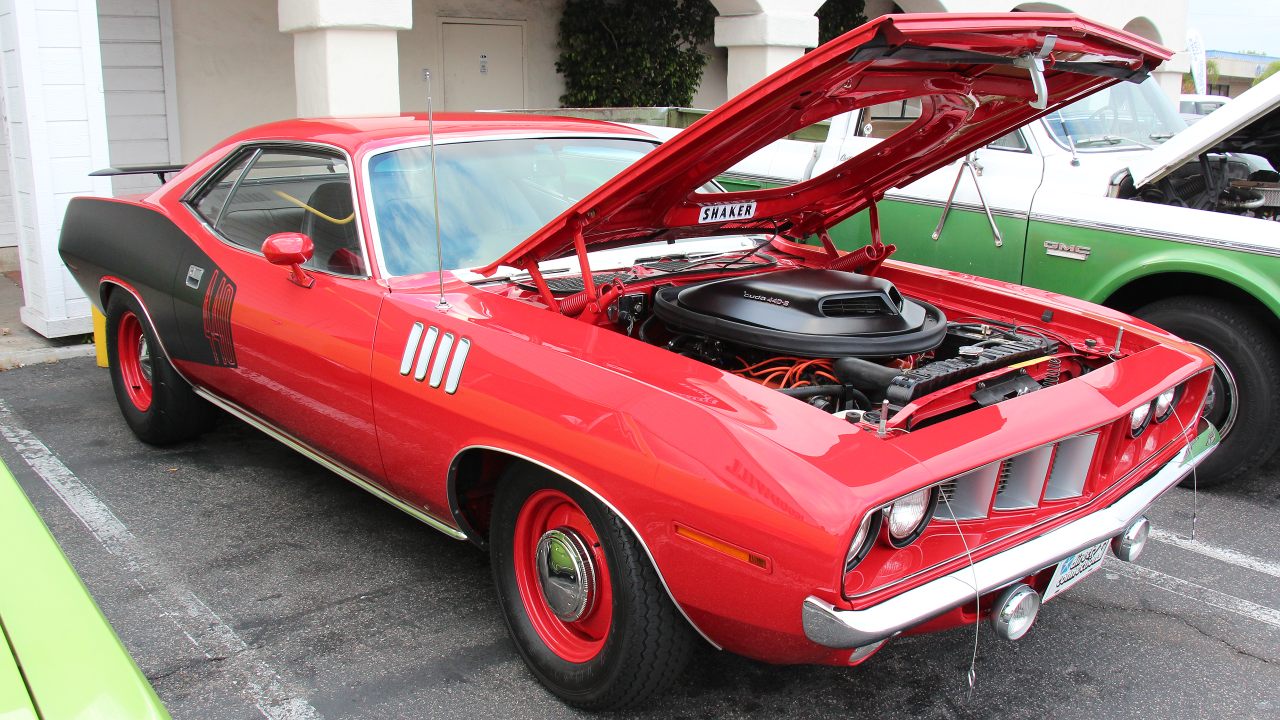
The 1971 Plymouth Hemi ’Cuda crossed a line that even other blue-chip muscle cars never quite reached, shifting from coveted collectible to something closer to untouchable myth. Scarcity, racing-bred hardware and a short production window all mattered, but it was the way those ingredients later collided with record-shattering auction prices and obsessive documentation that locked the car into a rarefied tier.
What began as a loud, relatively crude street machine has become a rolling financial instrument, a museum piece and a cultural reference point for the end of Detroit’s wildest era. I see its current status as the product of three intertwined forces: how few were built, how perfectly they captured Mopar performance at its peak, and how a handful of headline sales convinced the market that this was the muscle car you simply do not risk losing.
The brief, brutal peak of the Hemi ’Cuda
The 1971 Plymouth Hemi Cuda arrived just as the muscle car wave was starting to break, which is a big part of why it now feels frozen in amber. The model combined Plymouth’s compact E-body with the 426 Hemi, a race-derived V8 that had already earned a reputation for overwhelming both tires and drivers. By the early 1970s, tightening emissions rules and rising insurance costs were already squeezing big engines out of showrooms, so the 1971 Hemi Cuda effectively marked Mopar’s last unfiltered blast of factory performance before the decline that later enthusiasts would look back on with nostalgia. Reporting on Mopar’s peak muscle car era underscores that this was the moment when big-engine street cars were about to give way to detuned, regulated successors, which makes the 1971 configuration feel like a final chapter rather than just another model year.
That timing matters because it turned the car into a natural bookend for collectors who wanted a single machine to stand in for the whole Hemi legend. The 426 itself had been developed for competition, then adapted to street duty in limited numbers, and by 1971 it was already clear that the combination of raw displacement and minimal restraint would not last much longer. Later analysis of a one-of-one Hemi muscle car restored to concours standards, with all numbers matching from body to engine and transmission, reinforces how much value the market now places on cars that capture that exact moment before regulations reshaped Detroit performance. The 1971 Plymouth Hemi Cuda sits squarely in that window, which is why it has become shorthand for the end of an era rather than just a powerful old Plymouth.
Rarity that borders on folklore
Scarcity is the most obvious reason the 1971 Plymouth Hemi ’Cuda is treated as almost off-limits, and the numbers behind the convertible versions in particular read more like prototype counts than production figures. One detailed report on a one-of-one 1971 Plymouth Hemi Cuda notes that the model being offered was just one of 12 ever made, a figure that instantly explains why collectors talk about these cars in hushed tones. When a car exists in barely a dozen examples, and each one has a traceable history, the market stops treating it like a commodity and starts treating it like a piece of fine art, where the loss of a single example would be felt across the entire community.
The way auction houses frame these cars reinforces that sense of near-mythic rarity. A 1971 Plymouth Hemi Cuda convertible offered by Mecum Auctions carried a price guide of $7.31 m to $8.26 million, a range that would be unthinkable for a mass-produced muscle car but makes sense once you accept that there are only a handful of comparable cars on the planet. Another account of a B5 Bright Blue Cuda convertible, described as the finest example to roll across the block, shows how even within that tiny pool, condition and originality can elevate one car above the rest. When the market starts ranking a dozen cars by microscopic differences in paint, trim and documentation, it is a sign that the model has moved into a realm where almost no one is willing to risk driving or modifying what they own.
Auction records that rewired the market
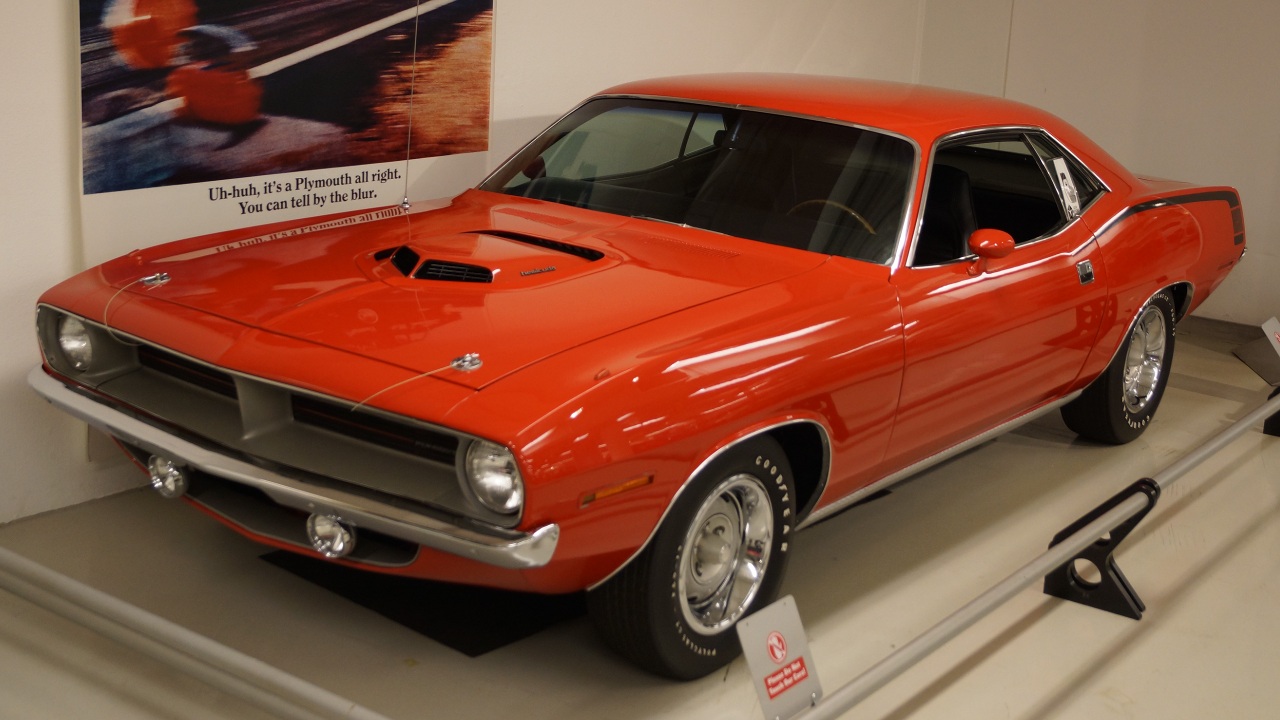
If rarity set the stage, it was a series of headline auction results that convinced many owners that a 1971 Plymouth Hemi ’Cuda should be treated as a financial asset first and a car second. One of the most cited examples is a Hemi ’Cuda convertible that crossed the block at a Mecum event for $3.5 million, a figure that was widely described as a record for the model and a benchmark for Hemi-powered cars in general. The same reporting notes that this $3.5 m sale remained a reference point even as pre-auction estimates for later offerings climbed higher, which shows how a single transaction can reset expectations for what a particular configuration is worth.
Subsequent offerings only pushed that ceiling upward. A rare 1971 Plymouth Hemi ’Cuda convertible attracted a record $4.8 million bid, yet even that eye-watering number was not enough to meet the seller’s reserve, a detail that signaled to the market that owners now believed their cars were worth more than even aggressive bidders were prepared to pay. Another 1971 Plymouth Hemi Cuda convertible, again handled by Mecum Auctions, was guided at $7.31 m to $8.26 million, a range that would have seemed implausible before the earlier record-setting sales. When owners see cars similar to theirs being valued in that band, the incentive to tuck them away in climate-controlled storage rather than risk depreciation or damage becomes overwhelming, which is how a car becomes effectively untouchable in everyday terms.
Obsession with originality and provenance
As values climbed, the standards for what counted as a truly top-tier 1971 Plymouth Hemi ’Cuda tightened dramatically, and that shift has made the best examples even more remote from normal use. A detailed profile of a one-of-one Hemi muscle car emphasizes that it was restored to concours standards with all numbers matching, including the body, engine and transmission, and that level of documentation has become the expectation for any car chasing the highest prices. Once a market starts rewarding matching stampings and factory-correct finishes with seven-figure premiums, owners have every reason to treat their cars like artifacts that must be preserved exactly as they left the assembly line.
This obsession with provenance also feeds into the stories that surround individual cars, which in turn make them feel less like machines and more like characters in a long-running saga. One investigation into the “shocking secrets” of a 1971 Plymouth Hemi Cuda traces how a billionaire’s custom order and subsequent changes blurred the line between factory specification and later modification, raising questions about what counts as authentic. The fact that enthusiasts now debate whether a particular Hemi Cuda is “real” enough to justify its valuation shows how far the conversation has moved from horsepower and quarter-mile times to paperwork, build sheets and ownership chains. In that environment, even a minor accident or non-original part can be seen as a catastrophic blow to value, which further discourages anyone from using these cars as they were originally intended.
From street legend to static icon
The final step in the Hemi ’Cuda’s transformation into an untouchable icon is cultural rather than purely financial. Over time, the 1971 Plymouth Hemi Cuda has come to represent not just Mopar performance but the entire mythology of American muscle, a role reinforced by the way enthusiasts and media single it out as the pinnacle of the era. Coverage of a Bright Blue Cuda convertible that was described as no average auction car, but rather the finest example to roll across the block, illustrates how the narrative now centers on superlatives. Each new feature or sale positions the car as the ultimate expression of Hemi power, which makes it harder for any owner to justify treating it like a mere weekend toy.
At the same time, the broader context of Mopar’s peak muscle car era, as outlined in analysis of how big-engine cars declined under regulatory pressure, gives the 1971 Hemi Cuda a symbolic weight that goes beyond its spec sheet. It stands in for a lost kind of freedom and excess, which is why collectors are willing to pay, and then protect, such staggering sums. When a car is one of 12, carries a guide of $7.31 to multi-million-dollar territory, and is scrutinized for matching numbers down to the last casting mark, it effectively exits the realm of normal automotive life. That is how the 1971 Plymouth Hemi ’Cuda became untouchable: not because it cannot be driven, but because the stories, prices and expectations wrapped around it have made most owners decide that they simply should not.
More from Fast Lane Only: