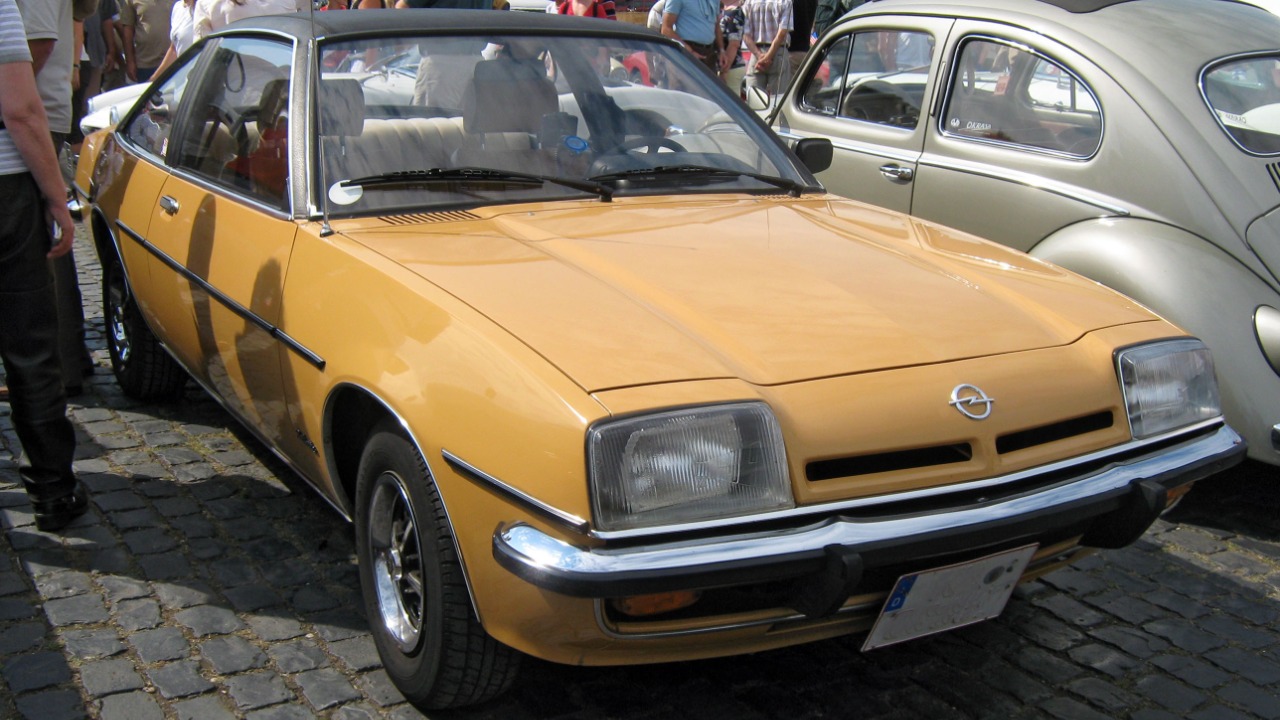
The 1975 Opel Manta did not arrive as a headline-grabbing supercar, yet it quietly became one of Europe’s most respected sporty coupés. It combined clean design, honest engineering and just enough performance to feel special without being fragile or fussy. That balance is exactly why, half a century on, enthusiasts still talk about the first year of the Manta B with a kind of knowing affection.
When I look at the 1975 car now, I see more than a pretty two-door from a defunct model line. I see the moment Opel figured out how to turn a mass-market platform into a cult object, one that bridged everyday commuting and weekend back-road blasts in a way that still feels modern.
The leap from Manta A to the sharper 1975 Manta B
The 1975 Opel Manta marked the start of the second generation, known as the Manta B, and it arrived with serious expectations on its shoulders. Sales of the A had reached 498,553 units, so Opel could not afford to alienate loyal buyers. Instead of a radical reinvention, the company refined the formula, stretching the body, sharpening the lines and keeping the front engine, rear-wheel-drive layout that drivers already trusted. The 1975 car effectively reset the benchmark for an attainable European coupé, proving that evolution could be more powerful than revolution.
That second-generation debut also repositioned the Manta in a fiercely competitive segment. The 1975 Manta B was pitched directly against the Ford Capri Mk, and while it was not as luxurious as some rivals, it was designed with performance and driving enjoyment in mind. A solid chassis and rear-wheel-drive handling gave the car a planted, predictable feel that appealed to young drivers who wanted something more engaging than a family saloon. That combination of familiarity and focus laid the groundwork for the respect the 1975 model still commands.
Design that aged into a cult look
Part of the Manta’s enduring appeal is visual. The first generation had already introduced a clean, almost American-influenced profile, and the Manta A was presented as a stylish coupé that helped establish Opel as a serious player among 1970s European classics. The 1975 Manta B kept that long-hood, short-deck stance but tightened everything up, with crisper edges and a more modern glasshouse. It looked purposeful without being aggressive, which is exactly why it still turns heads in a car park full of contemporary crossovers.
Details mattered too. Enthusiasts still talk about the Twin round headlamps, the minimal chrome and the way GT models wore unique badging, sportier trim and optional stripes or vinyl roofs. Those touches gave the car a recognisable face and a sense of occasion without tipping into flashiness. Inside, the Manta B was simple, functional and stylish, with a driver-focused cockpit that reflected its sporty character, a layout that Inside reports describe as deliberately focused on the driver rather than on luxury gimmicks.
Engines, handling and the “working man’s sports coupé”
Respect in car culture is rarely given to a pretty shell alone, and the 1975 Manta earned its reputation on the road. Earlier performance variants had already set the tone: The Opel Manta GT/E, powered by a 105 hp, 1.9-litre engine with Bosch L Jetronic fuel injection, showed that Opel could blend efficiency and punch. The GT/E-based “Black” special edition underlined that point, turning the Manta into a genuine performance statement without abandoning its everyday usability. When the Manta B arrived, it built on that mechanical credibility rather than starting from scratch.
The 1975 range would soon be crowned by the Manta GT/E, described as the Most Powerful Standard Version, with a 2.0L Fuel Injected Engine producing 110 hp, a Top Speed of about 190 km/h and 0–100 km/h in roughly 9.5 seconds. Those figures did not threaten exotic machinery, but they were more than enough to make the car feel lively, especially given its relatively light weight and rear-wheel-drive layout. Contemporary and retrospective accounts alike emphasise that the Manta was originally celebrated for its balanced handling, lightweight frame and rear-wheel-drive excitement, qualities that a modern Manta restomod project still leans on.
That blend of accessible performance and approachable dynamics is why one period observer called it the “working man’s sports coupé” and “the most brilliant thing ever built”, describing how it captured male hopes and dreams in a way few cars managed. In a video portrait of the car’s legacy, the Manta is framed as Germany’s cult coupé, a machine that delivered genuine driving fun without the price tag or pretension of more exotic badges. From my perspective, that is exactly the sweet spot that breeds long-term respect: a car that ordinary people could buy, drive hard and still rely on every day.
Motorsport, tuning and the birth of a scene
Cult status often needs competition credentials, and the Manta delivered those too. The Opel Manta (A) GT/E, produced from 1974 to 1975, is remembered as a true classic of the 70s, blending sharp design with spirited performance, and its Engine and Performance The Manta GT/E package laid the groundwork for later rally efforts. Those efforts culminated in the fearsome Manta B 400, a homologation special with distinctive styling, lightweight construction and enhanced performance that proved very successful in rallying, especially in the early 1980s. With only 245 units produced, this Legacy and Collectibility model has become a highly collectible classic, its value steadily increasing as enthusiasts chase cars with a genuine motorsport pedigree.
That competition story fed directly into a thriving tuning culture. GSi models became a Tuner Favorite, a Youth Icon and an Affordable dream for a generation of enthusiasts who wanted to personalise their cars. The Manta B GSi is described as one of the final and most evolved versions of the iconic coupé, a car that kept Opel competitive against rivals like the Audi Coupé and BMW 3 Series Coupé while also becoming a cult classic in its own right, a status echoed in dedicated GSi retrospectives.
By the 1990s, the Manta had become a canvas for creativity. Enthusiasts embraced widebody kits, wild paint and engine swaps, turning the car into a rolling expression of the tuning culture that flourished in that decade. One detailed look at the model notes that the Opel Manta stands as a testament to the creativity and spirit of that scene, inviting new generations to appreciate a car that only a select few are likely to remember, a sentiment captured in a Dec reflection on its legacy. For me, that is where the 1975 Manta’s reputation really crystallises: as the starting point for a platform that owners felt compelled to modify, race and celebrate.
From period hero to modern cult classic
What began as a practical sports coupé has now matured into a fully fledged classic. Both generations established the Both Manta as a true European classic, with Engine and Performance The Manta story culminating in performance models like the Manta GT/E. The Manta B, produced from 1975 to 1988, is now widely regarded as one of the most iconic and beloved sports coupés of its era, designed with performance in mind and offering a range of engines that balanced power and efficiency, as detailed in modern Manta retrospectives. Original or well-preserved examples are now highly sought after, with collectors valuing not just the car’s looks but its place in European automotive history.
That reverence has spilled into contemporary projects and media. A new electric reinterpretation of the car leans heavily on the original’s balanced handling and rear-wheel-drive excitement, showing how the template still works in a very different technological era, as recent Sep coverage of the revival makes clear. Enthusiast videos, such as a detailed Manta feature that walks through the car’s styling and driving character, keep the story alive for viewers who may never have seen one in person. When I watch those clips or read about the Opel Manta B GSE gaining a cult following, particularly in Germany and Scandinavia, I am reminded that respect in car culture is earned over decades, not marketing cycles.
More from Fast Lane Only: