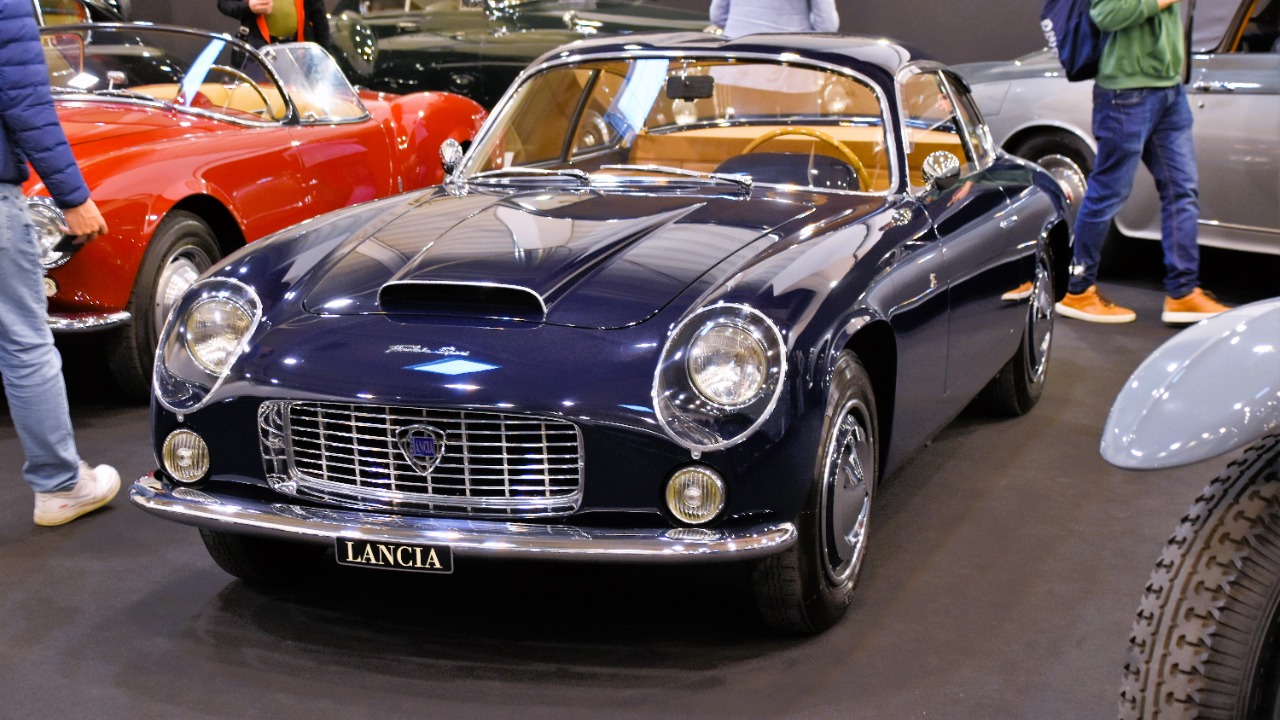
The 1957 Lancia Flaminia did not arrive as just another elegant Italian saloon. It was conceived as a flagship meant to sit in the same mental space as the most rarefied European luxury cars, a deliberate move upmarket at a time when expectations for comfort, speed and status were rising fast. To understand why it was pushed so high, I need to look at the rivals it faced, the engineering it inherited, the rarefied clientele it courted and the way its maker thought about “luxury” long before that word became a marketing cliché.
The flagship that replaced a legend
When The Lancia Flaminia appeared in 1957, it was explicitly positioned as a luxury car and as Lancia’s flagship model, taking over from the celebrated Aurelia. The company was not simply updating a range, it was replacing the Aure, a car that had already given Lancia a reputation for technical daring and quiet sophistication, with something that had to feel even more patrician and more expensive. By defining The Lancia Flaminia as the top of the tree from the outset, Lancia signalled that this was the car in which it would concentrate its most advanced engineering and its most ambitious coachwork.
That decision to succeed the Aure with a larger, more formal saloon also reflected a shift in who Lancia wanted in its showrooms. The Flaminia was named after the Via Flaminia, the ancient road that runs from Rome to Ariminum, now Rimini, which gave the car an immediate association with history, power and the Italian state. One rare early GT Touring example is described as a car that took its name from this road linking Rome and Ariminum (Rimini), underlining how The Flaminia was meant to evoke grand journeys and official processions rather than everyday errands. By tying the new flagship to a route that once carried consuls and armies, Lancia framed the car as a modern chariot for people who saw themselves in that lineage.
Engineering as a luxury statement
Lancia had long treated engineering as a form of luxury, and the Flaminia doubled down on that philosophy. Before it, the company had experimented with the Florida concept, a sleek show car based on the sophisticated mechanics of the Lancia Aurelia, with a V6 front engine, rear wheel drive and a transaxle layout. Those underpinnings, refined and reworked, fed directly into the Flaminia’s structure and running gear, so the production car carried over the sense that no component had been chosen simply because it was cheap or easy to build. In an era when many rivals still relied on conservative chassis designs, this kind of mechanical ambition was itself a way of going upmarket.
That approach did not always make the Flaminia the most practical choice, but it did make it feel special. When the car is compared with a contemporary Mercedes-Benz 300SE, the German saloon is described as an easier car to live with, with clear practical advantages over the Italian rival. Yet the same comparison notes that the Flaminia and its Italian makers had a tendency to over engineer, which in this context meant investing in complex solutions that served refinement and character more than cost control. In other words, Lancia treated engineering excess as a feature, not a bug, and that is exactly what a brand does when it is trying to climb into a higher luxury bracket.
Coachbuilt glamour and a fragmented range
One of the clearest signs that Lancia was aiming above the mainstream with the Flaminia was the way it opened the car up to several prestigious Italian coachbuilders. The chassis was offered in forms that could be turned into coupés and convertibles by specialists, and a Rare first series GT Touring example is described as part of a run of cars bodied by multiple high end Italian firms. That approach meant the Flaminia was not just a single model but a family of bespoke looking machines, each with its own silhouette and interior treatment, which is exactly how you build mystique around a flagship.
The range itself was unusually complex, with at least three main body styles and several sub variants that could confuse casual buyers but delighted connoisseurs. A detailed explanation of the Flaminia range describes how it was split into distinct lines, each with its own character and price point, which made the car feel more like a curated collection than a single product. By allowing the Flaminia to better cars from Aston and Ferrari in certain refined, grand touring roles, Lancia was not trying to chase volume, it was trying to sit at the same table as the most exclusive names in Europe, even if that meant accepting a smaller, more rarefied audience.
Competing with Mercedes, Jaguar and America
To see why Lancia felt compelled to push the Flaminia upmarket, it helps to look at the competition it faced. In the late 1950s and early 1960s, buyers who could afford a large, comfortable car were being courted by Mercedes, Jaguar and a wave of powerful American machines. Against that backdrop, the Flaminia often looked slow and expensive, especially in markets where straight line speed and low purchase prices were the main selling points. Lancia’s answer was not to undercut those rivals, but to offer something more rarefied, betting that a subset of buyers would pay for craftsmanship, subtlety and engineering nuance.
That strategy meant accepting that the Flaminia would never be the obvious choice for someone cross shopping a big Detroit sedan or a Jaguar saloon. Instead, it was pitched as a car for people who valued discretion over flash, and who were willing to trade outright pace for a sense of being in something hand finished and deeply considered. In that sense, the Flaminia was less a direct rival to mass produced luxury cars and more a European alternative for those who wanted to step sideways into a different idea of comfort and status, even if that meant living with quirks and compromises that more conventional cars avoided.
A car for elites at the end of an era
The social positioning of the Flaminia was as deliberate as its engineering. Contemporary analysis describes the Lancia Flaminia as patrician and upstanding, a car intended for the elite, including wealthy industrialists and even Pontiffs, and notes that some owners were the sort of people who did not like to publicise the fact. That quiet exclusivity is a hallmark of a certain kind of European luxury, where the real status lies in being recognised only by those in the know. By designing a car that looked formal rather than flamboyant, Lancia was speaking directly to that audience.
At the same time, later reflections on The Flaminia argue that it represented The End Of An Era for Lancia, the end of the company trying so hard to capture every last detail that made its cars great, regardless of cost. The Flaminia is described as something of a final flourish before more pragmatic thinking took over, which suggests that the upmarket push was both a high point and a financial strain. In hindsight, it reads like a last stand for a way of building cars that put engineering purity and low volume prestige ahead of the kind of rationalisation that would soon sweep through the industry.
More from Fast Lane Only: