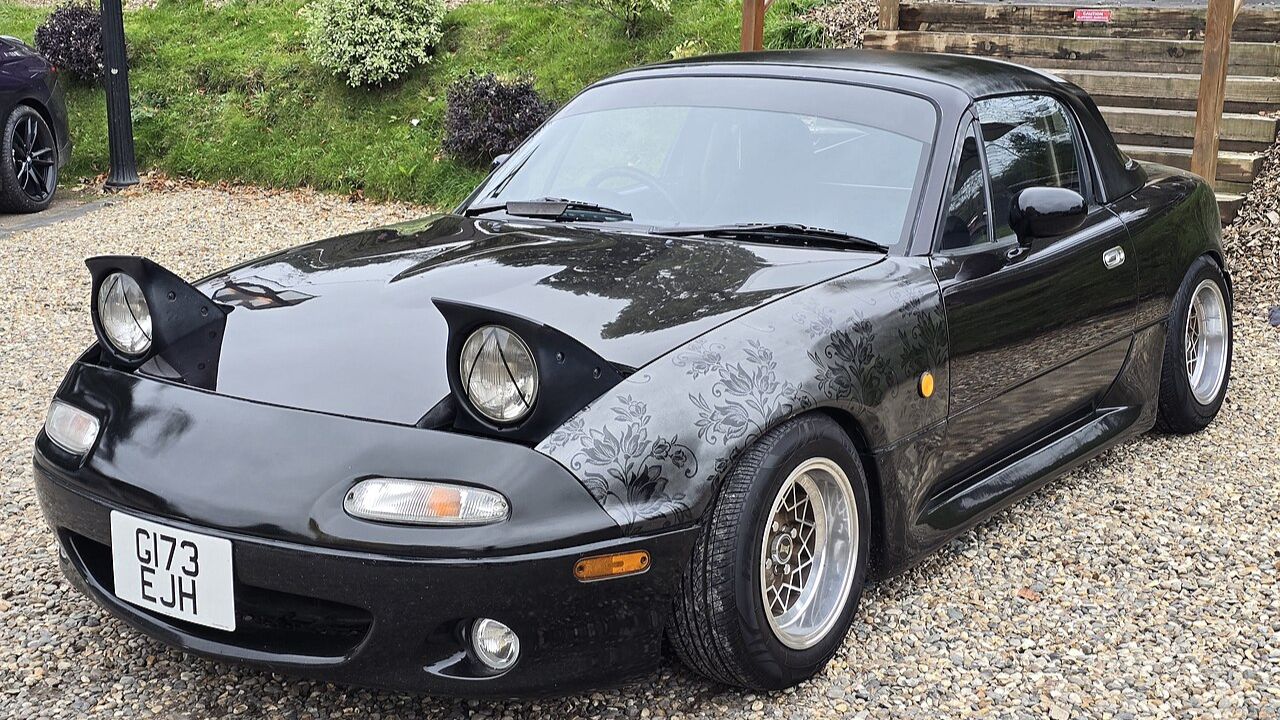
By the late 1980s, many enthusiasts believed the affordable two-seat roadster had become a relic of the past. British sports cars had largely disappeared from American showrooms, and manufacturers were focusing instead on practical front-wheel-drive coupes and increasingly sophisticated sports cars. Then the 1989 Mazda MX-5 Miata arrived, proving there was still enormous demand for a lightweight, open-top sports car built purely for driving enjoyment.
The Classic Roadster Had Nearly Disappeared
During the 1950s and 1960s, small roadsters from Britain and Europe enjoyed a loyal following among driving enthusiasts. Cars like the MG, Triumph, and Austin-Healey offered simple mechanical designs, light weight, and affordable fun. By the 1980s, however, stricter safety regulations, emissions requirements, and growing reliability expectations had driven many of these models out of production.
Manufacturers increasingly shifted their attention toward hot hatchbacks, front-wheel-drive coupes, and more expensive grand touring cars. Buyers who wanted an inexpensive convertible with responsive handling had very few options remaining.
Many industry observers assumed the affordable roadster market had permanently disappeared. It seemed unlikely that another manufacturer would take the financial risk of building such a specialized vehicle.
Mazda saw the situation differently.
Mazda Focused on Driving Enjoyment Instead of Raw Power
Rather than competing with high-horsepower sports cars, Mazda concentrated on creating a balanced driving experience. Engineers emphasized light weight, responsive steering, near-perfect weight distribution, and a slick-shifting five-speed manual transmission instead of chasing impressive horsepower figures.
The Miata’s compact four-cylinder engine delivered enough performance to make winding roads enjoyable without overwhelming inexperienced drivers. Its rear-wheel-drive layout provided predictable handling, while the independent suspension helped create a level of agility rarely found in affordable cars.
A manually operated soft top could be raised or lowered in seconds, encouraging owners to enjoy open-air driving whenever the weather allowed. Every aspect of the car reflected Mazda’s belief that simplicity often created a more rewarding driving experience.
The result was a sports car that prioritized balance over brute force.
Reliability Solved the Problems of Earlier Roadsters
One reason many classic roadsters disappeared was their reputation for mechanical problems. Electrical issues, oil leaks, and inconsistent build quality had frustrated countless owners over the years. Mazda recognized that enthusiasts still loved the roadster concept but expected modern reliability.
The MX-5 Miata combined classic sports car proportions with dependable Japanese engineering. Owners discovered they could enjoy spirited weekend drives without worrying about constant repairs or difficult maintenance. Routine servicing was straightforward, replacement parts were widely available, and the car quickly earned a reputation for exceptional long-term durability.
This combination attracted experienced enthusiasts as well as buyers purchasing their first sports car. The Miata offered the charm of traditional roadsters without many of the compromises that had limited their popularity.
Its dependability became one of its greatest strengths.
The Miata Inspired an Entire Generation of Sports Cars
The success of the 1989 MX-5 Miata surprised much of the automotive industry. Strong sales demonstrated that there was still a healthy market for lightweight, affordable sports cars focused on driver involvement rather than outright speed.
Competing manufacturers soon responded with their own open-top performance cars, including the Honda Beat, BMW Z3, Porsche Boxster, and later the Honda S2000. Although each took a different approach, they reflected renewed confidence that enthusiasts still valued simple, engaging sports cars.
More than three decades later, the Miata remains in production, making it one of the longest-running sports car nameplates in automotive history. It continues to embody the same philosophy that made the original so successful: lightweight engineering, balanced performance, and pure driving enjoyment.
Looking back, the 1989 Mazda MX-5 Miata revived a market most thought was gone by proving that enthusiasts had never stopped wanting affordable roadsters. They had simply been waiting for a manufacturer to build one with the reliability, refinement, and everyday usability that modern drivers expected.
More from Fast Lane Only
- Unboxing the WWII Jeep in a Crate
- 15 rare Chevys collectors are quietly buying
- 10 underrated V8s still worth hunting down
- Police notice this before you even roll window down
*Research for this article included AI assistance, with all final content reviewed by human editors