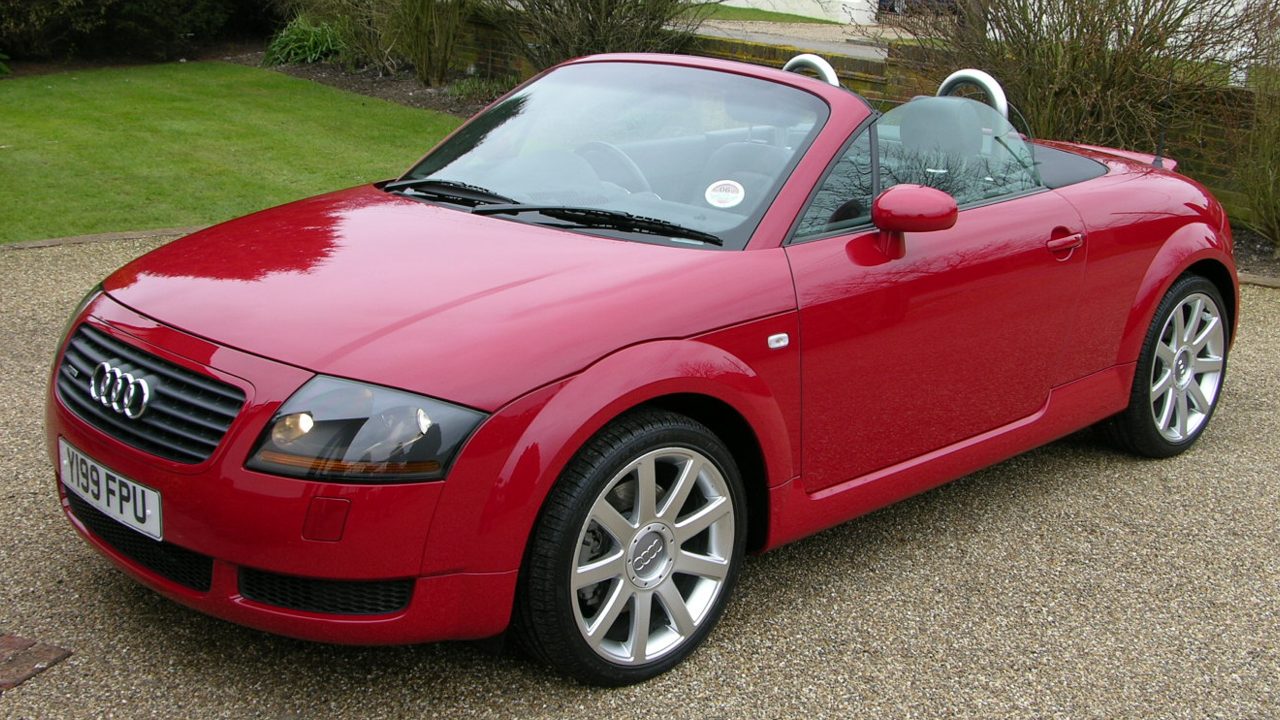
The first-generation Audi TT arrived at the turn of the millennium looking less like a product of focus groups and more like a concept car that had slipped past the accountants. Where rivals leaned on horsepower figures and Nürburgring lap times, the 2001 Audi TT proved that a clear, coherent design story could be just as powerful a sales tool as any performance spec sheet. Its rounded silhouette, minimalist cabin and almost architectural detailing turned a niche sports coupe into a modern design landmark that pulled new buyers into Audi showrooms.
That success did not happen by accident. The TT was conceived as a design-led project at a moment when Audi was still fighting to escape its reputation as a sensible, slightly anonymous alternative to German rivals. By treating the car as a rolling piece of industrial design, and then having the confidence to put that vision into series production with minimal dilution, Audi showed that aesthetics and brand identity could drive a business turnaround.
From design studio experiment to showroom draw
The TT’s story starts far from the usual engineering skunkworks. The exterior form was developed at the Volkswagen Group Design Center in California, where designers sketched a compact sports car built from simple geometric volumes rather than the busy surfacing that dominated the 1990s. That California origin mattered, because it freed the team from the weight of European sports car tradition and encouraged a cleaner, more graphic approach that would later define the production Audi TT. When the concept was shown, the reaction was strong enough that Audi leadership chose to preserve its essential shape almost intact for the road car, a rare act of faith in pure design.
By the time the 2001 model year TT reached customers, Audi had committed to that vision with only subtle adjustments. The bodywork surfacing remained crisp and rounded, described by designers as closer to an extrusion profile or bent sheet metal than to the sculpted, organic forms of its rivals. This gave the car a clarity that made it instantly legible on the road, with a roofline and fender arcs that could be recognized at a glance. Instead of chasing visual aggression, the TT leaned into restraint, and that restraint became its calling card in a segment crowded with louder shapes.
Bauhaus thinking and the power of the circle
The TT’s design language was not just clean, it was disciplined. Audi’s own design leaders have described the car as inspired by Bauhaus principles, where every line has a purpose and every shape serves a function. That philosophy is visible in the way the TT’s forms are reduced to circles, arcs and straight lines, from the wheel arches to the roof curve. The result is a car that feels more like a piece of product design than a traditional sports coupe, a quality that helped it appeal to buyers who might otherwise have ignored performance cars entirely.
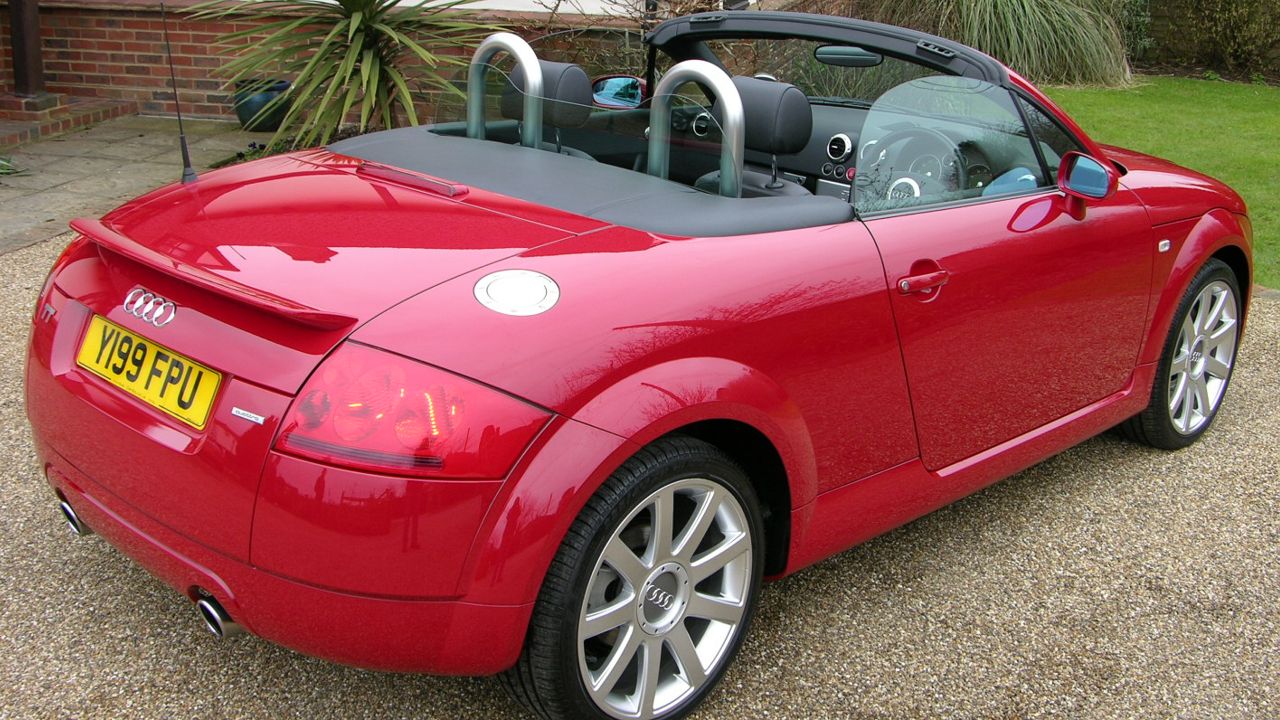
Inside, the same thinking produced one of the most distinctive cabins of its era. Another key element in the Audi TT Coupé is the circle, described internally as “the perfect graphic shape,” which appears in the air vents, instrument binnacles and even the distinctive gear knob. Details like the exposed aluminum fuel cap and the optional “baseball” style leather upholstery on some early cars reinforced the sense that this was an object carefully composed from a small set of visual ideas. That coherence made the TT feel premium even when its mechanical hardware shared much with more ordinary models, proving that perceived quality could be elevated through design alone.
How the TT reshaped Audi’s brand trajectory
When the TT arrived, Audi was still in transition from a brand that often ranked as a second or third choice to one that could stand toe to toe with established luxury rivals. Commentators have argued that to say the TT sparked a revival at Audi is no exaggeration, because it gave the company a halo product that communicated confidence and creativity. The car’s outstanding shape and intriguing interior drew attention far beyond traditional enthusiast circles, pulling design-conscious buyers into dealerships and helping to shift perceptions of the four-ring badge.
Corporate communications from Ingolstadt, Germany, later framed the TT’s three generations as a design-led success story that stretched over Twenty five years. By celebrating the original as a “design icon” in its own right, Audi effectively acknowledged that the car’s visual identity had been as important to the brand as any motorsport program or flagship sedan. The TT showed that a relatively compact, moderately powered coupe could still carry enormous symbolic weight if it embodied a clear aesthetic point of view, and that lesson filtered into the sharper, more confident design of subsequent Audi sedans and SUVs.
Why the 2001 TT sold on style in a performance-obsessed segment
On paper, the 2001 Audi TT was not the most extreme sports car of its time. Contemporary tests compared it with rivals like the Boxster and MR2 Spyder, which often felt more traditionally “sporty” at triple-digit speeds. Yet the TT held its own in the marketplace because it offered something those cars did not: a sense of everyday usability wrapped in a shape that looked like nothing else on the road. Buyers who might have been intimidated by mid-engined handling or stripped-back cabins found the TT’s combination of secure dynamics, all-weather capability and design-led interior a more compelling package.
That balance was deliberate. Reports on the 2001 model year highlighted how Audi leaped into the sports car league with a passion, turning from its usual sedans and wagons toward a surprisingly distinctive coupe. The TT’s available quattro all-wheel drive, turbocharged engines and solid build quality reassured customers that they were not sacrificing practicality for style. At the same time, the car’s visual drama, from its arched roof to its tight overhangs, meant that even a base model parked at the curb looked like a piece of automotive sculpture. In effect, Audi sold the TT as a design object that happened to be a capable sports car, rather than the other way around.
From modern classic to enduring design benchmark
Two decades on, the first-generation TT has entered the tricky phase where yesterday’s fashion risks becoming today’s used-car lot filler. Some owners and reviewers now debate whether the original Audi TT is a modern classic or a maintenance headache, pointing to age-related issues that can afflict any complex early-2000s German car. One analysis noted that the car’s outstanding shape and intriguing interior could obscure the reality that, underneath, it was built from relatively ordinary components, which means it can feel less exotic to drive than it looks. That disconnect has kept prices relatively accessible, even as design enthusiasts continue to praise the car’s form.
Yet the broader design community still treats the TT Mk1 as a reference point. Commentators focused on automotive design describe it as a masterpiece that redefined expectations for how a mass-produced sports car could look, emphasizing its disciplined surfacing and geometric clarity. Other retrospectives on the TT’s history underline how few truly iconic machines exist in automotive design, and place the original Audi TT among that small group. Even as Audi has brought the TT line to an end, internal and external tributes alike frame the first generation as a timeless design icon whose influence can be traced in the cleaner, more architectural lines of many later coupes and hatchbacks.
For me, that is the lasting lesson of the 2001 Audi TT. It showed that when a manufacturer commits to a strong, coherent design vision, customers will respond, even if the car is not the fastest or most exotic option on the market. By treating geometry, proportion and interior detailing as core product attributes rather than afterthoughts, Audi turned a compact coupe into a brand-defining object. In doing so, it proved that design, handled with conviction, can sell cars just as effectively as any performance statistic.
More from Fast Lane Only: