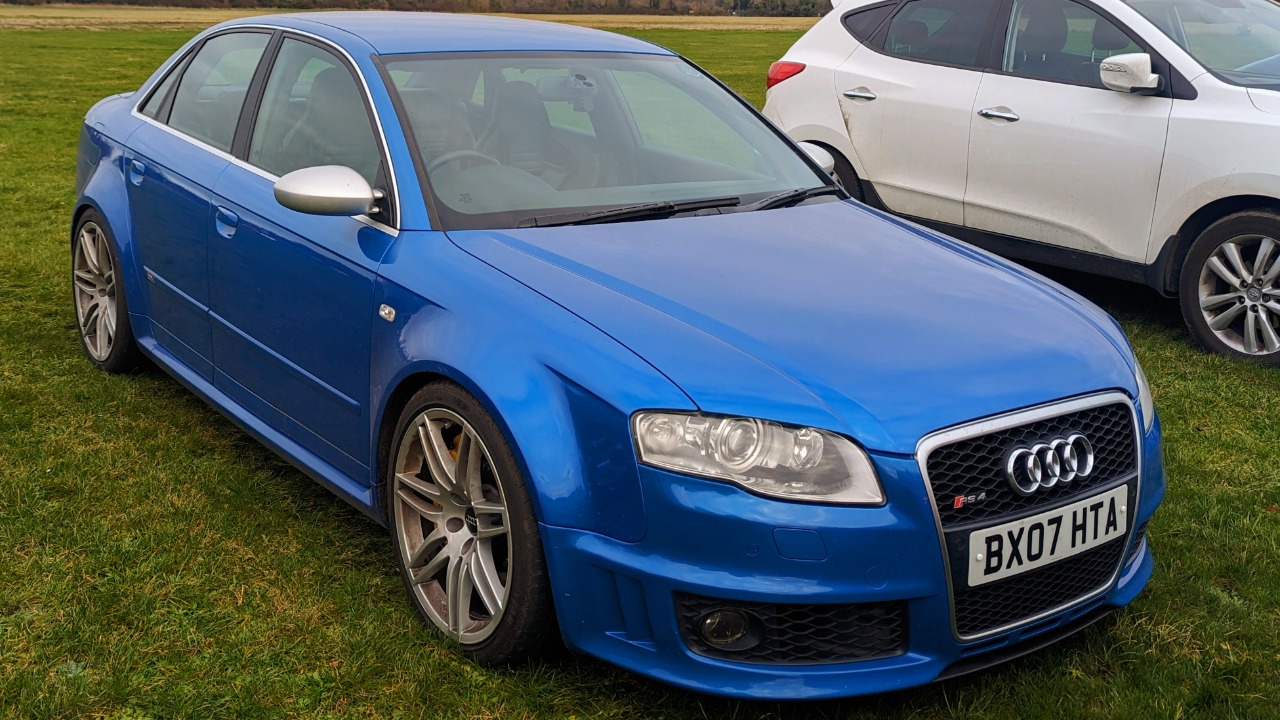
The 2007 Audi RS4 arrived at a moment when performance sedans were defined by turbo torque and straight-line numbers, then calmly rewrote the script with a high-revving V8 that begged to be chased to redline. Instead of leaning on forced induction, it trusted displacement, revs, and quattro traction to turn a sober four-door into something that felt closer to a touring car than a family hauler. I see that decision now as a turning point, a brief window when a mainstream brand let engineering excess win out over marketing checklists.
Looking back, what stands out is not just that the RS4 was fast, but that it made its speed feel earned, with a powerband that rewarded commitment and a chassis that seemed happiest on the edge of grip. The car’s structure, engine, and even its ownership quirks all tell the story of a sedan built around a single idea: if the engine is the soul of every car, then a high-rev V8 could give a four-door a soul to rival any supercar of its era.
The high-rev V8 that defined the RS4
At the center of the 2007 Audi RS4 was a naturally aspirated 4.2-liter V8 that refused to behave like a typical luxury-sedan engine. Instead of delivering a lazy wave of low-end torque, it came alive as the needle swept toward its redline, encouraging the driver to stay in gear and let the revs climb. Contemporary testers framed it in almost spiritual terms, with one Full Test video leaning on the idea that “if the engine is the soul of every car,” this particular V8 gave the RS4 a personality that was anything but clinical.
On paper, the numbers backed up the drama. The engine delivered a quoted 420-horsepower, and it did so in a way that felt almost race-bred, with a willingness to spin that was unusual in a sedan of its size. That same source highlighted the RS4’s “Favorite Features,” putting this high-revving V8 at the top of the list and noting how instantly it responded to any degree of accelerator input as it charged toward its 8,250 rpm redline. In an era when turbocharged torque curves were flattening out the driving experience, the RS4’s engine asked you to work for its best, and that effort was exactly what made it memorable.
Engineering a sedan around a race-bred heart
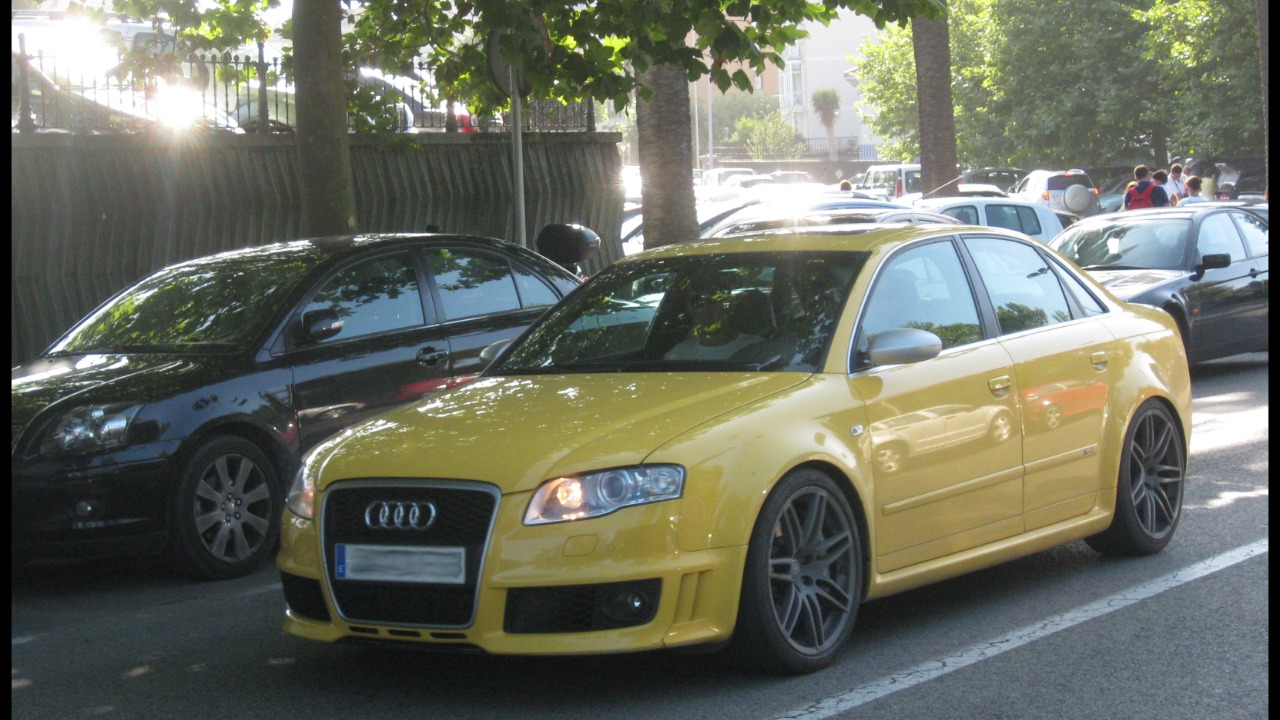
Building a high-revving engine is one thing, but making it live in a road-going sedan is another, and Audi’s engineers had to rethink the fundamentals to make the RS4 durable. The V8’s appetite for revs meant internal stresses that would have overwhelmed a conventional block, so the cylinder crankcase was machined to higher specifications to cope. A technical discussion from Nov spelled out how the high-revving engine demanded this extra precision, underlining that the RS4 was not just an S4 with more boost, but a fundamentally different piece of hardware.
The rest of the car was tuned to match that mechanical intensity. An Expert review of the 2007 Audi RS 4 described how the 4.2-liter V8 shaped both the “Going” and “Stopping” character of the car, noting that the RS 4’s 4.2-liter engine took a little getting used to because its character was so different from the more relaxed powertrains in other sedans. The same assessment emphasized how the brakes and chassis were calibrated to keep up with the engine’s urgency, so the car felt cohesive rather than overpowered. In practice, that meant a sedan that encouraged late braking, precise inputs, and a kind of rhythm driving that felt closer to a track car than a commuter special.
How the RS4 stacked up against its rivals
In the mid-2000s, the obvious benchmark for a fast German sedan was the BMW M3, and the RS4’s approach could not have been more different. Where the M3 leaned on rear-wheel drive and a more traditional sports-sedan balance, the Audi combined its high-rev V8 with quattro, creating a car that could deploy its power in conditions that would have humbled its rivals. A modern enthusiast review from Exhausted Reviews, hosted by Eddie, revisited the B7 RS4 and asked outright whether it was “Better Than The M3,” highlighting how the car’s grip and all-weather capability gave it a distinct identity rather than a copycat one.
From my perspective, that contrast is what made the RS4 so compelling. It did not try to out-M3 the M3; it built a different kind of performance sedan around the idea of relentless traction and a screaming V8. The same modern review from Jun underscored how the RS4’s steering feel, ride quality, and engine note combined into an experience that still feels special today, even as newer cars have eclipsed it on raw numbers. In a market where spec sheets often converge, the RS4’s particular mix of high revs and all-wheel drive gave it a niche that no rival quite matched.
Living with a high-rev hero
Of course, engineering drama and on-paper brilliance do not automatically translate into easy ownership, and the RS4’s complexity has always been part of its story. On enthusiast forums, owners have been candid about the realities of running one of these cars as they age. In a thread from Aug, one driver explained that they had owned two RS4s, noting that the first was lemon’d with great regret and that, after driving the competition, they still went for another, even while warning that these cars are not cheap to run. That mix of frustration and loyalty says a lot about how deeply the RS4 can get under an owner’s skin.
When I read accounts like that, I see a pattern that fits the car’s character. A sedan built around a high-strung V8 and intricate quattro hardware was never going to be a low-maintenance appliance, and the same traits that make it thrilling on a back road can translate into higher costs in the real world. Yet the fact that someone would go back for a second RS4 after a bad experience with the first suggests that the driving experience delivers something owners struggle to replace elsewhere. In a way, the ownership story mirrors the powerband: there is effort, risk, and expense, but also a payoff that keeps people coming back for another run to redline.
The RS4’s lasting influence on performance sedans
Nearly two decades on, the 2007 RS4 feels like a snapshot of a particular philosophy that has largely faded from mainstream performance sedans. Today, turbocharged engines dominate, and even Audi’s own fast four-doors lean on forced induction and hybrid assistance rather than naturally aspirated revs. That shift makes the B7-generation RS4 stand out even more sharply as a car that prioritized feel over efficiency, with its 4.2-liter V8 and manual gearbox forming the core of its identity. When I think about modern cars that try to recapture that analog intensity, few manage to combine it with four usable doors and all-weather traction in quite the same way.
The legacy of that approach shows up in how often enthusiasts still reference the RS4 when they talk about what they miss in current performance sedans. The way period tests framed the engine as the car’s “soul,” the way technical deep dives from Nov highlighted the extra machining in the cylinder crankcase, and the way modern reviewers like Eddie revisit the car on channels such as Exhausted Reviews all point to a machine that left a deeper mark than its production numbers might suggest. For me, the 2007 Audi RS4 is a reminder that when a manufacturer builds a sedan around a high-rev V8 instead of treating the engine as an afterthought, the result can resonate long after the spec sheet is outdated.