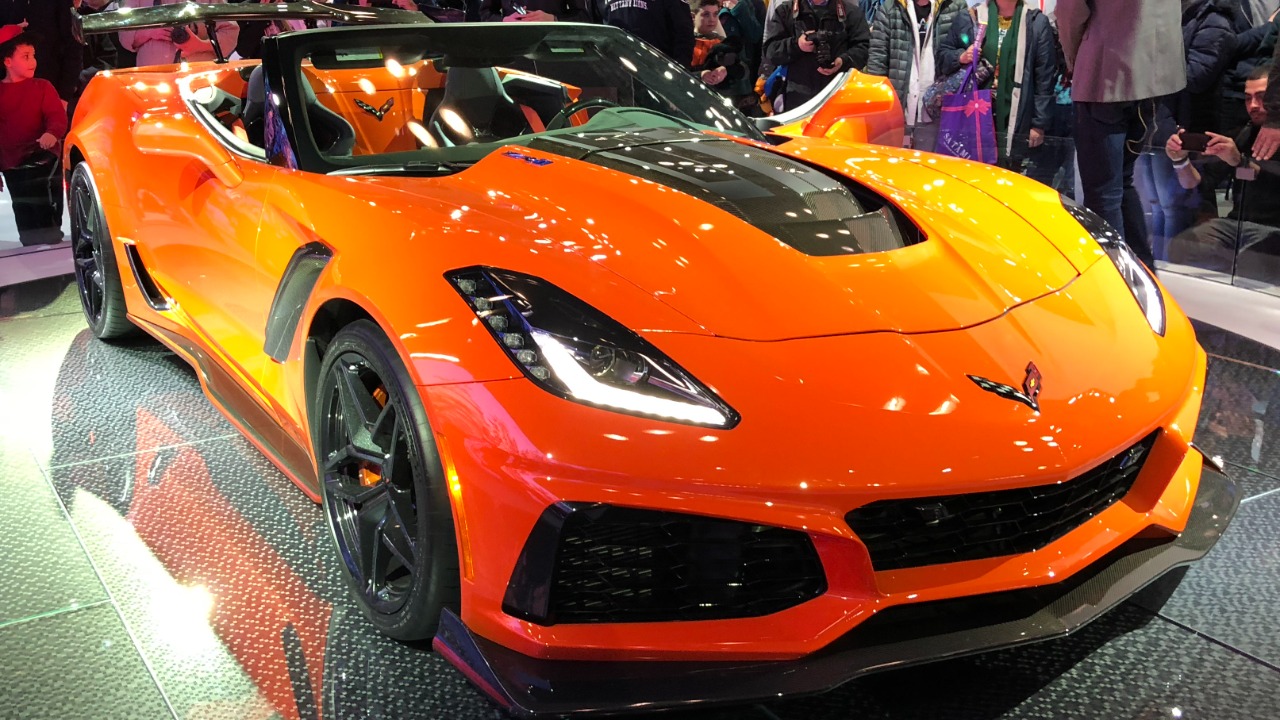
The 2019 Corvette ZR1 arrived as more than just another fast Corvette, it landed as a carefully engineered farewell to six decades of front‑engine tradition. By the time the mid‑engine C8 was ready, this last C7 flagship had already staked its claim as the most extreme interpretation of the classic long‑hood, rear‑drive formula. To understand why it became the ultimate front‑engine sendoff, I look at how its powertrain, aerodynamics, chassis and legacy all converged into a single, unapologetically loud full stop.
The last, loud word in front‑engine Corvette power
At the heart of the ZR1 story is the LT5, a supercharged 6.2‑liter V‑8 that turned the familiar small‑block into something bordering on outrageous. Factory figures made it clear that this was the most powerful Corvette ever, with the LT5 6.2L V‑8 described as advancing the car’s supercar ambitions and delivering output no previous production model could match, a point underscored when the car was introduced as the Return of the King. That powertrain did not just add a little extra shove, it reset expectations for what a front‑engine American sports car could do straight from the showroom.
The engine’s character mattered as much as the numbers. Described as a Powerhouse with a Heart of Gold, the LT5 sat Under the sculpted hood as a 6.2-liter supercharged centerpiece that defined the car’s personality. Factory specifications for the ZR1 Coupe emphasized that this was a milestone Corvette, the fastest and most powerful production version the brand had ever built, thanks to the LT5’s ability to push an immense volume of air into the engine. When I look at the broader Corvette lineage, that combination of displacement, forced induction and factory validation is exactly what cements the ZR1 as the definitive front‑engine high point.
Aerodynamics and cooling pushed to the edge

Power alone could not make the ZR1 a proper swan song, so the car’s bodywork became a functional statement about how far the front‑engine layout could be taken. Designers created an all‑new front fascia that was not just aggressive for its own sake but was explicitly shaped to channel air for propulsion‑system and drivetrain cooling, with four new radiators and a prominent, downforce‑enhancing front underwing integrated into the nose, details that are laid out in the factory description of the updated front fascia. That approach turned the ZR1’s face into a rolling heat‑management system, a necessity when you are feeding that much air and fuel through a supercharged V‑8.
On track, those choices translated into a car that could sustain serious pace rather than just deliver one‑lap heroics. Early testing focused on what made the ZR1 unique, starting with its mighty LT5 motor and then examining how the cooling and aero package coped when the car was pushed hard, with evaluators noting that the drivetrain’s ferocity could even force the car to pull back from its most aggressive mode if heat climbed too high, a reality captured in detailed first test impressions. To me, that tension between raw output and the limits of cooling is part of what makes the ZR1 feel like a boundary‑pushing final act for the front‑engine layout.
Chassis tech that kept the old layout competitive
Underneath the wild bodywork, the ZR1 relied on a familiar but highly evolved suspension recipe to keep all that power usable. The car used a double‑wishbone setup at both the front and rear, a configuration that had been refined over generations and was paired with GM’s sophisticated Magnetic Selective Ride Control to balance comfort and track capability. That combination allowed engineers to keep the engine in front of the driver without surrendering the kind of composure and grip that modern supercars demand.
Later reflections on the model have been blunt about where the ZR1 sits in the Corvette hierarchy, describing the 2019 car as the pinnacle of front‑engine Corvette performance and emphasizing how its chassis tuning worked with the adaptive dampers and Magnetic Ride Control suspension to extract the most from the platform, a view captured in a detailed video overview. When I weigh that against the move to a mid‑engine layout in the C8, it is clear that the ZR1’s suspension and electronics were doing heroic work to keep the traditional configuration competitive right up until the layout itself changed.
From RPO code to “holy grail” badge
The ZR1 name did not start as a halo model, it began life as a simple RPO code that quietly signaled a performance package. Over time, that internal shorthand evolved into a badge that symbolized ultimate performance in the Corvette world, a transformation that set the stage for the C7 version to carry enormous expectations. By the time the 2019 car arrived, the letters ZR1 meant you were looking at the fastest, most track‑focused interpretation of the platform, not just an options list.
Enthusiasts quickly embraced the C7 ZR1 as the apex of that evolution. One detailed walk‑around calls it the “holy grail” of Corvettes and describes the C7 Corvette ZR1 as the pinnacle of front‑engine Corvette performance, a final chapter of raw American power built around a supercharged V‑8 that made it the most powerful production example of the breed. That kind of language is not casual fan chatter, it reflects how the community now reads the ZR1 badge itself, as shorthand for the moment when the front‑engine formula reached its absolute limit before the architecture changed.
A swan song recognized in real time
What makes the 2019 ZR1 unusual is that people inside and outside the company understood its historical role even as it was being built. Coverage of the final C7 assembly made the point that the 755-horsepower Chevy Corvette ZR1 stood as the real swan song for the C7, and, by extension, for all front‑engine Corvettes. That framing matters, because it shows that the car was not retroactively crowned as a sendoff; it was treated as such while the last examples were still rolling out of the factory.
On the enthusiast side, the message was even more direct. One review flatly states that the 2019 Chevrolet Corvette ZR1 is here to destroy every other Chevrolet Corvette that came before it, leaning on its supercharged output and extreme aero to argue that it justified every penny of its price. Another deep dive into the C7 platform calls the 2019 ZR1 the pinnacle of C7 CORVETTE performance and describes the LT5‑powered ZR1 as an amazing feat of engineering that only becomes more intense once modified. When I put those perspectives together, it is clear that the ZR1’s status as a farewell performance was widely recognized, not just a story told in hindsight.
How it feels from behind the wheel and on screen
Even if you never drive one, the way people talk about the ZR1 from behind the wheel helps explain its aura. In one detailed video review, the host introduces the C7 ZR1 as the most powerful front‑engine Corvette the brand has ever built and notes that, although the new eighth‑generation C8 is mid‑engined for the first time in a Corvette, the driver in the ZR1 still sits in front of the powerplant, a contrast that highlights how the older layout delivers its own kind of drama, as seen in a spirited Corvette the track session. That perspective captures what I hear from many owners, that the sensation of a long hood and a thundering V‑8 ahead of you is part of the appeal, not a flaw to be engineered away.
Other presenters lean into the car’s personality as much as its numbers. One walk‑around hosted by Derek Shaky for the Collector Car Network at a Barr auction treats the ZR1 as a future collectible, focusing on its details and the way it stands out even among other high‑end performance cars. Another enthusiast review insists that the 2019 Corvette is worth every penny because of how it feels at the limit, not just how it looks on paper. When I watch those reactions, I see a consistent theme: the ZR1 is not just the end of the front‑engine era, it is the car that convinced a lot of people that the old layout deserved to go out on top.
A legacy that shapes how we see the C8
Looking back now that the mid‑engine C8 has firmly taken over, the 2019 ZR1’s role in the story feels even clearer. One retrospective video on the C7 platform describes how the 2019 Corvette ZR1 represents the peak of front‑engine Corvette performance and frames it as the final chapter before the C8 mid‑engine era, a moment when the classic layout was pushed as far as it could reasonably go, as laid out in a detailed Corvette overview. That framing shapes how I see the C8 today, not as a rejection of the old formula but as a response to a car that had already maxed out what front‑engine packaging could deliver.
Even the way enthusiasts talk about buying and modifying the ZR1 reflects its special status. Guides to the 2019 model emphasize that the LT5‑powered ZR1 is a pinnacle car, and tuning shops describe how the 2019 ZR1 CORVETTE becomes almost absurdly quick once modified, which only deepens its legend. When I put all of that together, from the LT5’s brute force to the aero, chassis and cultural impact, it is hard to escape the conclusion that the 2019 ZR1 did exactly what a final front‑engine flagship needed to do: it closed one era so decisively that the only logical next step was to start a new one with the engine moved behind the driver.
More from Fast Lane Only: