Ford has spent decades chasing efficiency, safety, and platform commonality, yet some of its most interesting engineering never became a household name. Buried beneath the marketing labels sits a “forgotten” architecture that quietly shaped how family sedans, workhorses, and police cruisers behaved on real roads. As the industry races toward electric platforms and software-defined vehicles, that old-school Ford layout suddenly looks less like a relic and more like a reference point.
Revisiting this underappreciated foundation helps explain why certain Fords felt so unflappable, why fleets clung to them long after showrooms moved on, and why enthusiasts still hunt for clean survivors. It also highlights what current designers might want to revive as they juggle weight, durability, and driver confidence in a far more complex era.
The quiet evolution of Ford’s workhorse underpinnings
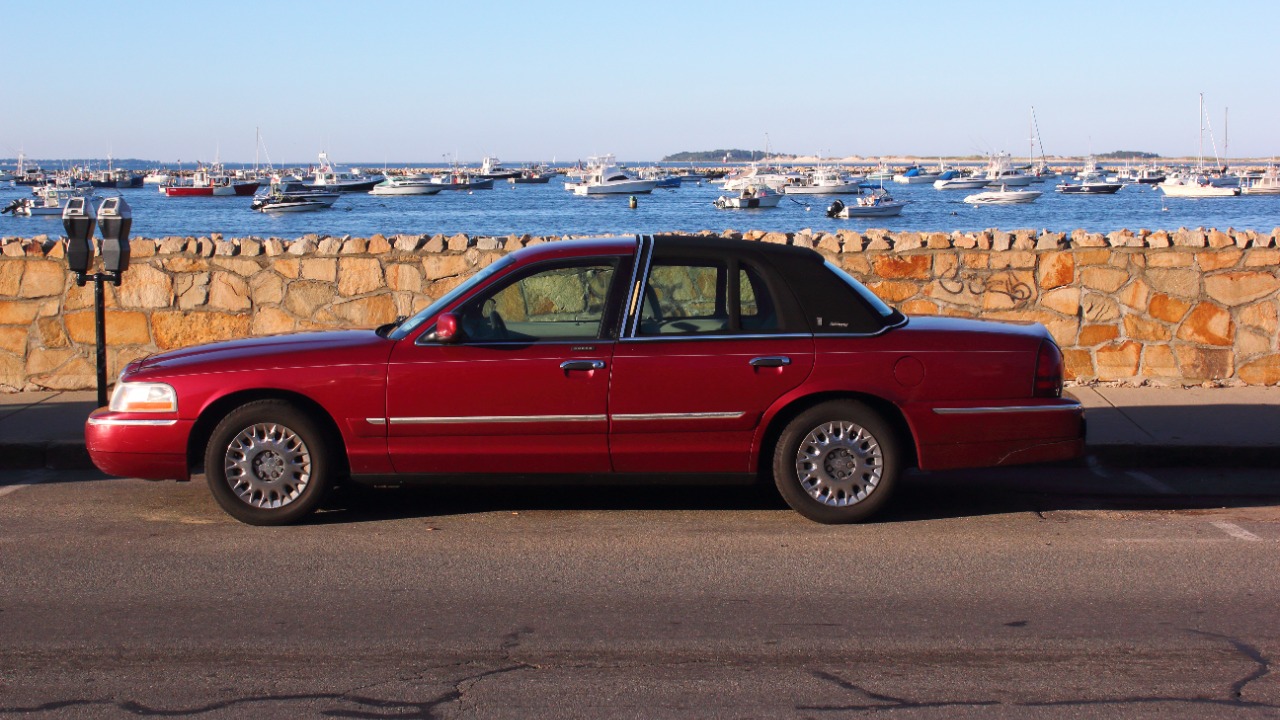
Ford’s mainstream sedans and wagons once relied on a traditional body-on-frame layout that prioritized durability over packaging elegance. That architecture, shared across multiple full-size models, was engineered to absorb abuse from rough roads, heavy loads, and high-mileage fleet duty. It favored a stout separate frame, simple suspension geometry, and drivetrains that could be serviced without special tools or delicate procedures.
While marketing campaigns focused on styling and trim names, the real story was how that shared structure let Ford spread development costs across taxis, police cars, and family transport. The same basic bones could carry a civilian commuter during the week, then tow or haul on weekends, or serve as a patrol car that idled for hours and still survived hundreds of thousands of miles.
By the 1990s, Ford had begun shifting toward more space-efficient unibody platforms for its mass-market cars, chasing lower weight and better fuel economy. That change mirrored a broader industry move that left many once-common architectures behind. The marketplace filled with front-wheel-drive compacts and crossovers, while older body-on-frame sedans quietly exited stage left and slipped into the background of automotive memory.
Much of that era’s hardware is already treated as a historical footnote. Enthusiast lists of forgotten 1990s cars often include Fords that rode on these stout underpinnings, models that never developed the cult status of sports cars yet delivered a distinct driving feel. Their engineering story rarely gets told, even though it shaped how those cars rode, turned, and aged.
Over time, Ford’s product planners increasingly favored global platforms that could underpin everything from small hatchbacks to midsize crossovers. The older architecture, optimized for North American tastes and conditions, did not fit that new strategy. It lingered in fleets and niche roles before finally disappearing from brochures, leaving a gap between what enthusiasts remembered and what new buyers were offered.
Why this old-school layout matters in a new-tech market
Renewed interest in this forgotten Ford architecture is not just nostalgia. It reflects specific qualities that many drivers and fleets still value, especially as modern vehicles grow heavier, more complex, and harder to repair outside dealer networks.
For one, the traditional frame-based layout delivered a particular kind of toughness. Police departments and taxi operators favored these cars because the structure could shrug off curb strikes, minor collisions, and constant stop-and-go traffic with minimal drama. Components were accessible, and the frame could often be repaired or replaced without scrapping the entire shell. In a world where minor structural damage can total a modern unibody, that resilience looks increasingly attractive.
The way these Fords drove also set them apart. The long wheelbase and rear-wheel-drive balance produced a calm, predictable demeanor that inspired confidence on highways and rough pavement. Steering feel and weight transfer were tuned for stability rather than razor-sharp response, which suited long shifts behind the wheel and high-speed cruising. Many current crossovers, with their tall bodies and front-heavy weight distribution, struggle to replicate that planted, unhurried character.
In addition, the architecture supported a clear hierarchy of use cases. Fleet buyers could specify heavy-duty cooling, upgraded brakes, and reinforced suspension components on the same basic platform that underpinned family sedans. That modularity simplified parts inventories and training for mechanics, who could move from a police interceptor to a civilian sedan without learning a completely new layout.
In the current market, where even compact cars are packed with sensors, multi-link suspensions, and complex electronics, that simplicity has become a selling point in its own right. Owners of older Fords built on this structure often praise the ability to keep them running with basic tools and affordable parts. Enthusiast forums routinely highlight how these cars can be maintained at home, with clear access to key components and fewer fragile plastics or tightly packaged engine bays.
The contrast with many modern vehicles is stark. Today’s architectures are optimized for crash performance, emissions, and packaging efficiency, all of which matter. Yet they also tend to bury components under layers of trim, subframes, and integrated modules. When something fails, the repair bill climbs quickly, and the car’s residual value can evaporate. The forgotten Ford layout, by comparison, treated serviceability as a core design goal.
There is also a cultural dimension. The cars that rode on this architecture became part of the visual fabric of North American streetscapes, from police fleets to airport shuttles. Their silhouette signaled authority, practicality, and a certain no-nonsense attitude. As those vehicles vanish, so does a driving experience that many younger enthusiasts have never sampled. The platform’s anonymity in marketing materials belies its influence on how a generation perceived Ford’s brand character.
Lessons this architecture offers the next wave of Ford platforms
As Ford commits to electrification and software-driven features, the company faces pressure to rethink its platforms from the ground up. The forgotten architecture’s virtues, especially durability and serviceability, can inform that transition even if the exact frame design never returns.
One clear lesson is the value of designing for long service lives. Electric vehicles are often heavier than their combustion counterparts, which stresses suspensions, tires, and braking systems. Borrowing from the philosophy behind the old Ford structure, engineers could prioritize overbuilt components in high-mileage applications such as ride-hailing, delivery, and law enforcement. That approach would help preserve range and performance over time while reducing lifecycle costs.
Another takeaway is modularity. The older platform showed how a single set of hard points could support multiple roles, from family transport to heavy-duty fleet work. Future electric architectures could echo that idea with scalable battery modules, interchangeable drive units, and standardized mounting points for body styles. Doing so would let Ford tailor vehicles to different markets without fragmenting its engineering resources.
There is also room to reintroduce a more analog driving feel, even in vehicles packed with digital aids. The calm, predictable behavior that defined those older Fords came from thoughtful weight distribution and suspension tuning, not just software. Modern stability systems can enhance safety, but they work best when the underlying hardware behaves consistently and communicates clearly with the driver. Revisiting the ride-and-handling priorities of the forgotten architecture could help new models feel less isolated and more trustworthy.
Finally, the serviceability ethos deserves a comeback. As vehicles add sensors and control units, designers can still choose to make key items accessible and modular. Battery packs can be divided into replaceable sections, power electronics can be mounted where technicians can reach them, and routine maintenance points can be laid out with independent shops in mind. The old Ford platform proved that building for mechanics pays dividends in loyalty and total cost of ownership.
Recognition for this underappreciated architecture is not about romanticizing the past or ignoring advances in safety and efficiency. It is about acknowledging that some of Ford’s most successful work came from a clear understanding of how people actually use their cars, how fleets manage costs, and how drivers respond to predictable, unpretentious behavior on the road. As the company navigates one of the biggest transitions in its history, the forgotten bones of those earlier cars still have lessons to teach.
More from Fast Lane Only
- Unboxing the WWII Jeep in a Crate
- 15 rare Chevys collectors are quietly buying
- 10 underrated V8s still worth hunting down
- Police notice this before you even roll window down
*Research for this article included AI assistance, with all final content reviewed by human editors