For more than a century, one basic layout has quietly powered everything from family sedans to fighter trainers and lawn mowers: the internal combustion engine with pistons driving a crankshaft. While electric motors and exotic turbines grab headlines, this familiar configuration has endured through wave after wave of innovation. Its survival says as much about manufacturing, infrastructure, and digital control as it does about raw mechanical ingenuity.
Understanding why this architecture lasted for decades, and how it is now being reinterpreted, helps explain the tension between legacy engineering and the next generation of propulsion and software.
From simple pistons to high-tech workhorse
The classic reciprocating engine solved several problems at once. It converted fuel into motion with relatively simple parts, could be scaled from a single cylinder to complex multi-bank layouts, and ran on widely available liquid fuels. Early on, that flexibility made it attractive for cars, tractors, small aircraft, and generators. Once factories, repair shops, and training programs were built around it, the design gained a powerful network effect.
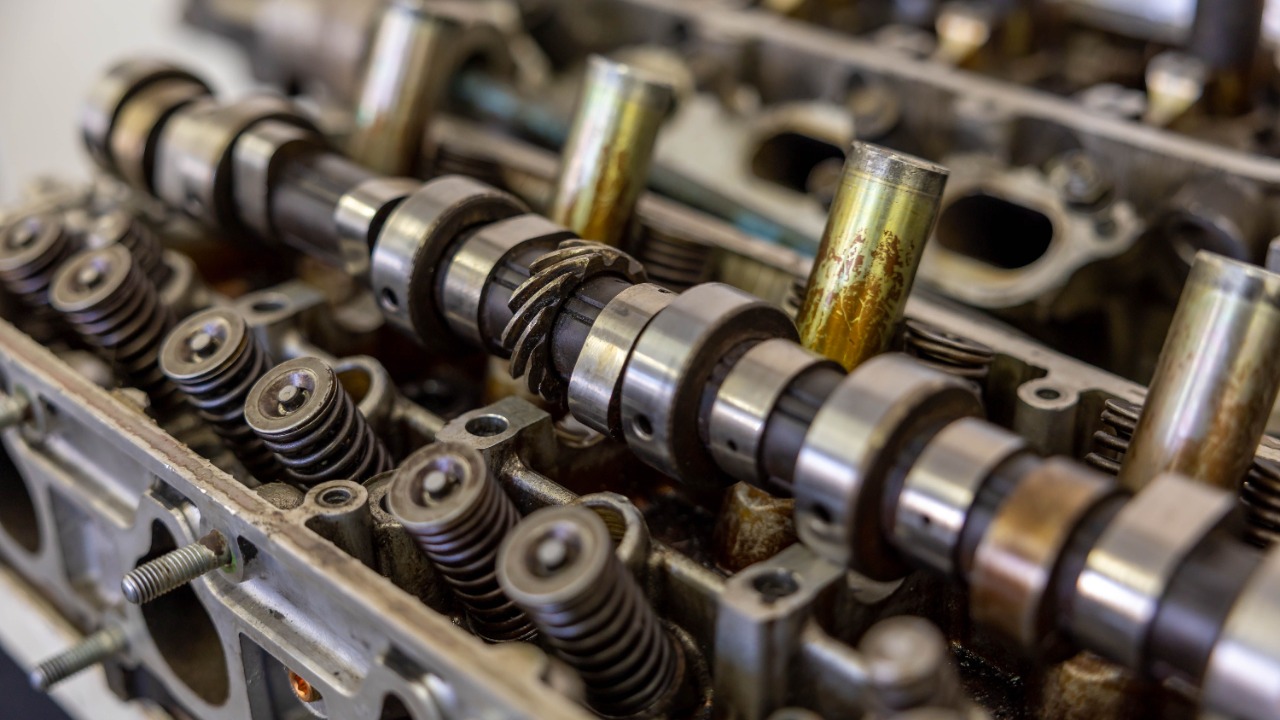
Over time, the basic block and head stayed familiar while everything around them changed. Carburetors gave way to fuel injection, contact breakers to solid-state ignition, and fixed camshafts to variable valve timing. Electronics turned a purely mechanical device into a tightly managed system, trimming emissions and squeezing more power from each drop of fuel. Yet the fundamental layout of pistons, valves, and crank remained recognizable to a mechanic from decades earlier.
That continuity mattered for cost. Automakers could amortize tooling and expertise over long production runs, while suppliers standardized components from spark plugs to bearings. For customers, the same pattern meant predictable maintenance and a vast pool of spare parts. The traditional engine became less a single invention and more an industrial ecosystem.
What really changed in this long-running design
Although the silhouette of a typical engine barely shifted, its internal behavior transformed. The key change was control. Sensors and microprocessors allowed precise metering of fuel and air, fine-grained ignition timing, and even cylinder-by-cylinder adjustments. Engineers could push compression ratios higher and run closer to the edge of knock without sacrificing durability.
Digital control also opened the door to hybridization. In many modern powertrains, the combustion unit no longer works alone. It shares duties with electric motors, batteries, and regenerative braking, yet it still provides the familiar range and quick refueling that drivers expect. The old architecture became one component inside a broader, software-defined system.
At the high-performance end, researchers are exploring entirely new operating regimes. In China, specialists have been testing a Mach 0.6-capable air-breathing engine that could power future fighter jets and missiles, using staged combustion and variable geometry to manage extreme airflow and temperature. Reporting on this Mach 0.6 engine highlights how even advanced aerospace projects still draw on the core idea of controlled combustion, while surrounding it with sophisticated materials and aerodynamics.
That kind of research shows how far the concept has stretched. What began as a low-speed mechanical pump for fuel and air now operates in regimes where airflow approaches transonic speeds and thermal loads rival those of rockets. The underlying principle stayed the same, yet the execution changed almost beyond recognition.
Why this long-lived engine architecture matters right now
The traditional engine design still matters because so much of the world’s mobility and logistics depend on it. Fleets of trucks, construction equipment, small boats, and backup generators rely on engines that can be repaired in the field, fueled from existing supply chains, and serviced by technicians with conventional tools. Swapping all of that overnight for batteries or hydrogen is not realistic, especially in regions with fragile grids or limited charging infrastructure.
Meanwhile, expectations around intelligence and efficiency have shifted. Vehicle buyers increasingly assume that even a basic engine will coordinate seamlessly with navigation, driver assistance, and predictive maintenance. That shift reflects a broader move toward software-defined products, where the value lies less in metal and more in data and control logic.
The same pattern appears in search and information tools. Earlier this year, Google described how it is folding generative and real-time capabilities into its core search product, turning simple queries into interactive sessions that can summarize, compare, and plan. The company’s Search I/O updates described new experiences that treat search less as a static results page and more as an adaptive assistant that understands context and intent.
There is a parallel with engines. Just as a search box now hides a complex orchestration of models and ranking systems, a modern powertrain hides layers of software, sensors, and actuators behind the familiar act of turning a key or pressing a start button. The user sees continuity. Underneath, the system is far more dynamic and data-driven than its predecessors.
Climate policy adds another layer of urgency. Governments are tightening emissions standards and setting timelines for phasing out new combustion-only vehicles. Yet many of those regulations still allow hybrids or low-carbon fuels, which keep the basic engine architecture in play. Engineers are responding with cleaner combustion strategies, lightweight materials, and engines optimized to run at steady speeds alongside electric motors, rather than across the full driving cycle.
How decades of momentum shape the next wave of propulsion
The persistence of this engine layout does not mean the future belongs to gasoline. Instead, it highlights how hard it is to displace a mature technology that sits at the center of a dense web of factories, fuel suppliers, training programs, and regulations. Even when a new solution is technically superior, it has to fight against that accumulated momentum.
For electric vehicles, that challenge shows up in charging infrastructure and grid capacity. For hydrogen, it appears in storage, transport, and safety codes. By contrast, the established engine fits into an existing world. That compatibility buys it time, which engineers use to refine it further and integrate it into hybrid systems that can meet near-term climate and performance targets.
In aerospace and defense, the story is similar but amplified. Designers of advanced fighters and missiles still weigh the trade-offs between turbines, ramjets, scramjets, and rocket engines. Each option brings specific fuel demands, speed envelopes, and maintenance requirements. Experimental designs like the Mach 0.6-capable engine in China show how far conventional combustion-based systems can be stretched before truly radical alternatives become necessary.
Meanwhile, software continues to reshape how engines are monitored and maintained. Predictive diagnostics can flag misfires or bearing wear before a breakdown. Over-the-air updates can tweak control maps for better efficiency or new fuel blends. The machine that once stood as a symbol of pure mechanics is now deeply entangled with code and connectivity.
What comes next for this enduring engine concept
Looking ahead, the traditional engine is unlikely to disappear suddenly. Instead, it will fade unevenly, hanging on in regions and sectors where its strengths still outweigh its drawbacks. Long-haul trucking, agriculture, remote power, and certain military applications are likely to rely on combustion for longer than urban passenger cars.
The design itself will keep evolving. More engines will be optimized for specific roles, such as running at a constant speed as part of a series hybrid, or burning alternative fuels like synthetic gasoline, e-fuels, or advanced biofuels. Engineers will continue to trim friction, improve combustion stability, and refine aftertreatment systems to squeeze under tightening emissions limits.
At the same time, the cultural weight of the engine will shift. For generations, it represented freedom, noise, and mechanical skill. As electric drivetrains and software-defined vehicles become more common, that symbolism may fade, replaced by an emphasis on quiet efficiency and digital services. Yet the physical reality of millions of engines in service will keep workshops busy and fuel stations open for years to come.
More from Fast Lane Only
- Unboxing the WWII Jeep in a Crate
- 15 rare Chevys collectors are quietly buying
- 10 underrated V8s still worth hunting down
- Police notice this before you even roll window down
*Research for this article included AI assistance, with all final content reviewed by human editors