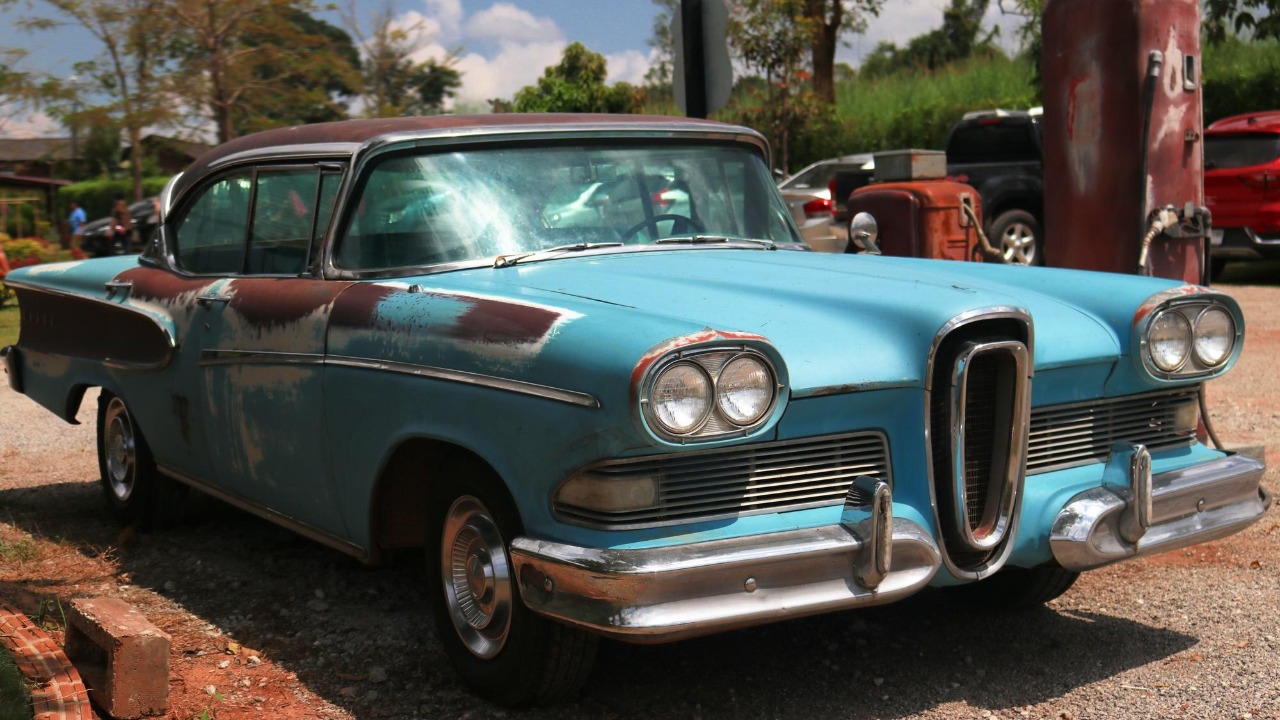
The 1950s are often remembered for chrome, tailfins, and drive-in diners, but some cars from that decade were quietly sketching the blueprint for the modern road. Long before safety regulations, fuel crises, or digital dashboards, a handful of designers and engineers were already experimenting with ideas that would not become mainstream for decades. When I look back at those machines now, I see less nostalgia and more a preview of how we drive today.
From compact city runabouts to wild concept cars and early experiments in driver assistance, these models did more than look futuristic. They anticipated shifts in technology, urban life, and even the way we think about comfort behind the wheel, often arriving years before buyers or regulators were ready to follow their lead.
The Rambler that predicted the compact revolution
In an era obsessed with size and spectacle, the 1950 Nash Rambler took the opposite path and treated small as smart. While Detroit was busy stretching wheelbases and piling on chrome, the Rambler focused on efficient packaging, comfort, and style in a footprint that made sense for crowded cities and tight postwar budgets. To say the Rambler was ahead of its time is, as one detailed auction listing puts it, an understatement, because it delivered the kind of practical, well-equipped compact that would not become a mainstream American priority until the fuel anxieties of later decades.
What strikes me is how modern the Rambler’s mission feels: a car that is easy to park, relatively frugal, yet still aspirational enough to make buyers feel they were not settling for less. The 1950 Nash Rambler Custom Convertible wrapped that philosophy in a fashionable body with upscale touches that challenged the idea that small had to mean cheap, and contemporary observers noted that, somehow, the Rambler was already where the rest of the market would eventually go.
Harley Earl’s Cyclone and the dream of sensor‑guided driving
If the Rambler hinted at the future through practicality, the General Motors Firebird-style show cars pushed straight into science fiction, and none did it more vividly than the Cyclone. Designed by the legendary Harley Earl, the Cyclone was not a production car at all but a rolling laboratory for styling and technology that treated the highway like a runway. Its body looked like a jet fuselage dropped onto four wheels, and the cabin sat under a clear bubble top canopy that made the driver feel more like a test pilot than a commuter.
What really makes the Cyclone feel prophetic to me is its early flirtation with electronic driver aids. The car used a radar operated system in the nose to warn of obstacles ahead, a primitive ancestor of the sensors that now power adaptive cruise control and collision alerts in family crossovers. In the late 1950s, the idea that a car could scan the road and react to what it “saw” sounded like fantasy, yet the Cyclone was already experimenting with the basic concept that underpins modern sensor suites.
Power steering, automatics and the quiet comfort revolution
Not every leap forward in the 1950s wore a show-car body or sat under a spotlight at an auto show. Some of the most transformative advances arrived in the form of components that quietly changed how ordinary people interacted with their cars. Earlier in the decade, Chrysler offered power steering, a feature that suddenly made big sedans feel manageable for drivers who did not want to wrestle a heavy wheel at low speeds. Within a couple of years, automatic transmission vehicles in the USA exceeded 2,000,000, a figure that shows how quickly drivers embraced the idea that the car could handle the shifting while they focused on the road.
Those numbers matter because they mark the moment when comfort and ease of use became central to automotive progress, not just horsepower or styling. By 1953, General Motors was already staging elaborate showcases of future technology, but the real revolution was happening in driveways as families discovered that power assistance and self-shifting gearboxes made daily driving less tiring and more accessible. Looking back through the lens of Chrysler power steering, the spread of Automatic gearboxes in the USA, and the way General Motors promoted these features, it is clear that the 1950s laid the groundwork for the user-friendly cars we now take for granted.
From austerity to the Swinging Sixtie: how 1950s ideas set the template
By the time the calendar rolled toward the early 1960s, the groundwork laid in the previous decade was ready to bloom. Car manufacturers had weathered the austerity of the 1950s, when materials, money, and in some markets even fuel were still constrained, and they were poised to race into the more optimistic culture of the Swinging Sixtie. The compact experiments, the early safety concepts, and the comfort features that had seemed novel in the 1950s suddenly looked like the obvious foundation for a new generation of models that would define the decade to come.
When I look at cars that turned 60 in 2024, I see a direct line back to those earlier innovations. Many of those 1960s designs refined ideas first tested in low-volume or concept form, from more efficient packaging to sleeker aerodynamics and integrated driver aids. The fact that a single Car generation could set a precedent for many years to come only makes sense when you remember how much quiet experimentation had already taken place in the supposedly conservative 1950s.
1950s cool and the lasting influence of American style
Of course, any conversation about forward-looking 1950s cars has to acknowledge the power of style, especially in America. The decade was a golden era in automotive design in the United States, when Carmakers were relatively untethered by strict safety or emissions rules and could chase dramatic silhouettes, bold colors, and expressive details. That freedom did more than create pretty sheet metal. It encouraged designers to think of the car as a lifestyle object, something that could project identity and aspiration, a mindset that still shapes how brands present electric crossovers and luxury SUVs today.
One vivid example is the supercharged Thunderbird, often held up as the definition of 1950s cool, with its low stance, confident grille, and performance to match its looks. The car captured a moment when personal coupes promised both glamour and speed, and its influence can be traced through decades of sporty two-doors and even modern retro-inspired models. When I see how a single stylish model can forever change the look of our cars, I am reminded that the 1950s were not just about engineering breakthroughs but also about a new visual language that still resonates, a point underscored by how America Carmakers used design to forever change the look of our cars.