Ford chief executive Jim Farley has done something auto bosses almost never do in public: he has admitted that the company pulled back from segments where Toyota and Hyundai set the pace. Instead of chasing them with thin-margin products, he has chosen to shrink Ford’s lineup, absorb large write downs and bet on a narrower set of vehicles and technologies that he believes can actually make money. That blunt assessment crystallizes a broader strategic reset that is reshaping Ford’s approach to electric vehicles, hybrids and global competition.
Farley’s blunt admission and what it really means
Jim Farley has acknowledged that Ford could not match Toyota and Hyundai in markets where those brands dominate, so the company stopped trying to go head-to-head. In an interview with an Argentinian outlet, La Nación, he described how Ford evaluated segments where rivals had structural cost and scale advantages and decided to retreat rather than keep burning capital for minimal share. That is a striking contrast with the traditional Detroit instinct to fight for every inch of market presence, and it signals a willingness to prioritize profitability over bragging rights in volume or geographic reach.
Farley’s comments line up with other reporting that he explicitly said Ford could not compete with Toyota and Hyundai and therefore ceased attempts in those arenas. One account notes that the Ford CEO concluded the company had to restructure its business rather than keep chasing entrenched leaders like Toyota and Hyundai, especially in segments where their manufacturing efficiency and supplier networks translated into lower prices and higher reliability perceptions. By publicly conceding that reality, Farley is not only explaining past retreats, he is also setting expectations that Ford will be more selective about where it chooses to fight in the next decade.
From sprawling lineup to focused portfolio
Pulling back from Toyota and Hyundai strongholds is part of a broader move to simplify Ford’s product range and concentrate on vehicles that can earn a return. Farley has overseen a deliberate shrinking of the lineup, cutting slower selling models and trimming regional offerings that lacked scale. Reporting on this shift describes Ford as moving away from a “car for every niche” mindset and toward a portfolio built around profitable trucks, commercial vehicles and a smaller set of electrified products, a change that has been framed as a profit focused shift rather than a retreat born of weakness.
That streamlining is not painless. Ford has accepted that walking away from certain markets and body styles means ceding customers to competitors, at least in the short term. Yet Farley and his team argue that the alternative, maintaining a sprawling catalog of low margin vehicles just to claim presence, would undermine the investments needed in electrification, software and new business lines. One analysis of the company’s strategy describes this as a “customer driven shift” designed to create a stronger, more resilient and more profitable Ford, even if it requires absorbing a large financial hit and exiting some familiar segments.
EV reality check: from $70,000 trucks to customer driven pivots
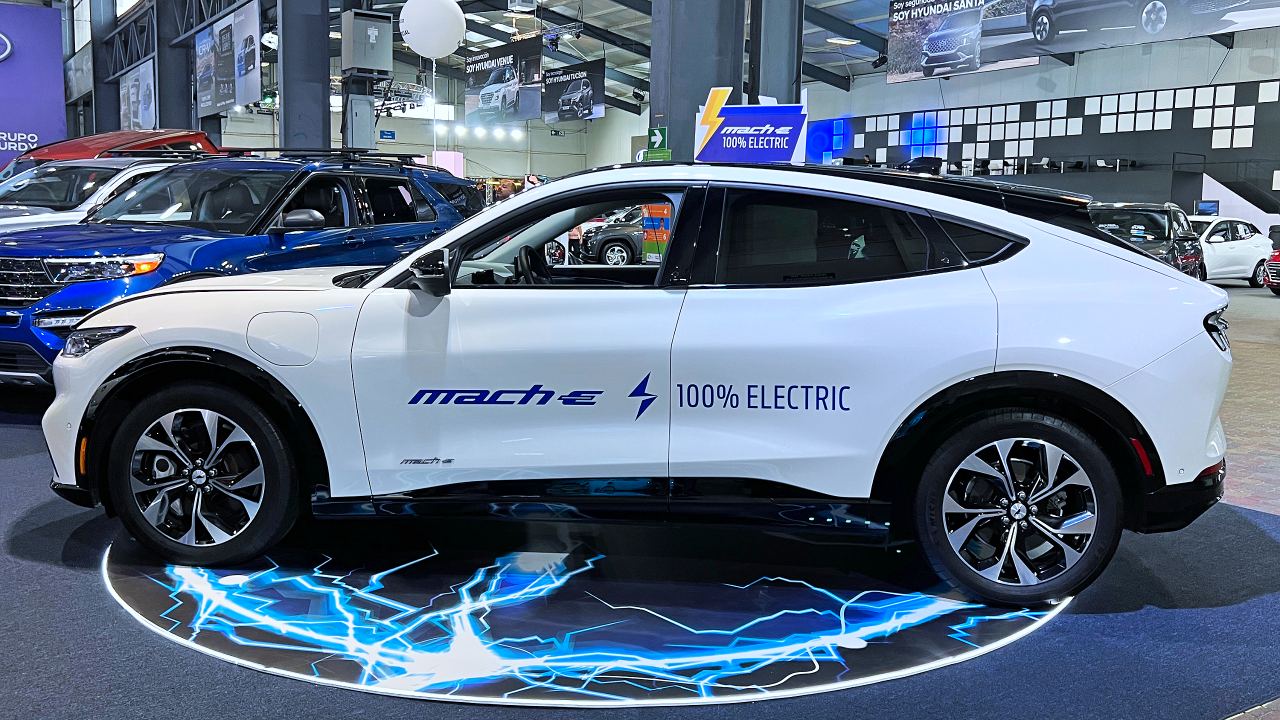
Nowhere is Ford’s new pragmatism clearer than in its electric vehicle strategy. Farley has been candid that some of the company’s early EV bets, especially at the top end of the market, did not work. In an interview with CNBC, he explained that “the very high-end EVs, the $50K, 70K, $80,000 vehicles just weren’t selling,” a blunt verdict on the performance of Ford’s expensive electric pickup. After evaluating the market, he concluded that customers were not willing to pay that kind of premium for a battery powered truck in sufficient numbers, which forced Ford to rethink its product roadmap and pricing.
That reassessment has major financial consequences. Farley had established Ford’s Model E division in 2022 to operate like a startup inside the company, focused on electric vehicles and new software driven services. Now he is writing down large sums tied to those initial EV plans and shifting toward a mix that leans more on hybrids and extended range electric vehicles, a change he has described as a response to what customers actually want rather than a retreat from electrification. One report notes that Farley warned President Donald Trump’s policies could halve the EV market by ending subsidies, and that he is now absorbing a $19.5 billion adjustment as Ford pivots Model E toward products that can succeed in a less subsidized environment, a dynamic captured in how Farley is writing down $19.5 billion while steering the lineup toward hybrid and EREV offerings.
Learning from Japanese dominance and the new China challenge
Farley’s willingness to concede ground to Toyota and Hyundai is rooted in a longer view of how global auto competition has evolved. He has drawn explicit parallels between the current contest with Chinese manufacturers in electric vehicles and the period when Japanese automakers trounced American brands in the 1980s. In his telling, Japanese companies built a structural edge through quality, lean production and relentless cost control, which left American firms scrambling to respond. He now sees a similar pattern emerging with Chinese EV makers, who combine scale, integrated battery supply chains and aggressive pricing.
That historical lens helps explain why Farley is so wary of fighting unwinnable battles. If Japanese brands once used their advantages to dominate compact and midsize segments, and if Chinese players are now poised to do something similar in mass market EVs, then Ford has to be brutally honest about where it can still carve out a defensible niche. Farley has said that “we’ve never seen a competitor like this before” when describing the intensity of the new EV race, and he has emphasized that success will depend on designing vehicles that customers love while keeping costs down. In that context, stepping back from Toyota and Hyundai dominated arenas looks less like surrender and more like a disciplined allocation of scarce capital.
What Ford’s retreat says about the next era of carmaking
Farley’s comments about backing off markets ruled by Toyota and Hyundai, his decision to shrink Ford’s lineup and his pivot away from very expensive EVs all point to a single conclusion: the era of chasing volume at any cost is over for Ford. The company is choosing to absorb short term pain, including a multibillion dollar hit tied to its EV strategy, in order to focus on segments and technologies where it believes it can earn sustainable returns. That means more emphasis on profitable trucks, commercial vehicles and hybrids, fewer vanity projects in crowded segments, and a more cautious approach to pure battery electric models that rely on heavy subsidies or unrealistic pricing.
For consumers, that strategy will likely mean fewer Ford badges in some segments where Toyota and Hyundai remain dominant, but potentially better developed products in the areas where Ford chooses to stay and fight. For the industry, Farley’s candor sets a new benchmark for how openly executives talk about competitive limits and strategic retreats. Instead of insisting that Ford can win everywhere, he is acknowledging that the company must pick its battles, whether that is in the face of Japanese efficiency, Korean value or Chinese EV scale. The fact that he is willing to say Ford could not compete with Toyota and Hyundai, and acted accordingly, suggests that the next phase of global carmaking will be defined less by national pride and more by hard headed choices about where each automaker can genuinely lead, a reality captured in discussions of how Farley says Ford could not compete with Toyota and Hyundai and therefore stopped trying in those markets.
More from Fast Lane Only: