

The 1960 Ford Falcon came standard with a three-speed manual shifted from the steering column, and that lever on the column earned a nickname: three on the tree. It showed up in America in the late 1930s. By the 1940s and 1950s, most cars sold in the U.S. and Canada had one.
The appeal was simple. You could shift between second and third without letting go of the wheel, and a bench seat stayed free for three. These are the column-shift-era classics we would happily buy today, and the picks are our own opinion.
1. 1960 Ford Falcon

Ford’s first compact launched with a 144-cubic-inch six making 95 hp, and the three-speed column shift was standard equipment. A two-speed Ford-O-Matic cost extra. Buyers clearly liked the formula, because the Falcon line sold over half a million in its first year. In our view, a 1960 Ford Falcon with the column three-speed is the purest version of the idea. It is light, honest and easy to keep running.
2. 1950 Studebaker Champion four-door sedan

The bullet-nose Champion used an 85 hp L-head six and a standard three-speed with a column-mounted shifter. Second and third gears had synchromesh, and overdrive was an option. Studebaker built 343,164 cars in the 14-month 1950 model year, its best ever, and 270,604 were Champions. That means plenty survived. We would grab a four-door, since it does all the things our look at how the 1950 Studebaker Champion embraced efficiency describes, with room for the whole family.
3. 1962 Rambler American 2-door Deluxe

AMC built 125,678 Rambler Americans for 1962, and Deluxe became one of its three new trim names that year. Base cars kept a flathead version of the 195.6-cubic-inch six, while pricier ones got an overhead-valve head. AMC also added tandem-circuit “Double-Safety” brakes for 1962. The boxy 1961 restyle made it look like a breadbox on a 100-inch wheelbase. Still, that shape is the charm, and we think a three-speed Deluxe is about as simple as a 1960s car gets.
4. 1963 Studebaker Lark Custom

Studebaker gave the 1963 Lark a cleaner face and a lighter greenhouse. The wraparound windshield went away, thinner pillars arrived, and a new dash brought full gauges. Even so, sales slipped to about 77,000 cars that year. That slow selling is why a Lark Custom feels special at a meet today. For us, it is the thinking person’s compact from the years when shifting on the column was normal.
5. 1961 Ford F-100

For 1961, Ford joined the cab and the Styleside bed into one piece on two-wheel-drive F-100s. However, the integrated design lasted only until midway through the 1963 model year. The base engine was the 223-cubic-inch Mileage Maker six with 114 hp, and a 292 V8 offered 170 hp. That short-lived body is the reason we would buy one. It is a Ford pickup with a one-off construction story attached.
6. 1966 Chevrolet C10

The 1966 C10 is the last year of Chevrolet’s first C/K generation. It also brought a new 250-cubic-inch six rated at 155 hp. Meanwhile, the 327 V8 joined the options for every pickup that year. Buyers could pick a three-speed manual, a four-speed or a Powerglide automatic. Coil springs sat at all four corners of the half-ton, so we see a three-speed six-cylinder C10 as the easygoing truck to own.
7. 1962 Mercury Comet 2-door sedan

The Comet was supposed to be an Edsel, but Edsel died in November 1959. So the car debuted under Lincoln-Mercury on March 17, 1960. Its first engine was a 144-cubic-inch six with 90 hp, paired with a three-speed manual or a two-speed automatic. Then a 101 hp 170 six arrived for 1961. Its canted elliptical taillights came straight from the Edsel prototype. In our view, a two-door Comet is the Falcon’s dressier cousin with a better story.
8. 1963 Dodge Dart 170
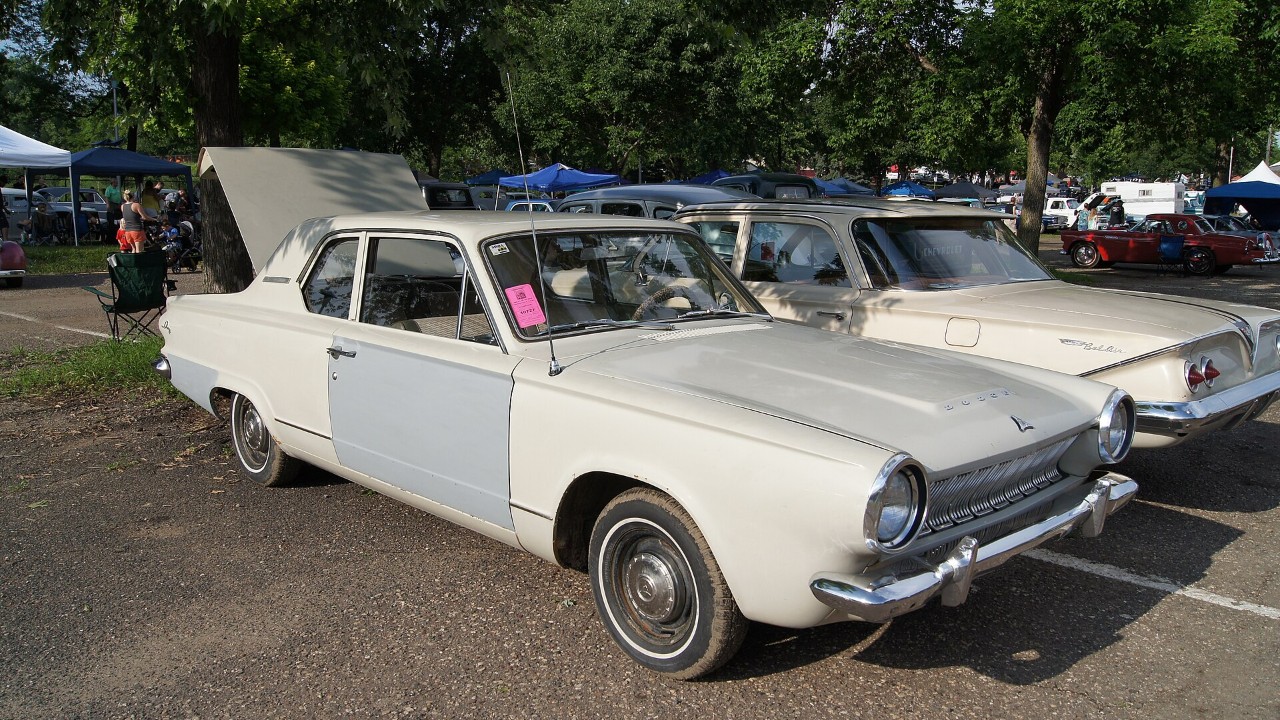
The 1963 Dart 170 came standard with a 170-cubic-inch slant six rated at 101 gross hp. In fact, buyers often paired that engine with a column-shifted three-speed manual. The Dart also rode on a 111-inch wheelbase, five inches longer than the Valiant’s. That extra length went behind the rear door, so back-seat riders got more legroom. We would take the base 170 on purpose, because the simple setup is the whole point.
9. 1957 Ford Ranch Wagon
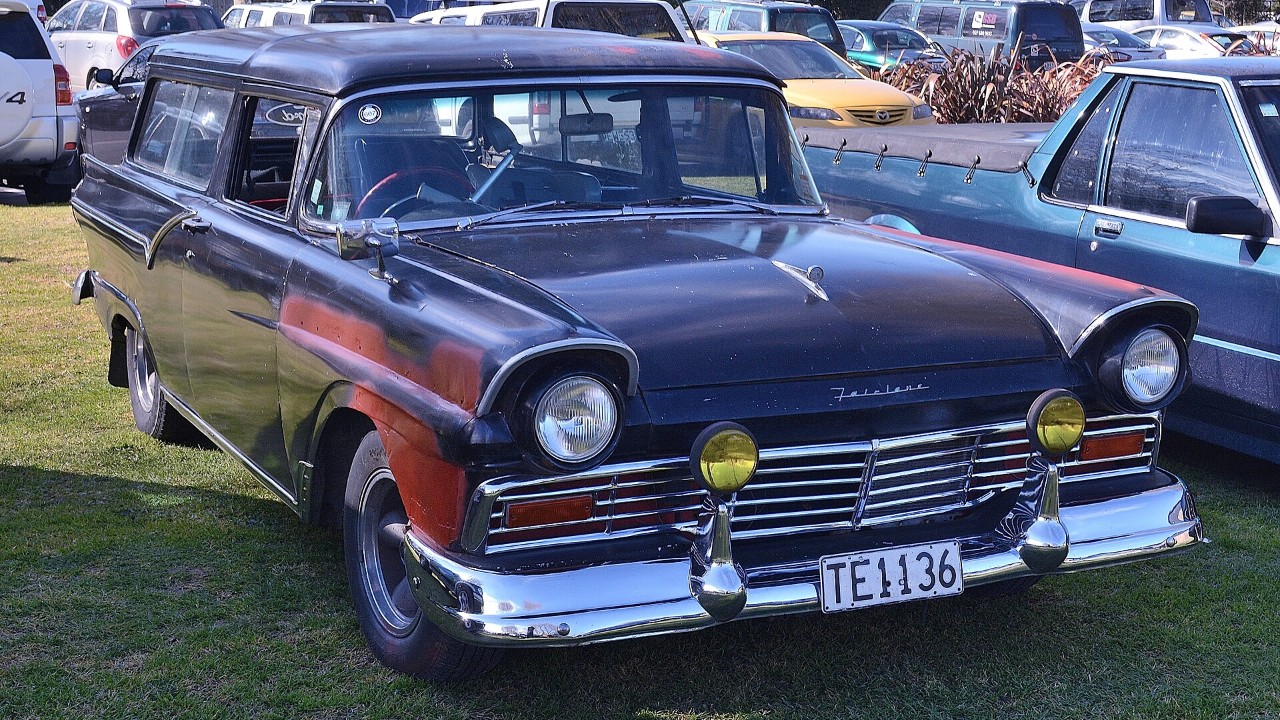
Ford built 60,486 Ranch Wagons for 1957. That year also brought the Del Rio Ranch Wagon, with special ranch-pattern upholstery. In addition, the Del Rio became the basis for the new 1957 Ranchero car-pickup. A long, low wagon from this year needs no explaining at a cruise night. We would buy a plain one from the column-shift years and spend the savings on gas for long trips.
10. 1966 Ford Bronco
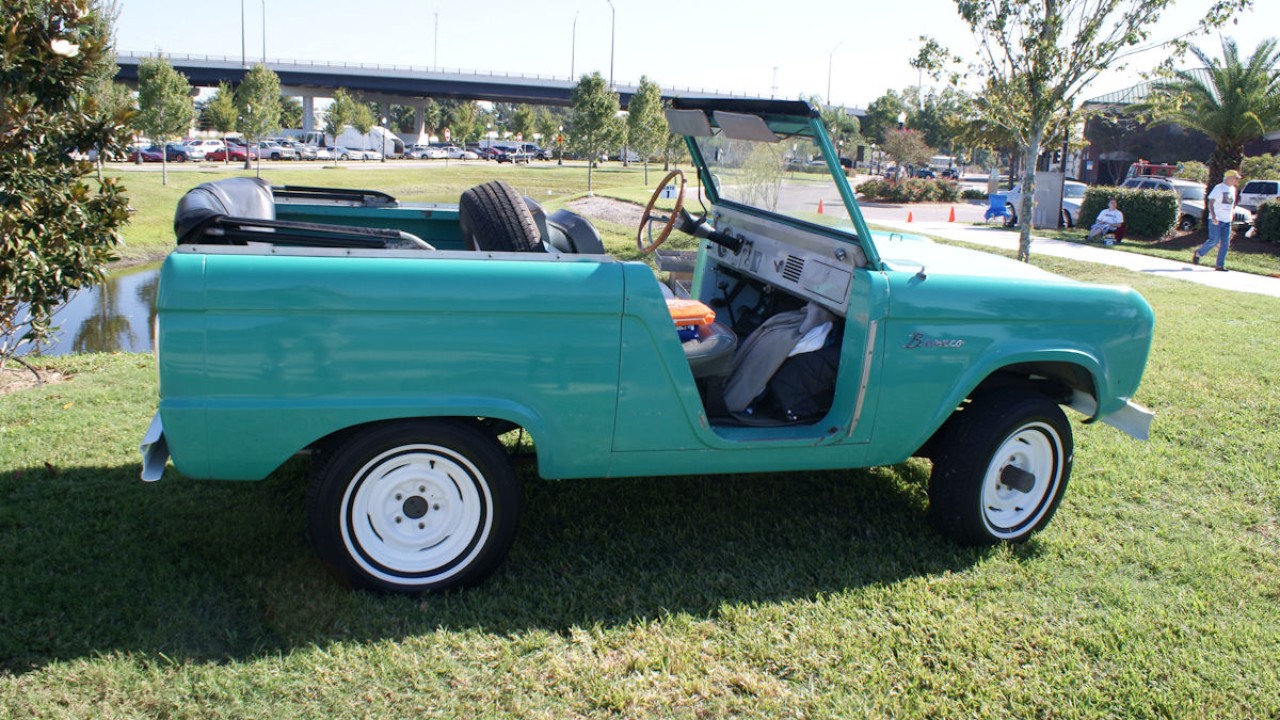
The first Bronco used a 170-cubic-inch six rated at 105 hp and a fully synchronized three-speed on the steering column. A separate T-handle on the tunnel worked the transfer case. Ford built 23,776 in the first year, and the wagon was the most popular at 12,756. Prices started at $2,404 for the roadster. Early Broncos have climbed far beyond that, as our story on why the classic Bronco keeps skyrocketing in price explains, so we would buy sooner rather than later.
More from Fast Lane Only


