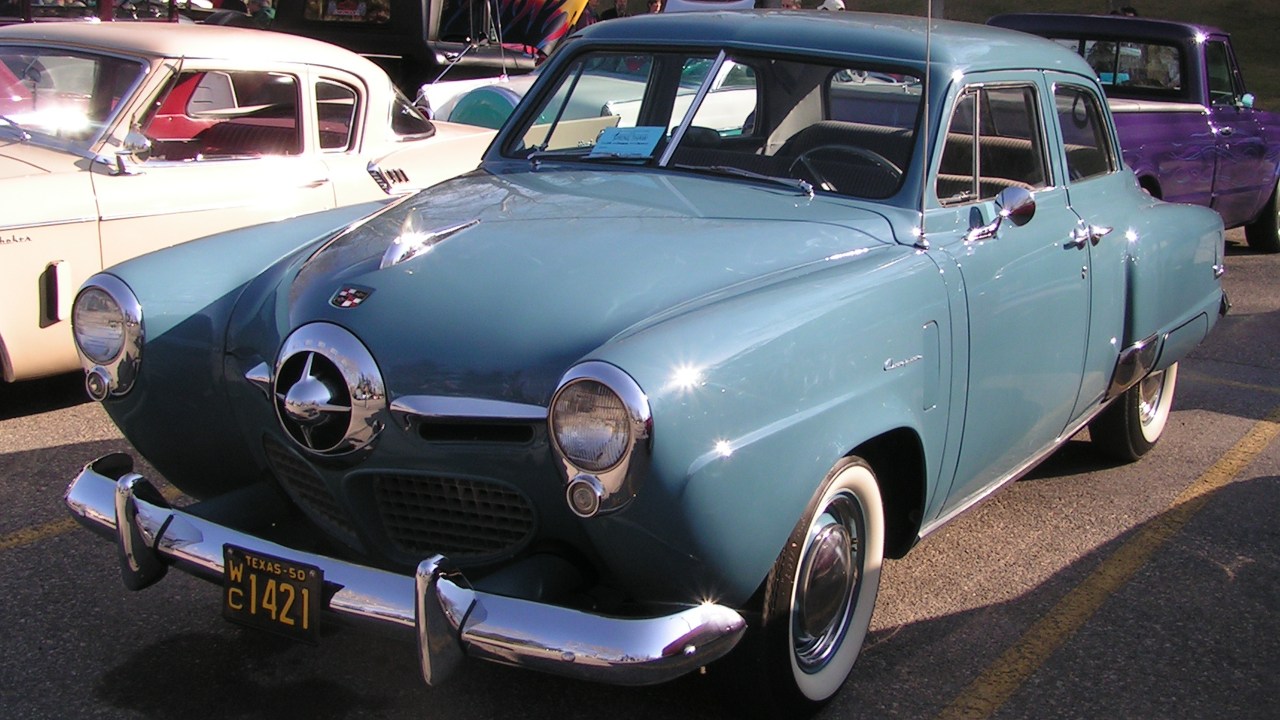
The 1950 Studebaker Champion arrived at a moment when American cars were getting larger, heavier, and more power hungry, yet it quietly went in the opposite direction. Instead of chasing ever bigger engines, Studebaker treated efficiency as a design problem to be solved from bumper to bumper, turning a modest compact into a forward looking experiment in how far careful engineering could stretch every gallon and every horsepower.
That choice did not make the Champion the loudest or flashiest car of its era, but it did make it one of the most revealing. By pairing a relatively small six cylinder with slippery styling and emerging drivetrain technology, Studebaker showed that efficiency could be baked into the structure of a car, not bolted on as an afterthought, a lesson that still resonates in today’s debates over how to move people with less waste.
Studebaker’s compact answer to a growing America
When I look at the 1950 Studebaker Champion, I see a company deliberately positioning itself against the tide of postwar excess. The Champion sat below the Commander in the lineup, built around a compact inline six that prioritized light weight and frugal running over brute force. Its engine displaced 169.9 cubic inches, or 2.8 liters, and in the years leading up to 1950 it produced 80 horsepower, or 60 kW, which translated to 81 PS. For 1950, Studebaker nudged that figure to 85 horsepower, a modest increase that reflected careful refinement rather than a wholesale leap in displacement.
That restraint was not an accident. Contemporary commentary on 1950s Studebakers stresses how Creativity set Studebaker apart, not just in styling but in how it thought about the future of car building. Instead of simply scaling up engines to keep pace with heavier bodies, the company treated the Champion as a system, where weight, aerodynamics, and drivetrain efficiency could combine to deliver real world performance that belied the spec sheet. In a decade often remembered for chrome and cubic inches, the Champion’s compact proportions and efficient six cylinder layout were a quiet statement that there was another way to build an American car.
Aerodynamics and structure as fuel saving tools
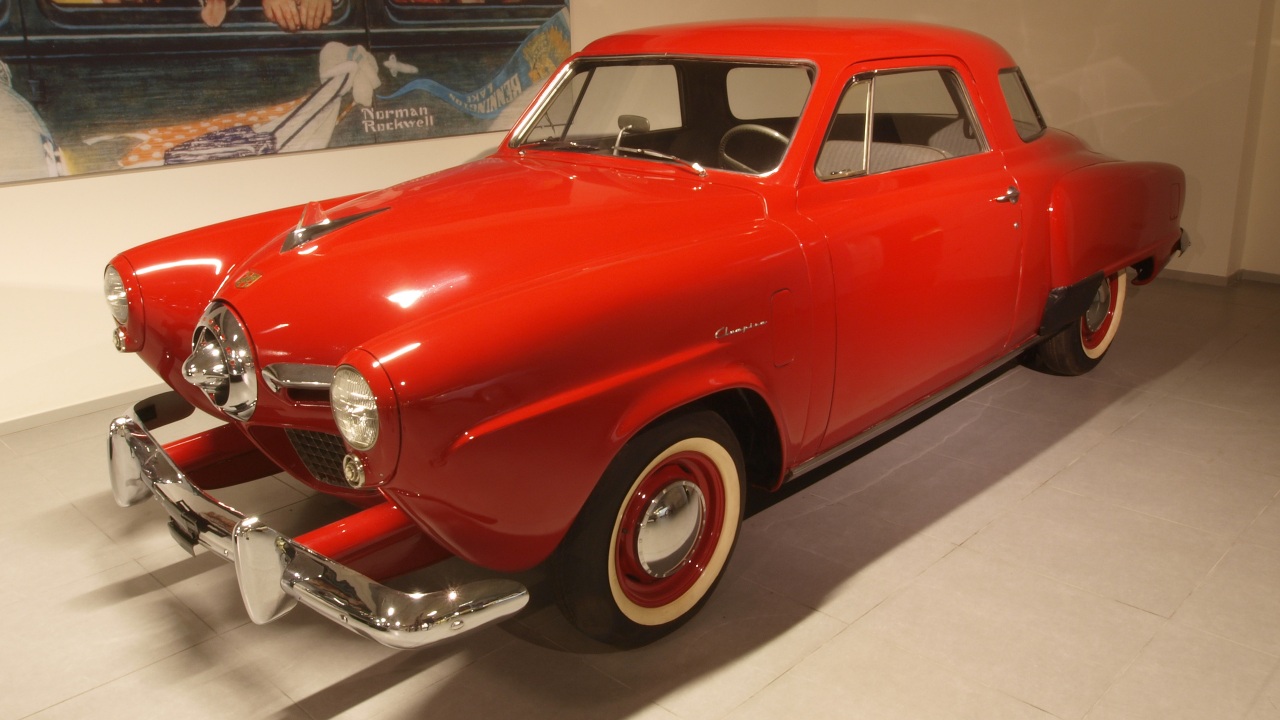
Efficiency in the Champion started with its shape. Studebaker had already experimented with streamlined forms before the war, and by 1950 that thinking had matured into bodies that looked almost futuristic compared with more conservative rivals. The Starlight coupe roofline, shared conceptually with the larger Commander Starlight Coupe, wrapped glass around the rear of the cabin and pulled the profile tight, reducing visual bulk and, crucially, cutting aerodynamic drag. That same design language carried into the smaller Champion Starlight Coupe, which used its sleek greenhouse and tapered rear to slip through the air more easily than the boxier sedans that dominated American streets.
Structural choices reinforced that aerodynamic advantage. The Champion’s relatively narrow body and careful packaging kept weight down, so the 85 horsepower six did not have to work as hard to maintain highway speeds. Accounts of the period highlight how the Starlight coupes, Built between 1947 and 1952, relied on Two key design features, including that wraparound rear glass, to stand out. In the Champion, those same ideas translated into real efficiency gains, because less frontal area and smoother airflow meant lower fuel consumption at a time when wind tunnel testing was still far from standard practice in Detroit.
Drivetrain innovation and the BorgWarner connection
Under the skin, the Champion’s efficiency story deepened with its transmission options. Studebaker turned to BorgWarner for an automatic gearbox, integrating a supplier that was already building a reputation for advanced drivetrain components. The Champion’s use of a BorgWarner automatic showed that efficiency did not have to mean spartan equipment; instead, it could be paired with convenience if the hardware was carefully matched to the engine’s modest output. BorgWarner’s own corporate history emphasizes its focus on powertrain technology, and the company’s current portfolio of propulsion systems and drivetrain components reflects the same obsession with extracting more performance from less energy that Studebaker was chasing in 1950.
That partnership mattered because it allowed the Champion to keep its 2.8 liter six operating in its most efficient range more of the time. A well calibrated automatic could hold gears to take advantage of the engine’s torque without forcing drivers to rev unnecessarily, a subtle but important contributor to real world fuel savings. Looking at BorgWarner’s present day emphasis on electrified and high efficiency drivetrains, it is striking to see how an early collaboration on a compact postwar sedan foreshadowed a much larger industry shift toward treating transmissions and engines as a single efficiency package rather than separate components. The Champion’s drivetrain was not just about comfort; it was an early example of system level thinking in pursuit of lower consumption.
Making modest power feel fast
On paper, the Champion’s output looked unremarkable, especially in an era when V8s were beginning to dominate performance conversations. Yet enthusiasts have repeatedly demonstrated that a well set up 1950 Studebaker with a flathead six can embarrass more powerful machinery. One detailed build shows how a 70 horsepower flathead 6 in a 1950 Stu can be tuned and geared to run quicker than V8 cars with roughly twice the rated power. The key is not magic horsepower hiding in the block, but the way the car’s light weight, aerodynamics, and drivetrain work together to turn every unit of output into usable acceleration.
That dynamic underscores how Studebaker’s efficiency focus paid off in ways that spec sheets could not capture. By keeping the structure lean and the body slippery, the company created a platform where careful tuning could unlock surprising performance without sacrificing the Champion’s thrifty character. The same build culture that now celebrates making a 70 horsepower flathead outrun bigger engines is, in effect, a tribute to the underlying engineering choices Studebaker made in 1950. It shows that efficiency and speed are not opposites; with the right foundation, they can reinforce each other.
Legacy of an efficient outlier
Looking back from today, I see the 1950 Champion as more than a quirky compact from a defunct brand. It represents a moment when a mid sized American automaker tried to anticipate where the market might go, not just where it was. Later assessments of 1950s Studebakers note how the company’s Creativity pushed new technology into the spotlight and helped shape the future of car building. The Champion’s combination of a compact 2.8 liter six, aerodynamic Starlight bodywork, and BorgWarner automatic transmission fits squarely within that narrative, showing how Studebaker tried to make efficiency a selling point rather than a compromise.
The car’s physical legacy is preserved in museum collections, where surviving Champions sit alongside other artifacts of American industrial design. One such example in a national collection highlights Studebaker’s role in the broader story of U.S. transportation, underlining how even a relatively humble model can illuminate shifts in engineering priorities and consumer expectations. When I trace the line from that 1950 sedan to today’s focus on lightweight structures, streamlined bodies, and integrated powertrains, the Champion stands out as an early, underappreciated chapter in the long effort to move people more efficiently without stripping away character or capability.
More from Fast Lane Only: