The 1963 Shelby Cobra did something European manufacturers did not see coming: it wrapped a lightweight British roadster around a compact American V8 and turned it into a weapon for both road and track. In an era dominated by Italian exotics and German precision, this small-maker V8 roadster arrived with brutal simplicity and enough pace to unsettle the continent’s racing establishment. I see its 1963 evolution as the moment the Cobra stopped being a clever experiment and became a serious threat in Europe.
From Anglo-American mashup to focused racing tool
The basic idea behind the Cobra was disarmingly simple, even if its impact was anything but. Carroll Shelby took the lithe AC chassis and body and paired it with Ford’s small-block V8, creating a compact, front-engined roadster with far more power than its European rivals expected from such a small maker. Under the hood, Ford’s small V8 gave the car the kind of torque and responsiveness that let it punch far above its weight, with period accounts crediting the Cobra with top speeds exceeding 165 mph in its most developed forms, a figure that put it in direct conversation with the fastest GT machinery in Europe.
By 1963, that concept had matured into a more disciplined package that could survive the punishment of long-distance racing rather than just straight-line blasts. The car’s engineering was refined to balance raw power with better control, and the Cobra’s design and performance were increasingly framed as an example of what happens when American muscle is channeled through European-style chassis tuning. Contemporary retrospectives on the Cobra’s engineering excellence highlight how the combination of a relatively light body, a compact V8, and focused suspension work created a car that could accelerate ferociously yet still hold its own on demanding circuits, not just drag strips.
Rack-and-pinion and the 289: the 1963 leap forward
The 1963 model year marked a turning point, when the Cobra evolved from a promising hybrid into a sharper, more precise instrument. Earlier cars used a steering layout that was adequate for road use but less than ideal for the kind of high-speed, high-load racing Shelby was targeting. In late 1962, AC’s chief engineer Alan Turner completed a major redesign of the front end to accommodate a rack and pinion steering system, a change that transformed the car’s feedback and accuracy. This shift to rack-and-pinion was quickly integrated into production, and by 1963 Shelby could barely meet demand for the brawny little race car that now steered with far greater precision at the limit.
Alongside the steering upgrade, the Cobra’s powertrain package was evolving into the specification that would define its 1963 identity. Early cars had already proven that Ford’s small-block V8 was a natural fit, but the transition to the 289-cubic-inch version with 271-hp, 289-cid output gave the car a stronger, more durable heart for competition. Period data on the 1963 Shelby Cobra 289 with rack-and-pinion notes that top speed was about 140 m, and that 75 were built in 1962 and 1963 before the engine was replaced by Ford’s 271-hp, 289-cid V-8 in later evolutions. That combination of a more accurate steering system and a robust, high-revving V8 turned the 1963 Cobra into a far more complete package for European circuits.
Le Mans and the moment Europe took notice
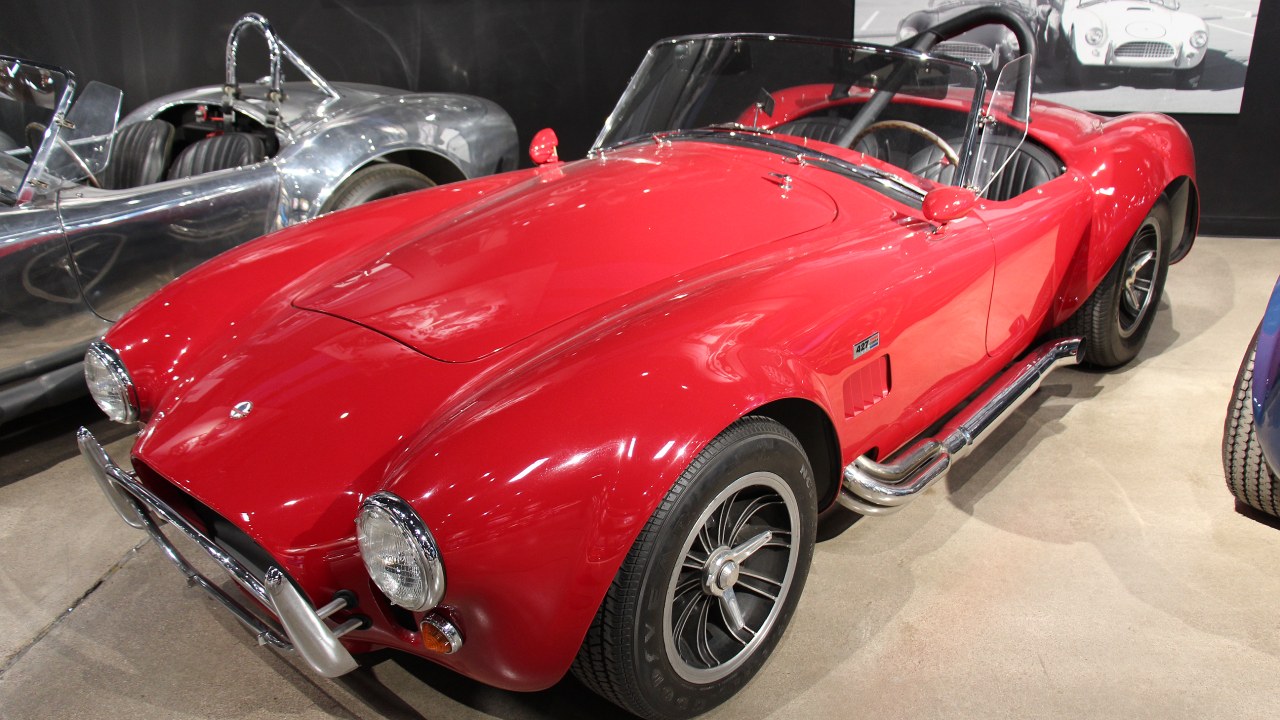
If the engineering changes made the Cobra more capable, it was the car’s results in Europe that forced rivals to take it seriously. The most symbolic battleground was France, where endurance racing was the ultimate test of both speed and reliability. Shelby’s team prepared specific chassis for this assault, including CSX2142, which was the first to be fitted with a hardtop in preparation for Shelby’s attack in France. That seemingly simple addition was a clear signal that the Cobra was no longer just a brutal open roadster, but a car being tailored to survive the long, punishing hours of European endurance events.
The payoff came when The Cobra entered by AC Cars finished 7th overall at Le Mans, 3rd in the GT category, and won the 4-liter to 5-liter class. For a relatively small operation fielding a car derived from a modest British roadster, that result was seismic. It placed the Cobra directly in the mix with established European marques and proved that the Anglo-American formula could not only sprint but also endure. The combination of a hardtop-equipped chassis like CSX2142, the refined steering and suspension, and the Ford V8’s stamina showed that this was not a one-lap wonder but a genuine GT contender capable of terrorizing Europe’s most prestigious race.
Carroll Shelby’s audacious idea and its lasting shockwave
Behind the 1963 Cobra’s rise was Carroll Shelby himself, whose vision reshaped how performance cars could be built. His audacious innovation, described in later profiles as a groundbreaking concept that now seems obvious, was to marry a lightweight European chassis with a powerful American V8 and then refine it enough to beat established manufacturers on their home turf. His willingness to push this formula into Europe, not just keep it on stateside streets, is what turned the Cobra from a clever hot rod into a global disruptor. The 1963 season, with its improved steering, stronger engines, and focused Le Mans program, was the clearest expression of that ambition.
What stands out to me is how improvisational the project remained even as it gained international credibility. Reports on the Cobra’s development note that even the original cars in the 60s came with whatever engine Shelby could get from Ford, while many other parts were borrowed from different suppliers. That pragmatic approach, captured in the phrase Even the original cars in the 60s came with whatever engine Shelby could get from Ford, underlines how far the Cobra was from the polished, vertically integrated programs of its European rivals. Yet by 1963, that patchwork had been honed into a cohesive machine that could run at the front in Europe, proving that ingenuity and smart component choices could rival far larger engineering departments.
From terror on track to timeless icon
The legacy of the 1963 Shelby Cobra is not just about lap times or class wins, but about how it redefined what a small manufacturer could achieve in Europe. The car’s blend of compact dimensions, Ford V8 power, and increasingly sophisticated chassis tuning created a template that enthusiasts and builders have chased ever since. Modern reflections on the Cobra’s engineering excellence emphasize how its design and performance still feel relevant, with the car often cited as a timeless icon in automotive history. Under the hood, Ford’s small V8 and the car’s lightweight construction delivered a power-to-weight ratio that remains impressive even by contemporary standards, which helps explain why original examples and faithful recreations continue to command attention.
That enduring appeal has also fueled a thriving world of replicas and continuations, many of which trace their inspiration directly back to the 1963 specification that first proved the concept in Europe. Guides to navigating Cobra replicas point out that many manufacturers retain a similar ethos, mixing available engines and components to recreate the raw, analog experience that defined the original. I see that as a testament to how deeply the 1963 Cobra’s character resonated: a small-maker V8 roadster that arrived in Europe with little deference to tradition, then forced the racing establishment to respond. Its combination of rack-and-pinion precision, 271-hp, 289-cid V8 power, and Le Mans credibility ensured that the shock it delivered in 1963 would echo for decades, long after the checkered flags fell.
More from Fast Lane Only: