The 1964 Pontiac GTO occupies a rare space in the collector market, combining genuine historical importance with performance that still feels vivid today. For buyers, understanding how its value, mechanical character, and common trouble spots intersect is essential before committing to what is often a six‑figure‑scale decision over the car’s lifetime of ownership and restoration.
As the model widely credited with igniting the American muscle car era, the 1964 Pontiac GTO rewards careful research. Shoppers who grasp how the option package was configured, which drivetrains command premiums, and where these cars tend to rust are far better positioned to judge whether a particular example is fairly priced or an expensive project in disguise.
Why the 1964 GTO still matters
The 1964 Pontiac GTO did not simply add horsepower to an existing coupe, it shifted Detroit’s thinking about performance. Before the muscle car era, big V8 engines were typically reserved for expensive full size models, but in 1964 Pontiac engineers put serious power into the lighter Pontiac Tempest platform, creating the Pontiac Tempest LeMans GTO and making high performance accessible to a wider audience. That formula, a midsize body with a large displacement V8 and a relatively modest base price, is why the car is widely described as the first true Muscle Car and a turning point in automotive history.
The name GTO, an acronym linked to Gran Turismo Omologato, signaled that Pontiac was aiming for a European flavored performance image even as it targeted American boulevard and drag strip culture. Contemporary road tests praised the way the GTO combined strong straight line acceleration with everyday drivability, and later commentary has emphasized how this balance helped the car ignite the American muscle car era and cement its status as a legendary American performance icon.
Performance, drivetrains, and how they affect price
Under the hood, every 1964 GTO centered on a 389 cubic inch V8, but the specification buyers choose today has a direct impact on value. The standard four barrel version already delivered robust power for the period, while the celebrated Tri Power setup, often described as Pontiac’s Triple Carburetion for Gran Turismo Omologato, added three two barrel carburetors and a more aggressive personality. Period and modern observers alike note that this Triple arrangement, especially when paired with a 4 speed, is Widely associated with the GTO’s reputation as a landmark Muscle Car and is therefore more collectible than base configurations.
Transmission choice is another key value driver. A heavy duty three speed manual was the basic fitment on the Pontiac Tempest LeMans GTO, but buyers could specify a close ratio four speed that enthusiasts strongly prefer today. Contemporary accounts point out that higher performance goodies added a four speed manual transmission while the available two speed automatic was largely ignored by performance minded buyers, a pattern that persists in the market where four speed cars typically command a premium. Factory performance figures, including quoted 0 to 60 mph times in the 7 second range, underline that even a stock GTO delivered serious pace for its era, and well tuned examples still feel brisk by modern standards.
Body styles, rarity, and current valuations
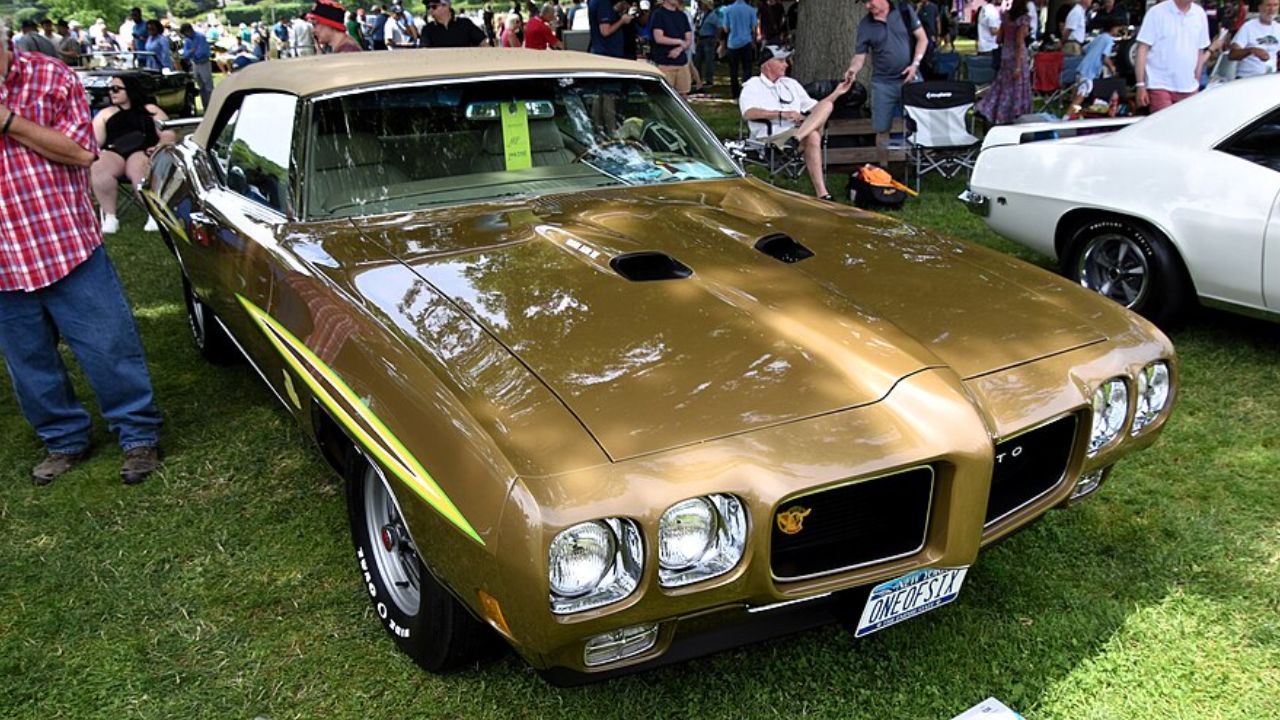
Although the GTO began life as an option package on the Pontiac Tempest, body style and production volume now play a major role in pricing. Hardtops and coupes make up the bulk of surviving cars, while the Convertible configuration is significantly rarer. One detailed account notes that the Convertible, priced at $3,081 when new, had a 6,644-unit production run, a figure that helps explain why open top cars are so keenly sought today. That relative scarcity, combined with the visual drama of a top down muscle car, typically pushes Convertibles to the top of the price spectrum for comparable condition and equipment.
Modern valuation tools illustrate how this desirability translates into numbers. A representative benchmark for a 1964 Pontiac LeMans GTO 2dr Convertible with a 389cid/325hp 4bbl engine lists an average figure of $35,700 with a recent movement of -8.2%, suggesting that while the market can soften in the short term, demand for solid, documented cars remains resilient. Auction results echo this pattern, with One of the more notable sales of a 64 GTO at a GAA Classic Cars event in Greensboro highlighting how well presented, correctly optioned examples continue to attract strong bidding. Collectors also pay close attention to documentation from specialists such as Jim Mattison and Pontiac Historic Services, whose records help verify that a given car left the factory as a genuine GTO rather than a later clone.
What to inspect: rust, originality, and mechanical issues
For all its historical appeal, the 1964 GTO is still a 50-year-old muscle car, and age related issues can dramatically affect both safety and value. Seasoned owners stress that Problems are basically the same as on later models, with rust around the back window, trunk corners, floors, and lower fenders among the most common trouble spots. Broader buyer guidance for classic GTOs distills this into three major rules, starting with Check for rust, then assessing mechanical condition and again checking for corrosion, a repetition that reflects how structural decay can turn an apparently affordable car into a financial sinkhole.
Originality is the other major pillar of due diligence. Expert advice on What to Look For when shopping for a Pontiac for sale emphasizes Matching Numbers, urging buyers to See whether the engine, gearbox, and rear axle correspond to the factory records. Cars that retain their original drivetrains, interiors, and key trim pieces are worth more than those with undocumented swaps or heavy modifications, even if the latter are faster or shinier. Prospective owners are also encouraged to scrutinize the quality of any restoration work, paying attention to panel alignment, paint consistency, and the correctness of details such as badging and interior materials, since these factors influence both enjoyment and long term resale prospects.
Market outlook and what buyers should know before committing
From a broader market perspective, the 1964 GTO benefits from Limited Production and Collectibility without being so rare that it is unusable. Commentary on surviving examples notes that the car was built in meaningful numbers to bring performance to the masses for an affordable price, yet attrition and decades of hard use mean that clean, well documented survivors are now prized. Some valuation snapshots show modest recent declines, such as the -8.2% movement on a representative Convertible, but the model’s foundational role in the muscle car story and its enduring American cultural cachet suggest that demand is not going anywhere anytime soon.
For buyers, the practical takeaway is to treat a 1964 GTO as both a piece of history and a complex machine. Those who prioritize a strong investment case should focus on cars with factory correct drivetrains, desirable options like Tri Power and a four speed, and thorough documentation from sources such as Pontiac Historic Services. Enthusiasts more interested in driving may find better value in less original but mechanically sorted cars, especially if they accept non original paint or interiors. In every case, commissioning a pre purchase inspection from a marque specialist, verifying Matching Numbers where possible, and budgeting realistically for ongoing maintenance will do more to protect both wallet and enjoyment than chasing the lowest advertised price on a 64 G.
More from Fast Lane Only