Two full-size American cars arrived for 1967 with comfort as their calling card, yet their reputations have aged in sharply different ways. The Mercury Marquis, pitched as a range-topping personal luxury coupe, leaned into plush materials and limited production numbers, while the Chrysler Newport chased quiet confidence, space and durability. Decades later, enthusiasts looking at the same model year see one car as a connoisseur’s choice and the other as a workhorse survivor that often needed more rust repair than reupholstery.
Luxury ambitions and showroom positioning
Mercury created its flagship personal coupe for 1967 with a clear mission: sit at the top of Ford’s mid-level division and tempt buyers who wanted more exclusivity than a comparable Ford offered. The Mercury Marquee was introduced in 1967 as a range-topping coupe by Mercury, and the base price for the 1967 Marquee was $3,989, a figure that pushed it into aspirational territory for middle-class families. Period marketing framed the car as a statement of taste rather than just transport, and that positioning still shapes how collectors view it today.
That pricing strategy also intersected with brand perception. Due to being less known than Fords, a Mercury with a powerful engine might be available at a lower price on the used market, even if it shared much of its hardware with more famous siblings. A video on the nameplate’s history notes how buyers who looked past the blue-oval badge could find surprising performance value in Mercury models that never achieved the same mainstream recognition as Fords. That dynamic still plays out in auctions, where a well-equipped Marquis can undercut a similarly powered Ford while offering more elaborate trim.
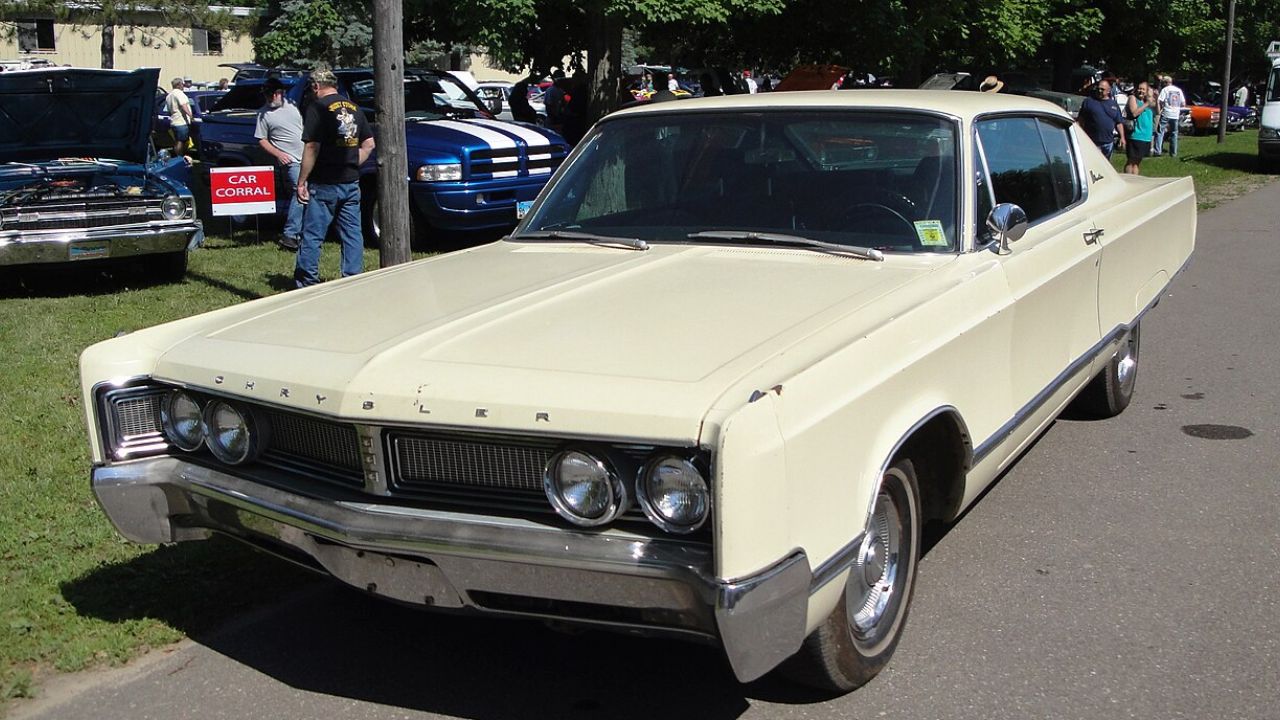
On the Chrysler side, the Newport filled a different role. The Chrysler Newport and the Mercury Monterey were both full-sized American sedans offering comfort, presence, and V8 power, but the Newport was the gateway into the Chrysler brand rather than a halo coupe. The Chrysler Newport exuded a clean, confident elegance with its long, horizontal lines, squared-off grille, and minimalist trim, backed by a solid unibody construction that signaled substance over flash. Buyers who chose the Newport in 1967 were often more interested in quiet authority and space than in the kind of personal-luxury image Mercury was cultivating.
That split in showroom intent helps explain why the two cars have aged differently. The Marquis arrived as a specialty model with a single, highly trimmed body style and a relatively high entry price, while the Newport was a volume full-size car that anchored Chrysler’s lineup. The Mercury’s scarcity and focus on luxury comfort now feed its appeal among collectors, whereas the Chrysler’s broader production and workhorse role mean more survivors, but also more examples that lived hard lives.
Design, interiors, and the feel of comfort
Visually, both cars represented late‑1960s American taste, yet they interpreted comfort in distinct ways. With its long, sleek lines and wide stance, the 67 Newport presented a balanced exterior that blended the muscularity of American car design with a restrained use of chrome. Contemporary descriptions of the Newport’s styling highlight how the sheetmetal avoided excessive ornamentation, instead relying on proportion and a strong shoulder line to project confidence. The Chrysler Newport exuded a clean, confident elegance with its long, horizontal lines and squared-off grille, which made it look at home in suburban driveways and corporate parking lots alike.
Inside, the Newport focused on space and straightforward luxury. Owners recall that they could not beat the comfort in the ride, and that the 383 g gives plenty of power, while the cabin offered PLENTY of room under the hood for maintenance and generous interior dimensions for passengers. The emphasis was on wide bench seats, simple controls, and materials that felt solid rather than ornate. For many buyers, especially families and older drivers, that approach defined comfort as roominess and ease of use rather than showy trim.
The Marquis, by contrast, was designed to impress as soon as the door opened. Catalog descriptions emphasize premium materials adorning every surface, from plush carpeting to richly upholstered seats. The cabin was laid out to feel more like a personal lounge than a family sedan, with more sculpted seating and decorative details. The split bench was a lot more practical, offering separate adjustment and individual armrests while still allowing three-abreast seating in a pinch, which gave the front row the feel of two armchairs without sacrificing capacity.
One contemporary review described the Marquis interior as featuring a more plush layout with real wood grain and individual arm rests for the front seats. Mercury built 6,510 examples of the 1967 Marquis, which meant that this level of finish was never a common sight on American roads. That limited production run, combined with the car’s upscale trim, has become a key part of its mystique. Enthusiasts often contrast that experience with the Newport’s more utilitarian layout, which favored durable materials and simple patterns over the Marquis emphasis on visual richness.
The difference in design philosophy shows up even in small touches. The Marquis cabin surrounded occupants with brightwork, padded surfaces, and carefully grained panels that aimed to justify its higher price. The Newport interior, while comfortable, largely prioritized function, with wide door openings, straightforward gauges, and bench seating that could handle family duty. Both cars delivered comfort, but one did it through sensory indulgence while the other leaned on space and ergonomic simplicity.
Powertrains, ride quality, and the way they drove
Under the hood, both cars delivered the V8 performance that full-size buyers expected in the late 1960s, although they framed that power differently. The Marquis was equipped with a strong V8 engine that fit its role as a gentleman’s express. Period specifications describe the car as Equipped with a robust V8 engine, tuned to move the heavy coupe with authority while remaining quiet enough for highway cruising. In some configurations, the Marquis paired a big-block V8 with a four-speed manual transmission, which gave the plush coupe unexpected muscle car credentials for those who ordered the rarer performance combinations.
Contemporary coverage of a four-speed example highlights how the Marquis combined luxury trim with serious hardware. One account notes that the car featured a more plush interior with real wood grain and individual arm rests for the front seats, and that Mercury built 6,510 examples in total. That same source explains that the manual transmission was Mated to a 330-horsepower, 410-cu.in engine, which put the Marquis into genuine high-performance territory despite its formal roofline and upscale image. Enthusiasts today see that pairing as a key reason why the car has gained attention among collectors who want something different from the usual muscle car roster.
The Chrysler Newport, meanwhile, leaned on a range of V8s that balanced power with durability. For 1967, one configuration offered a 270-hp, 383-cu.in. B-series big-block V-8, available for an extra $34.50 over the base engine. On a Newport, the TNT engine was a $198.35 option, which gave buyers a more aggressive tune and stronger acceleration without sacrificing the car’s core comfort mission. Another report on a 1967 Newport notes that a 383-cubic-inch (6.3-L) B-series V8 made 270 horsepower in its stock configuration, and that similar engines in the family could be jetted to 375 horsepower in their highest-output forms, underscoring how much latent performance sat under the hood of what many considered a sensible full-size sedan.
Owners consistently praise the Chrysler driveline. One long-term review explains that the drive train was rugged, and the transmission remained tight and shifted well even after being abused. Installing electronic ignition solved some problems that had developed over time, which suggests that the core mechanicals were sound even as peripheral components aged. Another owner recounts that the 383 gives plenty of power in the mountains and that the car is VERY easy to maintain and work on, with PLENTY of room under the hood for routine service.
Chrysler also invested in its automatic transmission technology. Period literature for 1967 describes a transmission that really transmits, with Chrysler’s TorqueFlite putting engine power to work faster than most other automatics in the segment. That marketing line reflected real engineering focus on smooth, quick shifts that supported the Newport’s reputation for relaxed, confident driving. Combined with the big-block torque, the transmission helped the car feel responsive without requiring high revs or constant gear hunting.
Ride and handling reveal another contrast. On both smooth highways and winding back roads, the Marquis handled with poise, absorbing bumps with ease thanks to its sophisticated suspension system. Contemporary catalog copy describes how the car’s chassis tuning balanced isolation with control, which fit its role as a personal luxury coupe that might be driven briskly by an owner who also cared about comfort. The suspension setup filtered out rough surfaces while keeping the car composed in curves, which made long trips less tiring.
The Newport followed a similar philosophy but executed it for a broader audience. Its suspension system absorbed imperfections while providing drivers with confident control, and the car rode on a rear-wheel drive layout that was standard for the era. A catalog entry lists the Drive Type as Rear-wheel drive and emphasizes how the chassis soaked up rough pavement while keeping the big sedan stable. That combination of a compliant ride and predictable handling became a hallmark of the Newport of this generation, which shared Chrysler’s C platform with larger and more expensive models.
Both cars therefore delivered on the promise of comfort, but in slightly different flavors. The Marquis felt like a refined coupe that happened to be large, with suspension tuning and powertrains that invited spirited driving when desired. The Newport felt like a big, unflappable sedan that could carry a family or a trunk full of luggage across long distances without drama. Enthusiasts who drive both today often describe the Marquis as more intimate and the Newport as more relaxed, even when the raw power figures are similar.
Durability, rust, and how they aged in the real world
Comfort in 1967 did not guarantee longevity, and the way these cars have aged says as much about their construction and usage patterns as it does about their original engineering. Owner reports on the Chrysler Newport present a mixed picture. On one hand, several reviewers praise the rugged drive train and the way the transmission remained tight and shifted well even after being abused. Installing electronic ignition solved some problems with reliability, which suggests that ignition upgrades could extend the life of the powertrain without major internal work.
On the other hand, rust has been a recurring theme for Newport owners. One account explains that the under carriage needed to be reinforced as rust was getting to the car, that the manifold has a hole in it, and that the rear wheel bearings needed to be fixed. Another buyer considering a 1967 Newport coupe for restoration notes that the under frame has no rot, just surface rust on it, but that the car needs a full cleaning to see how bad the corrosion really is. These experiences hint at a pattern where the unibody structure and underbody components can suffer in harsh climates, even when the main frame rails survive.
Despite those challenges, many owners remain loyal to the Newport. One review simply states that they cannot beat the comfort in the ride and that the 383 g gives plenty of power, while also stressing that the car is VERY easy to maintain and that there is PLENTY of room under the hood. That combination of mechanical durability and service accessibility has helped the Newport remain a viable classic for hobbyists who are willing to tackle rust repair but want a car they can keep running without exotic parts.
The Marquis, by contrast, tends to be discussed more in terms of rarity and preservation than in terms of hard-use durability. With only 6,510 examples built, many surviving cars are either well-kept originals or restorations that focus on preserving the luxurious interior and distinctive exterior trim. Catalog guides highlight how premium materials adorned every surface, from plush carpeting to richly upholstered seats, which means that interior restoration can be expensive but also rewarding when done correctly.
Specialist parts suppliers have recognized this demand. The 1967 Mercury Marquis Catalog and Classic Car Guide, for example, is supported by resources that help owners source weatherstripping, trim, and interior components. A support site for that catalog, listed under help.metroparts.com, is described as Discovered via citation trail from 1967 Mercury Marquis Catalog and Classic Car Guide, which signals a network of documentation and parts availability tailored to this specific model. Related social channels, including a page that is Discovered via citation trail from 1967 Mercury Marquis Catalog and Classic Car Guide on Facebook, along with Pinterest and X accounts that share the same description, further illustrate how niche but dedicated the Marquis restoration community has become.
Because the Marquis was often garaged and treated as a special car from new, many survivors show less structural rust than working Newports that spent decades as daily drivers. However, the very features that made the Marquis comfortable in 1967 can complicate restoration today. The intricate interior trim, real wood grain, and unique upholstery patterns are harder to reproduce than the simpler materials in a Newport. Owners who want to maintain the car’s original feel must either hunt for new-old-stock components or rely on specialist upholstery shops.
The Chrysler Newport also benefits from a support ecosystem, although its scale and focus look different. A sharing link that is Discovered via citation trail from 1967 Chrysler Newport Catalog and Classic Car Guide points to resources for weatherstripping and body seals, which are essential for keeping water out of the unibody structure and slowing further rust. Enthusiast groups on social media, including those where members ask if they should buy a 1967 Newport coupe and discuss whether the under frame has rot or just surface rust, show how the car has become a popular entry point for classic ownership among people willing to weld and wrench.
Survey-based owner review platforms have also shaped the Newport’s reputation. An advertising link that is Discovered via citation trail from 1967 Chrysler Newport Reviews, Page 2 of 2 on Carsurvey references the survey methods used to gather owner impressions, which often highlight both the strengths of the drive train and the weaknesses of the body structure. Those aggregated experiences reinforce the idea that the Newport is mechanically tough but vulnerable to corrosion, a pattern that influences how buyers evaluate project cars today.
Collector value, comfort reputations, and why their legacies diverged
Half a century on, the 1967 Mercury Marquis and the 1967 Chrysler Newport occupy different niches in the classic car world, even though both were originally sold as comfortable full-size cars with V8 power. The Marquis, with its limited production run of 6,510 units and its role as the top of the Mercury hierarchy, has become a connoisseur’s choice. Collectors are drawn to its combination of premium interior materials, distinctive styling, and available high-output engines. The perception that a Mercury with a powerful engine might be available at a lower price than a comparable Ford has also helped the Marquis attract enthusiasts who want performance and comfort without paying premium muscle car money.
The Chrysler Newport, by contrast, is often valued for its practicality and durability rather than exclusivity. Owners praise the rugged drive train, the way the transmission remained tight even after abuse, and the fact that Installing electronic ignition solved some problems that cropped up with age. At the same time, they acknowledge that the under carriage needed to be reinforced as rust was getting to the car and that components such as manifolds and rear wheel bearings may need attention. That mix of strengths and weaknesses has made the Newport a common sight at entry-level classic shows, where owners proudly display cars that may not be perfect but still deliver the comfort and presence of a full-size American sedan.
Styling also plays a role in their divergent legacies. The Chrysler Newport exuded a clean, confident elegance with long, horizontal lines and minimalist trim, a look that some modern enthusiasts appreciate for its restraint but others consider less exciting than the more ornate designs of the era. The Marquis, with its more elaborate interior and personal-luxury stance, taps into a different nostalgia, one that celebrates plushness and individuality. The split bench with individual armrests, the real wood grain, and the premium carpeting all contribute to a sense that the Marquis represents a particular moment when American buyers wanted their cars to feel like rolling living rooms.
Support networks have further shaped how each car aged. The Marquis benefits from targeted parts catalogs and enthusiast content that focus specifically on the 1967 model, including guides that describe how the Marquis handled with poise on both smooth highways and winding back roads. These resources, combined with social media channels tied to the Mercury Marquis Catalog and Classic Car Guide, help keep interest alive among a relatively small but passionate group of owners. The Newport, in turn, leans on broader Chrysler communities, owner surveys, and restoration discussions that treat the car as one of several C-platform models worth saving.
More from Fast Lane Only