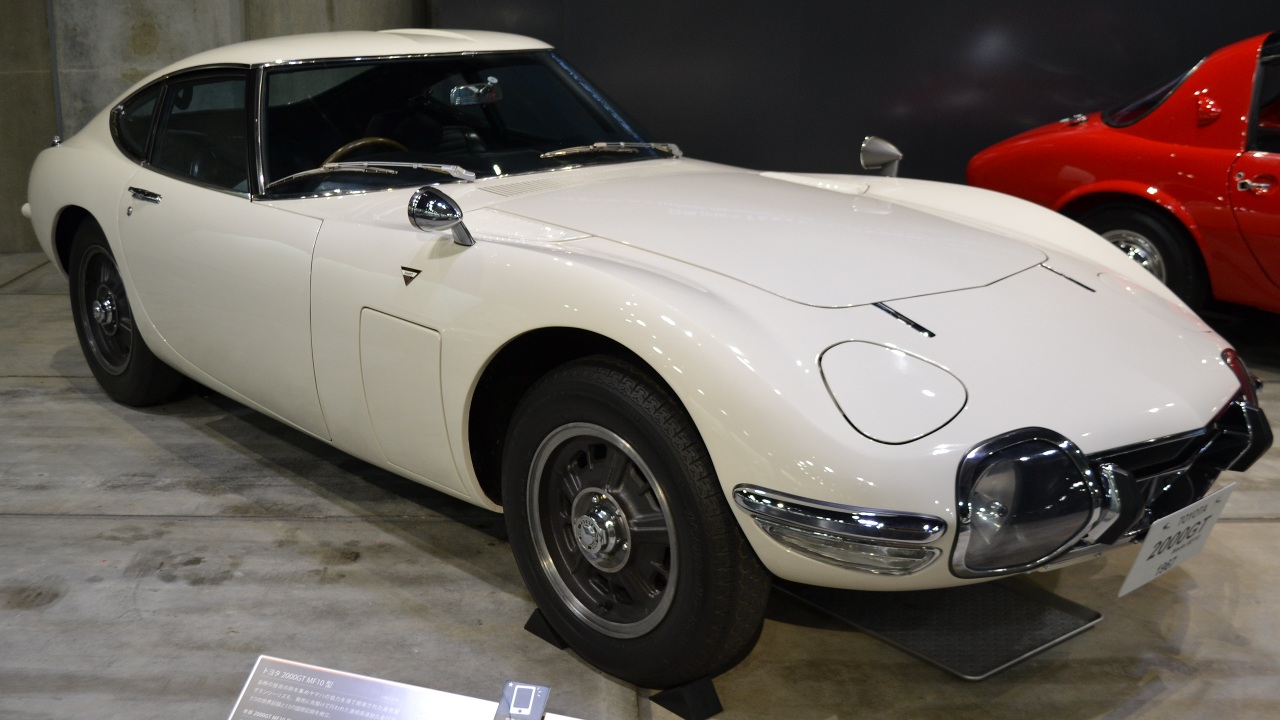
The Toyota 2000GT arrived in the late 1960s as a shock to Western expectations, a low, long‑bonnet coupe from a company better known for sensible sedans than glamorous sports cars. With its limited production, advanced engineering and cinematic star turn, it became the first Japanese exotic that Europe and the United States had to take seriously.
I see the 2000GT not just as a beautiful object, but as a strategic statement: Japan could build a world‑class grand tourer that matched Italian and British rivals on design, speed and sophistication. Its short production run and later collector frenzy only sharpened that point.
From conservative maker to grand touring statement
When Toyota approved the 2000GT, it was stepping far outside its comfort zone of practical family cars and taxis. The company created a limited‑production, front mid‑engine, rear‑wheel‑drive, two‑seat coupe that looked nothing like its existing lineup, with a long hood, compact cabin and fastback tail that placed it firmly in the grand touring tradition. The car’s proportions and flowing surfacing were deliberately pitched at the same audience that admired European exotics, yet the execution was rooted in precise Japanese engineering rather than flamboyance.
The production model reached the market in May 1967 after a prototype appeared at the Tokyo Motor Show, signaling that Toyota was ready to compete in the global performance arena. Official material describes the 2000GT as a two‑door sports car with a 2,000 cc engine and a curb weight of 1,120 kg, figures that put it squarely among contemporary European GTs. By keeping the engine behind the front axle line and driving the rear wheels, Toyota created a balanced layout that supported both high‑speed touring and serious track work, a combination that Western enthusiasts were used to seeing from established sports car makers rather than from a Japanese brand.
Yamaha partnership and engineering sophistication
One of the most striking aspects of the 2000GT story is how Toyota leaned on outside expertise to accelerate its learning curve. The car was developed and built jointly with Yamaha, which brought deep experience in high‑revving engines and precision fabrication. Official specifications list the engine as a liquid‑cooled inline six of 1,998 cc, paired with a five‑speed manual gearbox, a configuration that aligned with European performance benchmarks of the era. The collaboration allowed Toyota to move quickly from concept to production while delivering a level of refinement that surprised Western testers.
The chassis and suspension underscored that ambition. The 2000GT used independent suspension all around, a sophisticated choice at a time when many rivals still relied on live rear axles. Contemporary technical descriptions highlight how this setup, combined with the car’s compact dimensions of 4,175 mm in length and 1,600 mm in width, gave it agility without sacrificing stability at speed. The result was a car that did not simply mimic Western exotics in appearance, but matched them in underlying engineering, which is why it could credibly challenge European benchmarks on both road and track.
Design that could stand beside European exotics
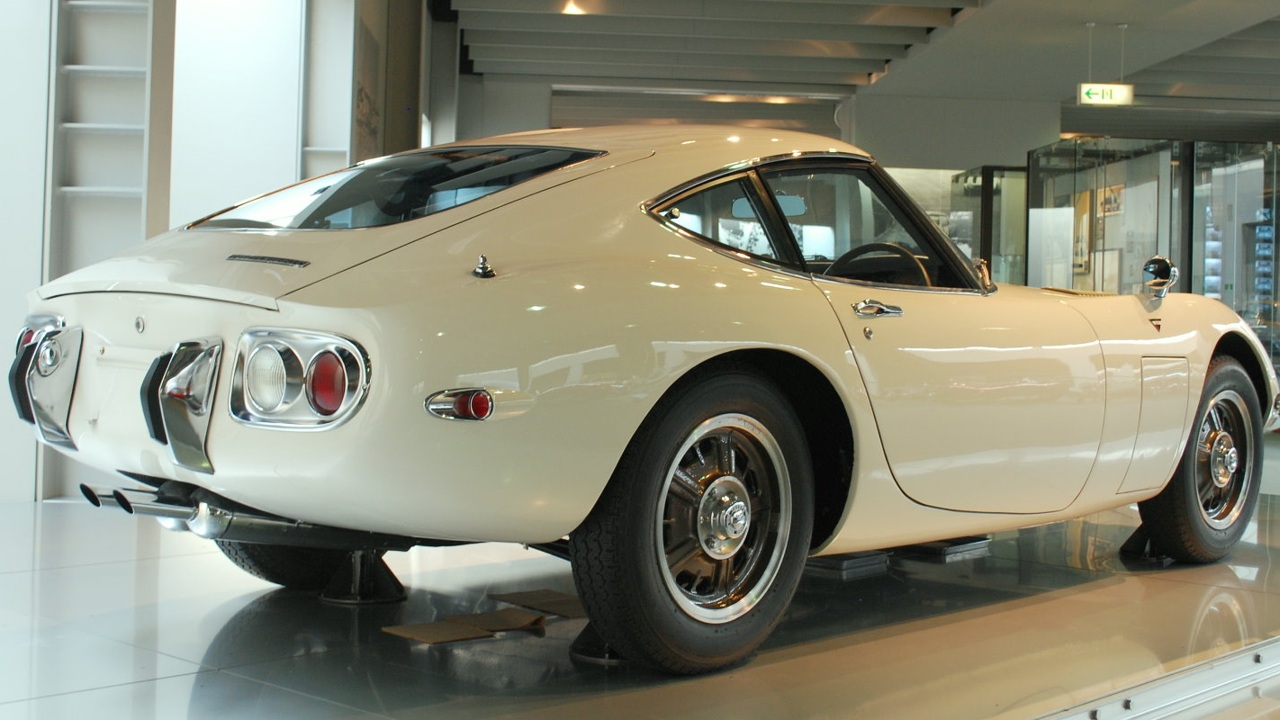
Visually, the 2000GT was the first Japanese sports car that could be parked next to a contemporary Ferrari or Jaguar without looking out of place. Its elegant lines, low roof and long, tapering hood created a classic GT silhouette that Western audiences already associated with high performance and exclusivity. Details such as the pop‑up headlights, sculpted fenders and neatly integrated rear glass gave the car a cohesive, almost jewel‑like presence that contrasted with the more utilitarian image of other Japanese imports of the time. Around the rear, period descriptions note how the taillights were mounted on metal frames rather than recessed into the body, a small but telling flourish that emphasized craftsmanship over cost cutting.
Inside, the 2000GT continued that message with a driver‑focused cockpit trimmed in wood and high‑quality materials, again echoing European grand tourers rather than mass‑market sedans. The combination of compact exterior dimensions and a richly finished cabin reinforced the idea that this was a purpose‑built sports car, not a tuned version of an existing model. When Western journalists encountered the car, they were confronted with a Japanese coupe that matched their expectations of an exotic in stance, detailing and ambiance, which helped shift perceptions of what companies like Toyota were capable of building.
Racing, endurance records and the Bond spotlight
The 2000GT did not rely on styling alone to earn respect abroad. Toyota used motorsport and endurance events to prove that its new flagship could perform as well as it looked, a strategy that Western manufacturers had long used to build credibility. Reports on the car’s competition history describe how it set multiple world endurance speed records, including long‑distance runs that showcased both reliability and sustained high‑speed capability. These achievements were crucial in convincing skeptical enthusiasts that a Japanese sports car could handle the same punishing conditions as European rivals.
Popular culture then amplified that message. When producer Albert R. Broccoli approached Toyota in early 1966 about featuring the 2000GT in the James Bond film “You Only Live Twice,” the company seized the opportunity. To accommodate the film’s needs, Toyota and Yamaha created special open‑top versions of the coupe, even though a production convertible was never offered. The movie placed the 2000GT on cinema screens around the world, racing through Japanese streets with the same glamour that earlier Bond films had given to British and Italian sports cars. That exposure, combined with the car’s competition record and technical sophistication, helped cement its status in Western eyes as a genuine exotic rather than a curiosity from a distant market.
Scarcity, collector mania and lasting influence
The 2000GT’s impact on Western perceptions was magnified by how few were built. Toyota’s own historical record notes that only 337 units were produced before production ended in 1970, a tiny number compared with mainstream models. That scarcity, combined with the car’s design and engineering pedigree, turned it into a coveted collectible. Later analysis of the collector market points out that the 2000GT became the first Japanese car to break the 1 million dollar barrier at auction, a milestone that signaled Western buyers were willing to value a Japanese classic on the same financial terms as European exotics. It also reframed Japanese performance cars as potential blue‑chip investments rather than disposable curiosities.
The car’s legacy inside Japan is just as significant. Commentators often describe the 2000GT as the machine that made Japan a contender in the global sports car arena, a role that set the stage for later icons. The lineage from this limited‑run coupe to later halo models is clear: by proving that a Japanese manufacturer could build a world‑class grand tourer, the 2000GT opened the door for cars like the Honda NSX to be taken seriously as supercars in their own right. Even though the NSX is often credited as Japan’s first modern supercar, the groundwork was laid in the late 1960s when Toyota and Yamaha produced a front mid‑engine, rear‑drive coupe that stunned Western audiences and permanently altered expectations of what Japanese engineering could achieve.
More from Fast Lane Only: