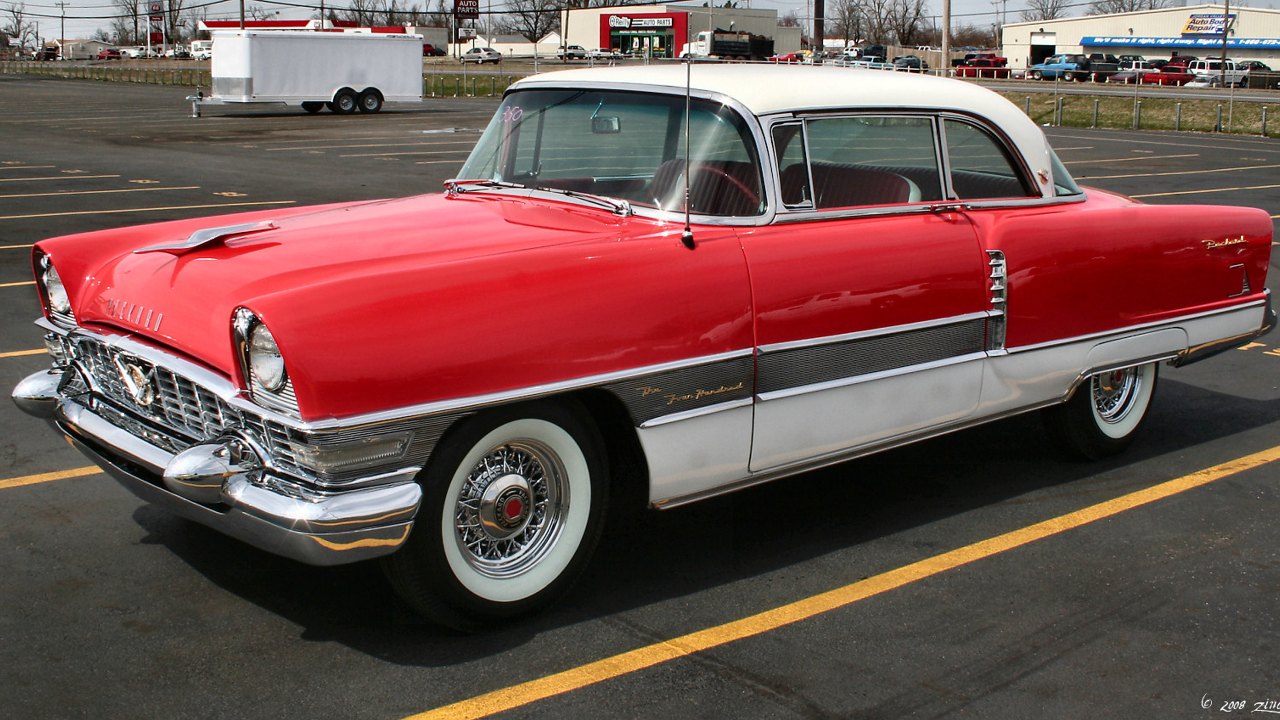
The 1955 Packard Four Hundred arrived as a stylish, technically ambitious hardtop at the very moment its maker’s prestige was slipping. It was engineered and trimmed to look like a confident return to form, yet it had to work against doubts about Packard’s relevance, quality, and independence in a luxury market that was rapidly tilting toward Cadillac. The car became a rolling argument that the old-line brand still belonged in the top tier, even as structural headwinds made that argument hard to win.
Recasting Packard’s image in a Cadillac world
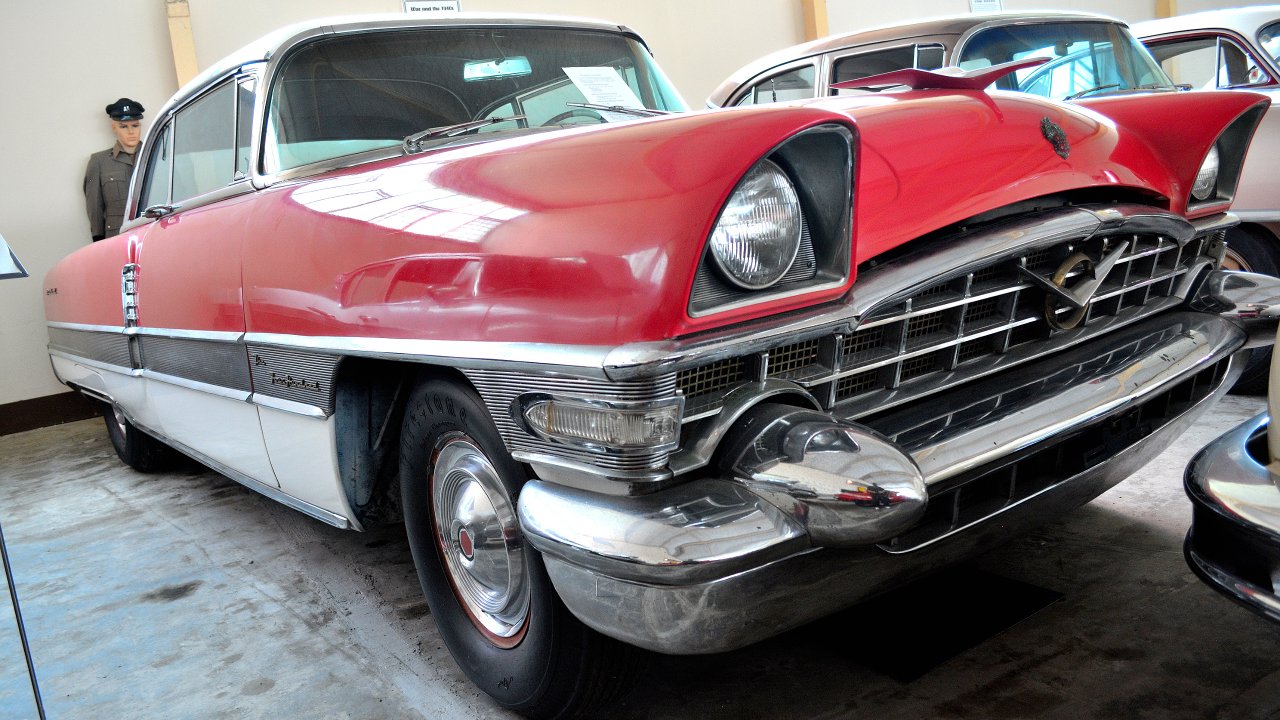
By the mid 1950s, Packard was no longer the default choice for American luxury buyers, and the Four Hundred was tasked with changing that perception in a single model year. The company revived the Four Hundred name for its senior two-door hardtop and loaded the car with visual cues meant to signal status, from broad chrome side moldings to a distinctive color break that swept around the rear wheel opening and door edge. The idea was to present a modern, glamorous Packard that could sit in the same driveway as a Cadillac without looking dated or timid.
That strategy ran into a different kind of skepticism, because critics saw the 1955 Packard styling as too closely echoing Cadillac’s own cues to rebuild the brand’s cachet. Contemporary analysis has argued that Cadillac’s trend setting look in 1954 helped push its share of the luxury field upward, and Packard’s decision to follow that template in 1955 risked making the Four Hundred look like a follower rather than a leader. Instead of restoring Packard’s aura as an innovator, the resemblance fed a narrative that the company was chasing General Motors rather than setting its own course, which undercut the very prestige the Four Hundred was supposed to project.
Engineering fireworks versus quality doubts
Under the skin, the Four Hundred tried to fight skepticism with hardware that was as advanced as anything in Detroit. Packard introduced a new V 8 that was described as a solid design and delivered the highest advertised horsepower in the industry except for the Chrysler 300. Enlarged to 374 cubic inches for later senior models, the engine signaled that Packard could still compete on power and refinement, not just on heritage. The company also rolled out a sophisticated torsion level suspension that linked the front and rear axles, promising a smooth, level ride that set the car apart from more conventional rivals.
Owners and historians have noted that the torsion level system generally worked well in service, which should have bolstered Packard’s reputation for engineering depth. However, the same period brought serious quality control problems that cut in the opposite direction. After its longtime body supplier Briggs was purchased by a rival, Packard had to hastily reestablish in house body production, and the resulting teething issues showed up in the 1955 cars. Reports describe fit, finish, and mechanical glitches that were out of character for a marque once synonymous with meticulous craftsmanship, and those flaws made it harder for buyers to trust that the Four Hundred’s innovations would be durable rather than experimental.
Price wars and the shrinking space for “middle luxury”
Even if the Four Hundred had been flawless, it was entering a market that was becoming hostile to independent luxury brands. A fierce price war in the early 1950s hit the low priced field hardest, but it also took a nasty bite out of the mid price segment where Packard had long depended on volume. As the Big Three used aggressive pricing and model proliferation to crowd every rung of the ladder, the room for a standalone company to sell both upper middle and true luxury cars narrowed. Packard’s attempt to cover that span with the Clipper line on one side and senior models like the Four Hundred on the other left the brand’s identity blurred.
The company tried to protect its top tier image by positioning the Four Hundred clearly above the Clipper, but the broader economics were working against that separation. The price war eroded margins and pushed buyers toward brands that could offer more perceived value or stronger resale, which favored the giants. Analysts of the period have argued that this environment further hurt the senior cars, because Packard could not afford the kind of sustained marketing and dealer incentives that Cadillac and others deployed. The Four Hundred, priced and trimmed to signal exclusivity, had to justify its premium in a market that was being trained to expect discounts and rapid styling changes.
Body sourcing turmoil and the perception of instability
Behind the showroom gloss, Packard was grappling with a supply chain crisis that fed public doubts about its stability. Its longtime body supplier, Briggs, had been purchased by another automaker, which forced Packard to scramble to bring body production back in house. Along with declining sales, this shift created a second major headache in 1955, because the company had to invest in tooling and facilities at the same time it was trying to launch a new generation of cars. The Four Hundred, as a senior model, depended on precise body fit and finish to justify its status, yet it was being built in the middle of this transition.
Accounts from the period describe how the rushed move to internal body production led to quality lapses that were visible to customers, from panel alignment to paint consistency. Commentators have drawn a line between those issues and the broader perception that Packard was losing its grip just as it needed to project confidence. When a luxury buyer opened a door on a Four Hundred and saw misaligned trim or heard a rattle, it contradicted decades of marketing about quiet, carefully assembled Packards. That kind of cognitive dissonance is especially damaging in the high end, where buyers are not just purchasing transportation but reassurance that the company will stand behind the product for years.
Legacy, survival, and the long shadow of perception
Viewed from today, the 1955 Four Hundred has gained a second life as an object of fascination for enthusiasts who see both its ambition and its flaws. Restorers who tackle these cars describe them as substantial “land yachts,” with imposing proportions and intricate details that reward careful work. Surviving examples, including cars documented in enthusiast videos and walkarounds, often come with original service manuals and paperwork that hint at how seriously Packard once took its relationship with owners. The fact that a model built in relatively modest numbers still attracts dedicated restoration projects suggests that the underlying engineering and design had lasting merit, even if the market did not reward it at the time.
For me, the Four Hundred’s story underscores how difficult it is for any automaker to change public perception once doubt sets in. Packard tried to answer questions about relevance with Cadillac like styling, to counter performance skepticism with a powerful new V 8 and advanced suspension, and to mask internal turmoil with bright paint and chrome. Yet the combination of price war pressures, supplier upheaval, and visible quality problems meant that each bold step forward came with a new reason for buyers to hesitate. The car fought that skepticism with every flourish on its body and every turn of its torsion bars, but the forces reshaping the American auto industry were larger than any single model, even one as determined as the 1955 Packard Four Hundred.
More from Fast Lane Only: