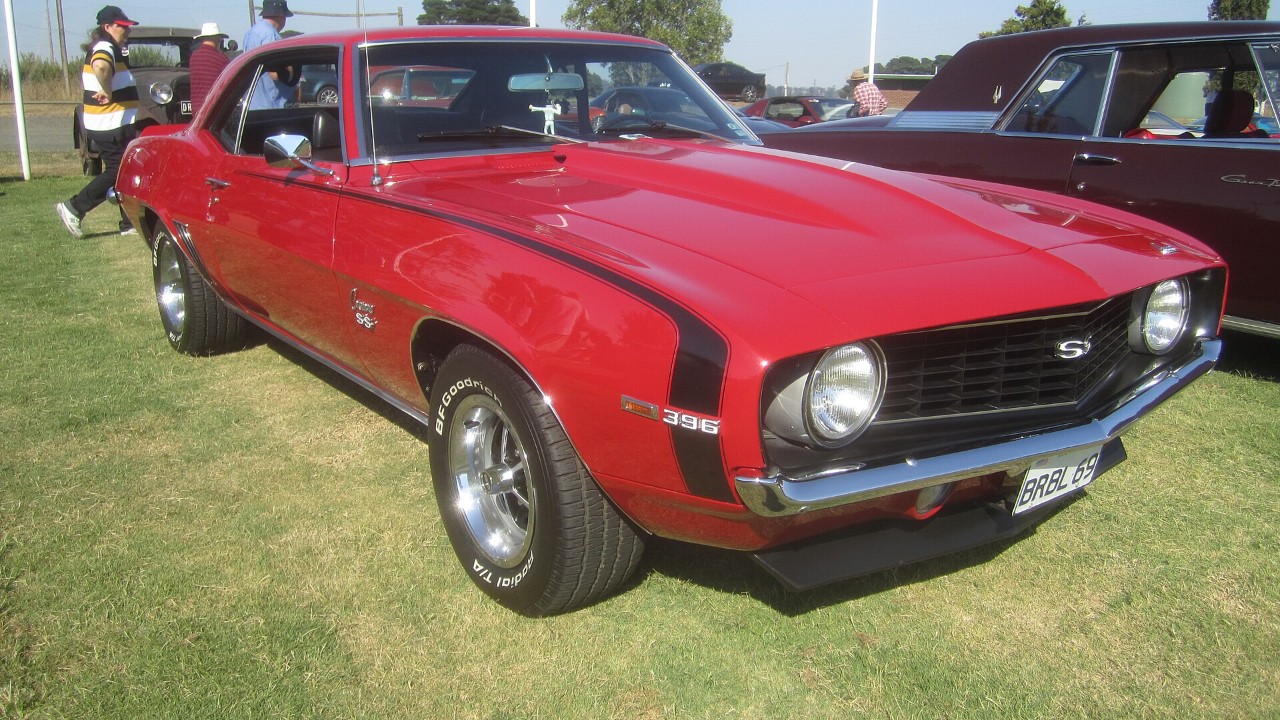
Only 311 Camaros left the factory with aluminum cylinder heads for 1969. That option was the Camaro L89, a 396-cubic-inch big-block V8 with its iron heads swapped for aluminum ones. It cost buyers about $700 extra. Yet on paper, it did not add a single horsepower.
So why did anyone pay for it? The answer was weight, and it sat right over the front wheels. A drag racer or a road racer could see the value in that. Most buyers, it turned out, could not.
Here is what the L89 was, what Chevrolet charged for it and how few left the factory. The figures come from Chevy Hardcore, Sports Car Market and Motorious, all linked below.
What the Camaro L89 was
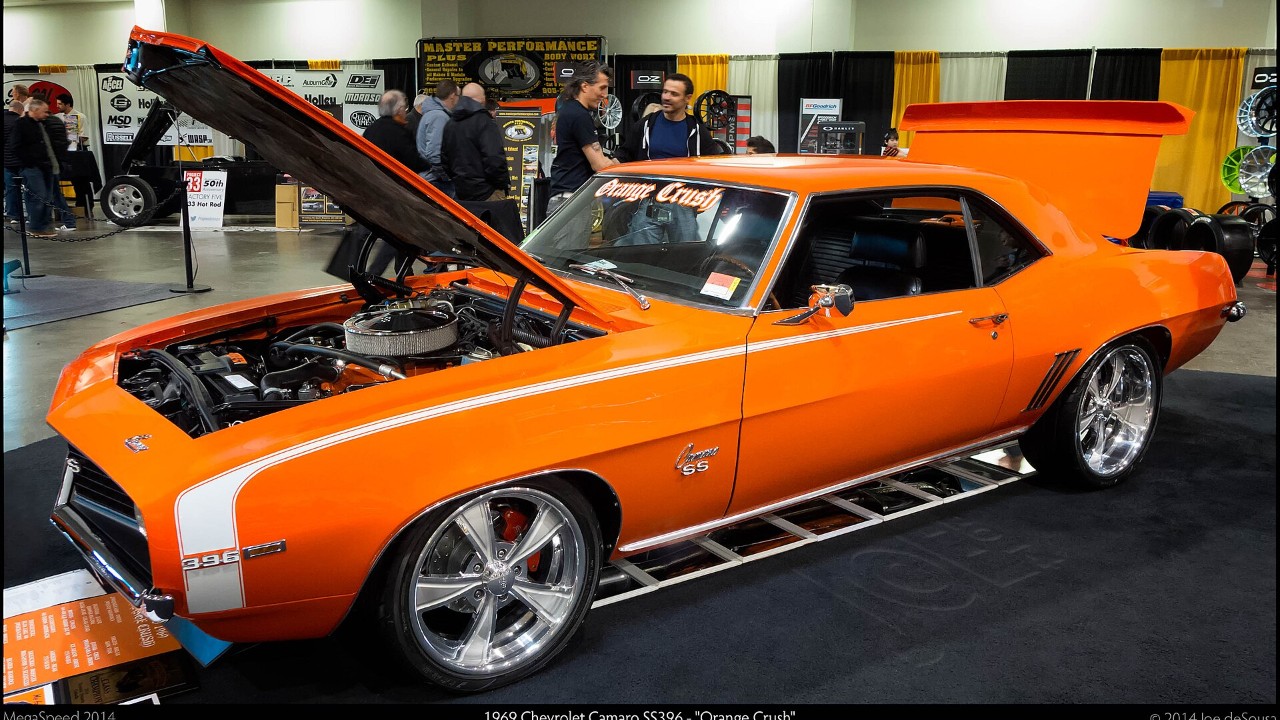
The L89 started with another engine. Writing for Chevy Hardcore, Andy Bolig says, “Other than the lightweight aluminum heads, the L89 engine is the same as the L78.” In other words, it was the solid-lifter L78 396 with different heads on top.
That base engine was serious hardware. Bolig lists 11.0:1 compression with forged, domed pistons. He also lists a forged steel crankshaft in a four-bolt block and a solid-lifter camshaft. On the L89, the heads were lightweight aluminum with rectangular ports. According to the same article, the L78 first appeared in Camaros during the 1967 production run.
The L78 already had a following. Bolig writes that racers had favored it in Corvettes and Chevelles a couple of years before it reached the Camaro. Still, there was a catch for comfort. Bolig notes that the solid-lifter engines did not get factory air conditioning, which Chevrolet listed as RPO C60. As a result, an L89 Camaro was a car for people who cared more about the engine than the cabin.
Same 375 horsepower, less weight
Chevrolet rated the L89 at 375 horsepower. That was exactly the rating of the iron-head L78. Sports Car Market puts it plainly: “all L89 396 Chevrolet engines produced the exact same 375 horsepower as their iron-head counterparts.”
The 375 figure has its own history. Bolig writes that the L78 “was originally rated at 425 horsepower” when it arrived in 1965. Later, Chevrolet listed it at 375. He reports that the 375 rating came at 5,600 rpm, compared with 6,400 rpm for the original 425. However, he adds that the internals stayed the same and only the paper rating changed.
What the aluminum heads did change was weight. According to Chevy Hardcore, they took about 70 pounds off the front of the car. For a racer, that meant less weight over the front tires. For everyone else, it meant a big bill for a small gain.
What the Camaro L89 cost in 1969
Buyers could not simply tick one box. Instead, Chevy Hardcore says they had to order the L78 and then the L89 on top of it, and pay for both. That rule made the L89 an expensive add-on to an already expensive engine.
Sports Car Market gives the exact figures for 1969. The L89 option “added an additional $394.95 to the $316 L78 option.” Together, that comes to $710.95. By comparison, Bolig puts the price of a base 1969 Camaro at just under $3,000.
Put another way, the aluminum heads alone cost more than the L78 engine upgrade they sat on. Sports Car Market notes that the weight saving was small compared with that cost. That helps explain why so few buyers signed up.
Only 311 Camaros got the L89 heads
Chevy Hardcore counts 272 L89 Camaros for 1968 and 311 for 1969. Sports Car Market agrees on the 1969 figure, writing that “only 311 folks ordered the Camaro with the L89 heads.” Motorious also gives 311 for 1969.
That 311 covers every 1969 L89 Camaro, according to Sports Car Market. It also includes the Pace Car editions. Chevrolet built 3,675 Pace Car Camaros for 1969 across all versions, the magazine says.
How many of those Pace Cars got the L89 is less clear. Sports Car Market cites a count of twelve L89 Pace Car convertibles. Then it calls the number a mystery, because other sources put it as high as 34.
How an L89 Camaro was equipped
An L89 Camaro could have a manual or an automatic gearbox. For example, the 1969 car in the Chevy Hardcore story has an M21 Muncie four-speed with a Hurst shifter. Bolig notes that an automatic car would have carried a Turbo 400 instead.
Likewise, the L89 Pace Car convertible that Sports Car Market covered had a 400 Turbo-Hydramatic and a 3.07 rear axle. As equipped, that car listed at $5,148.50 when new, the magazine says. Meanwhile, the Motorious car has a four-speed M22 manual and a 4.10 Positraction rear end. Each one started with the same 396 and the same aluminum heads.
Chevy Hardcore gives L89 Camaro counts for two model years. Taken together, they add up to 583 cars: 272 in 1968 and 311 in 1969.
More from Fast Lane Only
- Unboxing the WWII Jeep in a Crate
- 15 rare Chevys collectors are quietly buying
- 10 underrated V8s still worth hunting down
- Police notice this before you even roll window down
This article was created with the help of AI and was reviewed and edited by Fast Lane Only editors before publication.