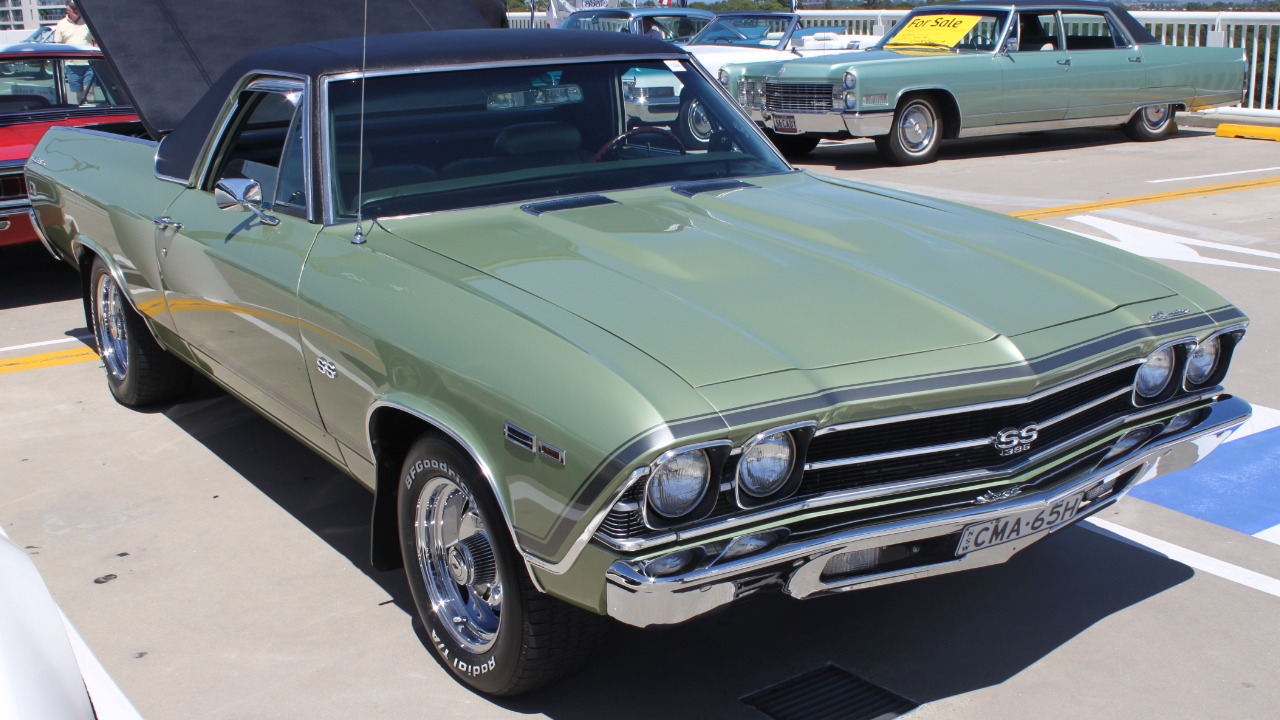
The 1969 Chevelle SS 396 sits at the intersection of American performance, mass production, and modern collectability, combining big-block power with everyday drivability. I see its story as a blend of imperfect factory records, evolving option packages, and a market that now rewards originality and documentation as much as raw horsepower.
To understand how this car moved from showroom staple to blue-chip muscle, it helps to look closely at how many were built, what made the SS 396 package mechanically distinct, and how recent sales data and buyer guides frame its current value range and long-term prospects.
Production realities and how many 1969 SS 396s exist
Any attempt to pin down exact 1969 Chevelle SS 396 production quickly runs into the limits of period record keeping. Students of Chevrolet history have long noted that the company’s internal documentation for this era is incomplete, and that is especially true for option packages that were spread across multiple body styles and plants. A detailed buyer’s guide published on May 6, 2020, explicitly frames PRODUCTION figures for the SS 396 as estimates rather than hard counts, underscoring that even factory-adjacent researchers are working from partial data rather than a single definitive ledger.
What can be said with confidence is that Chevrolet repositioned the SS 396 for the 1969 model year as an equipment package rather than a standalone series, which means the option could be ordered on cars that otherwise appeared as regular Chevelle Malibu models. One period-focused overview notes that Chevrolet’s marketing for the 69 Chevelle turned the SS 396 into an add-on rather than a separate model line, and that the SS 396 equipment option bundled three distinct engine packages under the same performance umbrella. That shift complicates any simple production tally, because the SS code is buried in option sheets rather than reflected in a unique VIN sequence, a point that modern buyer guides repeatedly stress when they caution shoppers to verify documentation rather than trust badges alone.
How the SS 396 package fit into the broader 1969 Chevelle lineup
The 1969 Chevelle family covered everything from basic six-cylinder transportation to serious big-block performance, and the SS 396 sat near the top of that pyramid. A detailed fact sheet on Chevrolet’s mid-size cars from Feb 13, 2024, lays out the base 230 CID Six with overhead valves, a cast iron block, and seven main bearings, making clear how far the SS 396 option moved a buyer from entry-level specification to full muscle car territory. That same fact sheet highlights that the Chevrolet SS 396 Convertible was offered as an option on the Chevelle Malibu line, reinforcing that the Super Sport identity was layered onto existing trim levels rather than standing alone.
Within that structure, the SS 396 package added both cosmetic and mechanical upgrades that distinguished it from non-SS Chevelles. Contemporary descriptions of the 1969 Chevrolet Chevelle SS 396 Coupe emphasize that the Super Sport equipment transformed the car into a street dominating force, with aggressive styling cues and performance hardware that went well beyond the standard Malibu. A more recent breakdown of 1969 Chevelle engine choices, published on Feb 16, 2024 under the banner Each Different Engine For The Chevelle, positions the SS 396 as the centerpiece of the performance lineup, sitting above small-block options and below the most extreme big-block configurations that would arrive later. In practice, that meant buyers could start with a relatively modest Chevelle and, by checking the right boxes, end up with a Chevrolet SS Convertible or hardtop that shared little with the Base six-cylinder car beyond its basic shell.
Engine options and performance specs for the 396

Under the hood, the 1969 Chevelle SS 396 lived up to its name by making the big-block 396 cubic inch V8 the only powerplant in play for the package. A detailed ENGINE section in the May 6, 2020 buyer’s guide makes the point that Chevy deliberately tied the SS identity to this displacement, and that the 396 was offered in several distinct states of tune. A separate technical breakdown of engine power for the Chevrolet Chevelle SS year 1969 lists the entry level L35 396 with 325HP, followed by the L34 396 with 360hp, and then the RPO L78 with 375hp, creating a clear three step ladder for buyers who wanted more performance without leaving the SS 396 branding.
The most serious of those factory combinations, the L78, has been dissected in depth by performance historians. A feature dated Mar 9, 2008 notes that the L78 396 carried a 375hp rating at 5600 rpm and produced peak torque of 415 lb-ft at 3600 rpm, figures that put it squarely in the top tier of period muscle car engines. That same analysis points out that the L78 relied on a forged steel crank and other heavy duty internals, details that help explain why these cars are now singled out as the factory’s fastest SS 396 variants. More mainstream builds, such as a 1969 Chevrolet Chevelle SS sport coupe powered by a 396ci L34 V8 paired with a four-speed manual and discussed in a May 9, 2025 enthusiast post, illustrate how the middle tier 396 specification delivered strong performance while remaining street friendly. Taken together, these sources show that the 396 label covered a spectrum of capability, from relatively mild to genuinely brutal, all within the same basic big-block architecture.
Visual cues, body styles, and how to spot a real SS
On the outside, the 1969 Chevelle SS 396 combined subtle trim changes with more overt performance signals, and those details now play a central role in authentication. A social media breakdown from Oct 18, 2024 describes the 1969 Chevrolet Chevelle SS 396 Coupe as a highly distinctive Super Sport model, emphasizing that, visually, it stood out through its aggressive stance and specific SS badging. Another enthusiast summary from May 31, 2025 calls the 1969 Chevrolet Chevelle SS a true muscle car legend and notes that the SS package added performance oriented features that set it apart from standard Chevelles, reinforcing the idea that the appearance upgrades were integral to the car’s identity rather than mere decoration.
Body style variety adds another layer of complexity. The Feb 13, 2024 fact sheet confirms that the Chevrolet SS 396 Convertible was available as an option on the Chevelle Malibu line, which means that both coupes and convertibles could legitimately carry SS 396 equipment. That flexibility has created fertile ground for clones and re-creations, a reality that modern buyers have to navigate carefully. A short video posted on Apr 8, 2024 under the title Chevel identification offers a practical reminder that not every car wearing SS emblems left the factory that way, and encourages shoppers to look beyond badges to documentation and specific build details. A separate walkaround of a numbers matching 1969 Chevrolet Chevel 396 Big Bloc, shared on Jan 19, 2021 by Frank of Earth Motorcars, underscores how much weight the market now places on original drivetrains and verifiable SS equipment, especially when the car presents with correct visual cues.
Current values and market trends for the 1969 Chevelle SS 396
Market data for 1969 Chevelles shows a wide spread in values that reflects condition, originality, and specification, and the SS 396 sits at the upper end of that spectrum. A valuation snapshot for 1969 Chevrolet Chevelle models lists Perfect Condition examples in a range from $55,000 to $341,000, with Excellent Condition cars between $39,600 and $55,000, Good Condition cars between $27,500 and $39,600, and Fair Con examples below that. While those figures cover the broader Chevelle family rather than only SS 396 cars, they illustrate how the very best documented, high specification builds can command six figure prices, while driver quality cars remain accessible to a wider pool of enthusiasts.
More focused tools that track specific configurations of the 1969 Chevrolet Chevelle SS 396 reinforce that pattern, with higher values attached to rare combinations such as the L78 396 with 375hp and 415 lb-ft, or to cars that retain their original big-block and four-speed hardware. A dedicated valuation page for the 1969 Chevrolet Chevelle SS 396 highlights how condition tiers and options influence pricing, and aligns with the broader auction data in placing top tier cars well above the average Chevelle. At the same time, recent enthusiast posts about the Chevrolet Chevelle SS and the 1969 Chevrolet Chevelle SS 396 sport coupe show that demand is not limited to investors chasing perfect restorations. There is an active audience for well sorted drivers that capture the look and feel of the period, even if they sit in the Good Condition band of $27,500 to $39,600 rather than the rarefied heights of the most collectible builds.
More from Fast Lane Only