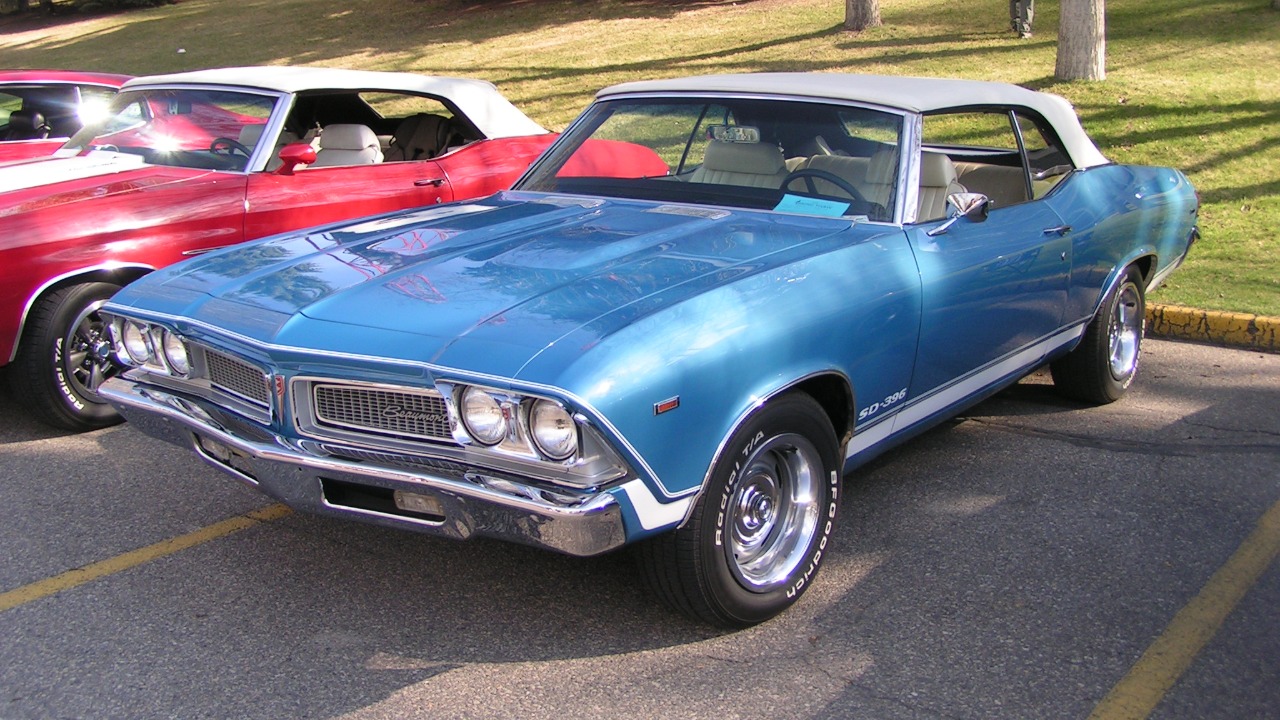
The 1969 Chevelle SS 396 sits near the center of American muscle car mythology, combining big-block power with everyday drivability. Collectors still chase correct-production cars, while drivers gravitate toward the model’s blend of performance, style, and relative usability compared with wilder contemporaries.
Enthusiasts now study production patterns, factory specifications, and auction data to understand how this Super Sport fits into the broader late‑sixties market. That focus helps explain why values for strong examples continue to climb while driver‑grade cars remain a gateway into serious big‑block ownership.
How the 1969 SS 396 fit into Chevelle production
Chevrolet treated the Super Sport as a performance layer on top of a broad mid‑size lineup, not a standalone model. The SS 396 package sat above workhorse trims and wagons such as the Chevelle Malibu Concours Estate Wagon, which shared much of the basic architecture. Buyers could still choose modest V8 options like a 350 cubic inch 255 horsepower engine or a 350 cubic inch 300 horsepower engine, so the SS 396 appealed to shoppers who wanted more than family transport.
Analysts who track late‑sixties Chevelles now rely on reconstructed production tables rather than a single factory total for the SS 396. One modern breakdown of the 1968 to 1970 Super Sport series lists each Model Year and Series Package Production as an estimate, and notes that exact factory figures for some variants remain unpublished. That uncertainty means serious collectors now verify individual cars by documentation and component correctness rather than relying on a single quoted production number.
Powertrain options and performance character
Engine choice defined the 1969 Super Sport experience more than any trim badge or stripe package. At the base level, the broader Chevrolet Chevelle range started with The Base Model Engines that used a Turbo Thrift 230 cubic inch inline six, which kept entry prices low. Performance buyers moved quickly past that configuration and into big‑block territory, where the first 396 L35 V8 returned for the 1969 model and anchored the SS package.
Period and modern write‑ups describe how Under the hood, the SS 396 used a 396 cubic inch V8 that could produce up to 375 horsepower and 415 lb-ft of torque in its hottest form. Enthusiasts still cite those 396, 375, 415 figures when they compare the car with rivals from Ford and Chrysler. That output gave the Chevelle enough punch to dominate local stoplight races and weekend drag strip brackets without turning it into an unruly street machine.
Buyers who wanted the most aggressive factory tune gravitated toward the solid‑lifter L78 specification. Contemporary coverage notes that the L78 396 carried a 375hp rating at 5600 rpm and delivered peak torque of 415 lb-ft at 3600 rpm, with the engine using a high‑flow intake and large valves. Reports on the L78 396 emphasize how that combination turned the SS into one of the quickest factory Chevrolets of its day while still retaining full interior trim and street manners.
Chassis, body styles, and key specifications
Chevrolet offered the Super Sport package across several body styles, which broadened its appeal beyond hardcore drag racers. One detailed fact sheet highlights that the 1969 Chevrolet SS 396 Convertible appeared as an option on the Chevelle Malibu line, giving buyers open‑air cruising with big‑block power. That same reference stresses the Convertible configuration’s role in positioning the SS as both a performance and image car.
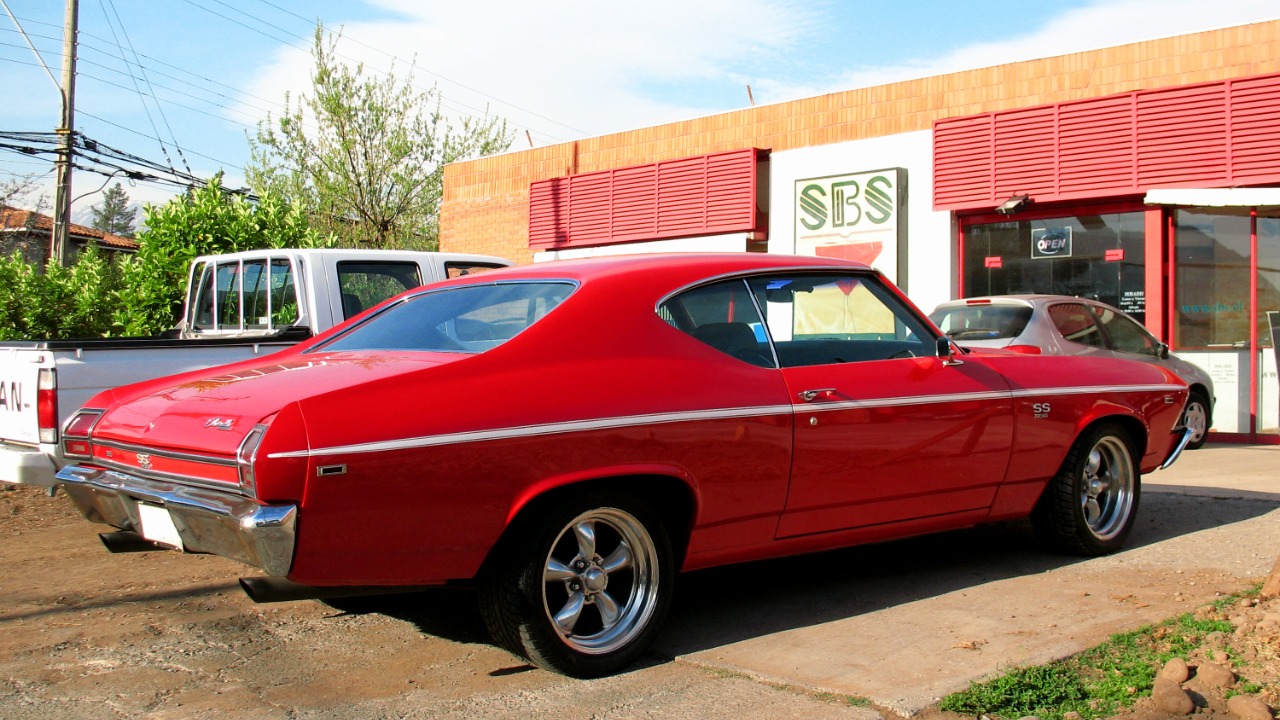
Weight and pricing data from period performance guides help frame how the SS 396 stacked up against its peers. A widely cited specification sheet lists the car’s Weight at 3,700 pounds, with a Base price of $2,850 for the Super Sport package and a Number built figure that enthusiasts now treat cautiously. The same source identifies the Specifications and Top Available Engine as central to the car’s appeal, and notes quarter‑mile performance that kept pace with other big‑block intermediates of the era.
Why the 1969 SS 396 became a muscle car icon
Enthusiasts often single out the 1969 model year because it blended fresh styling with mature mechanicals. One enthusiast summary describes the 1969 Chevrolet Chevelle SS 396 as a legendary American muscle car, and credits its bold lines and strong performance for that status. That same overview notes how collectors and muscle car fans still treat the model as a benchmark for late‑sixties street machines.
Later retrospectives also emphasize how the SS 396 package evolved within the broader Super Sports lineup. A detailed profile points out that the 1969 Chevelle SS 396 stood apart from other Super Sports because of its unique combination of trim and body configurations. That distinction helped the car carve out its own identity even as Chevrolet prepared to introduce larger big‑blocks and more radical options in the early seventies.
Modern social media communities continue to reinforce that reputation. One enthusiast group post from Jun 1, 2025 describes the 1969 Chevrolet Chevelle SS as a true muscle car legend and highlights its raw, aggressive character. That kind of grassroots enthusiasm helps sustain demand for both restored and modified examples decades after production ended.
Factory tuning details and what savvy buyers look for
Serious shoppers now pay close attention to factory tuning details that separate ordinary builds from the most desirable combinations. A detailed buyer’s guide notes that Below the ensemble of big‑block hardware, the hottest versions used an even more aggressive mechanical‑lifter camshaft and an 11.0:1 compression ratio. The same analysis advises Savvy enthusiasts to verify whether a given car retains its original specification or has been converted from a milder configuration, since those 11.0 compression engines command a premium.
Engine swaps and upgrades complicate that picture for today’s market. Many cars that started life with a 396 now carry later big‑blocks or stroker builds, which can improve performance but reduce historical authenticity. Buyers who want a car to show at marque events often prioritize correct casting numbers and date codes, while others focus on drivability and accept non‑original components if the work reflects period‑correct practice.
Current values and market trends for the SS 396
Valuation tools and auction data now give collectors a clearer picture of what different conditions and configurations bring. One widely used price guide tracks Past sales and lists a Chevrolet Chevelle Malibu that Sold for $22,050 in North America on Nov 25, 2025 through Bring a Trailer, alongside a higher sale of $157,500 for a better specified example. Those figures, drawn from the $22,050 and $157,500 records, show how condition, originality, and specification can swing values by six figures.
Market analysts who study big‑block Chevelles across the 1968 to 1972 window report that demand remains resilient. One recent overview notes that, Despite frequent claims that muscle cars have faded in the collector space, a robust market still exists for big‑block Super Sports. That Mar 17, 2025 analysis highlights how buyers continue to pay strong money for documented cars even as some other segments soften.
Price guides focused specifically on the 1969 Super Sport echo that pattern. A detailed valuation breakdown published on Feb 21, 2024 under the heading How Much Does a 1969 Chevrolet Chevelle Cost explains that the price of a 1969 Chevrolet Chevelle Cost depends heavily on originality, documentation, and whether the car remains stock, tastefully modified, or fully resto‑modded. That guidance notes that well restored SS 396 examples now sit firmly in investment territory, while driver‑quality cars still offer an accessible entry point for enthusiasts willing to accept cosmetic flaws or non‑original parts.
Why the SS 396 still matters to enthusiasts today
Modern coverage continues to frame the 1969 SS 396 as a touchstone for the muscle car era. One enthusiast feature from Nov 26, 2025 describes how the 1969 Chevrolet Chevelle SS 396 combined bold styling with serious performance and helped define the American big‑block formula. That same piece underscores how the American muscle identity of the car still resonates with new generations of collectors.
Engine option histories also reinforce the model’s importance in Chevrolet’s performance timeline. A technical overview published on Feb 17, 2024 explains how At the time, the return of the 396 L35 V8 for the 1969 model year bridged the gap before larger big‑blocks arrived. That Feb engine analysis shows how the SS 396 served as a proving ground for hardware that would later underpin even more powerful Chevrolets.
Enthusiast guides published as recently as Jun 1, 2025 continue to describe the 1969 Chevrolet Chevelle SS as raw, aggressive, and built to dominate the street. That language, combined with ongoing auction strength and detailed technical coverage dating back to Jan 11, 2007 and Mar 10, 2008, shows why the SS 396 still anchors conversations about late‑sixties performance. Collectors now treat it as both a historical artifact and a highly usable classic that can still deliver the kind of visceral driving experience many modern cars no longer offer.