
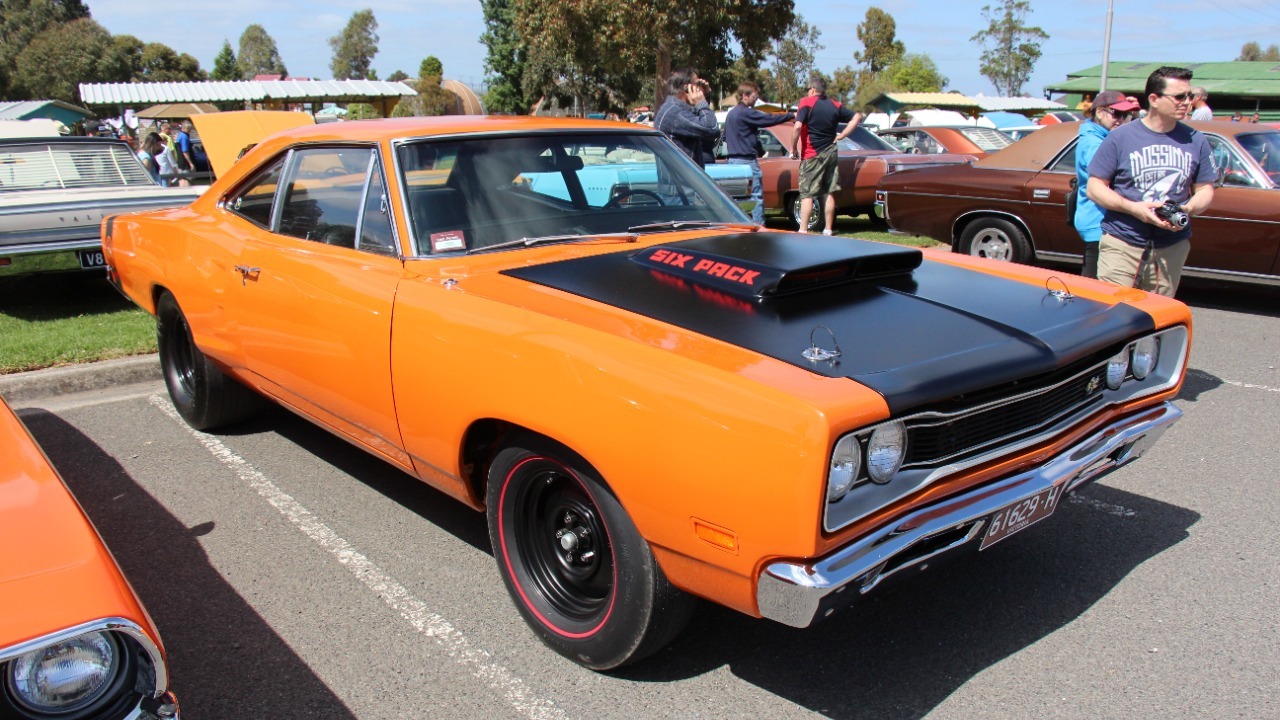
Collectors once treated 1969 Dodge A12 cars as rough street brawlers, not blue-chip investments. Today, those same stripped-down Super Bees rank among the most aggressively appreciating muscle machines, with rarity and raw performance driving a surge in values that shows little sign of easing.
Enthusiasts now chase correct A12 examples with the intensity once reserved for big-name exotics, and auction results reflect that shift. The combination of limited production, race-bred hardware, and a vivid backstory has turned these mid-year specials into some of the most closely watched Mopar assets in the market.
The mid-year street weapon that became a blue-chip collectible
Market momentum around the A12 starts with the way Dodge engineered the package for maximum impact. Engineers dropped a brutal 440 cubic inch V8 into the Super Bee shell and topped it with a unique “six-pack” intake that carried three two-barrel Holley carburetors, creating a factory hot rod that felt closer to a drag car than a commuter coupe. That 440, also listed as 7.2 liters, gave the A12 a reputation for instant torque and relentless acceleration that still shapes buyer demand today, and period-correct cars with the original Holley setup now command a clear premium, as detailed in period-correct descriptions of the 440 six-pack.
Designers reinforced that mechanical drama with visual cues that collectors now treat as non-negotiable. The lift-off fiberglass hood, steel wheels, and minimal trim signaled a car built for quarter-mile times rather than boulevard posing, and those details now separate genuine A12s from lookalike clones. Buyers pay particular attention to original hood hardware and correct wheel finishes, because those parts tie directly to the car’s identity as a purpose-built street weapon and help explain why values have climbed so sharply in recent years.
Production scarcity and the numbers that fuel today’s bidding wars
Rising prices also track closely with how few A12 cars Dodge actually built. Enthusiast registries and period documentation point to a narrow production window in 1969, which kept total volume low and ensured that surviving cars would feel scarce decades later. Earlier Super Bee runs already looked modest, with 1968 Super Bee Production Numbers listing a Total of 7,844 units, including 7,719 cars with the 383 engine and only 125 units with the 426 Hemi, and those figures now frame the A12 as part of a broader pattern of limited high-performance Mopar output, as outlined in detailed breakdowns of Super Bee Production Numbers.
Collectors study those numbers because they show how quickly rarity can translate into money. When a model line already includes only 7,844 units in one year, and just 125 units carry the top 426 Hemi, any special mid-year variant with its own drivetrain and visual package becomes a natural target for investors. Auction catalogs now highlight those production figures alongside drivetrain codes, and bidders respond with aggressive offers, especially for cars that retain original drivetrains and documentation that confirm their place within that narrow production band.
How the A12 package turned the Dodge Super Bee into a legend

Value growth also reflects the way the A12 package transformed the Dodge Super Bee from a budget muscle car into a legend. The 1969 Dodge Super Bee already offered strong performance, but the A12 option created a high-performance variant that enthusiasts now treat as a separate model, with its own identity and market. Enthusiast groups describe how the 1969 Dodge Super Bee A12 arrived with a wild combination of power and stripped-down equipment, and those same communities now track surviving cars and recent sales, as seen in detailed posts about the 1969 Dodge Super Bee A12 package.
Enthusiasts also emphasize the mid-year timing that gave the A12 its “1969 ½” nickname and added mystique. One detailed account of the 1969 ½ Dodge Super Bee A-12 notes that the 1969 ½ Dodge Super Bee A12 arrived as a special mid-year offering that featured a potent 440 engine and quickly became rare and highly sought after, and that narrative now underpins much of the car’s modern appeal, as highlighted in coverage of the 1969 ½ Dodge Super Bee A-12.
Chassis upgrades and the driving experience that buyers now pay to recapture
Investors do not chase A12 cars only for static display, because the driving experience still shapes demand. Dodge engineers knew that the 440 six-pack would overwhelm a standard chassis, so they upgraded the A12 structure with beefier torsion bars, reinforced control arms, and other heavy-duty components that could handle the extra power. Detailed restoration features describe how Dodge strengthened the A12 chassis to deal with all the horsepower under the hood, and those factory upgrades now help justify higher prices for unrestored survivors that still carry their original hardware, as seen in coverage of a numbers-matching A12 Super Bee.
Drivers who sample a well-sorted A12 often describe a combination of brutal straight-line speed and surprising composure, thanks to those chassis changes. That blend of raw acceleration and usable handling separates the A12 from some contemporaries that feel overwhelmed by their own engines, and it helps explain why collectors now pay a premium for cars that remain close to factory specification. Restorers who replace original suspension parts with incorrect components can unintentionally erode value, because buyers increasingly understand how those beefier torsion bars and control arms contribute to both authenticity and driving character.
Market data, recent coverage, and why values keep climbing
Recent reporting on the A12 market shows how quickly sentiment has shifted from curiosity to full-fledged enthusiasm. Analysts who track muscle car prices note that just 1,907 Super Bee A12 cars left the factory, and that figure now anchors many valuation discussions because it quantifies the scarcity that buyers feel when they scan auction catalogs. One detailed profile of the 1969 Dodge Super Bee A12 explains how They created a car that delivered 490 ft-lb of torque and helped customers feel like they dominated the streets, and that combination of low production and high output now drives aggressive bidding, as outlined in market analysis of the 1969 Dodge Super Bee A12.
Enthusiast media also continue to revisit the A12 story, which keeps the model in front of new buyers and reinforces its status as a must-have Mopar. A recent feature titled Flight Of The Super Bee, dated Aug 10, 2025, revisits the broader Super Bee Production Numbers and highlights how the A12 fits within a lineage that includes 7,844 units in 1968, 7,719 cars with the 383 engine, and 125 units with the 426 Hemi, and that context helps investors understand why the A12 now sits near the top of many wish lists, as detailed in the Flight Of The Super Bee feature.
Community documentation and the role of recent coverage in shaping perception
Online communities now play a significant role in documenting A12 history and influencing values. Enthusiast groups share build sheets, fender tag decodes, and survivor stories, which help buyers separate genuine cars from clones and give appraisers better data. One detailed post dated Mar 2, 2025, focuses on the 1969 Dodge Super Bee and describes how the A12 package turned the Dodge Super Bee into a high-performance icon, and that kind of grassroots documentation now feeds directly into valuation guides and auction descriptions, as seen in the Mar 2, 2025 discussion.
Additional coverage dated Aug 18, 2025, revisits the 1969 ½ Dodge Super Bee A-12 and reinforces its status as a rare and highly sought after model, and that repetition across multiple channels helps cement the A12’s reputation among both seasoned collectors and newer enthusiasts. The Aug feature on the 1969 ½ Dodge Super Bee A-12 underscores how the 440 engine and mid-year timing created a unique package that now commands strong money, and that narrative continues to shape buyer expectations and asking prices, as reflected in the Aug 18, 2025 coverage.



Leave a Reply