Wisconsin is about to turn a design tweak into a serious stream of money. By rolling out sleek blackout plates and a throwback yellow design, the state is betting that drivers will happily pay extra for a little personality on the back of their cars, and the early revenue estimates suggest that bet could pay off in a big way.
Instead of treating license plates as a boring necessity, the Wisconsin Department of Transportation is leaning into style, nostalgia, and regional trends to help fill the transportation fund. The result is a pair of specialty plates that look sharp, tap into local pride, and, if projections hold, could bring in tens of millions of dollars without raising base registration fees.
How Wisconsin’s new plates went from idea to revenue play
When I look at these new designs, what jumps out first is that they are not an accident of aesthetics, they are a budget strategy. In the 2025 to 2027 state budget, lawmakers approved two new specialty options, a blackout plate and a retro yellow plate, as one of the ways to generate fresh money for roads without touching the standard registration rate. Reporting on the budget debates makes it clear that the blackout and retro plates were written directly into the spending plan as a dedicated revenue source for the transportation fund, not just a fun side project.
The Wisconsin Department of Transportation then spent months refining what those plates would actually look like. According to state transportation officials, the Wisconsin Department of Transportation and its Division of Motor Vehicles considered about 10 different concepts before landing on the final blackout and retro yellow designs that were unveiled at a public event in Madison. That kind of internal competition is not just about graphic design pride, it is about picking the look that will convince the most people to pay extra every year for something they technically do not need.
What the blackout and retro yellow plates actually look like
On the style front, the blackout plate is exactly what it sounds like, a dark, minimalist design that swaps out the familiar white background for a deep black field with contrasting characters. I have watched that look spread across the Midwest, and Wisconsin lawmakers openly acknowledged that they were following a trend that has already taken off in Iowa and Minnesota, where dark plates have become a popular upgrade for drivers who want their vehicles to look a little more customized without going full vanity plate. By leaning into that regional momentum, Wisconsin is not trying to reinvent the wheel, it is trying to cash in on a proven aesthetic.
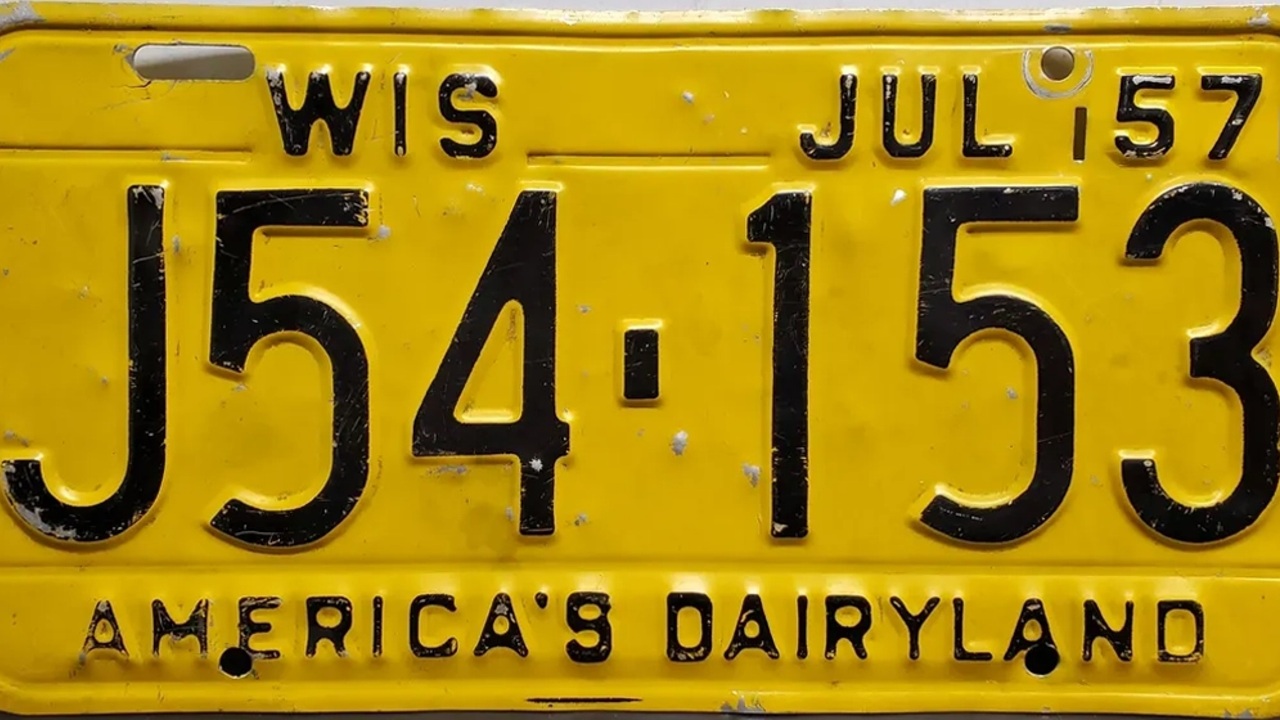
The retro yellow plate goes in the opposite direction stylistically, but it is just as calculated. Instead of sleek and modern, it pulls directly from the 1970s era of Wisconsin plates, with a bold yellow background that instantly reads as vintage to anyone who grew up seeing those colors on the road. State transportation officials have described it as a throwback option that brings back a piece of that decade onto current vehicles, and they have tied it explicitly to nostalgia for an earlier chapter of Wisconsin’s driving culture. The idea is simple: if you grew up riding in a 1976 Chevrolet Caprice or a 1979 Ford F-150 with that yellow plate bolted on, you might be willing to pay a premium to put that look on your 2024 Subaru Outback now.
The fees that turn design into dollars
The real magic trick here is not the paint, it is the fee structure. Both plates come with a one-time $15 issuance fee on top of the standard registration, plus a $25 annual registration fee specific to the specialty design. That means a driver who switches to either the blackout or retro yellow plate is committing to pay $25 more every year for as long as they keep that plate, after paying the initial $15 to get started. For a single driver, that might feel like a manageable splurge, but multiplied across tens of thousands of vehicles, it quickly becomes a serious revenue stream.
State projections show just how serious. One set of estimates pegs the blackout and retro yellow plates at generating about $16,000,000 in revenue in the first two years alone, while broader projections for the new specialty options put the total at roughly $25,000,000 flowing into the transportation fund over the first three years. The Wisconsin Department of Transportation has also framed the rollout as part of a larger pattern under the Evers administration, which has leaned on specialty plates since 2019 to bring in additional money for transportation without raising the base registration fee for every driver. In other words, the state is using design and personal choice to create a voluntary surcharge that drivers opt into because they like how it looks.
Why drivers are likely to bite
From where I sit, the demand side of this equation looks strong. Lawmakers who pushed for the blackout plate have pointed out that similar designs have already proven popular in Iowa and Minnesota, which gives Wisconsin a built-in test case for how many drivers might be willing to pay extra for a darker, more aggressive look. When you combine that with the broader trend of people customizing their vehicles with aftermarket wheels, tinted windows, and branded accessories, a $25 yearly fee for a plate that matches the aesthetic of a blacked-out Jeep Wrangler or a charcoal gray Tesla Model 3 starts to look like a relatively small add-on.
The retro yellow plate taps into a different kind of demand, one rooted in nostalgia and state identity. WisDOT officials have described it as bringing back a piece of the 1970s on your license plate, and they have tied that directly to a revenue estimate that runs into the millions over the first three years. For drivers who remember those yellow plates from their childhood, or for younger car enthusiasts who love pairing a vintage look with modern hardware, the throwback design offers a way to stand out in traffic while signaling a connection to Wisconsin’s past. That emotional hook is exactly what can turn a simple government fee into something people feel good about paying.
How this fits into Wisconsin’s broader plate strategy
These two designs are not arriving in a vacuum. Wisconsin already has a roster of specialty plates, including the Road America license plate that is currently the most popular option among drivers who want something beyond the standard issue. By adding blackout and retro yellow plates to that lineup, the Wisconsin Department of Transportation is expanding the menu in a way that targets both current style trends and long-running nostalgia, while keeping existing favorites like the Road America plate available. It is a portfolio approach, where each design appeals to a slightly different slice of the driving public but all of them feed the same transportation fund.
The rollout timing is also designed to keep momentum going. WisDOT has indicated that the new plates will be available starting in early January 2026, giving the state time to build buzz after the December unveiling in Madison, Wis. and to integrate the ordering process into existing systems. Drivers will be able to request the plates through the usual Division of Motor Vehicles channels, including online tools that already handle other specialty plate orders. By the time the first blackout and retro yellow plates hit the road, the state will have a clear path to convert curiosity into paid applications, and if the revenue projections hold, those stylish rectangles of metal could quietly become one of Wisconsin’s most effective small-dollar fundraisers.