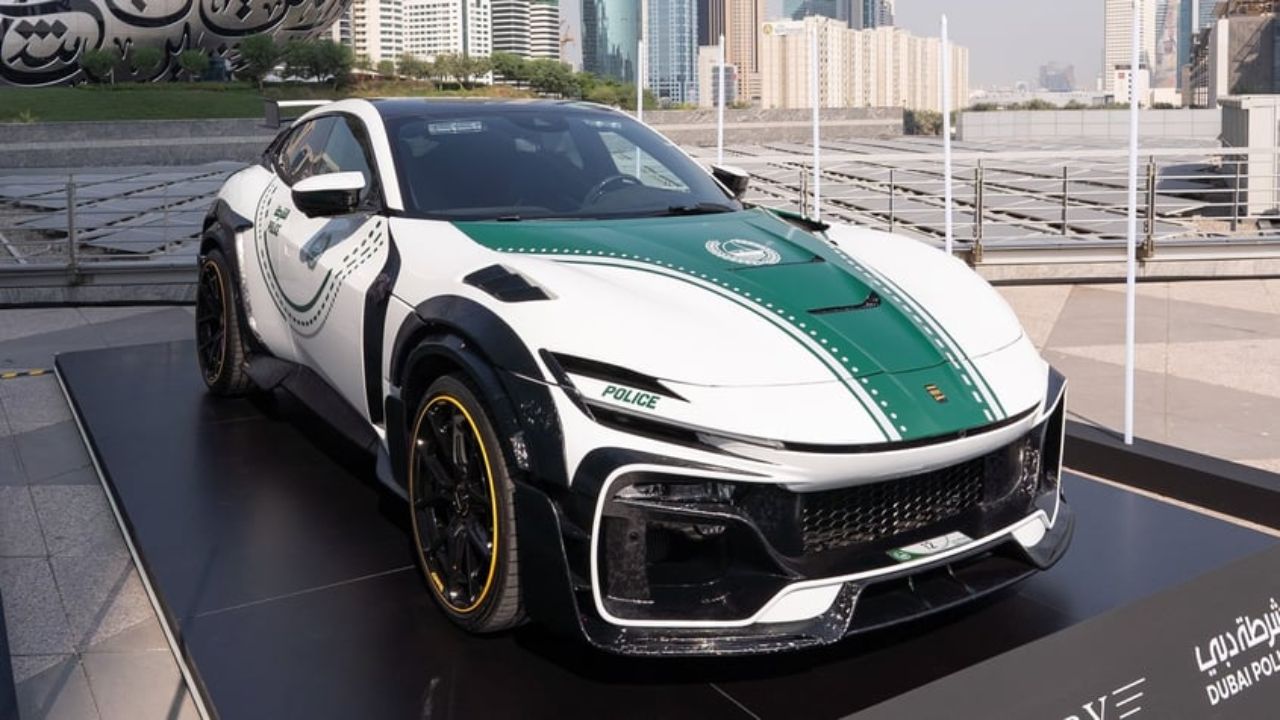
Dubai’s police fleet has become a rolling car show, the kind of lineup that makes even hardened gearheads stop scrolling and stare. When a city already fields patrol cars that look like they belong on a concours lawn, the idea of a new exotic SUV joining the ranks feels less like fantasy and more like an inevitable next flex.
I want to unpack why a high-performance sport-utility vehicle would fit so neatly into that world, how it compares with other overpowered police hardware around the globe, and what it says about the way law enforcement is leaning on both speed and tech. The result is a picture of policing where the badge shares equal billing with the horsepower.
Dubai’s supercar cop culture is built for an exotic SUV
Any talk of a wild new police SUV in Dubai has to start with the city’s long-running love affair with supercar patrol units. High-end patrol cars are already par for the course in the Middle East, and Dubai in particular has turned its police fleet into a curated collection of exotics that includes a Bugatti Veyron, several Aston Martins, Bentleys, Ferraris, and Lamborghinis, all wearing the same green-and-white livery. That lineup is not rumor, it is documented as part of the region’s broader embrace of high-end patrol cars that blur the line between law enforcement and lifestyle branding.
That context matters, because it shows Dubai Police in the United Arab Emirates are not just dabbling in fast cars, they are curating a fleet that already includes some of the most exotic supercars on the planet to help catch wrongdoers. When a department is comfortable parking a Bugatti Veyron next to a Lamborghini and calling both “patrol units,” the idea of an ultra-quick SUV sliding into the same garage is less about shock value and more about filling a practical gap in the lineup. The existing fleet is proof that Dubai Police treat performance hardware as both a crime-fighting tool and a rolling billboard for the city’s image, a pattern that would naturally extend to any future exotic SUV.
Why an exotic SUV makes tactical sense, not just Instagram sense
From a purely functional angle, a high-performance SUV gives officers something the low-slung supercars cannot: real-world usability with serious pace. Super-SUVs are now hitting top speeds that would have sounded absurd a decade ago, as brands keep upping the stakes with each new flagship in an effort to outdo each other. The fastest of these machines sit in a rarefied club of super-SUVs that can comfortably cruise at autobahn velocities while still carrying gear, extra officers, or detained suspects.
That blend of speed and space is exactly what makes a fast SUV so tempting for a department that already treats its fleet like a performance catalog. A Lamborghini patrol car might be perfect for a quick highway sprint or a tourist photo op, but it is not the vehicle you want when you need to haul equipment across town or navigate a curb to reach an incident. A super-SUV, built on the same performance logic as those exotics but with a taller ride height and a usable cargo area, would plug that gap. It would let Dubai keep the visual drama of its current fleet while adding the kind of everyday versatility that traditional sedans and crossovers struggle to match at high speed.
Global police fleets are quietly getting faster and smarter
Dubai is not the only place where patrol cars are starting to look like something from a track-day paddock, which helps explain why a wild SUV would not be an outlier so much as part of a global trend. In Japan, officers have already been handed an Acura NSX in full police spec, a mid-engine hybrid supercar that sits miles away from the usual compact sedans. That NSX is a reminder that high-end patrol cars are no longer a Dubai-only phenomenon, they are part of a broader shift in how departments think about speed, deterrence, and public image.
Even in places that stick with more familiar badges, the performance bar is rising. In Canada, a 2023 Chevrolet Corvette has joined a police fleet, a car that sits firmly in the sports-car camp rather than the traditional cruiser category. That Corvette slots into a landscape where the Dubai Police in the United Arab Emirates are already known for using some of the world’s most exotic supercars to help catch wrongdoers, and it shows how departments on different continents are converging on the same idea: if offenders have access to fast machinery, patrol units need something that can at least keep them in sight. The Corvette may not be a hypercar, but it is a clear step toward the kind of performance-first thinking that makes an exotic SUV in Dubai feel like part of a pattern rather than a stunt.
Speed is only half the story; tech is the other
Raw pace grabs the headlines, but what really turns a fast SUV into a serious police tool is the technology bolted inside. The California Highway Patrol is a good example of how that side of the equation has evolved, with its distinct black-and-white patrol cars carrying state-of-the-art communication tools, GPS for precise location tracking, and computer-aided dispatch systems that streamline response times during emergencies. Those cars are also fitted with high-performance features that allow quick and safe maneuvering during high-speed chases or urgent responses, which shows how modern fleets blend mechanical grip with digital awareness to keep the public safe. The CHP’s commitment to integrating cutting-edge technology into its vehicles turns each cruiser into a rolling command post rather than just a fast car with lights.
Drop that philosophy into Dubai’s context and an exotic SUV starts to look less like a toy and more like a platform. A tall, powerful chassis has room for the same kind of advanced communication gear, GPS hardware, and dispatch terminals that define modern patrol work, while still leaving space for officers and equipment. When you pair that with performance levels that echo the top tier of motorsport, where Formula One cars are described as incredibly fast, reaching speeds over 200 miles per hour, you get a sense of the engineering mindset at work. No police SUV is touching F1 numbers, but the same obsession with aerodynamics, power, and control is trickling down into road cars, and departments like Dubai’s are clearly willing to tap into that progress.
Fast fleets, faster expectations
All of this leaves me looking at Dubai’s next move less as a question of “if” and more as a question of “how far” they want to push the concept. The city already treats its police fleet as a showcase for what high-performance engineering can do in uniform, from the Bugatti Veyron to the Lamborghinis and Ferraris that share garage space with more conventional units. Other forces are catching up in their own ways, whether it is an Acura NSX in Japan or a 2023 Chevrolet Corvette in Canada, and the California Highway Patrol is proving that sophisticated onboard systems can matter just as much as the badge on the grille.
What ties those threads together is a simple reality: modern policing is being shaped by the same forces that drive the car industry at large, where super-SUVs chase ever-faster top speeds and race series like Formula One set the technological tone. An exotic SUV in Dubai’s colors would not be a break from that story, it would be a logical next chapter, combining the city’s taste for spectacle with the global shift toward faster, smarter patrol vehicles. Unverified based on available sources is any specific claim about a brand-new Dubai Police SUV already on the street, but the groundwork for such a machine is clearly visible in the fleets, and the ambitions, that are already out in the open.