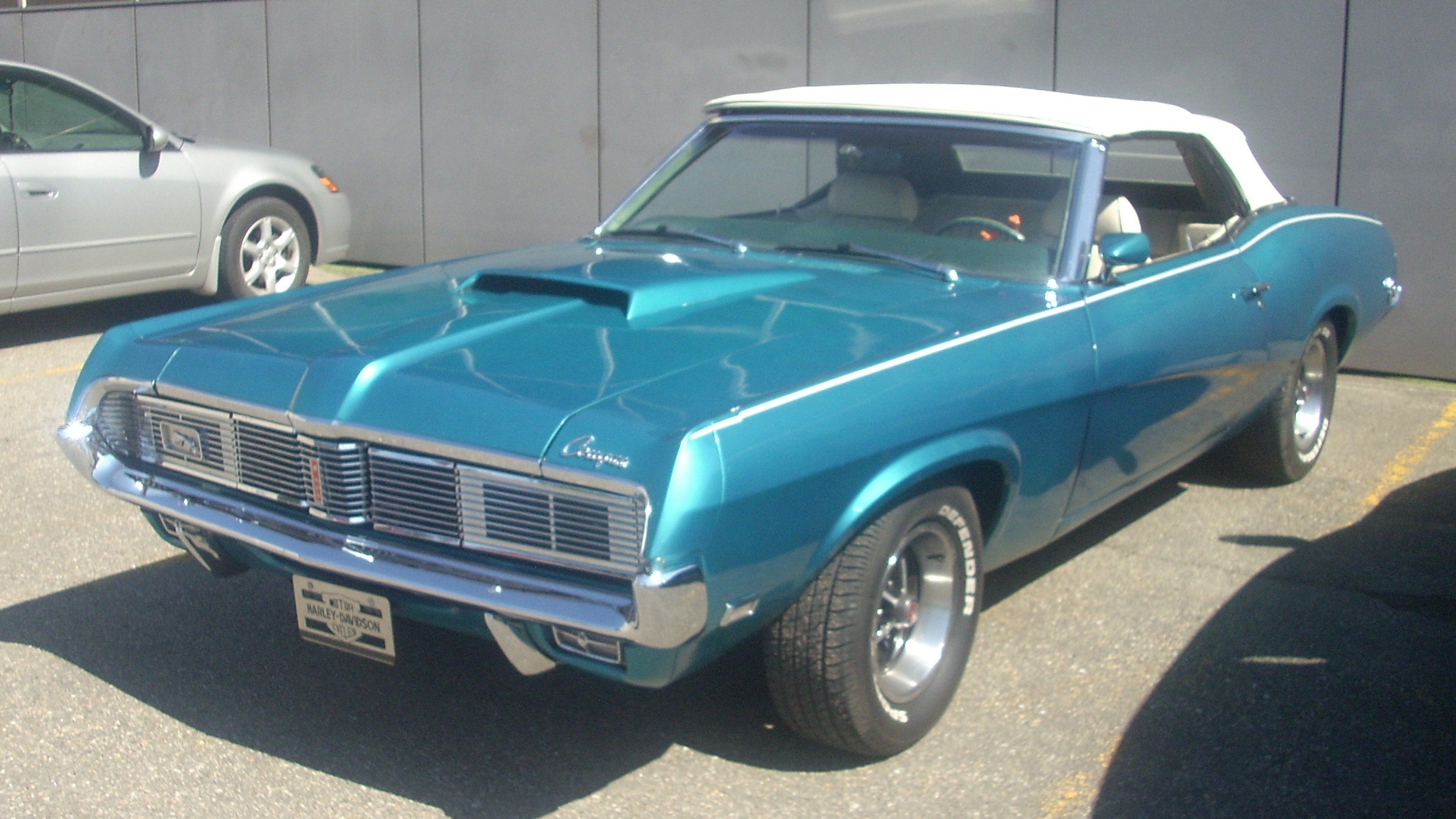
The 1969 Mercury Cougar Eliminator arrived at a moment when Detroit muscle cars were getting louder, cruder and more single minded, yet Mercury tried something different. Instead of building a bare bones drag strip special, the division wrapped serious performance hardware in a more polished, almost European inspired package. The result was a car that could run with the era’s street legends while still looking and feeling like a premium coupe.
More than five decades later, the Eliminator has become one of the most intriguing branches of the classic muscle family tree. It combined big block power, competition bred chassis tweaks and bold graphics with comfort, sound insulation and upscale trim in a way that set it apart from its Ford cousins and most showroom rivals.
What happened
When Mercury launched the Cougar for 1967, the car was positioned as an upscale alternative to the Ford Mustang. It used the same basic platform but stretched the wheelbase, softened the ride and dressed the body in long hood, short deck sheetmetal with hidden headlamps and a distinctive full width grille. Inside, the Cougar leaned heavily on woodgrain trim, plush seats and quieter road manners that appealed to buyers who wanted style and comfort more than quarter mile times.
By 1969, the muscle car market had shifted. Chevrolet had the COPO Camaro and SS 396, Dodge offered the Charger R/T and Plymouth was pushing the Road Runner as a budget performance icon. Mercury needed something that would speak directly to performance enthusiasts without abandoning the Cougar’s premium image. The answer was the Cougar Eliminator, a package that turned the refined pony car into a credible street and track machine while keeping its luxury oriented character intact.
The Eliminator package arrived mid cycle for 1969 and instantly changed the Cougar’s personality. It added a front air dam, rear deck spoiler, bold side stripes and blackout trim that replaced much of the standard chrome. High impact colors such as Competition Orange and Bright Blue Metallic made the car stand out in traffic and on dealership lots. Functional upgrades included a performance suspension, heavy duty shocks and quick ratio steering that sharpened responses compared with the regular Cougar.
Under the hood, buyers could choose from serious V8 powerplants. The base Eliminator engine was a 351 cubic inch small block, tuned for higher output than the Cougar’s regular 351. For drivers who wanted true big block muscle, Mercury offered the 390 cubic inch V8 and, at the top of the range, the 428 Cobra Jet. In some cases, that 428 could be ordered with performance oriented options that mirrored Ford’s drag strip packages, which turned the Cougar into a surprisingly capable quarter mile car. A surviving example finished in Competition Orange and equipped with a 428 Cobra Jet has been documented as a numbers matching big block car, which highlights how carefully some of these models were specified and preserved.
Transmission choices helped define the Eliminator’s character. Buyers could select a close ratio four speed manual with a Hurst shifter or a heavy duty automatic that still allowed brisk acceleration. Rear axle ratios ranged from highway friendly setups to aggressive gears that favored drag racing, and limited slip differentials were available to help put power to the pavement. Mercury also bundled in power front disc brakes on many high output cars, giving the Eliminator better stopping performance than some rivals that still relied on drums.
Inside, the Eliminator kept the Cougar’s focus on comfort and refinement. High back bucket seats, thick carpeting and detailed door panels created a more upscale feel than the vinyl heavy cabins found in many muscle cars. Full instrumentation, including a tachometer on performance models, gave the driver useful information without resorting to add on gauges under the dash. Sound deadening materials remained in place, so the cabin stayed quieter on the highway than many cars with similar power. Buyers could still order air conditioning, power windows and other amenities, which meant the Eliminator could serve as a daily driver as well as a weekend toy.
Production numbers for the 1969 Cougar Eliminator remained relatively low compared with volume leaders in the muscle segment. The package arrived partway through the model year and appealed to a narrower slice of the market that wanted both speed and sophistication. That limited production run has made surviving cars especially desirable among collectors. Many were driven hard or modified heavily during the 1970s, so unrestored or lightly restored examples with original drivetrains now command significant attention at auctions and in private sales.
The Eliminator name itself signaled Mercury’s intent. Marketing materials emphasized competition imagery and performance credentials, yet the car never fully abandoned its gentlemanly roots. It was as comfortable pulling up to a restaurant as it was lining up at the local drag strip, which made it an unusual proposition in a market crowded with more single purpose machines.
Why it matters
The 1969 Cougar Eliminator occupies a distinctive place in muscle car history because it tried to bridge two automotive cultures that often sat at odds. On one side were raw, relatively inexpensive performance cars that prioritized acceleration over comfort. On the other sat personal luxury coupes that emphasized style, quiet cabins and convenience features. The Eliminator attempted to combine both, and in many respects it succeeded.
From a design standpoint, the car showed how visual aggression could be layered onto an already handsome shape without descending into caricature. The front spoiler and rear wing were functional but not oversized, and the side stripes followed the Cougar’s existing body lines instead of fighting them. The blackout grille and tail panel treatment sharpened the car’s face and rear profile while still letting the underlying elegance show through. Where some competitors relied on scoops and decals to shout about performance, the Eliminator projected a more measured confidence.
Mechanically, the car demonstrated that serious power did not have to come at the expense of everyday usability. The availability of the 428 Cobra Jet and other strong V8 options meant the Eliminator could run with the era’s better known muscle machines. At the same time, the retention of sound insulation, comfortable seating and optional convenience equipment meant owners did not have to suffer through harsh rides or stripped down cabins. For buyers who wanted one car to handle commuting, long distance travel and weekend racing, that balance was attractive.
The Cougar Eliminator also highlighted Mercury’s attempt to carve out a performance identity distinct from Ford. While it shared engines and basic architecture with the Mustang, the Cougar’s longer wheelbase and more upscale positioning gave it a different personality. The Eliminator package leaned into that difference instead of trying to mimic the Mustang’s rawer image. That strategy foreshadowed later efforts by various brands to create performance variants that still aligned with their core values rather than chasing someone else’s formula.
In the broader context of late 1960s American performance, the Eliminator can be seen as an early expression of the idea that muscle cars could aspire to something closer to grand touring behavior. European GT cars of the period, such as the Jaguar E Type or Aston Martin DBS, combined strong engines with comfortable interiors and long distance capabilities. While the Cougar did not match those cars in price or refinement, its blend of speed and civility moved in a similar direction. That mindset would later influence cars like the Pontiac Grand Prix SJ and various luxury performance coupes of the 1970s and 1980s.
The car’s modern significance is reinforced by the way collectors and enthusiasts talk about it. Surviving big block examples, especially those with the 428 Cobra Jet and factory documentation, are often treated as hidden gems in the muscle world. Their relative rarity compared with Mustangs or Camaros gives them an exclusivity that appeals to serious collectors. At the same time, the Cougar’s more mature styling allows it to fit into collections that favor understated performance over flashy stripes and scoops.
For restorers, the Eliminator presents a particular challenge. Correctly recreating the graphics, colors and trim requires careful research, since the package included specific striping patterns, spoiler designs and interior details. Sourcing original or high quality reproduction parts for the unique components can be difficult, which has raised the value of cars that retain their factory pieces. The existence of documented, numbers matching cars helps establish benchmarks for authenticity and guides restoration standards.
The model also matters as a snapshot of a turning point in American automotive history. The late 1960s marked the peak of the original muscle era, just before tightening emissions rules, rising insurance costs and shifting consumer tastes began to erode the market for high performance V8s. The 1969 Cougar Eliminator arrived at that crest, fully embracing big block power and bold styling while still hinting at a future in which comfort and refinement would become more central to performance cars.
For Mercury as a brand, the Eliminator represented both an achievement and a missed opportunity. It proved that the division could build a performance car that felt distinct from Ford offerings, yet Mercury never fully capitalized on that momentum. Later performance oriented models struggled to maintain the same balance of luxury and muscle, and the brand eventually faded from the market. Enthusiasts now look back at the Eliminator as one of Mercury’s high points, a moment when the company briefly stood shoulder to shoulder with the era’s performance leaders.
What to watch next
The legacy of the 1969 Cougar Eliminator continues to evolve, especially as interest in less obvious muscle cars grows among collectors. As prices for mainstream icons like the Hemi Charger or big block Camaro climb, more buyers are turning to alternatives that offer similar performance with a different story. The Eliminator fits that niche well, and values for well documented cars have reflected that shift.
One trend to watch is the increasing focus on originality and documentation. Cars that retain their factory engines, transmissions and unique Eliminator components, along with build sheets or other paperwork, tend to command the highest attention. The example highlighted as a numbers matching big block car illustrates how much weight collectors place on authenticity. As more of these cars are restored or modified, truly original survivors are likely to become even more coveted.
Another area of interest is the way modern builders interpret the Eliminator formula. Restomods that start with Cougar shells and update them with contemporary suspension, brakes and drivetrains are becoming more common. These projects often aim to preserve the car’s distinctive styling while improving performance and reliability to meet current expectations. In doing so, they echo the original car’s philosophy of combining speed with comfort, although with twenty first century hardware.
The car’s influence also surfaces in contemporary performance coupes that try to blend luxury and muscle. Modern examples such as the Dodge Challenger SRT, Chevrolet Camaro SS and various high output German coupes all attempt to offer strong acceleration without sacrificing comfort or technology. While the engineering and safety standards have changed dramatically, the basic idea that a performance car can also be a refined daily driver traces back to experiments like the Cougar Eliminator.
More from Fast Lane Only