The 1970 Torino Cobra was built to win races and stop traffic, yet Ford’s own marketing never quite caught up to what the car could actually do. You see it most clearly when you line up the spec sheets and the racing ambitions against the mild way the company talked about the car in period brochures. If you are used to thinking of the Torino as a supporting player in Ford’s muscle lineup, the reality of the Cobra and its wilder King Cobra cousin forces you to rethink that story.
Look past the nameplates and you find a machine that was engineered to run with the fiercest Detroit iron of its era, then dressed in a relatively understated suit. The disconnect between the car’s performance and Ford’s image work is exactly what makes the 1970 Torino Cobra so compelling today, especially if you enjoy discovering the cars that were quicker than their reputations.
The quiet menace in Ford’s muscle lineup
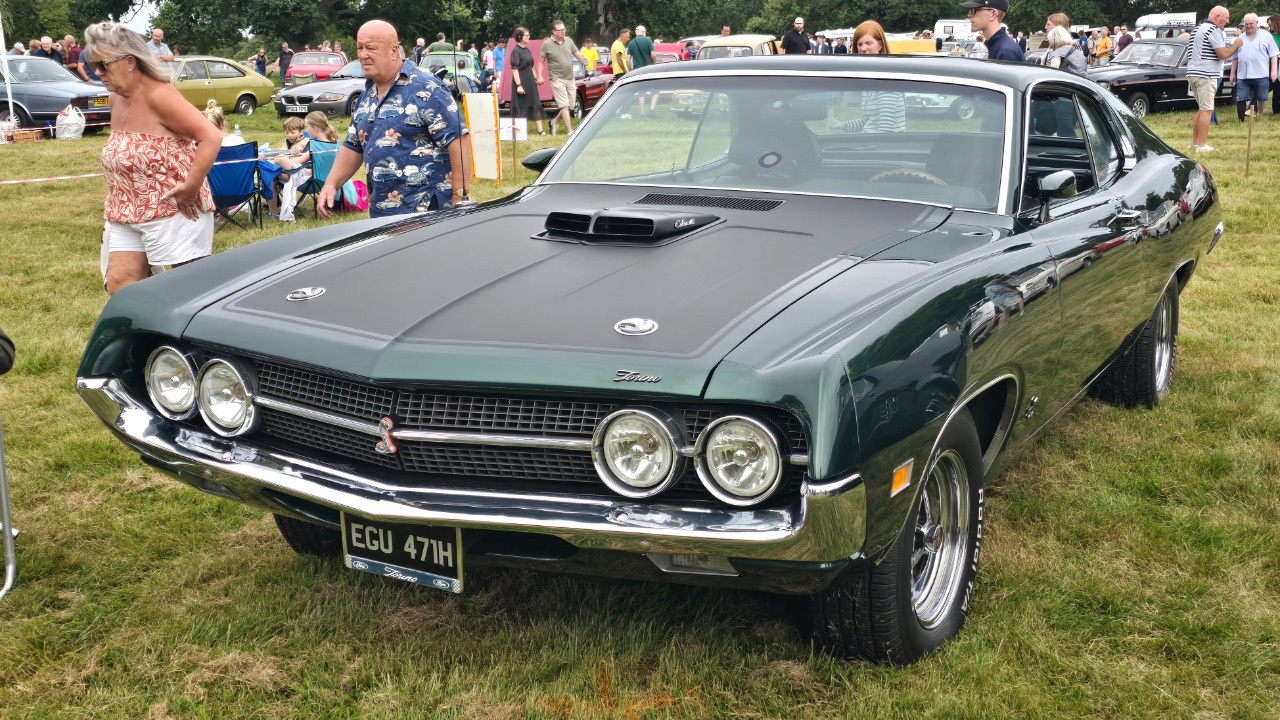
When you first walk around a 1970 Torino Cobra, it does not shout in the same way a Boss Mustang or a winged Mopar does, which is part of why you might underestimate it. The long “coke-bottle” profile and fastback roofline look clean rather than cartoonish, and the badging is subtle enough that only the hood scoop and wide stance really hint at trouble. Period owners and modern enthusiasts have filled forums with stories of how the car’s relatively low-key styling let it surprise rivals who expected a family Torino, not a full-bore Cobra.
Underneath that sheetmetal, though, Ford gave you hardware that belonged in the front row of any Saturday night grudge race. Enthusiasts who document the car’s specs describe how the Torino Cobra could be ordered with serious big block power and a chassis tuned for straight-line work, not just boulevard cruising, which is why it still shows up in detailed engine breakdowns and restoration threads today. The gap between the car’s calm exterior and its mechanical intent is the first sign that Ford’s image team was playing catch up.
429 reasons the Cobra’s reputation lags its reality
If you judge the Torino Cobra by its engines, you quickly realize it was anything but a mid-pack player. The base big block was already stout, but the real story starts when you move up to the 429 options that enthusiasts still obsess over. One detailed comparison notes that the Next step up was the 429 / 370 Cobra Jet without Ram Air, which Ford literature simply called the 429 Cobra, and that the Top motor was an even hotter configuration. Those numbers alone tell you Ford was not shy about displacement, even if the brochures sounded conservative.
Contemporary coverage of the broader Torino family reinforces how serious these engines were. Enthusiast writeups of the Ford Torino GT with the J-Code 429 Cobra Jet describe it as one of Ford’s most underrated muscle monsters, and that same 429 architecture sat at the heart of the Cobra’s appeal. Later retrospectives underline that The Torino Cobra Was All Power With The 429 CJ, stressing that the Cobra Jet and engines were not something to be toyed with and could easily be over 400 horsepower. When you put that in context, it becomes clear that the Torino Cobra’s spec sheet was more aggressive than its marketing copy ever admitted.
Drag Pack secrets and the Super Cobra Jet edge
The real connoisseur’s Torino Cobra hides in the option codes, where Ford quietly offered packages that turned a strong street car into a track weapon. Enthusiasts who track these details point out that the super cobra jet / drag pack option brought a cluster of unique parts, including a Holley carburetor, a specific intake manifold, solid lifters and other upgrades that separated it from the standard big block. One detailed registry of these cars notes that the super cobra jet also added an oil cooler, underscoring that Ford expected these engines to live at high rpm and high load.
Owners who have documented their restorations show how these Drag Pack Cobras were built to take abuse that would wilt a lesser muscle car. A separate enthusiast breakdown of the 1970 Ford Torino Cobra’s configuration explains that the package combined heavy-duty internals with supporting hardware so the car could survive repeated hard launches and extended high speed running, not just the occasional stoplight sprint. That level of engineering focus is why the Drag Pack cars are now prized among collectors who understand that the factory quietly built a limited run of Cobras that were far more serious than the average buyer ever realized.
Inside the sleeper: wheels, tires and a spartan cabin
Part of what kept the Torino Cobra under the radar was how ordinary it could look when you glanced inside. Enthusiast descriptions of the car’s cabin emphasize that the Interior was relatively spartan, with bucket seats and straightforward trim rather than the flashy graphics you might expect from a top-tier muscle car. One detailed post notes that it rode on 14-inch Magnum 500 wheels with Magnum 500 rims wrapped in Goodyear Polyglas GT tires, a combination that delivered grip and attitude without screaming for attention.
That mix of purposeful hardware and low-key presentation is exactly what you feel when you slide behind the wheel. The gauges are simple, the view over the hood is long, and the car’s stance on those Goodyear Polyglas GT tires hints at performance only if you know what you are looking at. Enthusiasts who catalog these details argue that this understatement helped the Cobra age gracefully, since it avoided the excesses that date some of its rivals, and it also meant that many drivers never realized how much performance lurked in a car that looked, at a glance, like a well-optioned family Torino.
King Cobra: the 200-mph dream that rewrote the Torino’s image
If the regular Torino Cobra was quicker than its reputation, the King Cobra project was faster than Ford’s entire image machine. Engineers were tasked with a bold brief: Their mission was simple, build a 200-mph car that can beat Dodge and Plymouth on the superspeedways. They took the new 1970 Torino and reshaped its nose with an aero kit that included a separate nose cone, all in pursuit of stability and speed that would let Ford dominate high speed ovals. That mandate alone shows how far the company was willing to push the platform, even if the public story never fully reflected it.
The resulting Ford Torino King Cobra was intended as a full-on NASCAR weapon, a car that would take the Torino’s basic structure and turn it into a specialized NASCAR aero warrior. Detailed histories of the project explain how only a handful of prototypes were built before changing rules and corporate priorities sidelined the program, leaving the King Cobra as a tantalizing “what if” in Ford’s racing story. When you connect that 200-mph ambition back to the street-going Torino Cobra, you see how the same basic car was capable of far more than its marketing ever suggested, and how Ford’s image team never quite caught up to what its engineers had already proven on the drawing board.
More from Fast Lane Only