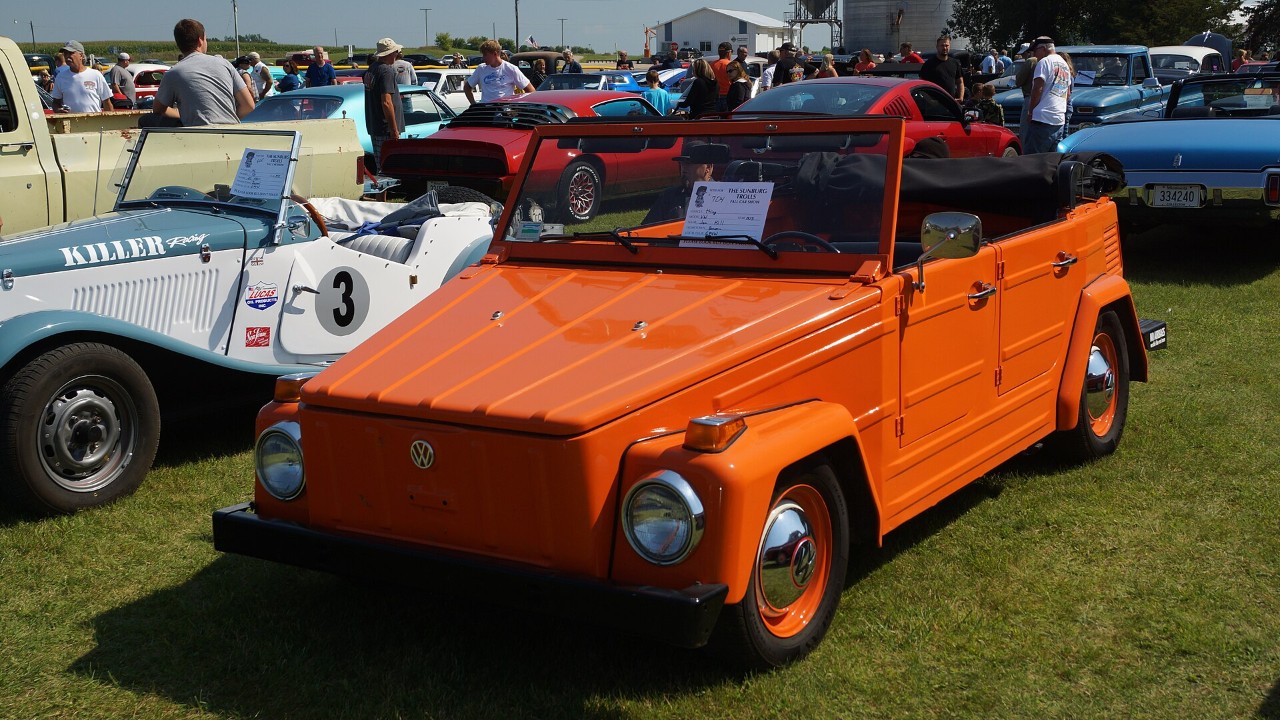
The 1973 Volkswagen Thing started life as a military runabout, yet today it draws smiles wherever it parks. That is the Volkswagen trick. The company built people’s cars by the million, and it kept slipping oddballs and showpieces in between.
Some of those cars came from coachbuilders like Karmann and Hebmüller. Others came from Volkswagen’s plants in Brazil, Mexico and Austria, or from engineers chasing a single bold goal. A few were mass-market cars that simply aged into icons.
These are our picks, twelve Volkswagens we think turn heads wherever they park. The verdict is our own opinion. Each pick comes with the facts behind it, plus our take on what makes it special and what to look for if you want one.
1. 1973 Volkswagen Thing
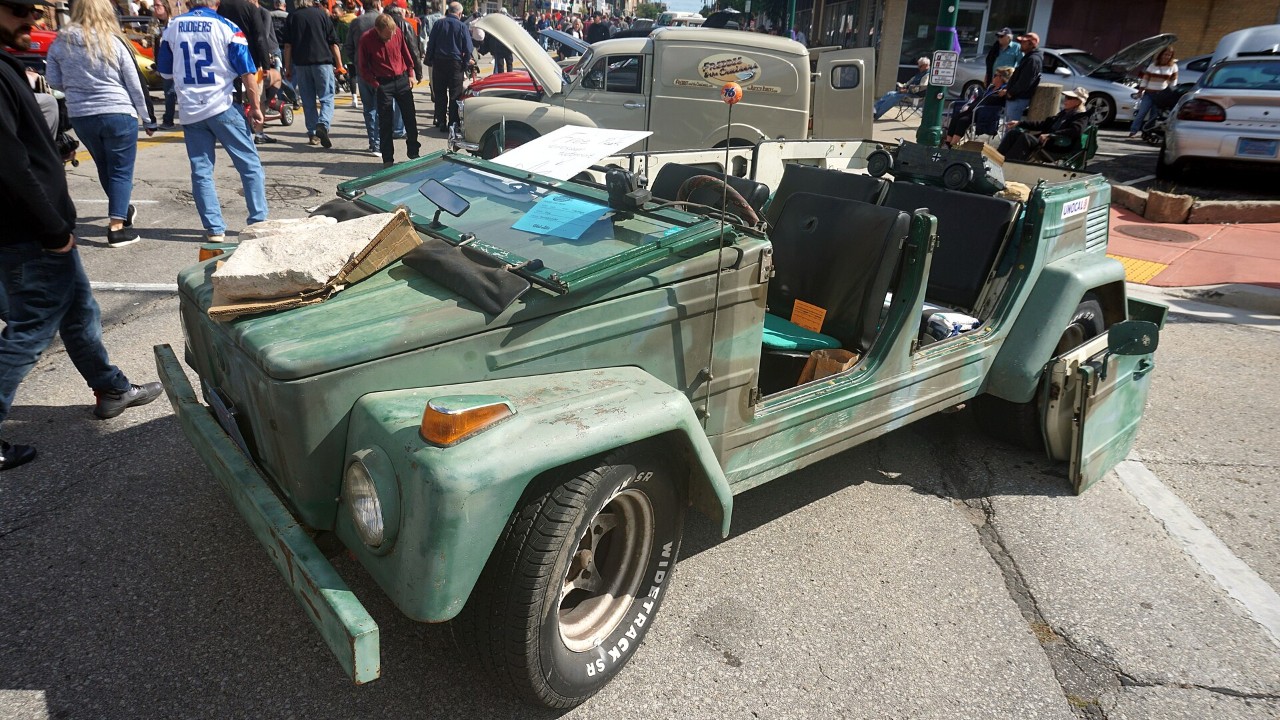
The Type 181 began as a job for the West German Army, which needed a light vehicle to replace the DKW Munga. Civilians in Germany knew it as the Kurierwagen, or courier car. Americans got the blunter name, Thing.
Volkswagen designed everything about it for simplicity. All four doors came off and swapped from side to side, and the windshield folded flat. Under the body sat Beetle running gear. Volkswagen built 90,883 in all, including 20,364 made in Puebla, Mexico, between 1970 and 1980.
The Thing left the American market because it could not meet tougher US safety rules for 1975. That short run explains part of its appeal now. According to Hagerty’s look at the model, a Thing in good, #3 condition averaged $15,500, and concours cars ran just over $30,000. Cars with the striped Acapulco top carried roughly a 20 percent premium.
Our take: the 1973 Volkswagen Thing is one of the cheapest ways to own a car that stops conversations. It is slow, drafty and loud. However, that is the point, since it makes every trip to the beach feel like a small adventure. If you are buying, inspect the body carefully, as you would on any 50-year-old steel car, because this one was never meant to be pampered.
2. Volkswagen 1303 Cabriolet
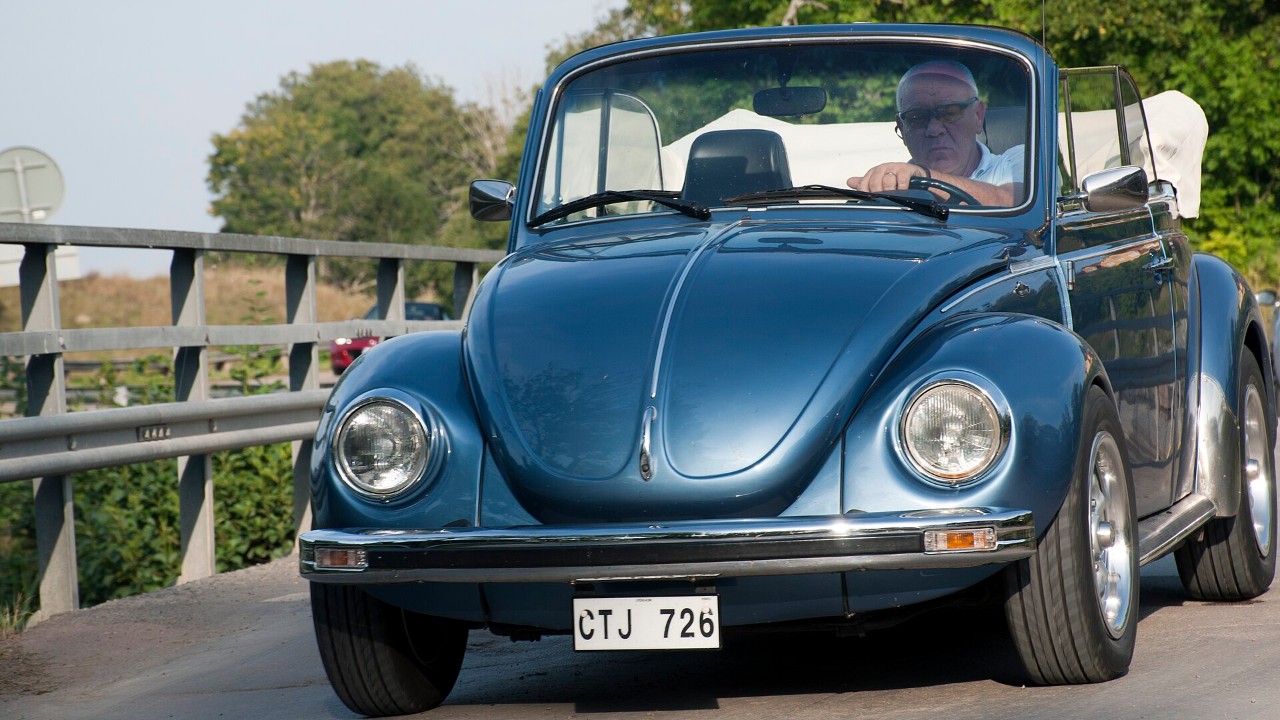
The convertible Beetle was the long-running partnership between Volkswagen and Karmann. Karmann built the cars in Osnabrück, and the last one rolled out on January 10, 1980. That ended a convertible Beetle story that had run for decades. By then, the firm had built 330,281 convertible Beetles.
The 1303 was the final chapter. It replaced the 1302 in August 1972 and carried over the Super Beetle’s front strut suspension and bigger front trunk. That made the late cabriolet more comfortable and more practical than the early convertibles, while keeping the familiar shape.
The Beetle cabriolet also had a remarkable second act. Volkswagen kept it in production even after the first Golf cabriolet arrived in 1979, so the two overlapped for a short time before the Golf took over.
In our view, the 1303 Cabriolet is the best way to enjoy an air-cooled Beetle with the sky overhead. It looks right with the top up or down, and it rides better than earlier convertibles. Before you buy, have the top mechanism and the body seams inspected, because a convertible body without a roof depends on a healthy structure underneath.
3. 1974 Volkswagen Scirocco Mk1

The Scirocco was a test run for Volkswagen’s water-cooled future. It debuted at the 1973 Geneva Motor Show and went on sale six months before the Golf, which shared its platform. In effect, buyers could try the new front-drive hardware in a sporty coupe first.
Giorgetto Giugiaro drew the shape, with a low nose, a fast roofline and a hatchback tail. Karmann handled production in Osnabrück. European engines ranged from 1.1 to 1.6 liters, and the TS version made 85 PS. Later, a fuel-injected GTi version arrived in 1976.
The first-generation car sold well. Volkswagen built 504,153 Mk1 Sciroccos before the second generation replaced it in 1981. Yet, in our opinion, you see far fewer of them today than Golfs from the same years.
Our take: a 1974 car is one of the earliest Sciroccos, and that matters to fans of Giugiaro’s original lines. It feels light and eager, much like a Mk1 Golf, but with a sharper suit. If you want one, buy the most solid and original car you can find, since early examples are the ones fans want.
4. 1992 Volkswagen Corrado VR6
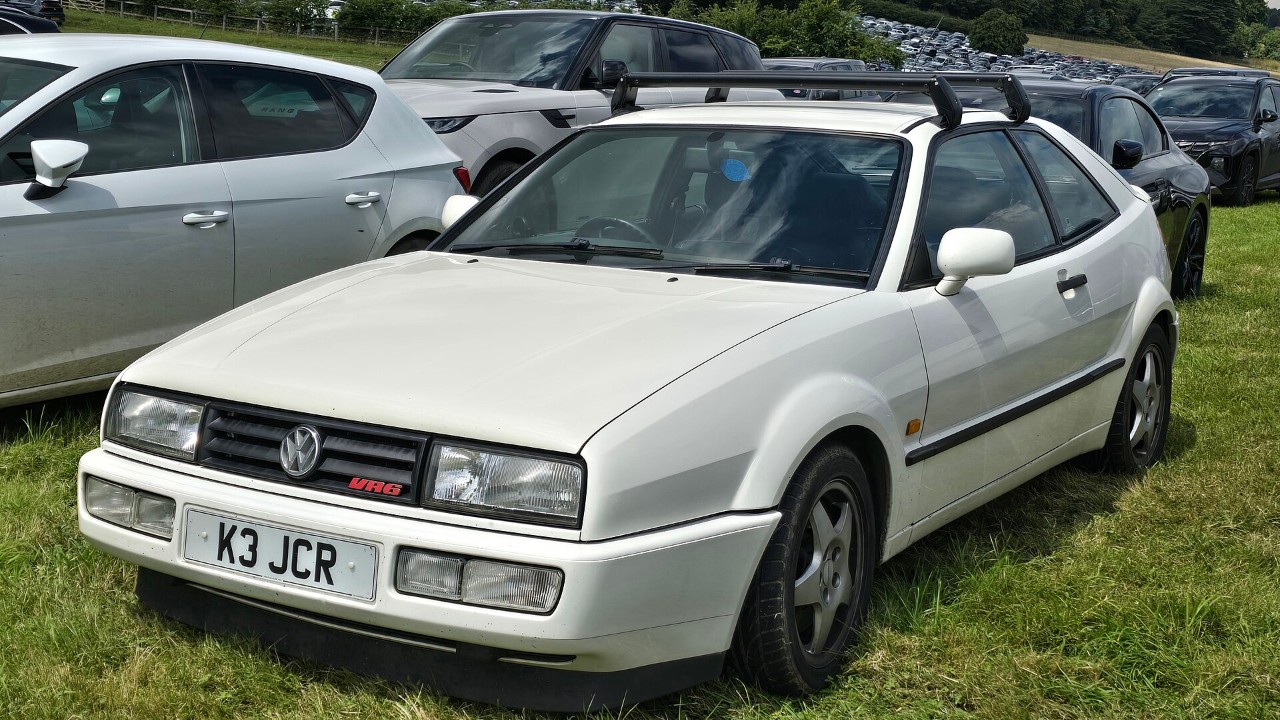
The Corrado had a party trick that still makes kids point. Its rear spoiler rose on its own once the car passed 100 km/h, or 45 mph on North American cars. Then it dropped back down below about 15 mph, unless the driver chose to control it by hand.
The VR6 version brought the right engine for that drama. In America, where it was sold as the Corrado SLC, the 2.8-liter narrow-angle V6 made 178 horsepower. European cars got a 2.9-liter version with 190 PS. In our view, that compact V6 gave the Corrado a smooth, torquey character.
Karmann built the car in Osnabrück, as it did with the Scirocco before it. Total production from 1988 to 1995 reached 97,521, which is modest for a Volkswagen. As a result, a clean VR6 is a welcome sight at any show.
In our view, the Corrado VR6 is the best-looking Volkswagen coupe of the 1990s. It drives like a hot hatch with better manners. If you are shopping, make sure the spoiler rises and drops as it should, since that trick is half the fun.
5. 1983 Volkswagen Golf GTI Mk1
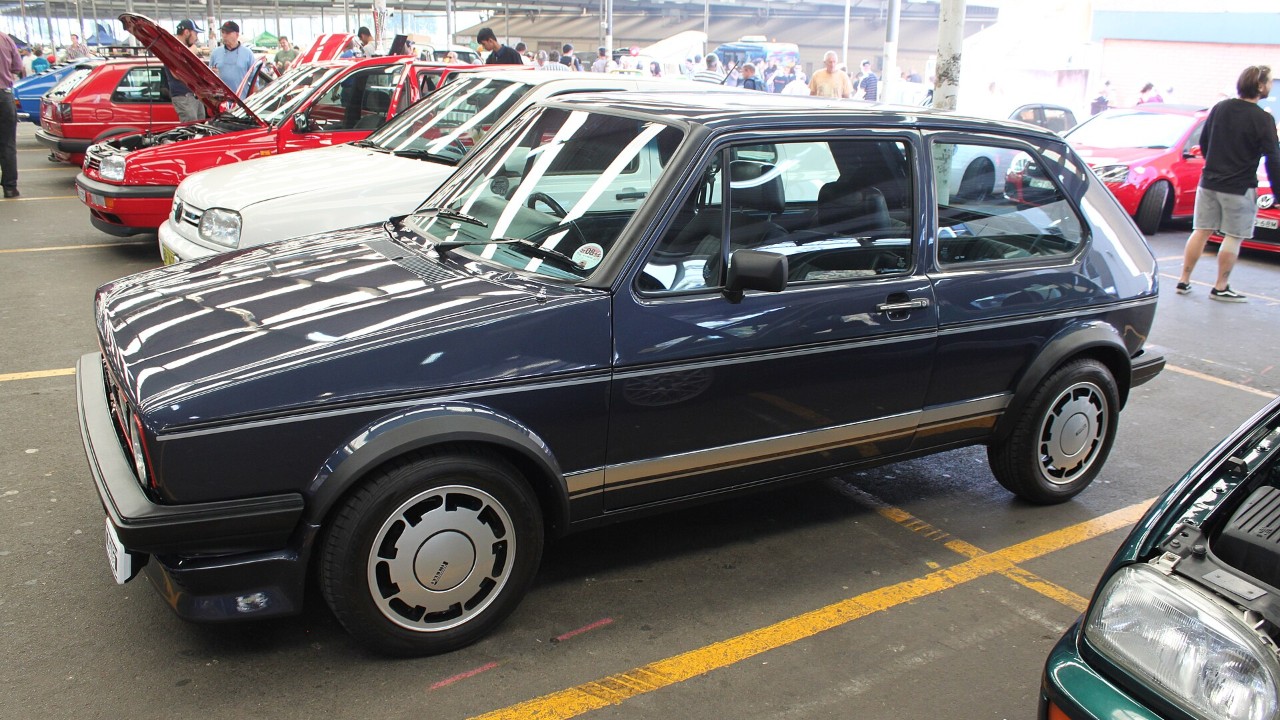
Volkswagen expected to build no more than 5,000 Golf GTIs, enough to qualify the car for touring-car racing. Instead, buyers kept coming. Total Mk1 GTI production eventually reached 462,000, and the hot hatch became a whole category.
The car debuted at the 1975 Frankfurt show and reached showrooms in September 1976. The first engine was a 1.6-liter with 110 PS. Then, in 1982, the engine grew to 1.8 liters and 112 PS, with more torque low down. A 1983 car like this one belongs to that later, stronger run.
The details helped make it iconic. Gunhild Liljequist designed the tartan seat fabric and the dimpled gear knob shaped like a golf ball. Meanwhile, a red frame around the grille told everyone this was no ordinary Golf. American buyers got their own version for 1983, the Rabbit GTI, built at the Westmoreland plant in Pennsylvania.
We have traced the forgotten journey of the Volkswagen Golf GTI into enthusiast culture before. Our take: a late 1.8 Mk1 is the one to buy, because it pairs the original look with the better engine.
6. Volkswagen Hebmüller Cabriolet
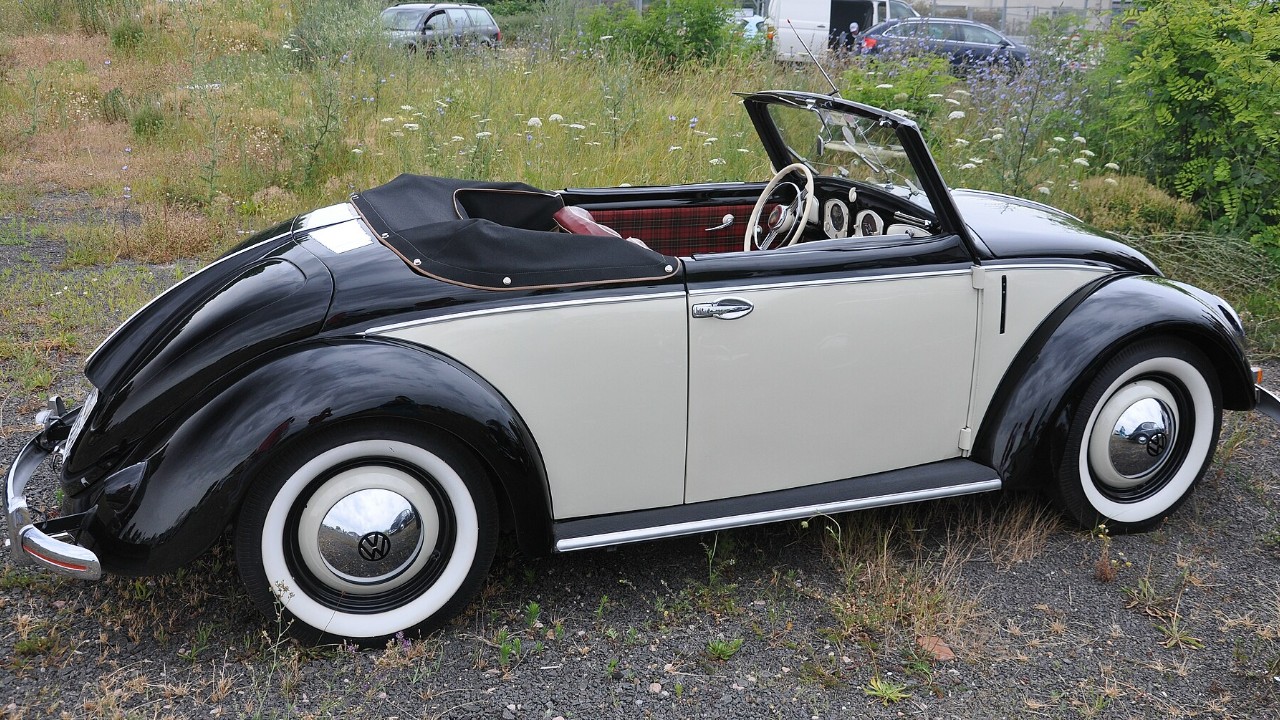
The Hebmüller is one of the great what-ifs of postwar Volkswagen. The coachbuilder, based in Wülfrath, began building Beetle-based cabriolets in June 1949. Volkswagen reportedly ordered 2,000 of them.
Then disaster struck. On July 23, 1949, a major fire hit the Hebmüller factory. A water shortage meant firefighters could not stop it before almost the entire plant was destroyed. The company rebuilt quickly and produced more than 350 more cars in 1949 alone, but it never recovered.
Hebmüller went bankrupt in May 1952. By then, it had completed 696 cabriolets, and Karmann built a final batch. That tiny output is why the Hebmüller draws a crowd whenever one appears.
In our view, the Hebmüller is the most elegant Beetle ever made. It looks more like a small sports car than an economy car, especially with the top down. If you ever get the chance to see one, take your time with it, because the details reward a close look. For most of us, a museum or concours lawn is the only place we will meet one, and that makes each sighting memorable.
7. Volkswagen Golf Country
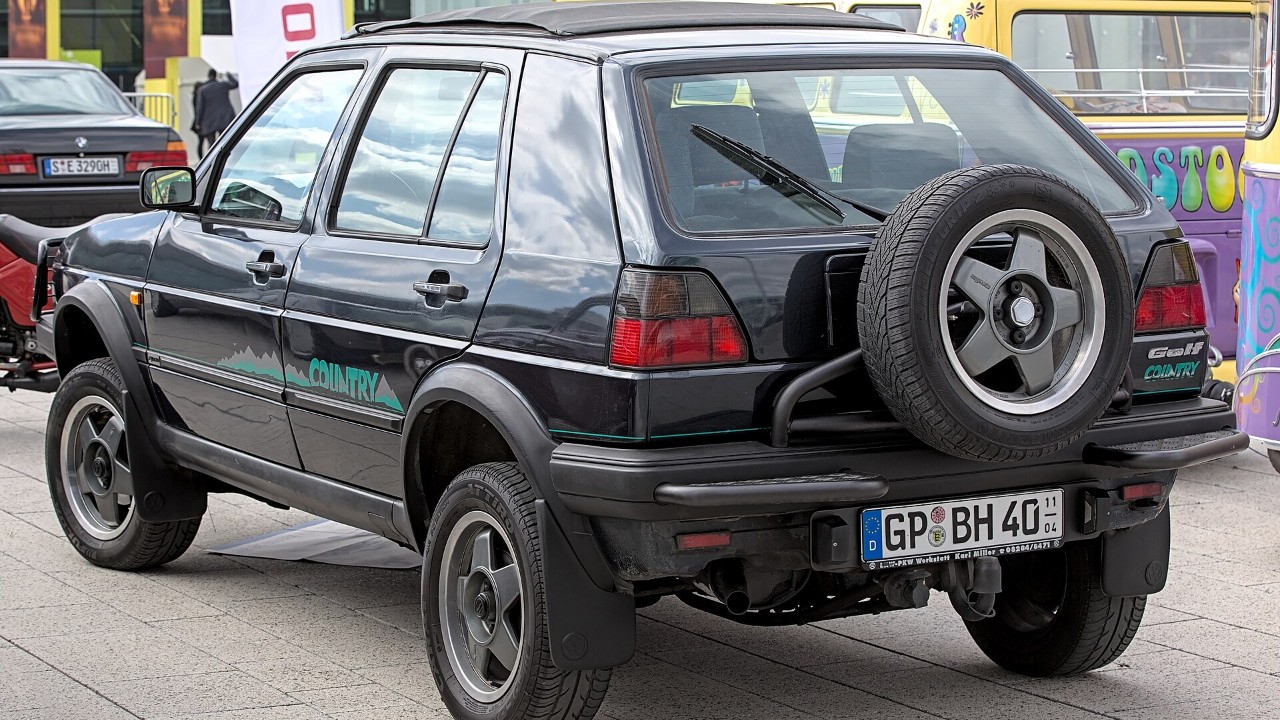
Long before every carmaker sold a lifted hatchback, Volkswagen built the Golf Country. It took a second-generation Golf with syncro four-wheel drive and raised it to 21 cm of ground clearance. Steyr-Daimler-Puch, the Austrian specialist, co-built the car in Graz.
The look is what stops people. Up front and out back, the Country wore bullbars, a skid plate under the engine and a frame protecting the rear differential. The spare wheel rode outside, on a swing-away triangular frame at the back, like a small off-roader. In Europe, the main engine was a 1.8-liter petrol four with 98 PS.
Volkswagen and Steyr built only 7,735 Golf Countrys. A few versions were even rarer. The Chrompaket, with chrome bars, a sliding sunroof, pre-heaters and beige leather, numbered 558. A simpler Country Allround, with fewer luxury features, accounted for 1,500 more. Meanwhile, Volkswagen made just 50 Country GTIs, with a 112 PS GTI engine, for its own staff.
Our take: the Golf Country is the crossover before crossovers, and it looks charming rather than aggressive. If you want one, make sure the syncro system works properly, since that is the heart of the car.
8. 1971 Volkswagen Super Beetle
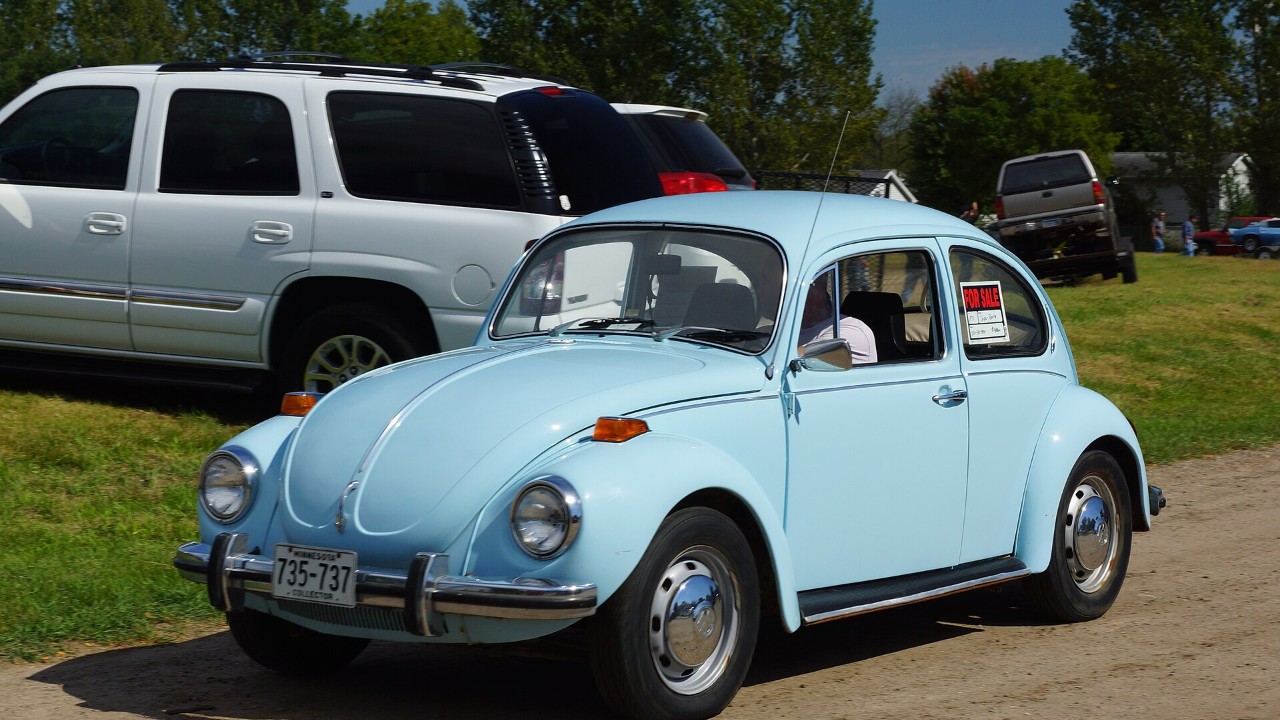
By 1970, the Beetle needed more room. Volkswagen answered with the 1302, sold in America as the Super Beetle, which arrived in August 1970 for the 1971 model year. It was the biggest change to the car’s front end in years.
The key was a new MacPherson strut front suspension. With it, the front trunk capacity doubled. The car also grew 8 cm longer, and luggage space rose by 3 cubic feet overall. That gave the Super Beetle a rounder nose that sets it apart from the standard Beetle at a glance.
The standard 1302 made 44 PS. Meanwhile, the 1302S made 50 PS from a twin-port head, which gave it a little more pep. Two years later, the 1303 replaced it.
Our take: the 1971 Super Beetle is the practical Beetle, and that makes it a great daily classic. The bigger trunk matters on road trips. Yet the shape remains unmistakably Beetle, which is why people smile when one rolls past. If you want to know how the Beetle story began, start with why the 1938 Volkswagen Beetle became one of the most influential cars ever built.
9. Volkswagen New Beetle RSi
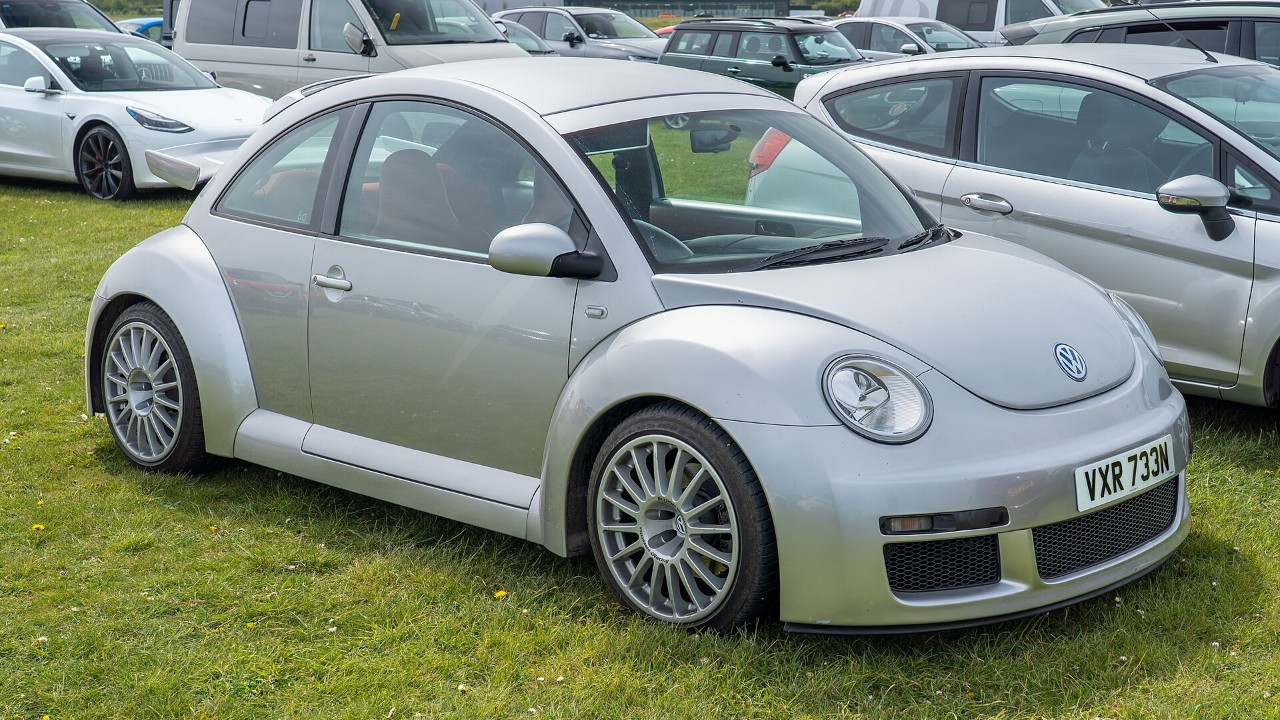
The New Beetle was a friendly retro car, so the RSi came as a surprise. Volkswagen built only 250, and each one looked like a touring car with a cartoon shell. The fenders were 80 mm wider than standard, and a big rear wing sat on the tail.
The engine was a 3.2-liter VR6 with 24 valves and about 224 PS. Power went to all four wheels through Volkswagen’s 4motion system and a six-speed gearbox. Large 18-inch OZ Superturismo wheels filled the arches, while a Remus twin-pipe exhaust gave it a proper voice.
Inside, the RSi had Recaro racing seats and a cabin trimmed in carbon fiber and billet aluminum. There was also a rear cross brace to stiffen the body. In short, this was a factory hot rod with a retro face.
In our view, the RSi is one of the most underrated Volkswagens of the 2000s. Most people have never heard of it, so it makes for a great reveal at a car show. If you ever find one for sale, insist on documentation from Volkswagen, since its value depends on being one of the 250. Then simply enjoy the double takes every time you park it.
10. Volkswagen XL1
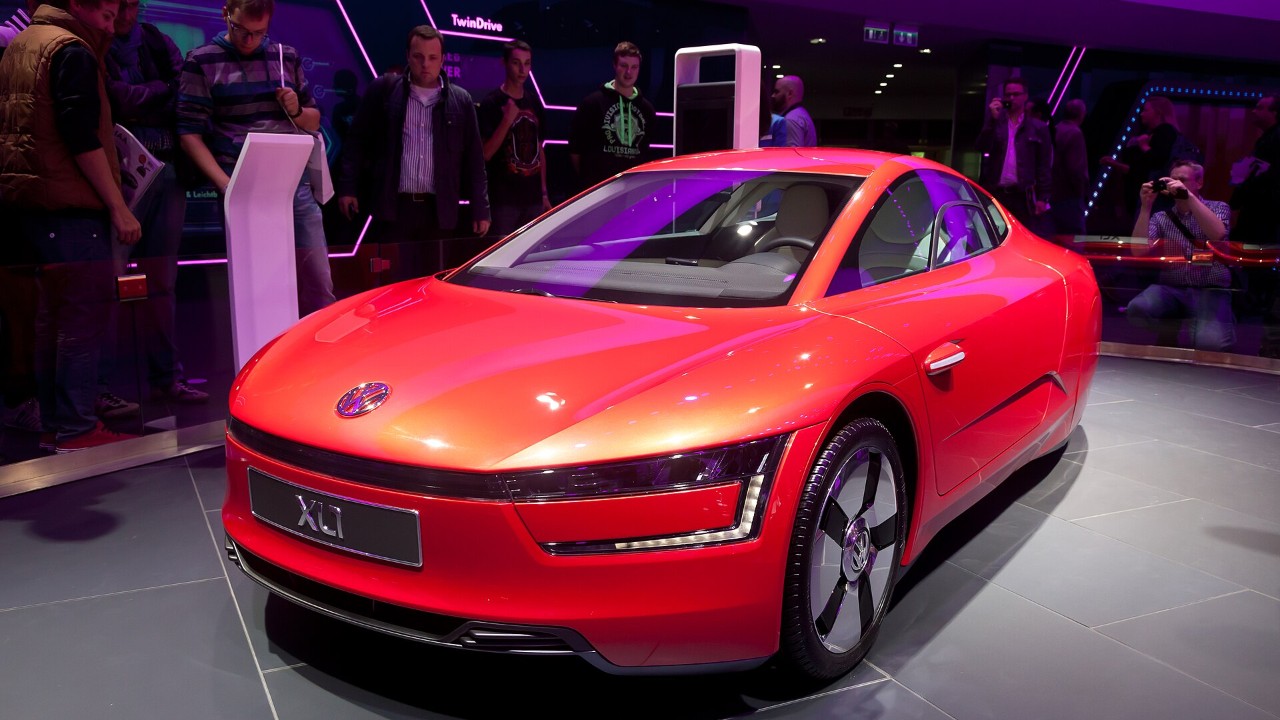
The XL1 looks like a car from a science museum, and in a way it is. Volkswagen built it to prove a car could use less than one liter of fuel per 100 km. According to Auto123’s report on production, it rated 0.9 L/100 km and 21 g/km of CO2. Assembly took place in Osnabrück.
The powertrain was a plug-in hybrid. A 47 hp two-cylinder TDI diesel, essentially half of a 1.6 TDI, worked with a 20 kW electric motor and a seven-speed DSG gearbox. Top speed was electronically limited to 160 km/h.
The body did the rest. It used unpainted carbon fiber over a magnesium-alloy subframe, and the car weighed only 795 kg. Volkswagen built 250 in total, with 200 for retail customers, starting at €111,000.
Our take: the XL1 is the most futuristic production car Volkswagen ever sold, and it stops people in their tracks. Its teardrop shape looks nothing like anything else on the road. If you ever see one, take a moment to look at the bare carbon fiber, which is rare on any road car.
11. 1962 Volkswagen Karmann Ghia Convertible
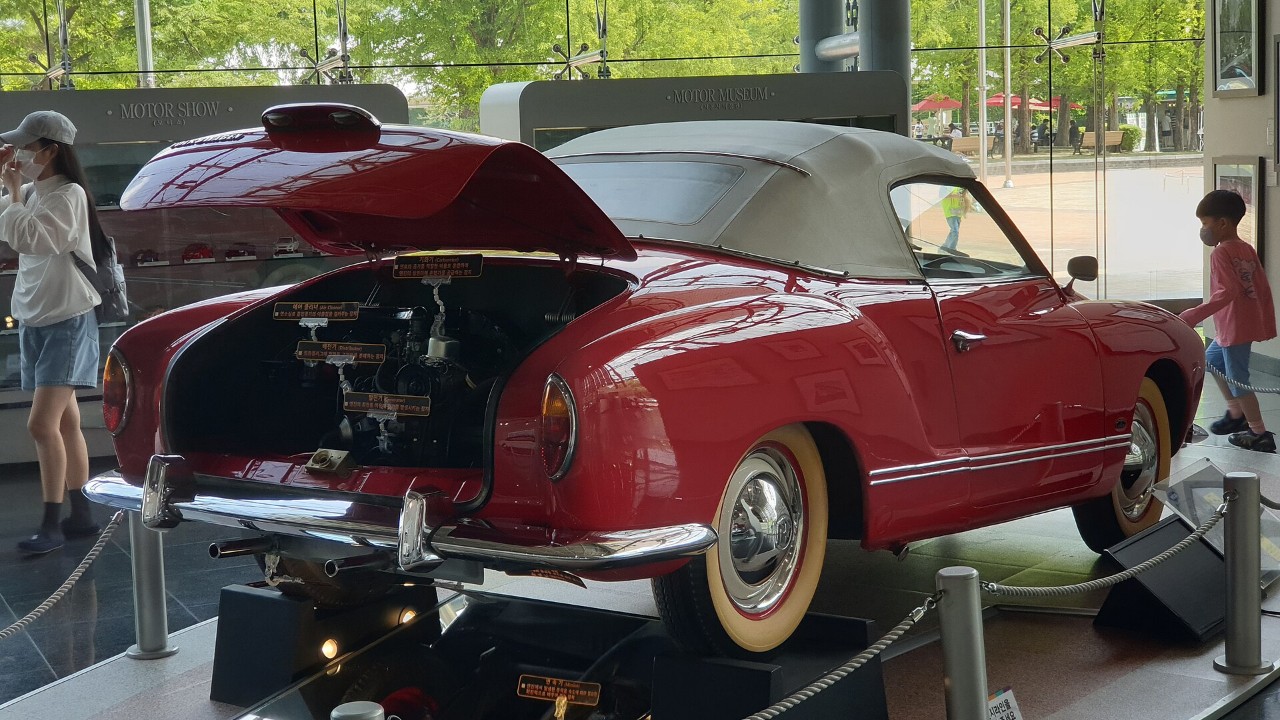
The Karmann Ghia was a styling exercise that became a hit. Carrozzeria Ghia handled the design, and Karmann built the bodies by hand in Osnabrück. Luigi Segre and Felice Mario Boano both get credit, though historians have never settled who deserves the most.
The coupe came first, in 1955. Then the convertible arrived in August 1957, which made the shape even more appealing. Underneath, it used Beetle running gear, so it was easy to own and service. In our view, that blend of Italian styling and VW mechanicals is the whole appeal.
Karmann’s German plant built 80,837 cabriolets, compared with 364,401 coupes of both types. In other words, the convertible is far less common. That alone makes a 1962 convertible a rare and welcome sight at a cars-and-coffee meet.
In our view, the Karmann Ghia convertible is one of the prettiest cars ever built on humble mechanicals. If you want one, focus on the body, because hand-formed panels are costly to repair. The engine side is easy, while the bodywork is where you should spend your inspection time and money.
12. Volkswagen SP2
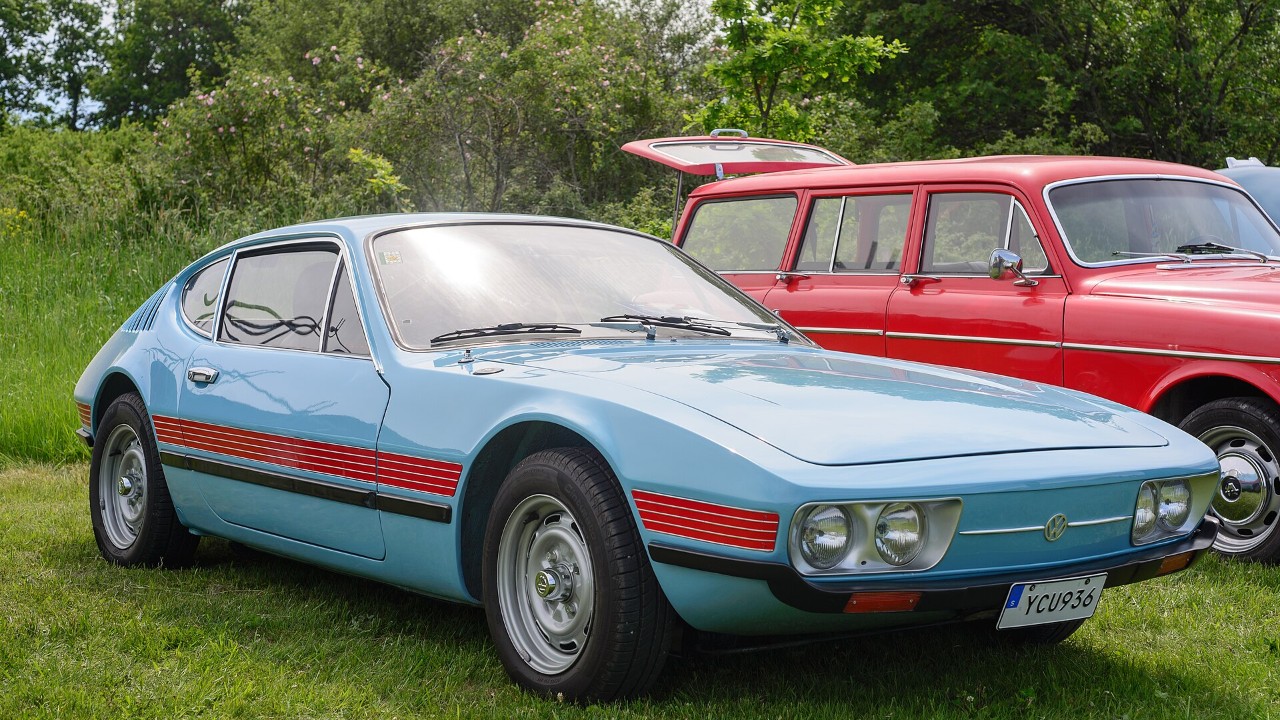
Brazil built its own Volkswagen sports car, and most Americans have never seen one. The SP2 came from Volkswagen do Brasil, which produced it from July 1972 to December 1975. Márcio Lima Piancastelli, José Vicente Novita Martins and Jorge Yamashita Oba designed it, with a long nose and a sharp fastback tail.
Underneath, it used the Brazilian Type 3 Variant chassis and a 1.7-liter air-cooled flat-four of 1,679 cc. The rating was 65 DIN horsepower. That was modest for a car that looked so fast, and a local joke claimed SP stood for “Sem Potência,” or without power.
Officially, SP referred either to São Paulo or to sports prototype. Volkswagen do Brasil built 10,205 SP2s. A weaker SP1 with a 1.6-liter engine lasted only until July 1974, and the factory made just 88.
Our take: the SP2 is one of the best-looking Volkswagens most people have never seen, and that is why it stops traffic. It is not fast. Instead, it is a design statement from a country with its own car culture. If you find one, buy it complete, and enjoy being the only one at the show.
More from Fast Lane Only